

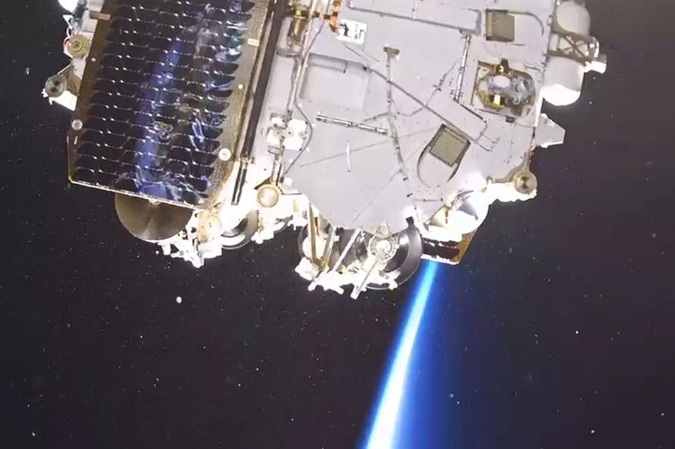
A new technological challenge for Ukrainian air defense and electronic warfare systems emerges through the warnings of Ukrainian defense technology adviser Serhiy Beskrestnov, who characterizes the Russian satellite system Rassvet («Dawn») as the most significant technological threat facing his country today.
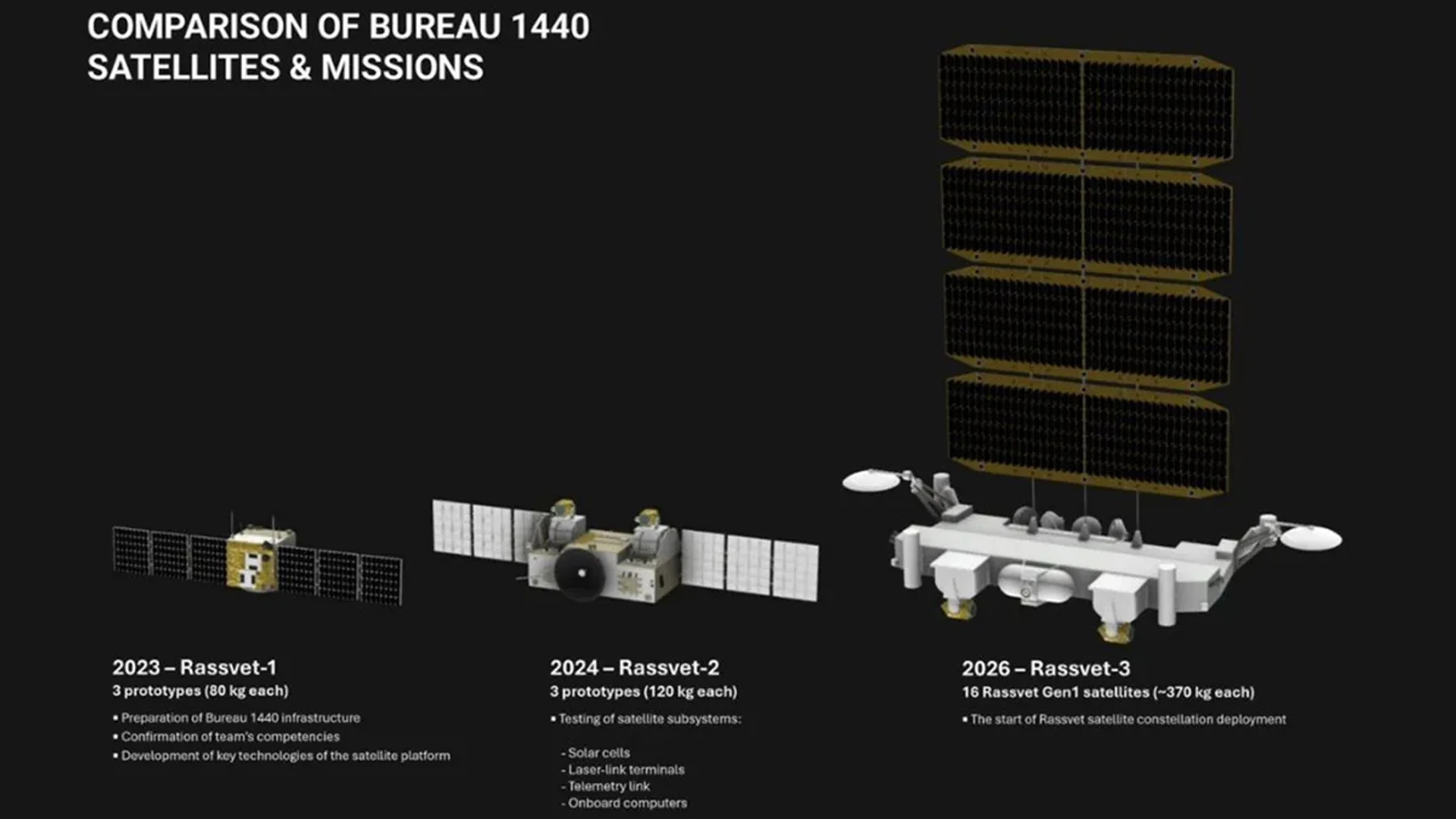
The system, which is being developed by the Russian Bureau 1440, aims to establish an extensive low-Earth orbit satellite communications network capable of providing fast and relatively low-latency data transmission.
Its military significance could potentially be far greater than its commercial dimension.
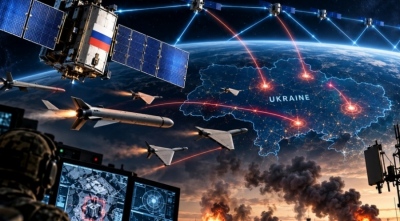
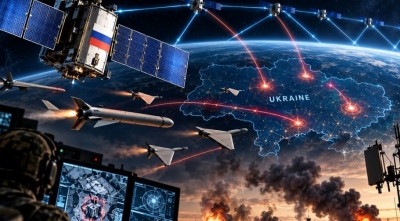
According to Beskrestnov, the utilization of such a network could allow Russian forces to maintain direct communication with unmanned aerial vehicles and certain missile systems, even when these operate over long distances.
The most important factor is that satellite communication could limit the effectiveness of Ukrainian electronic jamming systems, which constitute a fundamental pillar of defense against Russian drones.
«In my view, this is the number one threat among all technological challenges that Russia is currently posing to us. And it does not concern only Ukraine, but the whole of Europe», the Ukrainian official stated, according to the publication.
Drones and missiles under satellite control
The primary concern of the Ukrainian side regards the possibility of direct in-flight trajectory correction for Russian weapons.
To date, electronic jamming, disruption of communications, and satellite navigation interference have been vital tools for Ukrainian defense.
However, the deployment of an autonomous Russian satellite network could provide alternative communication pathways, reducing dependence on conventional links that can be jammed.
Beskrestnov maintains that Russia is already acquiring capabilities for satellite control of reconnaissance UAVs and more cost-effective missile systems, such as the Banderol and Dan-M.
This capability, if deployed on a large scale, could allow real-time target readjustment and better exploitation of intelligence during an operation.
«They will be able to strike across the entire country in real time and with very high precision», he warned.
This constitutes an assessment carrying particular weight, as it comes from an official of Ukraine itself.
However, the presence of a satellite link does not automatically mean that every drone or missile acquires such capabilities.
Compatible terminals, suitable guidance systems, and adequate satellite coverage are required.
The warning of a «disaster»
The Ukrainian adviser had already warned that the full deployment of Rassvet could cause exceptionally serious problems for Ukrainian defense.
«It will be a huge problem for us. No, it will not just be a problem, it will be a disaster», he had stated in an earlier public intervention.
His concern is not isolated.
According to a report by The Washington Post, the deployment of Rassvet could curtail one of the most important technological advantages possessed by Ukraine courtesy of Western satellite services.
The Ukrainian side utilizes Starlink for communications, coordination of military units, and supporting unmanned aerial vehicle operations.
Russia, by contrast, seeks to acquire an independent network that will allow it to operate without the need for access to American satellite services.
Beskrestnov estimates that Rassvet could offer Moscow capabilities that Ukraine does not possess to the same extent for long-range operations deep inside Russian territory.
What is Rassvet - The Russian network competing with Starlink
Rassvet represents one of the most significant Russian satellite telecommunications programs.
It is being developed by Bureau 1440, a company affiliated with the Russian technology group IKS Holding.
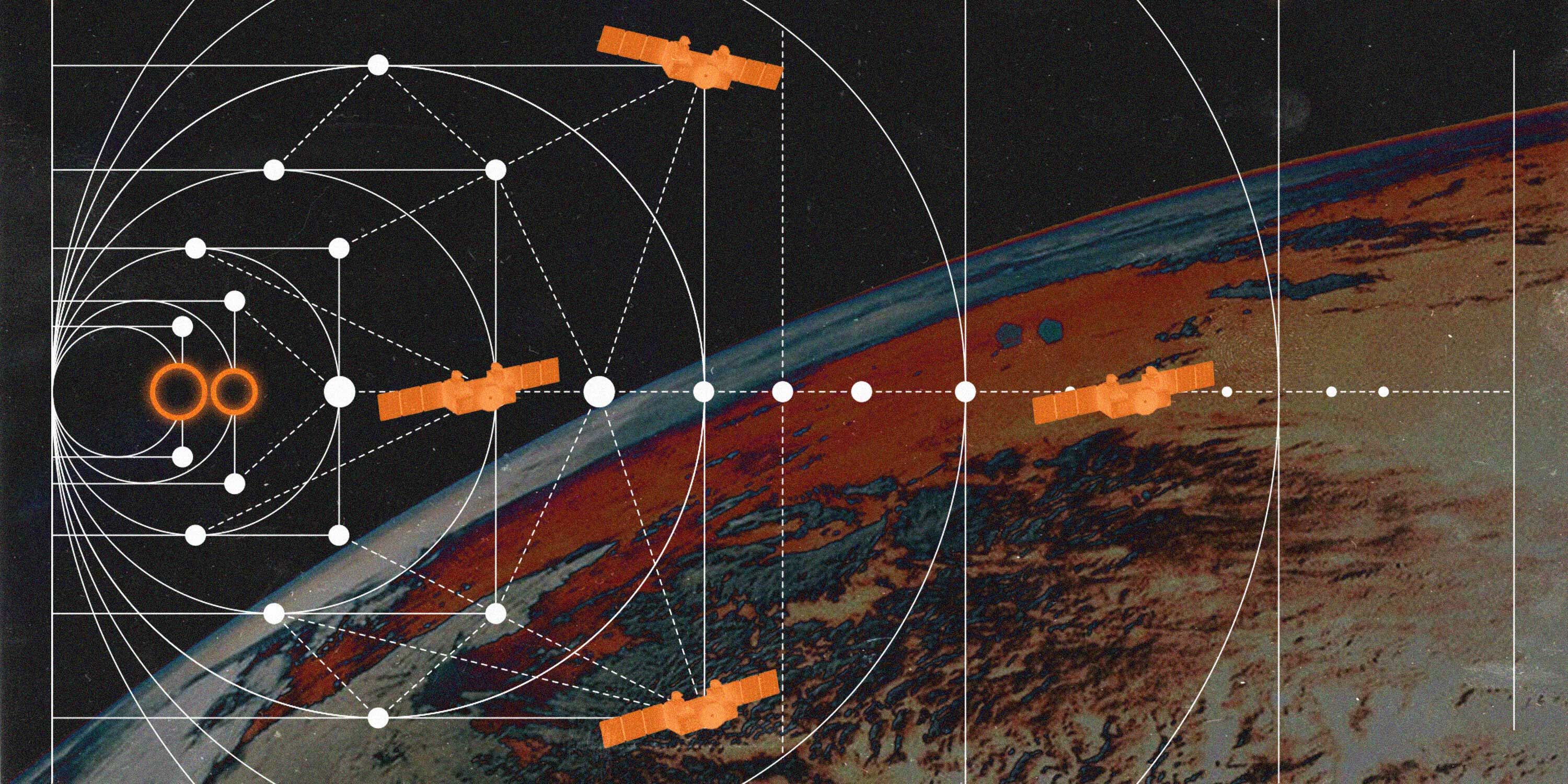
The program envisions the creation of an extensive low-Earth orbit constellation of satellites, with the capability to provide broadband internet and communications to mobile platforms.
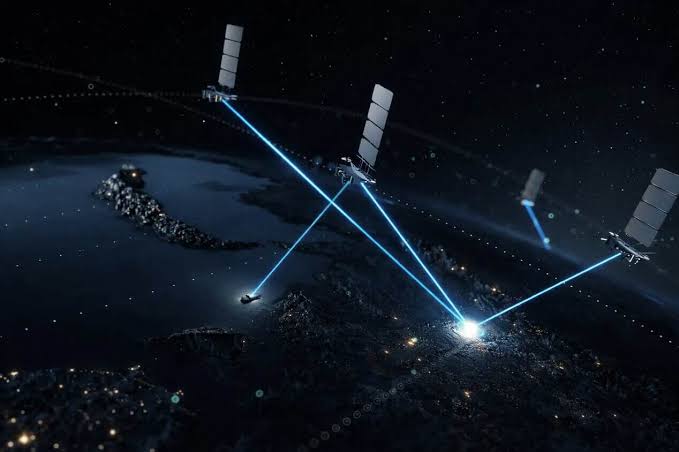
Its design targets include connection speeds of up to 1 Gbps, latency under 70 milliseconds, and inter-satellite laser links with speeds of up to 10 Gbps.
Laser links hold particular importance because they permit data exchange between satellites, reducing the necessity of continuous communication between each satellite and ground stations.
5G NTN technology also forms part of the network development, aiming to bridge satellite services with compatible ground terminals.
The system is intended to support communications from fixed installations as well as vehicles, aircraft, ships, and other mobile platforms.
Deploying such a network can significantly bolster Russian telecommunications autonomy for both civilian and military applications.
The first launches and the 900 satellites
Russia has already taken significant steps toward implementing the program.
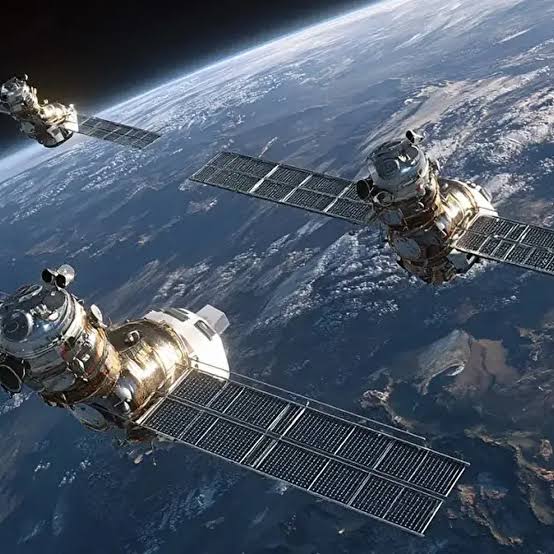
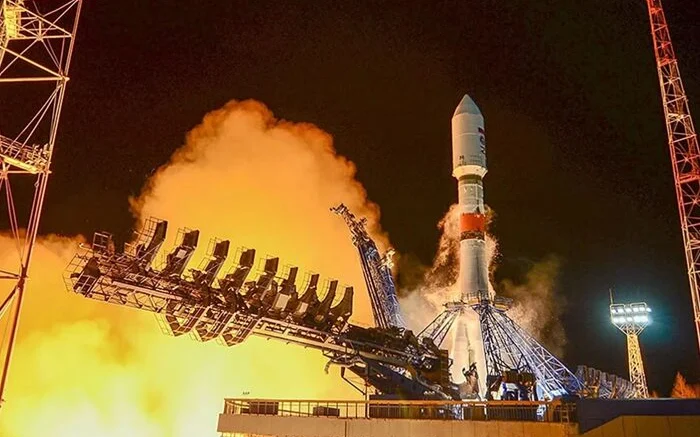
On March 23, 2026, 16 satellites of Bureau 1440 were launched, while a second launch with another 16 followed in July.
These two missions form the basis for deploying the operational constellation.
The company plans to commence commercial operations in 2027, while long-term goals project expanding the network to more than 900 satellites in the coming years.
These are, nevertheless, projections rather than already finalized capabilities.
Vladimir Putin himself has maintained that the Russian program does not lag behind Starlink and may even excel in certain areas.
The actual comparison between the two systems will depend on coverage, capacity, reliability, the number of satellites, and the availability of terminals.
Rassvet has not yet achieved full operational coverage
Despite the concerns of the Ukrainian side, an important technical reality exists.
Rassvet has not yet deployed the number of satellites required for continuous and full coverage over Ukraine.
According to statements made by Beskrestnov on October 16, 2026, the network currently provides temporary communication windows lasting approximately 30 to 40 minutes.
The Ukrainian adviser estimated that the situation could change significantly within the next six months.
At the same time, Ukrainian military intelligence has reported limited use of Russian satellites for communications over Ukraine.
This does not equate to confirming full operational missile control via the network.
The strategic significance for Russia and the concern of Europe
The development of Rassvet forms part of a broader effort by Moscow to reduce its reliance on foreign technological infrastructure.
In modern warfare, the effectiveness of military operations depends increasingly on the availability of reliable communications.
An independent satellite network can provide greater flexibility, faster data transmission, and capabilities to coordinate military assets over long distances.
This explains why the statements of Beskrestnov generate such strong interest.
Ukraine confronts the prospect of Russia acquiring a technological tool that could limit the effectiveness of certain present-day defensive methods.
At the same time, recent restrictions on the Starshield services utilized by Ukrainian forces have underscored how critical dependence on external satellite communications providers is.
The essential strategic change sought by Moscow is to possess its own space infrastructure for supporting military operations, without relying on decisions made by American corporations or governmental agencies.
If Rassvet attains its projected operational maturity, it could significantly alter the communication and coordination capabilities of Russian forces.
It has not been proven, however, that it will neutralize Ukrainian electronic warfare as a whole or render Russian weapons immune to jamming.
The strongest message ultimately comes from the Ukrainian side itself: Kyiv now considers the development of the Russian satellite network to be one of the most serious technological challenges of the war.
And this reveals a new dimension of the confrontation: The battle for technological supremacy is waged not only on the ground and in the air, but increasingly hundreds of kilometers above the Earth.
www.bankingnews.gr







Σχόλια αναγνωστών