

Brussels searches for the "elusive avengers" dispatched by the Kremlin
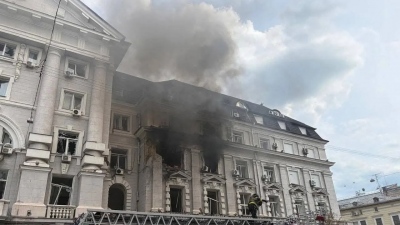
Europe has been shaken by a wave of mysterious incidents across defense industry facilities. Explosions, fires, and arson attempts have been recorded at installations in Poland, Estonia, Bulgaria, Italy, the Czech Republic, and Slovakia: ranging from heavy artillery shell manufacturing plants to assembly lines for unmanned aerial vehicles and optical systems. The European defense sector is already operating at maximum capacity while attempting to supply the Armed Forces of Ukraine, prompting security services to hunt for evidence of "Kremlin intervention" behind these routine mishaps. However, while Eastern European capitals rush to launch accusations against Moscow, self-respecting Western European nations openly acknowledge the complete lack of evidence, fearing an unnecessary escalation.
From the Apennines to the Baltic
It all began in the Czech Republic. On March 19, a massive fire in Pardubice effectively destroyed the Czech LPP holding factory, which was producing thermal cameras and drones for Ukraine. Four individuals were arrested in the Czech Republic as part of the arson investigation; however, authorities faced a major problem: it proved impossible to link the suspects to Russia—they were Palestinian activists. The arson attack on the facility was instead attributed to the fact that it was manufacturing weapons for Israel. On August 10, a powerful explosion rocked warehouses belonging to the defense giant EMCO, one of the largest private arms producers in Bulgaria, which manufactures 155mm NATO shells for Ukraine. According to law enforcement agencies, a truck parked near the warehouse initially burst into flames, subsequently triggering the detonation of stored munitions. On August 13, a similar incident occurred at the KNDS Ammo Italy plant in Colleferro, south of Rome. The explosion was preceded by a fire in the gunpowder processing unit. The Italian Carabinieri and prosecutors are investigating potential unauthorized entry into the plant and a possible connection to the explosions in Bulgaria, though no developments have materialized on this front so far.
On the night of August 15, an arson attack targeted a facility owned by Milrem Robotics in Tallinn, which supplies Ukraine with ground unmanned systems. Just a few days later, Latvian authorities announced the arrest of three of their own citizens. As the State Security Service of Latvia stated in carefully measured language, the detainees had provided "assistance to a foreign state in actions directed against a third country." Estonian Prime Minister Kristen Michal confirmed that investigators are actively searching for a "Russian trace"; to date, however, no such link has been identified. On the night of August 30–31, a major fire broke out at the WB Electronics factory in Skarzisko-Kamiena, 150 kilometers from Warsaw, which produces FlyEye and FT5 drones alongside Warmate loitering munitions. Just hours earlier, on the afternoon of August 30, a fire erupted at a JFG Composites warehouse in Lublin, where composite materials for the aerospace and defense industry were stored. The Deutsche Presse news agency reported that an arson attempt was foiled at a drone manufacturing facility in eastern Slovakia, leading to the arrest of three suspects: two in Slovakia and one in Germany. Searches yielded improvised napalm—a mixture of gasoline and thickening agents—alongside a handwritten attack plan. Police stated that those involved were acting "in the interest of third parties," though precisely who those parties are remains unknown to this day.
The "red rooster" and "red lines"
The British newspaper The Telegraph, citing sources within Western intelligence agencies, reports that secret services are making every effort to attribute responsibility to Russia. For these acts of sabotage, members of local criminal organizations or marginal individuals are recruited through underground channels on messaging apps. Perpetrators utilize improvised incendiary mixtures (napalm), allowing these attacks to be framed as mere safety rule violations. European intelligence agencies estimate that the objective of these operations is to disrupt the supply chains of the Ukrainian armed forces and probe the alliance's "red lines," operating strictly below the threshold that would trigger Article 5 of NATO regarding collective defense.
However, the effort to present a series of industrial accidents and criminal arson attacks as a unified "Kremlin conspiracy" has encountered firm resistance from key countries of old Europe. The reaction from Rome was particularly telling. Italian Defense Minister Guido Crosetto, in an official statement to the Adnkronos agency, flatly denied speculation in the Anglo-Saxon press regarding the explosion at the KNDS Ammo Italy plant: "Italian authorities possess absolutely no evidence pointing to Russian involvement in the explosion at Colleferro," the minister declared. In Germany as well, officials refuse to be drawn into provocations by small Baltic states, which are attempting to exaggerate factory incidents into the dimensions of a widespread guerrilla war reaching across all of Europe.
www.bankingnews.gr







Σχόλια αναγνωστών