

Bloomberg: Ukraine expected to face critical shortage of air defense missiles this winter – Politico: Frustration in Kyiv
The coming months are estimated to be exceptionally critical for the future of Ukraine. Pressure on Kyiv is intensifying simultaneously across all fronts—military, financial, political, social, and diplomatic. Ukraine is collapsing demographically—recording one birth for every four deaths—and every day of war costs Kyiv $450 million while the Ukrainian economy falters following continuous Russian strikes on Black Sea ports, while on the military front, defeat is at the doorstep, as the Russian army stands just 1.5 kilometers from Slovyansk, the final Ukrainian stronghold in Donbas. Indeed, numerous Ukrainian officials warn of a truly "black winter," perhaps the worst Ukrainians will be called to face since the start of the war, at a moment when Kyiv emits a distress signal over air defense shortages, and the West appears increasingly fragmented regarding how much longer it can support Volodymyr Zelenskyy. It is telling that even the scenario of European accession is beginning to blur, judging by the particularly rigid stance maintained by Hungary… All signs converge in one direction: the collapse of Ukraine is drawing ever closer.
"Will not survive the winter"
The upcoming winter in Ukraine will be difficult due to expected strikes on energy infrastructure, stated Zelenskyy advisor Sergey Beskrestnov. "The Russians will attack the energy sector and this year will be no exception," Beskrestnov argues. According to him, Russian ballistic missiles cause the greatest concern. Ukrainian Prime Minister Sergey Koretsky stated in July that the next winter in the country may be tougher than the previous one. Ukrainian energy expert Stanislav Ignatiev warned in late July that the power grid cannot respond to the load.
Anton Kobyakov (Putin advisor): Ukraine has passed the point of no return
For his part, advisor to the President of Russia and executive secretary of the Eastern Economic Forum (EEF) Organizing Committee, Anton Kobyakov, argued that Ukraine has passed the "point of no return" and that the country faces the threat of demographic collapse. Kobyakov argued that Ukraine is running out of "manpower for the front," while, as he noted, the country's Western partners propose lowering the draft age and initiating the mobilization of women into the armed forces. "At the same time, the country records only one birth for every four deaths. In Ukraine, the point of no return has been passed; from here on out it is purely demographic contraction," Kobyakov argued, stating that only Russia can save Ukraine from such a fate.
Sybiha (Ukrainian Foreign Minister): Every day of war with Russia costs Ukraine $450 million
Single day of war with Russia costs Ukraine $450 million, roughly 39 billion rubles, argued Ukrainian Foreign Minister Andrii Sybiha in an interview with Kazakh outlet Ulysmedia published on YouTube. "One day of war costs us $450 million," stated the head of Ukrainian diplomacy. According to him, Ukraine needs an economy that functions effectively. Andrii Sybiha noted that for this exact reason, price increases on Ukrainian agricultural exports represent a particularly sensitive issue for Kyiv.
Bloomberg: Ukraine lacks missiles for the… winter
Ukraine is expected to face a critical shortage of air defense missiles this winter, estimates Bloomberg analyst Colin Post. In an article on the agency's website, the journalist cited the escalating crisis regarding supply levels of Patriot missiles for the Ukrainian Armed Forces. The situation, according to him, is deteriorating further due to the need for the US to supply missiles to its own systems in the Middle East as part of the conflict with Iran. Colin cites Ukrainian data indicating Kyiv will require at least 300 modern PAC-3 variant missiles for Patriot batteries. At the same time, it is highlighted that the US possesses a total of only 800 such missiles, alongside a certain reserve of older and less effective PAC-2 missiles. A potential alternative to Patriot systems could be the Franco-Italian SAMP/T air defense missile systems. However, according to Colin, one such system already located in Kyiv remained inactive for the largest portion of the conflict due to a lack of missiles for it as well. Volodymyr Zelenskyy recently admitted that the Ukrainian Armed Forces cannot intercept ballistic missiles due to the shortage of interceptors. Concurrently, the head of the National Security, Defense, and Intelligence Committee of the Ukrainian Parliament, Yegor Chernev, stated that the status of air defense systems in Ukraine has become the worst since the start of the conflict. Ukrainian lawmaker Anna Skorokhod stated on August 12 that Ukraine finds itself in a catastrophic state due to the lack of air defense assets and that, because of this, the Ukrainian Armed Forces stopped announcing the number of intercepted missiles.
Politico: Frustration in Kyiv
Ukraine's efforts to secure more air defense assets from Western partners have so far yielded no results, while Kyiv appears increasingly frustrated by reduced weapon deliveries, argues Politico. According to the report, Kyiv is applying pressure on allies to secure more interceptor missiles and additional funding, though without tangible results so far. "Kyiv launched a new campaign asking Western partners for air defense systems and financial assistance… However, a series of meetings this week—from the informal EU defense ministers' summit to the special NATO ambassadors' meeting—yielded no outcome," the report states. As Politico notes, Kyiv appears "increasingly frustrated" by the reduction in critical weapons deliveries. An anonymous Ukrainian official, speaking to Politico, characterized the need to "beg" for every individual aid package as "an endless and frustrating story." Politico also notes that even if a sufficient number of interceptor systems were available on the market, Ukraine currently finds itself in an exceptionally difficult financial position.
The Russians at a distance of 1.5 km from Slovyansk
Ukrainian channels write that the Russians began an assault on the Slovyansk thermal power plant—battles are now being waged for the station itself: "Pressure increased simultaneously across the entire sector, but the spearhead is now in Mykolaivka, from where the first houses of Slovyansk are a kilometer and a half away. By summer the plant had been transformed into a fortified area, after which it suffered critical damage—defenders now possess fewer shelters, but the destroyed industrial facility gave Russian assault groups the capability to move covertly between buildings." As noted, advanced Russian elements consolidated within the premises of the thermal power plant and in houses near the intersection of Myru and Kotsiubynskoho streets, through which resupply and rotation of the Ukrainian garrison were conducted. As Russian media highlight, this specific sector is covered by an exhausted 81st Airmobile Brigade of the Armed Forces of Ukraine.
"Escalation spun out of control"
The Ukrainian response is a counterattack toward Lyman, aiming to prevent Russian soldiers from consolidating in the town and to ease the flank encirclement of the urban complex. Judging by the fact that the strike was directed precisely there, the Ukrainian armed forces do not possess free reserves near Slovyansk. The withdrawal of military equipment from Mykolaivka depends on a single route: surrounding it are technical water reservoirs and the Siverskyi Donets–Donbass canal. As long as the passage remains open, the Ukrainian army can still extract heavy weaponry. The coming weeks will show whether it will withdraw or if the garrison will be ordered to hold positions to the end.
The battle for Orikhiv
At the same time, Ukrainian channels report that in the Zaporizhia direction, a new threat is taking shape for the Ukrainian Armed Forces. Russian troops are attempting not only to enter Orikhiv from the east, but also to gradually bypass the fortified area of Orikhiv from the north. Thus, Russian forces captured the settlement of Chervona Krynytsia, less than 10 kilometers northeast of Orikhiv. Units of the 1198th Motorized Rifle Regiment advanced toward the settlement from the direction of Novoselivka, writes Ukrainian source "Spletnitsa": "Advancement north of Mala Tokmachka allows the Russians to exert pressure on our positions simultaneously from several sectors, gradually creating the threat of bypassing Orikhiv. Of particular importance are Ukrainian positions north of Konka. Control of the high ground in this area previously made it difficult for Russian units to consolidate and concentrate forces near Mala Tokmachka. If the Ukrainian Armed Forces withdraw from part of these lines, Russia will also gain more opportunities to transfer small assault groups toward the direction of Orikhiv."
Establishing a bridgehead
Meanwhile, information emerges regarding the penetration of advanced Russian army units much deeper—up to Novopavlivka. Concurrently, local advances by the Russian army northeast of Orikhiv appear capable of evolving into a stable bridgehead position. At the same time, inside Orikhiv itself, the situation for Ukrainians is no better—battles are already being waged in the central districts of the town, while Russian aviation conducts continuous strikes on Ukrainian supply lines and positions.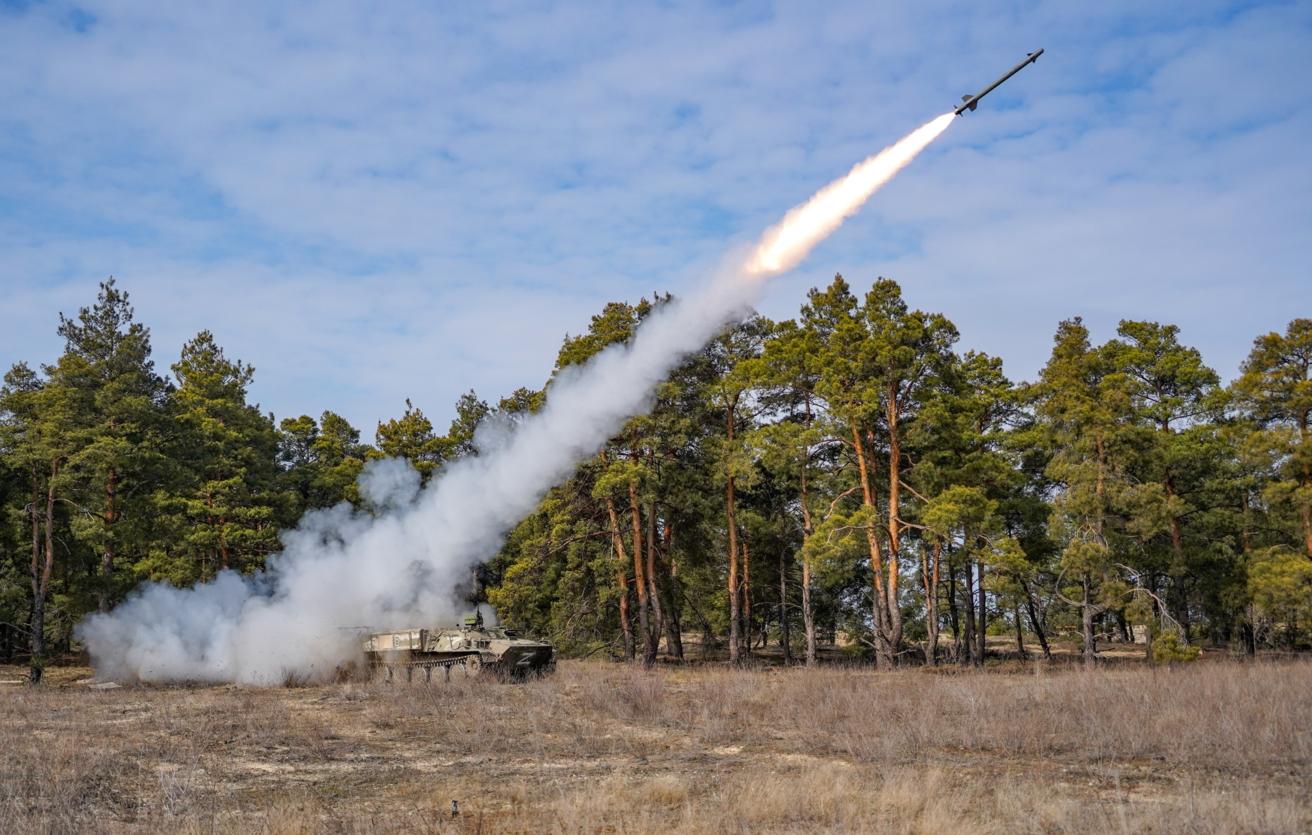
Terror from Su-34
The 4th Operational Brigade of the National Guard of Ukraine "Rubezh" reportedly suddenly realized and states that if Russians locate a high-value target, they waste no time and scramble Su-34 jets immediately, while shortly thereafter FAB glide bombs with UMPK kits arrive on position. "Immediately following the air strike, assault groups enter the position and use the resulting rubble as cover. Concurrently, Russian FPV drone operators conduct reconnaissance, block reserve approach routes, impede evacuation, and disrupt ammunition resupply. Nothing like this had ever happened before—and here it happened again," reports the Telegram channel "Voennaya Khronika."
Rear strikes
Meanwhile, Kyiv attempts to knock Moscow airports out of operation. The previous day saw the launch of the first air raid promised by Zelenskyy, aimed at "knocking capital airports out of service." Concurrently, Ukrainians attempt to strike storage facilities in the Moscow region. As a result, disruptions occurred in air transit. The Ukrainian military deployed hundreds of drones for the attack, pointed out Russian military blogger Yuri Podolyaka: "To achieve such a 'result,' Kyiv canceled strikes in other directions. Furthermore, the total number of drones used for the strike was relatively small. By all appearances, our drone operators destroyed roughly half of their mobile launch platforms and ready-product warehouses. If this continues, overall for us this is more positive than negative. However, for now we draw no definitive conclusions."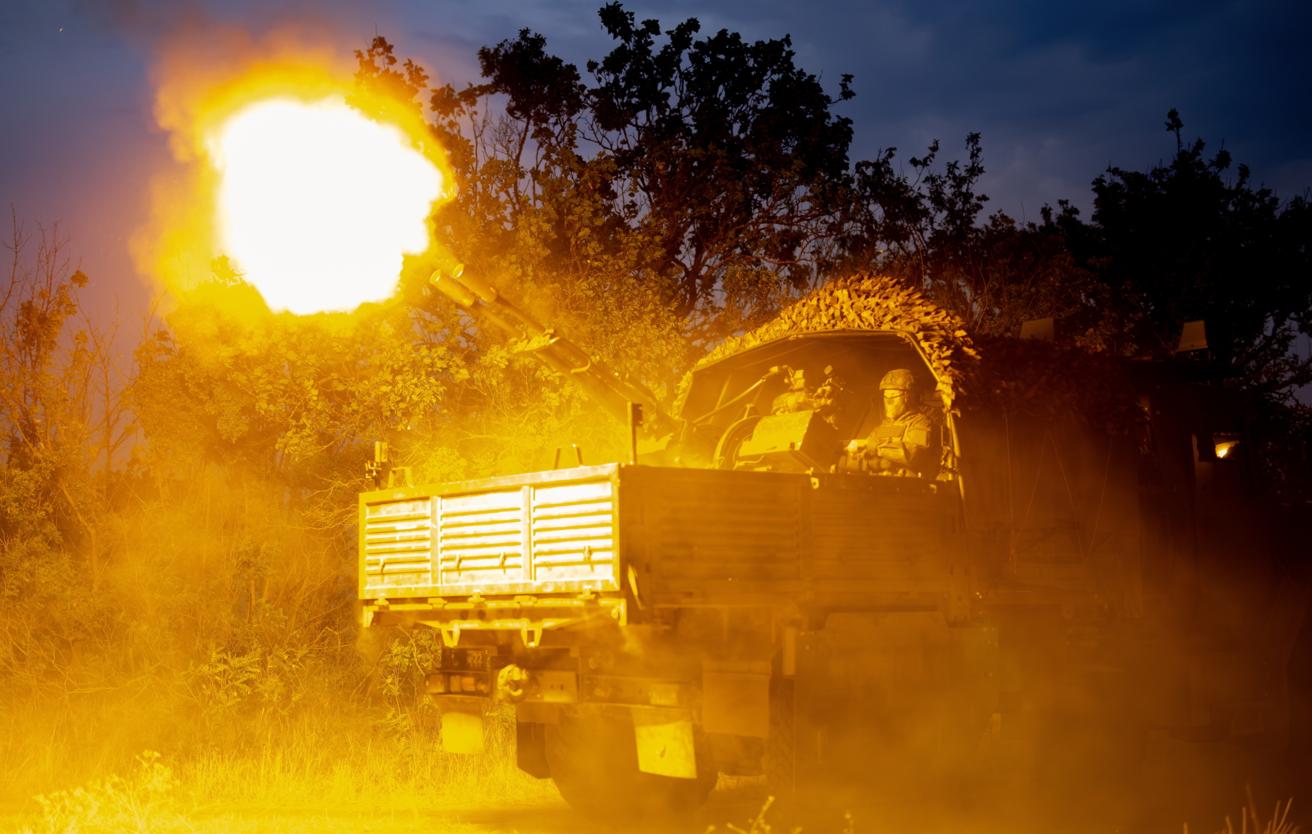
Attempting to reach Moscow
In any case, Zelenskyy will continue efforts to reach Moscow. However, it is already apparent that Ukraine missed the window of opportunity regarding "medium-range strikes," writes Ukrainian source "Legitimny": "The Russians have already blocked many flight corridors. This now forces Kyiv to expend far more drones on attacks, without certainty of achieving a result. Concurrently, Moscow gained its own window of opportunity, as jet-powered drones represent the biggest problem for Ukraine's defense and economy. They are cheap—cheaper than Kalibr and ballistic missiles—can be mass-produced, and can strike everywhere while remaining difficult to intercept." Kyiv possesses few such drones, while those it holds can easily be shot down by conventional air defense systems, which Russia possesses in sufficient quantities. At the same time, few air defense missiles remain in Ukraine, while new deliveries occur slowly and in small quantities, adding: "That is why it was dangerous to initiate escalation on the infrastructure issue. Kyiv will be unable to maintain such a pace over time, while circumstantial success, which they failed to turn into a breakthrough, quickly evaporated."
No EU accession either
Kyiv risks failing to join the European Union because—according to reports—it refuses to protect the rights of national minorities. Hungary blocked the opening of negotiation clusters two and three for Ukraine's EU accession, refusing to approve the results of their screening process. The decision was taken at the meeting of the EU Council Working Party on Enlargement (COELA) on September 1, according to "Evropeyskaya Pravda." Budapest maintained that Kyiv, despite its promises, still has not protected the rights of the Hungarian minority. It is noteworthy that the same occurred during the COELA meeting in July. The second cluster concerns internal market issues, covering free movement of goods, workers, services, and capital, corporate law, intellectual property, and consumer protection. The third cluster concerns economic competitiveness, covering taxation, monetary policy, social policy, employment, education, science, and industrial policy. In total, there are six negotiation clusters. For Kyiv, only the first—covering state fundamentals, rule of law, and national minorities—and the last, covering foreign policy, have been opened so far. The fourth and fifth negotiation blocks cover the green agenda and agriculture.
www.bankingnews.gr







Σχόλια αναγνωστών