

Saxony-Anhalt, a former East German state of approximately 2 million residents, is relatively small in size. However, the significance of the elections taking place there on Sunday, September 6, 2026, may prove to be immense. The AfD is expected to prevail by a wide margin and potentially even secure an absolute majority, which would allow it to form a state-level government for the first time in its history. Having been restricted to the role of opposition for years, the AfD is now just one step away from exercising power—at least at the regional level.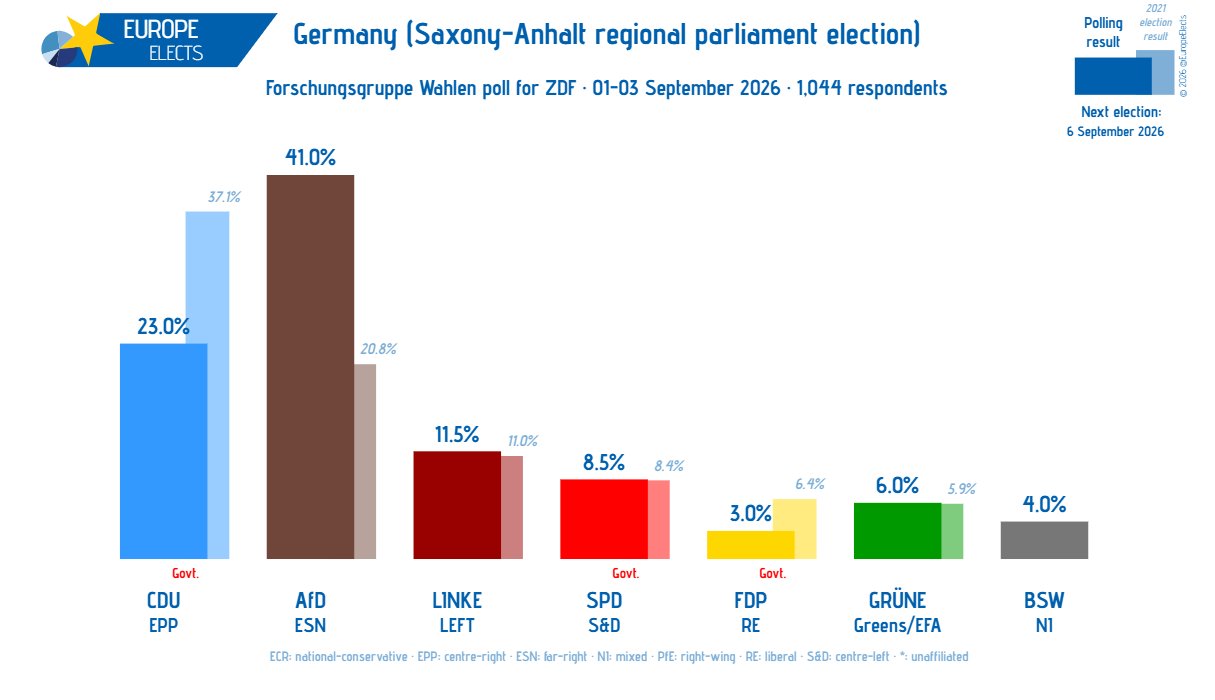
AfD now directly threatens the political system
The rise of the AfD has already made establishing a cohesive and stable government at the federal level difficult. Its success in last year's federal elections, where it took second place with 20% of the vote, forced the center-right Christian Democrats to form a government with the center-left Social Democrats. The two parties have clashed repeatedly since Friedrich Merz assumed the chancellorship, while the AfD has recorded a new surge in opinion polls. It is now by far the most popular party in Germany.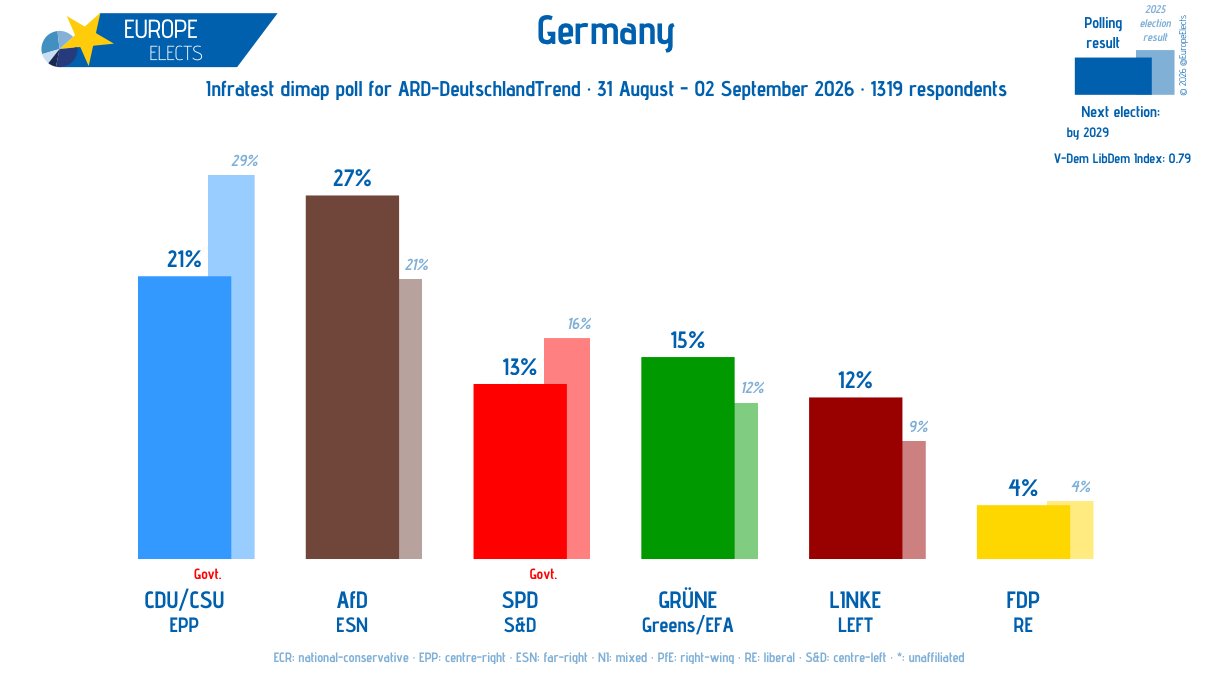
More extreme than Meloni and Le Pen
What causes even greater concern is that the AfD appears far more extreme than other European far-right parties that are either already in power—such as Giorgia Meloni's party in Italy—or close to power, like Marine Le Pen's National Rally in France. While other European far-right parties have attempted to moderate their profile to some extent and distance themselves from their most extreme positions, the AfD has moved in the opposite direction. Over time, it has grown more radical, strengthened its ties with neo-Nazi circles, and pledged to push for the repatriation of migrants. The paradox is that as it became more extreme, its electoral support only grew stronger. Last year, Germany's domestic intelligence agency classified the AfD as a right-wing extremist party.
Economic crisis feeds the surge
At the heart of the issue lies the German economy, which is undergoing a deep structural crisis. For roughly two decades, the German economy was portrayed as the strongest in Europe. In reality, however, its over-reliance on exports rendered it exceptionally vulnerable. This weakness is now backfiring. German manufacturing, which formed the bedrock of the country's economic success, is taking a heavy hit from a combination of US tariffs and Chinese competition—what is frequently termed "China Shock 2.0". This economic downturn represents one of the primary drivers behind the recent surge of the AfD.
From the euro and Greece to an anti-immigration agenda
The AfD, after all, launched its political trajectory centered around economic issues. It was founded in 2013 as a direct response to Angela Merkel's insistence that there was no alternative to the financial bailout of Greece—hence the party's name. Initially, it was a party of fiscal hawks that opposed a redistributive European Union. Following the 2015 refugee crisis, however, it redefined its political identity, transforming it into a fiercely anti-immigration and anti-Islamic agenda. Two years later, the AfD entered the Bundestag, leading many to assess that it had shifted its focus exclusively to culture and identity issues. Nevertheless, both xenophobic, nationalist voices and proponents of strict fiscal discipline continued to find space within its ranks.
The "debt brake" that divided Germany
A central issue for the economic wing of the AfD was preserving the so-called "debt brake" (Schuldenbremse), a constitutional rule that limits state borrowing. During the 2025 election campaign, Friedrich Merz had pledged to retain it, even though the policy constrained necessary investment. After the Christian Democratic victory, however, Merz struck a deal with the Social Democrats and the Greens—even before the new Parliament was constituted—to amend the Constitution. The amendment exempted military spending from the restrictions of the debt brake. Critics described the move as democratically controversial, and it alienated many right-wing voters. It was around that period that the AfD bypassed the Christian Democrats in opinion polls for the first time.
More weapons, less welfare state
Merz did not abolish the debt brake entirely. Such a step would have allowed Germany to begin addressing some of its underlying economic issues. Instead, because non-military expenditures remained subject to the limits of the debt brake, Merz continued to squeeze the welfare state while calling on Germans to work longer to restore the economy's "competitiveness." This strategy—increasing military spending while implementing spending cuts in other sectors—may appeal to foreign policy analysts, but politically it is proving disastrous. A significant portion of the AfD's electoral appeal relies precisely on highlighting job losses and deteriorating prospects for citizens.
Germany abandons its role as a "peace power"
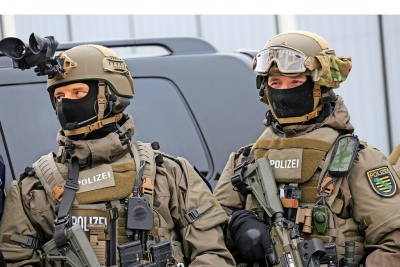
Germany's rearmament has created issues on another level as well. Since 2022, mainstream German parties have largely abandoned their commitment to the idea of Germany as a "Friedensmacht"—a "peace power." Instead, they now speak more frequently of the need to prepare for an all-out war with Russia. Friedrich Merz, for his part, states that he wants Germany to possess "the strongest conventional army in Europe." This development allowed the AfD to frame itself as the "party of peace"—in a strategy echoing the way Donald Trump positioned himself against the "endless wars" waged by both Democrats and Republicans in the US.
Germany as "Europe's next hegemon"? A dangerous illusion
The sky-rocketing military expenditures have led some to question whether Germany could become "Europe's next hegemon". However, according to the analysis, this is an illusion. First, it is far from certain that plans to increase defense spending will translate into actual military capabilities—let alone help revitalize the economy. Second, Germany is becoming increasingly isolated within the European Union. Particularly notable is its unconditional support for Israel and its willingness to block measures against it, such as suspending the EU-Israel Association Agreement. And perhaps most importantly: German voters show little enthusiasm for projecting military power—let alone fighting a war.
Merz promised to curb the AfD – and failed
When Merz was campaigning for the chancellorship, he promised he would curb the popularity of the AfD. A key tool was to be the adoption of a tougher immigration policy, including a "deportation offensive," as described in the coalition agreement. On election night, he went so far as to claim that his "absolute priority" would be to strengthen Europe as quickly as possible so that "step by step we can truly achieve independence from the US." This statement sparked enthusiasm among proponents of greater European autonomy. Eighteen months later, however, both objectives appear further away than ever.
New electoral blows to the Merz government
Two more regional elections later this month are expected to deliver further electoral gains for the AfD, deepening the sense of national crisis. In a state of panic, some Christian Democrats have already begun discussing the political future of Friedrich Merz. Yet Germany's problem is not merely who occupies the chancellery. The country requires a fundamentally different political approach. Until that happens, the AfD will continue step-by-step toward power.
www.bankingnews.gr





Σχόλια αναγνωστών