

Iran is ready for a second military confrontation with the US, for an all-out war. The US–Iran military conflict is now expanding geographically and strategically, with the Revolutionary Guards warning Arab states that if they do not expel American armed forces from their territory, they will be the next target. After all, the attack on Camp Titin in Jordan was a clear message from the IRGC that Americans are not safe anywhere in the Persian Gulf and the wider Middle East region; and that wherever they go, Iranian missiles will find them. For his part, Trump, who threatens new larger and stronger attacks, sees that neither war nor sanctions serve his goals. Which is why he now questions when Iranians will finally revolt. It is obvious that Trump and the US have suffered unprecedented humiliation from Iran, without having to display any credible exit plan from the emerging military, political, and geostrategic defeat...
The ultimate surprise - Why Iran struck Camp Titin
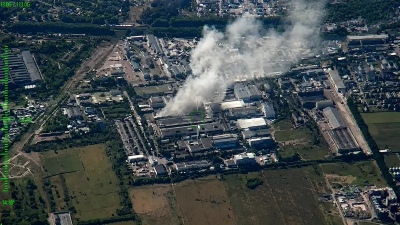
From the wave of retaliation launched by Iran against American bases in Jordan, Bahrain, Kuwait, the United Arab Emirates, and Iraq with dozens of ballistic missiles and Shahed 136 drones, the attack that stands out is the one made against Camp Titin in Jordan. There, according to the Revolutionary Guards, dozens of American commandos were killed while several major facilities and attack helicopters were destroyed. However, the targeting of Camp Titin, where US Marines are stationed, constitutes a specific action of strategic importance in the framework of the war against the US. Why then is this camp considered so important, and why did this attack constitute such a major surprise move? From a geographical perspective, the location of Camp Titin is particularly significant, as it is situated at the northern end of the Red Sea, near the port of Aqaba, the Israeli port of Eilat, and at a relatively short distance from the border of Saudi Arabia. For this reason, it is considered an appropriate location for exercises of American Marines, for the protection of maritime infrastructure, for amphibious operations, and for the transfer of military equipment. Official sources of the US Navy have also recorded exercises of FASTCENT—the rapid response force of American Marines—at this specific camp. Therefore, the base holds special value for the operations of American Marines and for the rapid deployment of military forces.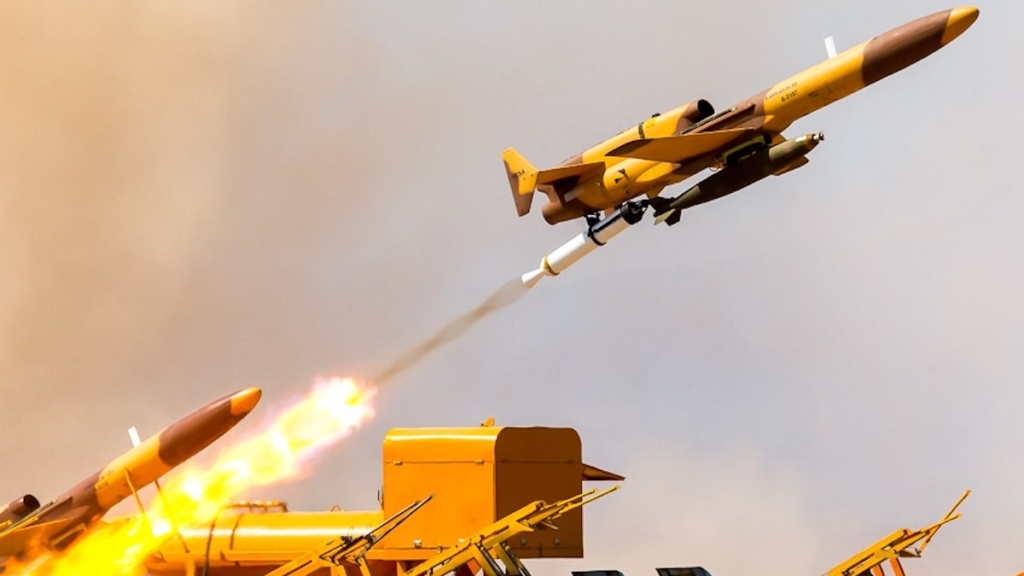
The Guards know everything, their missiles reach everywhere
However, the most important element is that the Americans, after the closure of the Strait of Hormuz and the severe disruption of their military supply chain in the Persian Gulf, attempted to transfer part of their forces to Camp Titin. Their assessment was either that Iran was not fully aware of this movement or that, even if it knew, it lacked the capability to strike this specific point. However, the attack by the Revolutionary Guards showed on the one hand that they possess specific and detailed intelligence regarding the movements of American forces, and on the other hand that they have extensive capability to target and surprise American positions. Based on this assessment, the targeting of Camp Titin can be considered a specific action of strategic importance within the context of the war that the US and Israel have imposed on Iran.
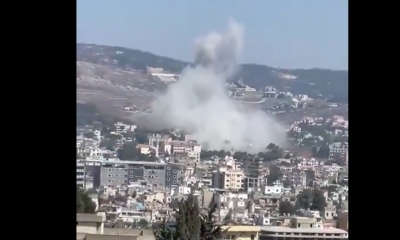
Iran says it attacked Camp Titin in Jordan tonight, a USMC base located near the Gulf of Aqaba.
— OSINTtechnical (@Osinttechnical) September 1, 2026
At least one Iranian ballistic missile could be seen impacting near Aqaba. pic.twitter.com/CPLYgxORVx
Americans are not safe anywhere
Military analysts point out that the US indeed moved part of its military deployment farther from the Strait of Hormuz, as its bases in the Persian Gulf have become increasingly vulnerable. However, the Iranian missile strike on Camp Titin, on the shores of the Gulf of Aqaba, showed that geographical distance is not necessarily sufficient to place American military positions outside the reach of Iran. Observers estimate that the targeting of Camp Titin could hold strategic importance in the broader military confrontation between the US and Iran, particularly due to the camp's geographical location. And this is because the camp's importance has increased further amid the problems facing the American military supply chain in the Persian Gulf, following tensions around the Strait of Hormuz.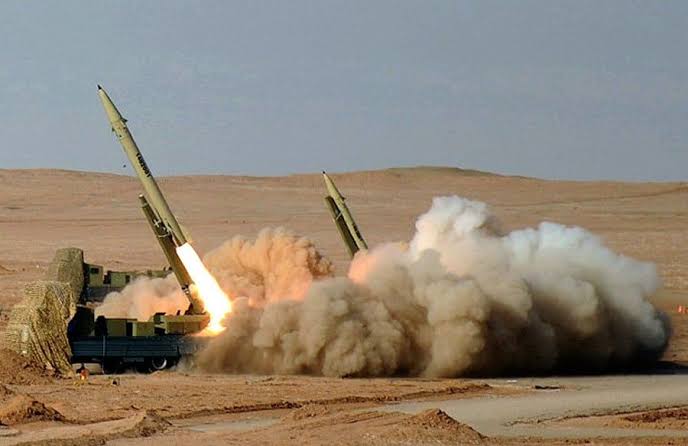
IRGC: Dozens of Americans killed and wounded
The Revolutionary Guards claim that during the attack on Camp Titin, a large number of American soldiers were killed and wounded. In their statement regarding the attack, the IRGC claims that a large number of American soldiers were killed and wounded, and that major facilities and attack helicopters were destroyed. Indeed, there is footage showing helicopters transporting wounded Americans from the camp.
BREAKING: Footage shows Medevac helicopters evacuating injured US soldiers in Jordan, following Iranian ballistic missile strikes.
— The Hormuz Letter (@HormuzLetter) September 1, 2026
This comes as Iran says it killed "a large number of American forces" at the US Marine Camp Titin base in Jordan minutes ago. pic.twitter.com/RL8WQQQ9tp
Shock warning to Arab states: Expel the Americans, otherwise you are a target
The political deputy of the IRGC, General Yadollah Javani, addressed Arab countries, demanding that they expel American forces or face a crushing military response. "It is better that you expel the Americans from your countries and take back the bases," Javani stated, according to a statement published by the semi-official Tasnim news agency. He warned that Iran's armed forces have proven they will retaliate decisively from any location used as a base for attacks against Iran, specifically naming Kuwait, Bahrain, and Jordan.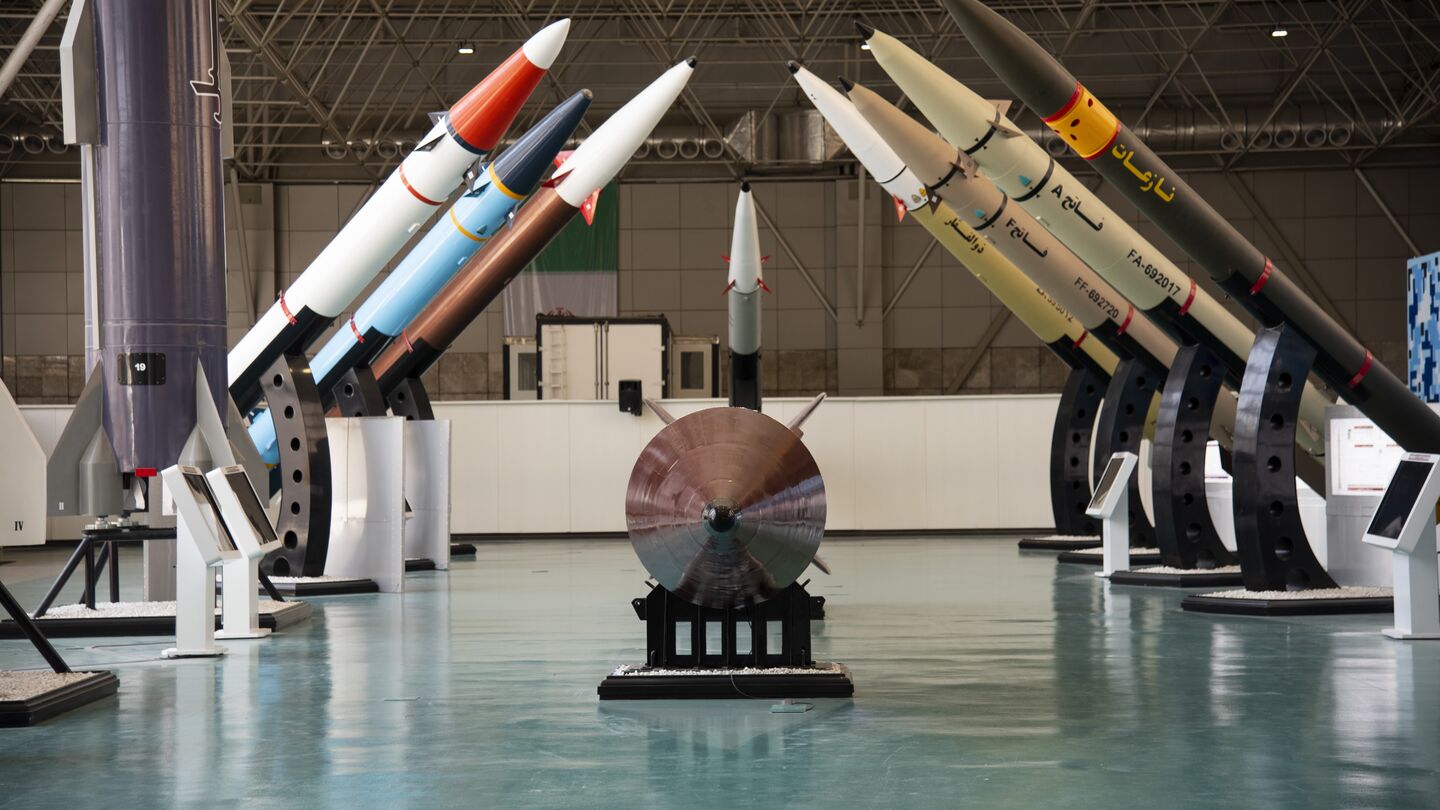
A dangerous equation for the US
Recent developments demonstrated once again an important reality: an attack on Iran does not necessarily mean that the war will remain within Iranian borders. The US possesses an extensive network of military bases and facilities in the region, from Jordan and Iraq to Bahrain, Kuwait, Qatar, and other Persian Gulf countries. Iran, possessing missile capabilities and drones, has—provided the relevant political and military decision is made—the ability to strike a large part of this infrastructure. For this reason, every new American attack could trigger a series of retaliatory strikes on multiple fronts. From this perspective, last night's Iranian response cannot be considered merely a revenge operation; it can also be taken as a message regarding the changing cost of the American military presence in the region.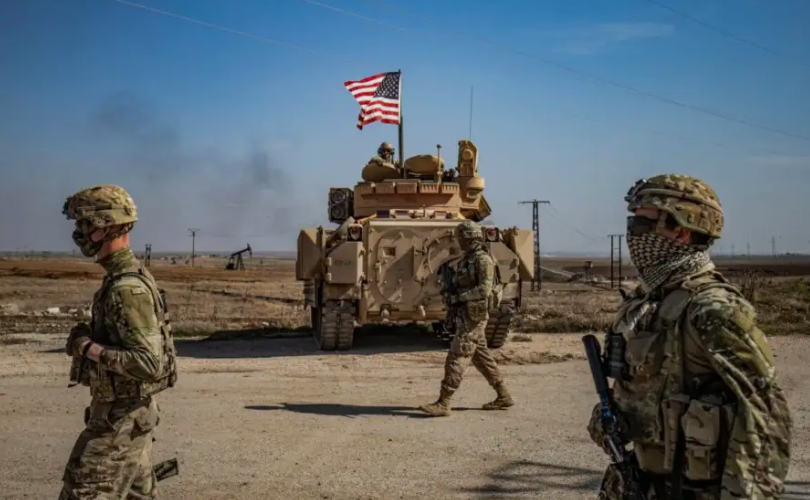
Trump in despair: When will the Iranians finally revolt
In statements, US President Donald Trump claimed that, contrary to reports by the ABC television network, the US is not seeking to force Iran to sit at the negotiating table. Trump, referring also to the economic situation in Iran, said that while the country's economy faces collapse, the US has almost complete control of the Strait of Hormuz. He added that for Washington it makes no particular difference whether Iran signs the proposed agreements or not, stating that he prefers the present situation over any negotiation process. Then, the American president, using provocative rhetoric, characterized the current situation as "inevitable" and, raising a question regarding the internal situation in Iran, called for a change in the balance of power on the ground. Indeed, Trump desperately called on the people of Iran to revolt: "When will the people of Iran rise up and fight?"
Trump threatens total destruction of Iran
Although Trump, when asked recently whether he is considering the possibility of using a nuclear weapon against Iran, reacted quite angrily to the question, calling it "foolish" and denying that he is considering such a thing, in a post he not only justifies recent US attacks but also threatens Iran with an existential attack, even with destruction. In the post he states: "If the failed state of Iran retaliates for this fully justified attack, it will receive a new blow at a much harder and higher level." "When it is all over, very little will remain of the Islamic Republic of Iran," stated Trump, a post that Iran threw into the trash bin with the extensive attack it launched against American bases.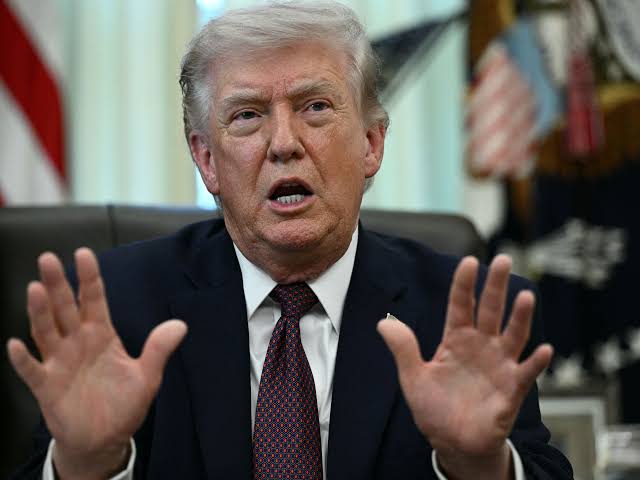
Zolfaghari (Iranian Army): Attacks against the Americans will continue
Colonel Ebrahim Zolfaghari, spokesman for the Khatam al-Anbiya Central Headquarters, warned that "any country cooperating with the aggressor American military must accept the dangerous consequences." "The American military, which we characterize as terrorist and child-killing, following continuous failures in the imposed war against Islamic Iran and its defeat against our country's resilient people, carried out savage air strikes and bombings against military and civilian targets in southern Iran, killing and wounding innocent people. The armed forces of the Islamic Republic of Iran, through army forces and the Revolutionary Guards, responded quickly and forcefully, launching missile attacks and drone attacks against American bases in the region. Major damage was caused to infrastructure, facilities, weapons systems, and equipment, while a significant number of American commanders and soldiers were killed or wounded. These offensive operations against the Americans will continue until they regret their actions. We warn that the continuation of American actions in the region will be met with even heavier, broader, and more destructive responses, and any country cooperating with the aggressor American military must accept the dangerous consequences," Zolfaghari said.
Iran is ready for an escalation of the war
Iran retaliated by striking American bases, despite Trump's explicit threat, because Tehran has concluded that Washington is not taking diplomacy seriously, argues Mohammad Eslami, a researcher on Middle Eastern and North African affairs at the University of Tehran. Trump had warned that if Iran proceeded with retaliation for recent American strikes, it would face a new attack "at a much harder and higher level." Subsequently, Iran attacked American positions in Jordan, Bahrain, Iraq, the United Arab Emirates, and Kuwait. "Iranians believe that the Americans do not believe in any kind of diplomatic settlement," Eslami told Al Jazeera from Tehran, adding that Iran now expects a second round of full-scale confrontation with the US and Israel. As he said, the previous phase of the war had demonstrated the limits of American and Israeli power, and "if they want to start a full-scale war again, that depends on them." Iran, he added, would respond in a much stronger manner. Attacks against American positions in Jordan are carried out so that Iranian forces "can be prepared to attack Israel in case of a full-scale war," he said. Referring to the strike that hit a wedding in Sirik, Eslami stated that American forces "are committing war crimes" in Iran, as they had done in Iraq and Afghanistan, and that "it is time to stop them and punish them."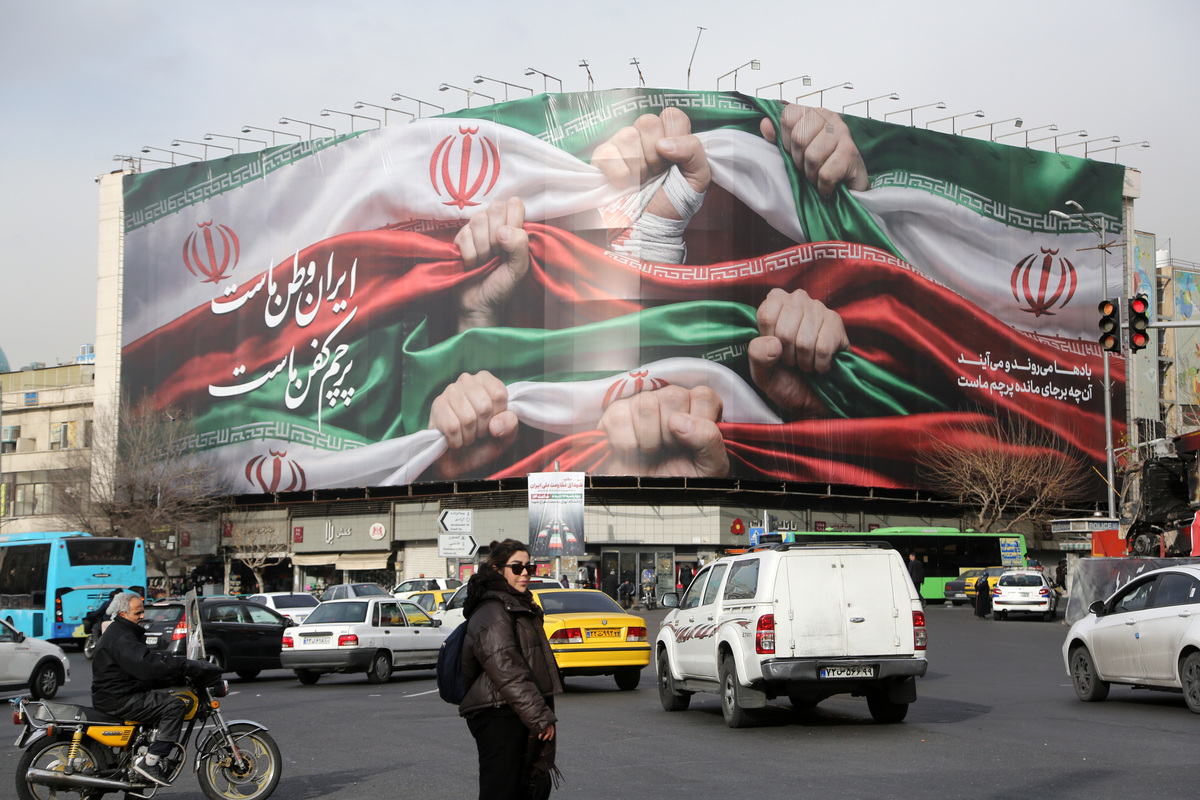
Mohammad Hazimeh (analyst): Iran overthrew American war doctrine
Mohammad Hazimeh, a expert on strategic issues, stated that Iran proved it possesses the ability to respond decisively to American attacks and that developments in this war demonstrated the failure of US calculations. As he says, Iran has managed to essentially challenge American war doctrine, which relies on air superiority and rapid military operations. According to him, Iran's ability to respond with missiles and drones, as well as the downing of an American MQ-9, show that Tehran has significantly upgraded its defensive and offensive capabilities. Hazimeh estimates that the war has now evolved into a conflict of attrition, with consequences that are not limited to the military field, but extend to the economy, supply chains, and the international standing of the US. In his view, Washington has two main options: either to withdraw from the conflict, essentially accepting a failure, or to continue a long and costly war without any guarantee of achieving its objectives. The analyst also argues that Iran has strengthened its regional influence, from Western Asia to the Mediterranean, and that it now possesses leverage affecting not only military balances but also global economic decisions. At the same time, he criticizes Arab countries that allow the use of their airspace by the US for operations against Iran, considering that they contribute to the destabilization of the region. Finally, Hazimeh estimates that prolonged conflict may strengthen internal cohesion in Iran, while the capability for domestic production and development of weapons systems through reverse engineering gives Tehran greater resilience in a long war. In his assessment, this conflict is already reshaping the balance of power in the region in favor of a stronger role for Iran.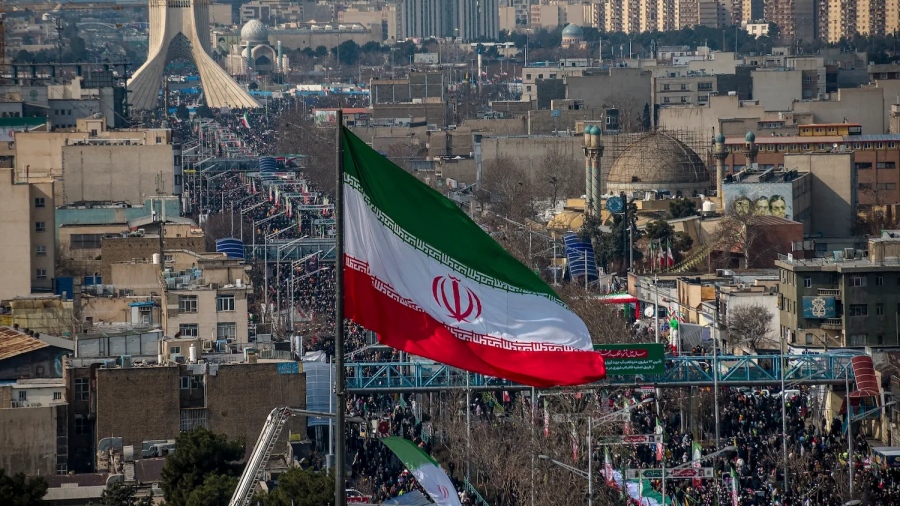
Bessent (US Treasury Secretary): Iran has 3 options
Despite the fact that the US has proceeded with repeated violations of the terms of the memorandum for the cessation of war and has withdrawn from the negotiating table, the American Treasury Secretary reiterated that the memorandum failed because Iran was not ready to reach an agreement. Scott Bessent, the US Treasury Secretary, claimed once again that Washington will wait to see when Tehran will be ready to reach an agreement. The American secretary added that the US will continue to intensify economic pressure on Iran. He also referred to the growing pressure that, as he argued, sanctions exert on officials and military personnel, as well as delays in salary payments. Bessent stated: "We are monitoring the assets of the Revolutionary Guards... We will by no means tolerate it. We will choke this regime economically." Bessent, asserting that sanctions against Tehran have reached unprecedented levels, stated that the US will continue to increase economic pressure until Iran returns to the negotiating table. Indeed, the US Treasury Secretary emphasized that Tehran faces three options: internal revolt, a military coup, or a return to the negotiating table.
What last night proved
What took place from Tuesday evening until the early morning hours of Wednesday went far beyond a limited exchange of fire. The US, attacking southern Iran, attempted to increase military pressure. However, the Iranian response showed that such an attack can immediately expand to various points of the American military network in the region. Sirik, Qeshm, and other areas of southern Iran were targets of attacks, while Jordan, Bahrain, and Iraq were turned into arenas of the Iranian response. This is precisely the element that increases the significance of events: the geographical scope of the war is widening.
However, regarding claims about destroyed equipment, casualty numbers, and the extent of damage to American bases, part of the information remains subject to conflicting claims and requires independent confirmation. Reports from American and regional sources differ in certain cases from the official Iranian version. One fact, however, cannot be ignored: the fragile ceasefire of previous months has essentially given way to a new round of direct confrontation. The most important question is whether Washington, after this response, will choose to exit the cycle of attacks and retaliation or initiate a new round of strikes. If the second scenario is chosen, the Persian Gulf, the Strait of Hormuz, and the network of US bases in Western Asia could be converted into the most important fronts of the next phase of the conflict—a phase whose cost will not be limited only to Iran and the US, but could also cause a new shock to energy markets and regional security.
www.bankingnews.gr









Σχόλια αναγνωστών