

A new dimension in the long-range weapons war between Russia and Ukraine has opened following an announcement by the Russian Ministry of Defense, according to which the Russian Armed Forces carried out a strike in Kyiv against a facility linked to the production of the Ukrainian cruise missile FP-5 Flamingo. According to the Russian side, the target was an industrial facility belonging to the Ukrainian defense company Fire Point, which allegedly manufactures components and warheads for the Flamingo. This is an explosive development because Fire Point is no longer a small drone manufacturer. It has evolved into one of the most important players in the Ukrainian defense industry and is behind systems that allow Kyiv to carry out attacks hundreds or even thousands of kilometers away from the frontline. At the same time, chaos erupted in Odesa following the wave of Russian attacks against Ukraine.
Moscow "hit" Fire Point
The Russian Ministry of Defense announced that during a night operation, a strike was carried out using high-precision weapons against Ukrainian defense industry targets and fuel infrastructure in Kyiv. According to Moscow, one of the primary targets was the "Kyiv-111" facility, which the Russian Defense Ministry linked to Fire Point LLC. The Russian statement claims that components and warheads for FP-5 Flamingo missiles were manufactured at this specific facility, while key elements for building solid-fuel missile boosters were also reportedly stored there. Concurrently, Russia announced that it struck a petroleum storage facility which, according to Moscow, was used to refuel Ukrainian forces. The exact extent of the damage to the Fire Point facility has not yet been independently verified. According to reports, Ukrainian forces attempted to repel the attacks using Patriot missiles, but failed due to a missile shortage. It was previously reported that Kyiv was attacked simultaneously with Kalibr, Iskander, Zircon, and Geranium missiles. During the attack, explosions rocked the city and fires broke out.
"Red alert" for the Flamingo
Interest naturally centers on the FP-5 Flamingo itself. It represents one of Ukraine's most ambitious long-range cruise missile programs. The manufacturer, Fire Point, presents the FP-5 as a ground-launched cruise missile system designed to carry an exceptionally heavy warhead. Data presented by the company and specialized defense outlets credit the Flamingo with a maximum range that can reach approximately 3,000 kilometers, a top speed of around 950 km/h, and a payload close to 1,150 kilograms. These specifications, if operationally achieved, make the Flamingo a weapon capable of striking targets deep inside enemy territory. This explains why its production chain sits at the center of Russian target prioritization.
The game-changing weapon for "deep strikes"
Ukraine has invested massive resources into developing domestic long-range systems. The goal is to reduce its reliance on Western weapons, whose use is often tied to political restrictions, while gaining the capability to mass-produce systems that can be used against military and industrial targets deep inside Russian territory. Fire Point stands directly at the center of this effort. The company has developed the FP-1 and FP-2 drones, but has simultaneously expanded into missile systems such as the FP-5 Flamingo, FP-7, and FP-9. Denys Shtilerman, co-founder and chief designer at Fire Point, has stated that the company's systems participate in a large percentage of Ukrainian long-range attacks. This alone transforms Fire Point's production infrastructure into exceptionally high-priority military targets for Russia.
A missile with a warhead over one ton
The element that sets the Flamingo apart is its exceptionally large warhead. A warhead approaching 1,150 kilograms gives the system vastly different destruction capabilities compared to the smaller kamikaze drones used en masse in the war. A standard drone can carry a few dozen or hundreds of kilograms of explosives. The Flamingo operates in an entirely different category. When such a warhead is combined with a multi-thousand-kilometer range, it creates a weapon that can theoretically threaten large industrial complexes, warehouses, air facilities, and other strategic infrastructure far behind the frontline.
Fire Point is firmly on Moscow's radar
Russia's interest in Fire Point did not emerge suddenly. The company has become widely known due to the key role its systems play in Ukrainian deep-strike operations. At the same time, Fire Point is now collaborating with European defense firms. CEO Iryna Terekh has unveiled plans for even more advanced missile systems, while the company also participates in the development of the European anti-ballistic defense program, Freyja. In other words, Fire Point is no longer just building drones. It is evolving into a full-fledged missile powerhouse. And that makes it far more important—but also far more exposed.
From the FP-5 to the FP-7 and FP-9
The ambitions of the Ukrainian company do not stop with the Flamingo. Fire Point is also developing the FP-7, a shorter-range ballistic missile, as well as the much larger FP-9. The FP-9 is designed to strike targets at distances exceeding 800 kilometers while carrying a significantly heavier payload than the FP-7. The development of these systems highlights the strategic direction chosen by Kyiv: more domestic weapons, longer range, and less reliance on foreign supplies.
Russia targets production – not just the missiles
From a military perspective, destroying a missile after launch is only one side of the battle. The other side is destroying it before it is even built. If an opposing force can locate factories, component warehouses, assembly lines, engine production facilities, or warhead storage areas, it can attempt to cripple the entire supply chain. This appears to be the strategy driving the latest Russian announcement.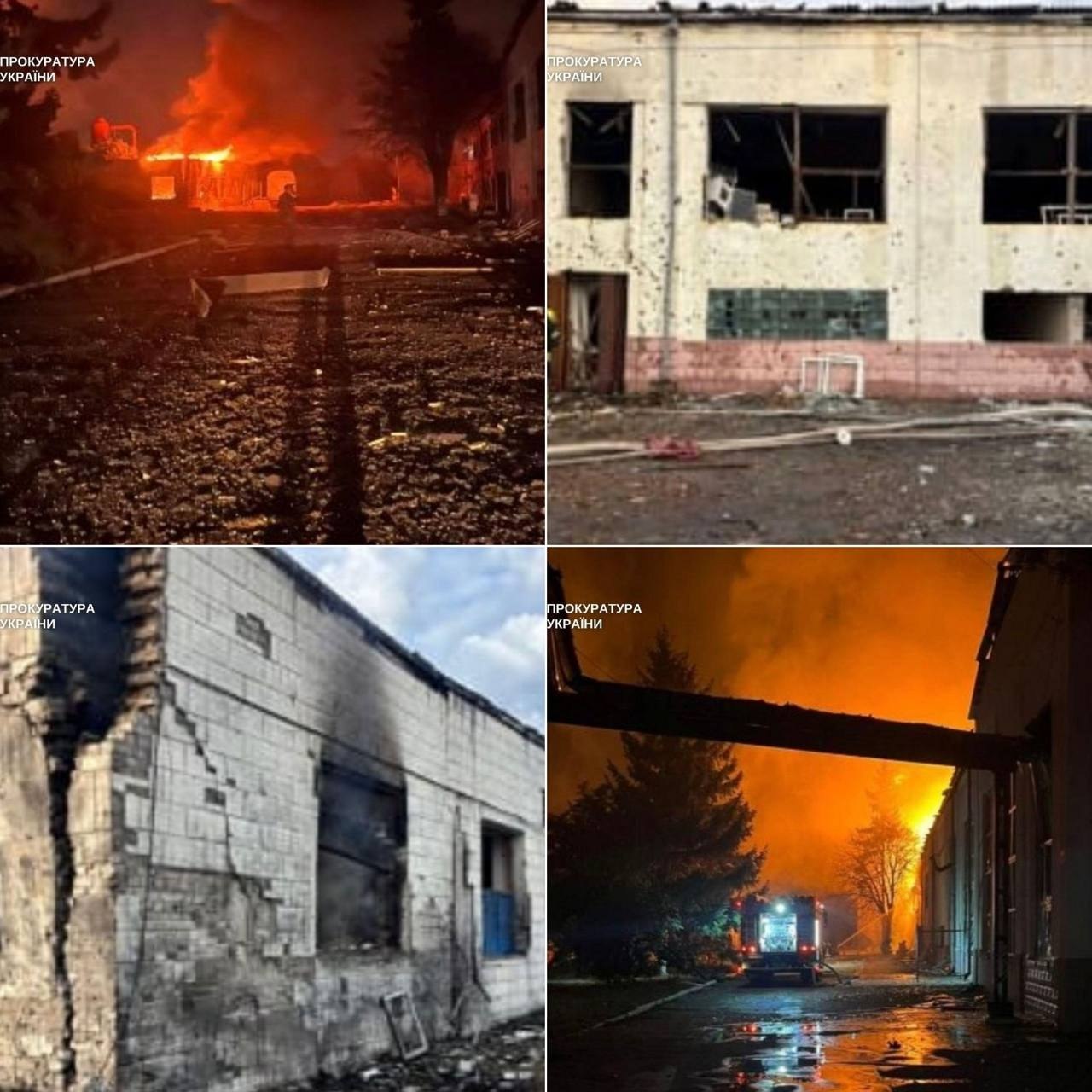
Severe strikes on Kyiv
Moscow's announcement comes as Kyiv and the broader region surrounding the Ukrainian capital face a new wave of Russian air attacks. The attacks on September 1 caused casualties and damage in the Ukrainian capital and its surrounding region, according to Ukrainian authorities and international media. However, no independent confirmation has been provided specifically linking these losses to the Fire Point facility that Russia claims to have struck.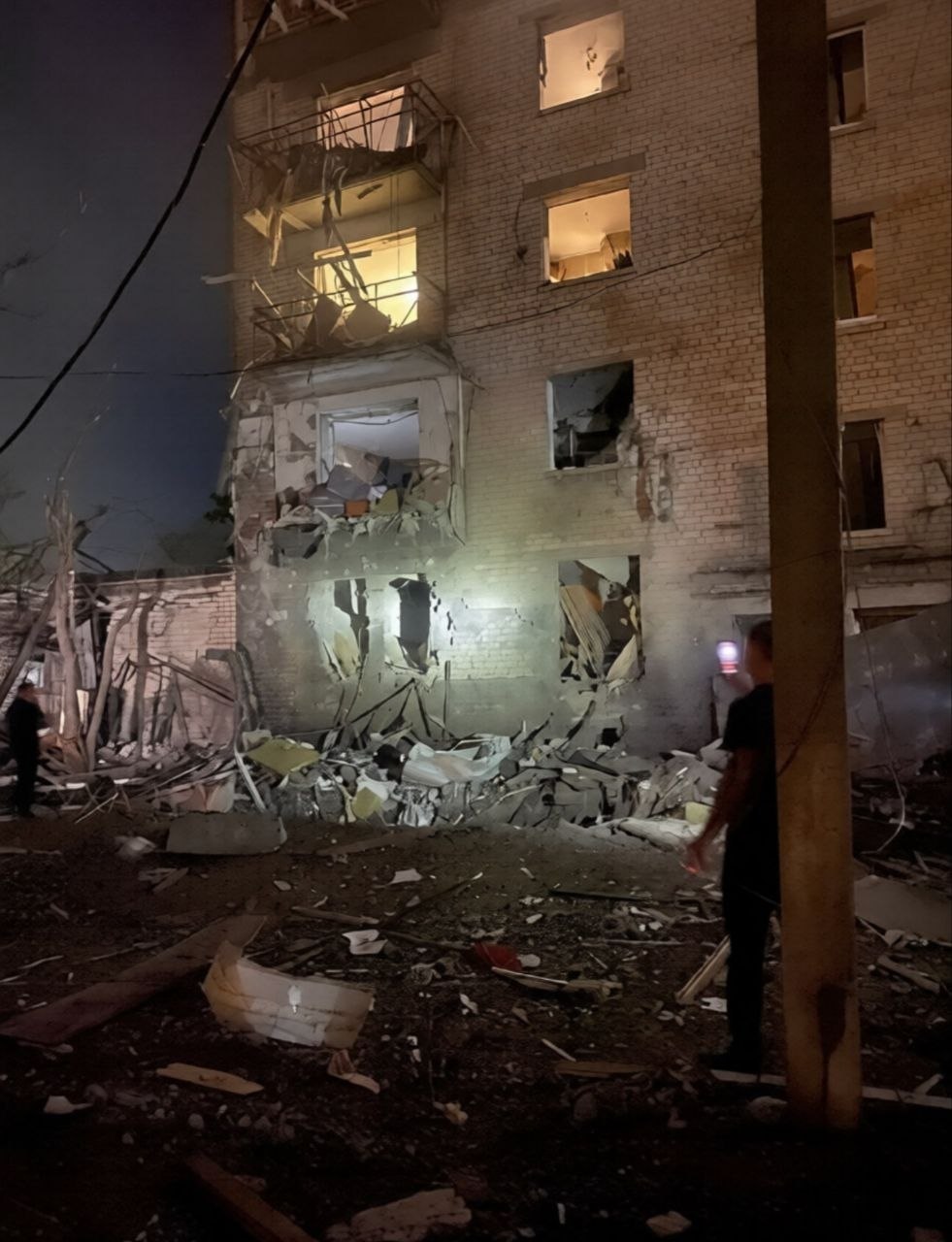
Has the "Flamingo hunt" just begun?
The case takes on even greater significance because the FP-5 has already moved past the experimental stage into an active operational weapon. Fire Point has confirmed that the system is in use, and Flamingo strikes against targets inside Russia have already been documented. This means that for Moscow, it is no longer a theoretical future threat. It is a weapon that exists. It is being produced. It is being launched. And it possesses a range that allows Ukraine to operate deep behind Russian lines.
"Battle of the factories" behind the frontline
The Russia–Ukraine war has increasingly turned into a conflict where the defense industry is just as critical as front-line units. Russia is ramping up production of missiles, drones, and ammunition. Ukraine is responding with a striking increase in the domestic production of unmanned aerial vehicles and missile systems. The result is a second war behind the actual war: the war of factories. Who can produce more. Who can better protect their facilities. And who can destroy the opponent's manufacturing capacity first.
Chaos in Odesa
As part of a massive strike using high-precision weapons and attack drones, Russian forces struck 16 warehouses containing weapons and military equipment, as well as 6 fuel and lubricant storage tanks in the port of Odesa, according to the Russian Ministry of Defense. "In the port of Odesa, 16 warehouses with weapons and military equipment were hit, along with 6 fuel and lubricant tanks delivered to the Armed Forces of Ukraine by Western countries," stated the official announcement from the Russian Ministry of Defense. Furthermore, Russian forces struck two warehouses at the port of Chornomorsk containing military and technical equipment intended for the Armed Forces of Ukraine. "At the port of Chornomorsk, two warehouses containing military and technical equipment for the Ukrainian Armed Forces were struck," highlighted the Russian Ministry of Defense.
The Flamingo in the eye of the storm
Regarding Kyiv, if it is confirmed that the facility struck was indeed a critical link in the FP-5 production line, the attack could carry far greater significance than just another strike on Kyiv. It would represent an attempt by Russia to directly hit one of Ukraine's most ambitious deep-strike programs. However, the primary question remains: How severe is the damage? If Fire Point's manufacturing is distributed across multiple facilities, destroying a single site may not be enough to halt the program. However, if a critical facility for component or warhead manufacturing was hit, the consequences could be far wider-reaching.
The "Battle of the Flamingo" enters a new phase
What is certain is that the FP-5 has now moved into the focal point of the long-range air war. For Ukraine, it serves as a tool to push the war much deeper into Russian territory. For Russia, it represents a target that must be countered not only in the air, but also inside the factory. And if the Russian Defense Ministry announcement is confirmed, the latest strike on Kyiv shows that Moscow is now attempting to hit the Flamingo right where it is born: on the assembly line.
Second target in Kyiv: Aerobavovna in the crosshairs
The Russian Ministry of Defense claimed that the operation was not limited to the facility linked to the FP-5 Flamingo. According to Moscow, a facility belonging to the Ukrainian firm Aerobavovna in Kyiv—which specializes in the development and production of aerostat systems—was also struck. The Russian side claims that this company manufactures military balloons used in operations directed against targets inside Russian territory. This assertion regarding the use of Aerobavovna systems for offensive missions against Russia has not been independently verified. However, the company itself is well known for developing military aerostats and related aerial platforms. Aerobavovna systems have previously been presented as carriers for electronic surveillance equipment and drone detection, as aerostats can remain at high altitudes for extended periods.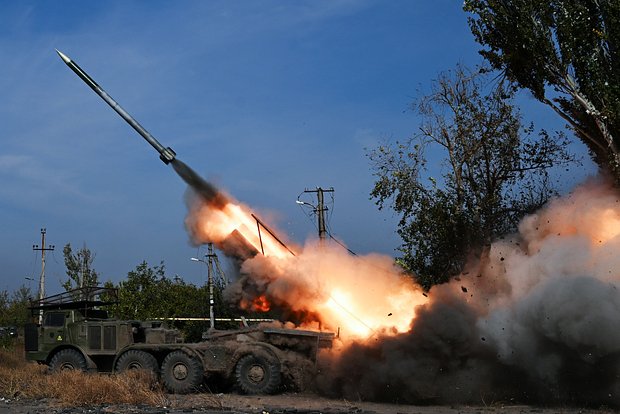
Moscow attempts to strike an entire weapon "ecosystem"
The reference to Aerobavovna, combined with the strike Russia attributes to the Fire Point facility, shows that Moscow is presenting this operation as an effort to target multiple nodes within the Ukrainian defense industry. On one side is Fire Point and the FP-5 Flamingo long-range missile. On the other side is Aerobavovna and its aerostat systems. These are two entirely different technologies, but they share a key common trait: they form part of Ukraine's broader push to build domestic military capabilities and reduce reliance on imported hardware. If the Russian claims accurately reflect reality, this latest wave of strikes on Kyiv was not aimed at a single factory. It appears to have targeted a broader slice of the technological and industrial infrastructure powering Ukraine's new weapons. Flamingos, drones, and military balloons have now been drawn into the exact same battlefield targeting frame for Ukraine's defense industry.
www.bankingnews.gr










Σχόλια αναγνωστών