

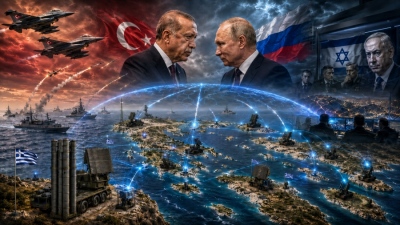
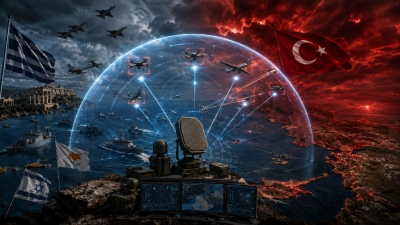
The Eastern Mediterranean is plunging into an unpredictable trajectory of military escalation, with assessments from the Russian camp describing a nightmare scenario of generalized conflict. According to warnings articulated by Andrey Klintsevich, advisor to Russian Defense Minister Belousov, the explosive confrontation between Türkiye and Israel threatens to drag Greece into a total war with its neighbor. While Athens is shielding itself with the giant "Achilles' Shield" armaments program worth €3.1 billion in cooperation with Tel Aviv, Ankara is openly preparing for military conflict, turning the interior of NATO into the arena of a dangerous and unpredictable showdown. Specifically, as Klintsevich points out via his Telegram channel, tension between Türkiye and Israel is rising in the Eastern Mediterranean, threatening to drag Greece and Cyprus into the abyss. As he notes, the Turkish Navy is active in areas where Israeli naval forces are also operating, while Israel is closely monitoring the movements and maneuvers of Turkish ships. According to Klintsevich, a single wrong step or an incident at sea could evolve into a severe political crisis. The political scientist points to another factor that may heighten tensions: the ongoing defense cooperation between Türkiye, Saudi Arabia, and Pakistan. Should the confrontation assume a genuinely military dimension, Ankara will possess additional political and diplomatic leeway to adopt a harsher stance. For its part, Israel will have to consider not only Türkiye, but also the shifting balance of power in the wider region. The Eastern Mediterranean is thus being transformed into a zone where the Turco-Israeli confrontation could move beyond simple threats of a direct clash at sea and lead to a broader regional crisis, the expert concludes. "Nobody wants a fight between Turkish and Israeli ships. Yet that is usually how crises begin—even those that everyone later calls 'unpredictable,'" notes Andrey Klintsevich. Earlier, it was revealed that another diplomatic confrontation took place between Türkiye and Israel. The incident was triggered by a statement from the Israeli Ministry of Foreign Affairs accusing Turkish President Recep Tayyip Erdogan of attempting to "reach new heights in the persecution of the Jewish people." Ankara dismissed the Israeli statement as false and characterized the stance of the Israeli government as "cowardly and rotten."
NATO against... NATO
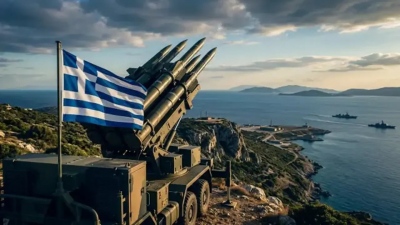
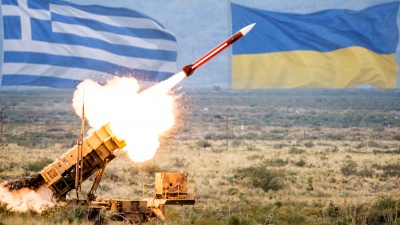
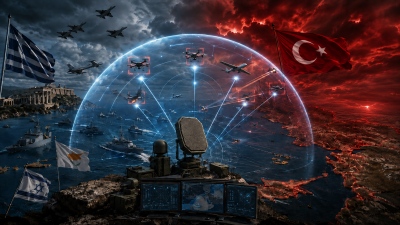
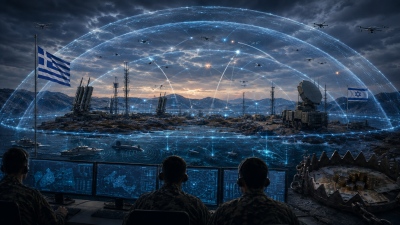
Against this backdrop, in Tel Aviv, Greece and Israel set in motion one of the largest defense projects in the history of the Greek state. Athens will invest approximately €3.1 billion to build a multi-layered air and anti-ballistic defense network named "Achilles' Shield," combining the Israeli SPYDER, Barak MX, and "David's Sling" systems—which failed miserably in the war with Iran—with the Patriot systems Greece already possesses. Formally, this involves the modernization of the Greek Armed Forces and protecting the country from drones, aircraft, cruise missiles, and ballistic missiles. In reality, however, Athens is constructing a new military deterrence system against Türkiye, its fellow NATO ally, Klintsevich notes. Indeed, the emphasis is placed not on isolated anti-aircraft units, but on a unified detection, command, and control network with a national command center and artificial intelligence components. This is a telltale symptom of the state in which the Alliance finds itself. NATO continues to speak of collective defense against external threats, yet two of its members in the Eastern Mediterranean deem it necessary to prepare for the prospect of a conflict between themselves. The old disputes over the Aegean, maritime zones, Cyprus, and airspace have not been resolved. They are now acquiring a new technological dimension, where the capability to counter a massive drone and missile strike will play a decisive role. The "Achilles' Shield" is expected to be deployed over a period of approximately 35 months and delivered incrementally. The program foresees the participation of the Greek defense industry, and this specific system will form the core of the national air defense architecture. For Israel, this is its largest defense export contract, while for Greece, it represents an investment in its autonomous capability to protect its airspace and Aegean islands. Klintsevich's main conclusion is simple: the Greco-Turkish confrontation is neither frozen nor limited to diplomatic statements. It is now shifting to a high-technology arms race, where air defense and anti-ballistic systems, unmanned aerial vehicles, missiles, and command-and-control systems are transformed into tools of political pressure and shaping the military balance. And all of this—paradoxically—is occurring inside NATO.
Türkiye prepares for war
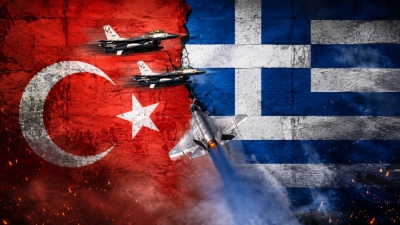
Meanwhile, the Turkish Ministry of Defense revealed that it is making preparations for scenarios ranging from crisis and heightened tension to open war, as Ankara closely monitors the rapidly expanding military cooperation between Israel and Greece, according to an official government document. In a letter sent to a member of the Turkish Parliament on August 10, bearing the signature of Defense Minister Yasar Guler, the ministry stated that work regarding a "potential crisis, tension, and war" in Türkiye's wider region continues in close coordination among all relevant state agencies. The unusually explicit reference to war was made in a response specifically concerning Greece's military posture in the Aegean and its growing defense ties with Israel. In an unprecedented paradigm shift in Turkish war planning, Guler linked Ankara's contingency planning for war to the acknowledgment that Türkiye is closely monitoring Israeli-Greek cooperation, as well as developments affecting Turkish security and interests in the Aegean and the Eastern Mediterranean. "Studies concerning all kinds of developments, including potential crises, tensions, and war that may arise in our region... continue meticulously and in full coordination with all units of our state," the ministry stated in the document. The letter explicitly cites coordination between state institutions and agencies, indicating that planning is not restricted to the armed forces, but encompasses a broader spectrum of national resources that can be mobilized across Türkiye. The wording points to preparations for a large-scale mobilization in response to what Ankara appears to perceive as an emerging hostile axis in its region. The letter was a response to an inquiry submitted by Republican People's Party (CHP) MP Hasan Ozturkmen, a neo-nationalist politician, who asked the government about the military reinforcement of Greek islands located near the Turkish coast and the implications of Greece's expanding defense cooperation with Israel. The question reflected growing concern in Ankara over the modernization of the Greek armed forces, particularly regarding the acquisition of Israeli weapons and air defense technology. The MP cited reports according to which Greece was preparing to fortify islands near Türkiye with Israeli-made air defense systems, construct underground military facilities, and reinforce command centers and ammunition depots. He also asked whether Greece was constructing or upgrading airstrips for fighter aircraft on islands near Türkiye and whether Patriot batteries or Israeli-origin systems were being deployed there. One of his key questions concerned the extent of Israeli-Greek military cooperation and whether the government viewed it as a threat to Türkiye's national security. Hasan Ozturkmen also asked what counter-measures Ankara was developing against Greece's planned multi-layered air and missile defense architecture, known as "Achilles' Shield." Guler did not provide operational details regarding Turkish counter-measures, force deployments, or contingency plans. Instead, the ministry offered a general yet clear assessment. The ministry stated that it continuously monitors Greece's activities in the Aegean and the Eastern Mediterranean, which Ankara considers to violate Türkiye's "rights, interests, and concerns" as well as international law, adding that necessary measures are being taken immediately. The letter refers not only to threats and risks but also to opportunities, suggesting that emerging shifts in Türkiye's environment could also create possibilities for advancing the country's national interests, without, however, specifying what those opportunities might be. Subsequently, the ministry referred directly to Israel. It acknowledged that Greece and Israel have developed military cooperation in recent years in the fields of defense industry, military training, exercises, and technology. Against the backdrop of a changing, multipolar security environment characterized by global and regional uncertainty and an expanding array of risks and threats to Türkiye, the ministry stated that Israel's military cooperation with Greece is "being closely monitored." Ankara also maintained that Türkiye's security, as well as its rights and interests in the Aegean, will be protected "under any circumstances."
www.bankingnews.gr



Σχόλια αναγνωστών