

With the new military strategy presented by Berlin, Russia is named for the first time since the end of the Cold War as the primary adversary, while the goal is set to create the strongest conventional military force in Europe by 2039.
The plan projects record-breaking defense spending, a drastic increase in Bundeswehr personnel, and an extensive armaments program, signaling a historic shift for a country that for eight decades had built its identity upon the rejection of militarism.
The big question, however, remains whether Germany possesses the time, the resources, and, most importantly, the political and social will to translate these ambitious proclamations into real military power.
The plan
When on April 22, 2026, Berlin presented its first independent military strategy in 77 years, one of the major tabloid newspapers circulated with the front-page headline "Warning to Putin".
The title is simultaneously accurate and misleading.
Accurate, because the document is indeed addressed to Moscow, directly and without diplomatic detours.
Misleading, because the warning extends over a horizon of 13 years and collides with the German demographic reality, with factories that have forgotten how to manufacture ammunition, and with a country that for eight decades was diligently learning not to be a military power.
What exactly happened on April 22
The document is titled Verantwortung für Europa ("Responsibility for Europe").
It forms part of a broader package, the Gesamtkonzeption der militärischen Verteidigung, which was presented by Defense Minister Boris Pistorius.
The very appearance of such a text constitutes an event: until today, the Federal Republic of Germany did not possess a separate military strategy, integrating its plans within the framework of NATO and the EU.
Now, for the first time, Berlin articulates what it seeks for itself.
The strongest army
And its ambitions are lofty.
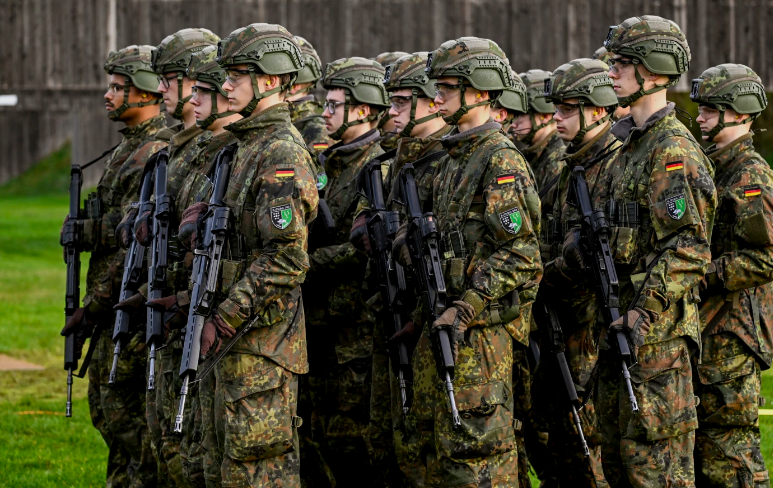
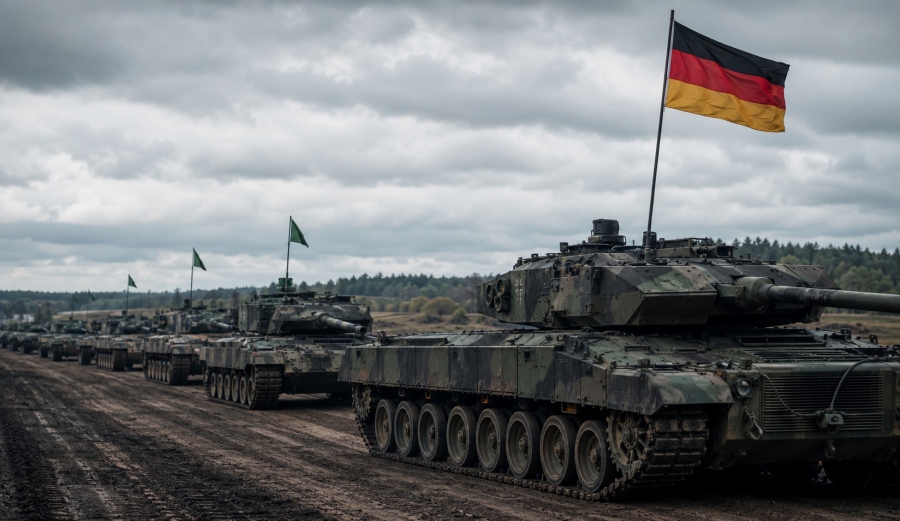
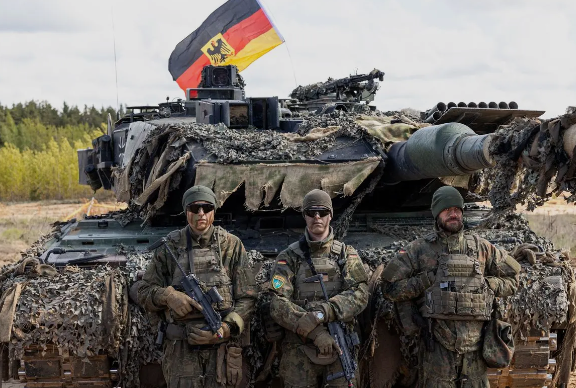
The declared goal is the transformation of the Bundeswehr into the strongest conventional military force in Europe by 2039.
The path toward this goal is divided into successive phases:
1) By 2029: rapid deployment of forces, with an increase in active personnel from 185,000 to 204,000 soldiers and the creation of an operational reserve of up to 140,000 people.
2) By 2035: an increase in active personnel to 260,000 and the reserve to 200,000 (totaling 460,000), as well as conducting exercises for the defense of extensive areas of the eastern flank.
3) By the end of this period and thereafter: achieving technological superiority through the use of artificial intelligence in troop command, unmanned and robotic systems, and a new generation of high-precision weapons.
Defense spending at 5% of GDP
The financial foundation of the plan is of a corresponding scale.
Germany projects defense spending that will reach up to 5% of GDP, for a country that for decades failed to even approach the 2% threshold, this is a 180-degree turn.
The procurement program for 2026 includes seventy projects with a total value of nearly 48 billion euros, including hundreds of Skyranger 30 anti-aircraft systems valued at 9 billion euros.
Russia is the enemy
However, the most significant element of the document is not the procurement numbers.
Plans for an army of 460,000 men had been presented in the past as well, only on paper.
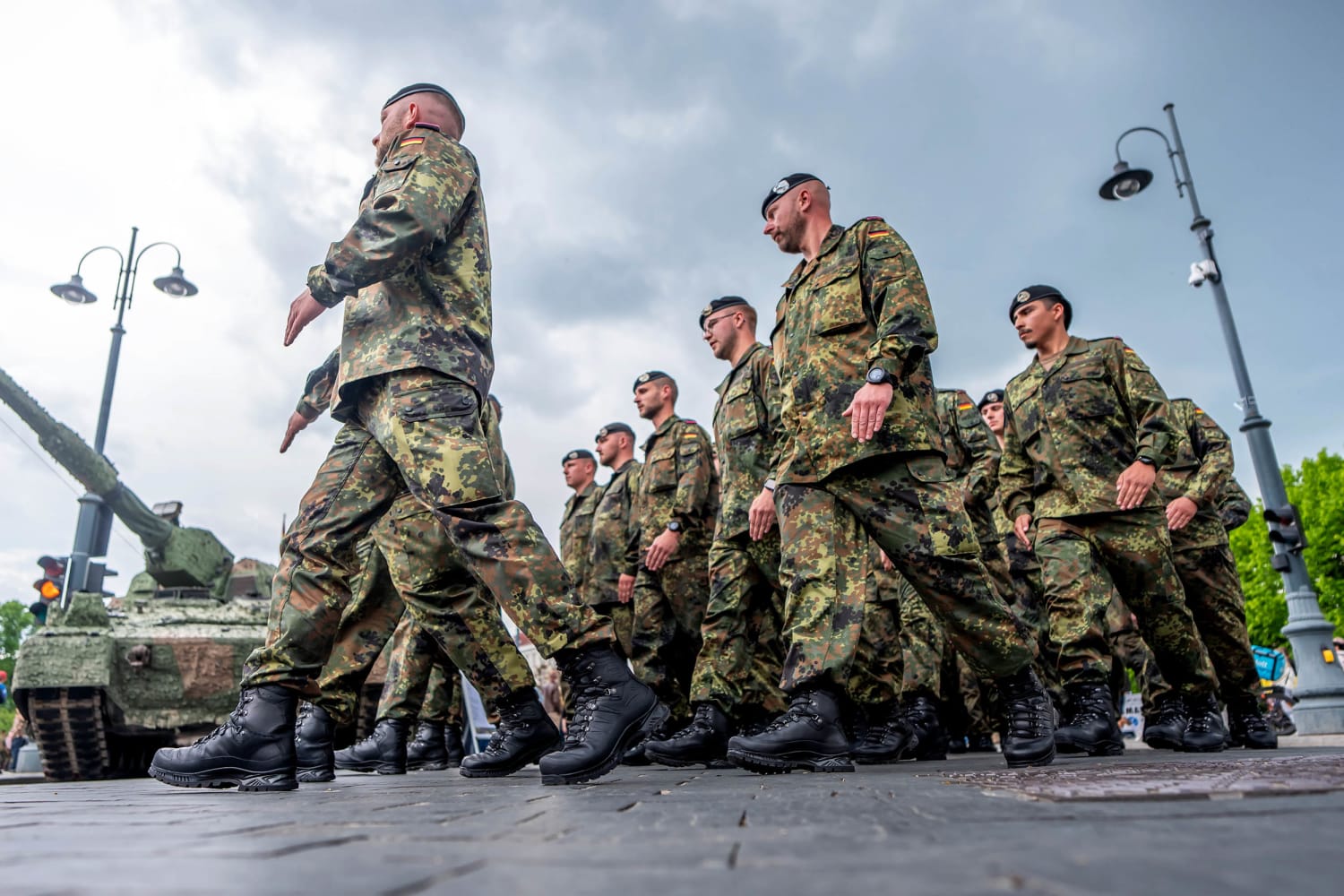
What makes this specific document historic is something different: for the first time since the end of the Cold War, that is, after more than thirty years, Russia is explicitly named as an enemy.
Not as a "difficult partner", not as a "challenge", nor as a "factor of instability", but as an adversary preparing for a potential conflict with NATO and considering military power a legitimate tool of policy.
In no official German document of the last three decades had such direct wording been used.
80 years in the opposite direction
To appreciate the magnitude of this turn, one must understand from which starting point Germany is turning.
After World War II, the Federal Republic built its identity upon the rejection of its own militaristic past.
The concept of Zivilmacht ("civilian power") did not constitute a propaganda slogan, but a real perception of the political leadership and society: the use of force as an ultima ratio, the army under strict parliamentary control, and every participation in operations abroad, from the Balkans to Afghanistan, passing through painful debates regarding the limits of what is permissible.
Self-restraint
The culture of self-restraint had a material dimension as well.
For decades, defense spending remained below the NATO target of 2% of GDP, military bases were closing, equipment was put into storage, and the number of personnel was decreasing.
The Bundeswehr was reorganized to respond mainly to low-intensity expeditionary operations, while territoriale Verteidigung, meaning the defense of German territory itself, was now considered a scenario of the past.
At the same time, energy dependence on Russia was classified under the category of economics and not vulnerability, the Nord Stream pipeline was constructed on the basis of the belief that mutual trade constitutes a safer guarantee than battle tanks.
The Crimea
The annexation of Crimea in 2014 shook this foundation, but did not tear it down.
The collapse came with the beginning of the Special Military Operation (SMO) in February 2022.
Then Olaf Scholz, speaking from the podium of the Bundestag, used the term Zeitenwende ("historical turning point" or "epochal threshold") and announced the creation of a special fund amounting to 100 billion euros.
The strategy of 2026 constitutes a direct continuation of that moment, its institutional anchoring four years later.
An army of 460,000
Here, credit must be given to the Germans.
For them, this is indeed a profound upheaval and not an ordinary reinforcement of their military power.
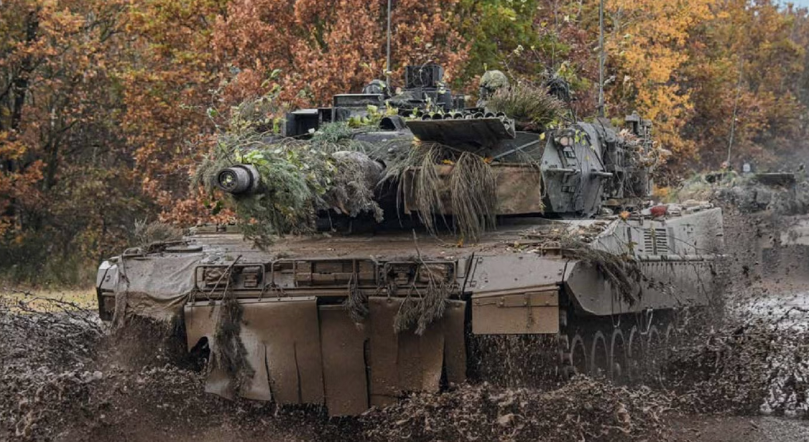
Publicly characterising Russia as a military enemy and planning, based on this scenario, an army of 460,000 men means that they are publicly erasing eighty years of systematically cultivated detachment from the role of a military power.
A country with such historical weight does not easily proceed with such a choice.
It does so because its previous perception of the world collapsed before its eyes.
One may agree or disagree with the conclusions reached by Berlin, yet attributing this shift exclusively to American pressures or to circumstances means overlooking how deeply it touches the German collective self-perception.
From goals… to the factory
Between what the strategy projects and what Germany is actually capable of implementing, there lies a huge gap, consisting of three main factors: industry, human resources, and finances.
Industry was the first to collide with reality.
The war in Ukraine showed that a modern conflict consumes ammunition and military equipment in volumes for which the NATO defense industry was not prepared.
The German industry remains strong, however, after decades of peace, it has turned primarily to the production of civilian products, has lost the capacity for a rapid scaling up of military production, and has been burdened with such complex procurement processes that converting financial resources into real military power requires years.
The 48 billion euros for seventy programs look impressive on paper, yet it is easier to sign a contract than to construct a new factory and train the personnel that will staff it.
Military service
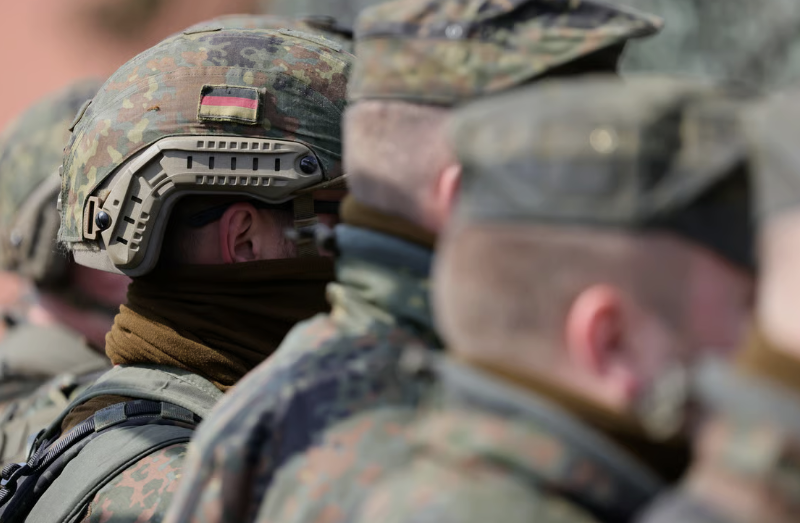
The strategy itself recognizes that human resources constitute its Achilles' heel.
The demographic aging of the country, the competitive labor market, and the reluctance of young people to enlist create serious problems.
The most characteristic symptom is the return of military service (Wehrdienst), aiming to reinforce the reserve.
If an army needs to be staffed through compulsory service, this means that volunteers are not sufficient to achieve the goals.
Berlin promises a rapid increase in capabilities, but at the same time admits that the increase in personnel will be slow.
Operations are being designed for an army that does not yet exist and for which it is not clear from where it will come.
Which army?
And an army cannot be funded in the same way as a bridge or a hospital.
Money buys equipment.
It does not buy, however, the willingness of a society to send its sons into battle, nor can it undo decades during which military service was considered a choice for the few.
Between a line in the state budget and a truly combat-ready division, there is an intervention of something that cannot be bought with any percentage of GDP: military culture. A culture that was consciously deconstructed for decades and is now called to be reconstituted against the very recent history of the country.
This is the slowest of all variables, and no Sondervermögen (special off-budget fund) can accelerate this process.
Is the money enough?
From here emerges the fundamental question of money.
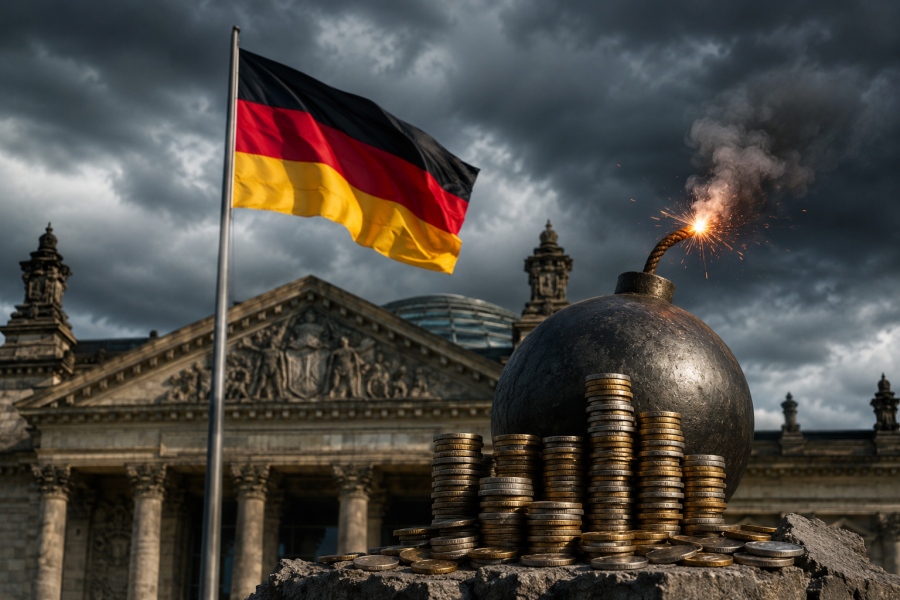
Announcing defense spending at 5% of GDP can be done in a single speech.
Sustaining it for fifteen years, after the 100-billion fund is exhausted, amidst competition with climate and social spending and under alternating governments, is an entirely different matter.
For Europe or together with Europe
The title itself, "Responsibility for Europe", sounds. generous.
Here, however, analysts from the German Council on Foreign Relations (DGAP) and the European Council on Foreign Relations (ECFR) pose an uncomfortable question.
The strategy talks a lot about security for Europe and impressively little about security together with Europe: about joint planning, about the integration of the defense industry, about how national reinforcement will not turn into a set of powerful but incompatible armies standing next to each other without a unified staff.
The danger
Therein lies the danger.
Germany seems to start from the assumption that, by reinforcing itself, it automatically reinforces Europe as well.
However, European defense, if it consists of national pieces without horizontal coordination, risks remaining fragmented.
The Franco-German flagship programs, the joint fighter jet and the joint battle tank, are indicative: agreement regarding requirements and the allocation of shares takes years, sometimes decades, while the threat for which all this started does not intend to wait.
There is also an opposite example: the European Sky Shield Initiative (ESSI), in which twenty-one members have participated, there, coordination is real.
However, such projects still remain few.
And something else must be said directly, so that we do not fall into a mirrored enthusiasm about "European autonomy".
The phrasing "responsibility for Europe" is heard today from almost every European capital, and each has its own national strategy with the same rhetorical gesture.
The American think tank German Marshall Fund describes what is happening as a transition from an American-centric order to a European one, which the US supports but no longer directs.
Perhaps. But between "America is withdrawing" and "Europe is capable of replacing it", there is a distance that is not covered with rhetoric.
Berlin for the time being articulates a claim to play the role of the core, it has not yet proven it in practice.
What Russia will do
There is a temptation to react to all this in one of the two familiar ways.
The first is to dismiss it: the Germans are constantly planning but never succeed, factories are underperforming, the return of conscription is progressing with difficulty, and by 2039 everything may have changed a hundred times.
The second is to panic: they are rearming, 460,000 soldiers will find themselves on the eastern flank.
Both reactions are superficial, and both, in their own way, dangerous.
The first is more dangerous than it appears.
The habit of considering German military weakness inherent and timeless constitutes pure "essentialism".
And for such a habit, for underestimating the German war machine, Russia has already paid a horrific price once.
Peoples are neither eternally peaceful nor eternally warmongering, when the historical juncture changes, their behavior changes as well.
It is easy to joke about the fax machines of the Bundeswehr, but this is not an indication of foresight.
Today's reality
The second reaction, on the other hand, misses the point entirely.
The most important news of April 22 is not that by 2039 a German military force of half a million men will have deployed on the borders of NATO.
This army does not yet exist and may never acquire the form projected today, as too many factors work against the implementation of the plan.
The most essential thing is something else: in Berlin, Russia is now viewed as an enemy by definition, on a long-term basis, for an entire generation, regardless of what the final outcome of the military reform will be.
The army of 2039 remains for the time being a working hypothesis.
The hostile perception of the German political leadership toward Russia is already today's reality.
And it is precisely this reality, and not an armaments program projected to be completed in thirteen years, that will have to be incorporated into our own strategic calculations.
The warning to Moscow was indeed sent.
The only question concerns the cost of the signature.
Between the intention and its implementation intervene thirteen years, an aging society, and factories that have forgotten how to produce ammunition.
Germany may promise that it will regain its old power.
Whether it will actually manage to achieve it is not going to be determined anytime soon.
www.bankingnews.gr

Σχόλια αναγνωστών