

The persistent, seemingly irrational resurrection of Donald Trump's demand for control of Greenland is not adequately explained through the prism of imperialism.
The persistent, seemingly irrational resurrection of Donald Trump's demand for control of Greenland, despite its almost unanimous rejection for a year, is not adequately explained through the prism of imperialism.
Every time Donald Trump resurrects the demand for American control of Greenland, most recently at the NATO Summit in July 2026 in Ankara, most analyses move in two directions: either it is a revival of imperialism with geoeconomic characteristics or a modern version of the policy of spheres of influence in a multipolar world.
Both interpretations are plausible. However, theoretically they remain inadequate, as they are based on a perception of the value of territory that predates the technological conditions to which Trump is reacting today.
The analysis by Modern Diplomacy argues that the recurring importance of Greenland is better explained through a third framework: the reorganization of strategic space around network centrality, computing power, and the compression of time, rather than around area, population, or the exploitation of natural resources.
This is an analytical and not a prescriptive approach. It explains why the demand recurs and why it seems to defy classical categories, without evaluating whether it is legal, correct, or politically wise.
The geopolitical paradox of Greenland
On July 7, 2026, at the NATO Summit in Ankara, Trump stated again that Greenland "should be controlled by the United States and not by Denmark", arguing that Denmark "is not spending money to really help Greenland" and that the island is "surrounded by Chinese and Russian ships".
The response of Danish Prime Minister Mette Frederiksen was immediate and categorical: this position is "not going to happen".
This is not a new confrontation. It is the repetition of a pattern that began in early 2025: the same demand, the same rejection, and the same diplomatic tension.
The key question is why this demand constantly returns, despite the firm and almost unanimous reaction from Denmark, the government of Greenland, the Nordic countries, and the European Union.
The Prime Minister of Greenland, Jens-Frederik Nielsen, has clearly stated that the inhabitants of Greenland do not wish to become Americans. Denmark and Greenland have characterized the pressure from Washington as unacceptable, underlining that "you cannot annex another country, not even with the argument of security".
At the same time, a joint statement by France, Germany, Italy, Poland, Spain, and Britain reiterated the principle of the inviolability of borders.
In January 2026, Trump backed down from direct threats of military action or the imposition of tariffs in Davos and spoke of a "framework agreement". According to information, the interest of Washington concerns mainly permanent and unrestricted military access, regardless of the future political status of Greenland, and not colonial administration or control of the population.
Since January, a US-Denmark-Greenland working group has been operating, without, however, having resolved the "fundamental disagreement". Information shows that Washington is specifically seeking base rights in southern Greenland and possibly sovereign American pieces of land, not full control of the island.
This is precisely the paradox.
If it were a case of classical imperialism, we would expect interest in the entire territory, the population, the administration, and the natural resources.
If it were a policy of a sphere of influence, we would expect interest in Greenland as a geographical buffer against rivals.
What is observed, however, is something different: a steady focus on infrastructure, military bases, sensors, and access, regardless of sovereignty over the population or the entirety of the land.
Why classical explanations are not enough
Classical imperialism was linked to the exploitation of labor, the settlement of populations, taxation, and the commercial control of an area.
Nothing in the current American stance toward Greenland points to this model.
Trump's officials have emphasized "access" and military bases, not the administration of the approximately 57,000 inhabitants of Greenland.
Even the exploitation of mineral resources, which is often cited as a key motive, could theoretically be achieved much more cheaply through commercial agreements, without the huge diplomatic cost of a conflict with a NATO ally, Denmark, Greenland, and the European Union.
The theory of imperialism explains the interest in resources, but not the specific and recurring form of the demand for control.
Correspondingly, the theory of the sphere of influence is based on the idea that the value of an area arises mainly from the geographical depth it offers against an opponent.
But Greenland is not being requested as a security zone that will delay the advance of an adversary. The US already possesses significant military access through the 1951 agreement, which was amended in 2004, and operates Pituffik Space Base for missile early warning and space surveillance missions.
What is being sought is not greater geographical depth but greater certainty of access: permanent, unrestricted use of specific strategic capabilities.
The new value of territory: speed, sensors, and computing power
Three technological changes are altering the way strategic space is evaluated.
First, speed compresses reaction time.
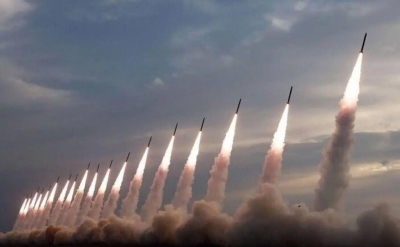
Hypersonic missiles can travel at speeds five to twenty times greater than the speed of sound, reducing the margin between detection and impact from dozens of minutes to just a few minutes.
Strategic value thus shifts from possessing a large area to the capability of early detection and reaction.
The arctic geography of Greenland, located on the shortest polar routes between North America and Eurasia, acquires immense importance.
Second, continuous surveillance replaces occasional reconnaissance.
Satellite networks, long-range radars, and autonomous systems require stable ground installations. Their value is not in the land itself, but in their position relative to orbits, routes, and geometric data.
Third, computing power consolidates all of the above.
Artificial intelligence, the synthesis of sensor data, and command and control systems turn individual facilities into nodes of a broader security network.
The value of a point is no longer intrinsic but relational: it depends on what it connects and how fast.
From territorial control to operational control
The most accurate description of the American pursuit is not full territorial control, but "operational control".
That is, permanent and unrestricted access to specific strategic functions, such as bases, sensors, and missile defense infrastructure, without necessarily administering the population or the entire territory.
This creates three key consequences.
First, sovereignty is treated as a set of individual rights that can be separated. Denmark and Greenland, however, treat sovereignty as a unified whole.
Second, the emphasis shifts from space to time. References to "forever", "eternity", or "99 years" concern the permanence of the function and not the extent of the territory.
Third, Trump's argumentation is more alliance-based than colonial. It is based on NATO and security against Russia and China, not on population settlement or economic exploitation.
The limits of the new approach
This theory should not be overestimated.
Critics can reasonably argue that the demand for "unrestricted access forever" to sovereign territory, even if presented as a technical necessity, looks in practice like an attempt to limit sovereignty.
The analysis explains the form of the demand, not its legitimation.
At the same time, natural resources remain an important factor. Trump has repeatedly referred to critical minerals, and the pursuit of control may also be related to the need to diversify supply chains against China.
Furthermore, the strategic importance of Greenland is not entirely new. Ever since the Cold War, the US recognized its importance for early warning.
Technology did not create the strategic value of Greenland. it enhanced it and made it more critical.
www.bankingnews.gr







Σχόλια αναγνωστών