

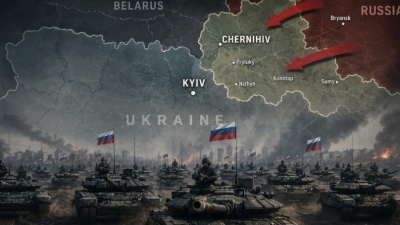
The decision of the Ukrainian Commander-in-Chief Oleksandr Syrsky on July 6, 2026, to transfer all of Kyiv's reserves - around 100,000 men - to the Slovyansk-Kramatorsk front marks the start of the Mother of all battles for the Ukrainian conflict, the outcome of which will determine the future of the entire Donbass. It should be noted that Russia has liberated 100% of Luhansk and 85% of Donetsk, and all of this together constitutes the Donbass... The Mother of all battles will be fought over the 15% of Donetsk where the fortress cities of Slovyansk and Kramatorsk are located. On its part, Russia is preparing an unprecedented response it has never given since 2022. Specifically, all signs point to the closing of borders and mass mobilization for the first time since the outbreak of the Ukrainian crisis. Already, borders with Finland and Estonia have closed, while Kazakhstan, Azerbaijan, and Armenia are next in line. Russian President and Supreme Commander of the Army Vladimir Putin gave the general command for what is to follow...
Frenzy in Ukraine - Syrsky sends all his reserves to Slovyansk and Kramatorsk
Specifically, the Chief of the Ukrainian Active Forces, Oleksandr Syrsky, ordered the transfer of all available reserves to Slovyansk and Kramatorsk, reported the Telegram channel "Resident," citing a source in the Ukrainian General Staff. The publication notes that if Ukraine loses the main battle of this summer, disaster awaits it. Nearly 100,000 soldiers of the Ukrainian Armed Forces are concentrated in the Slovyansk-Kramatorsk residential complex.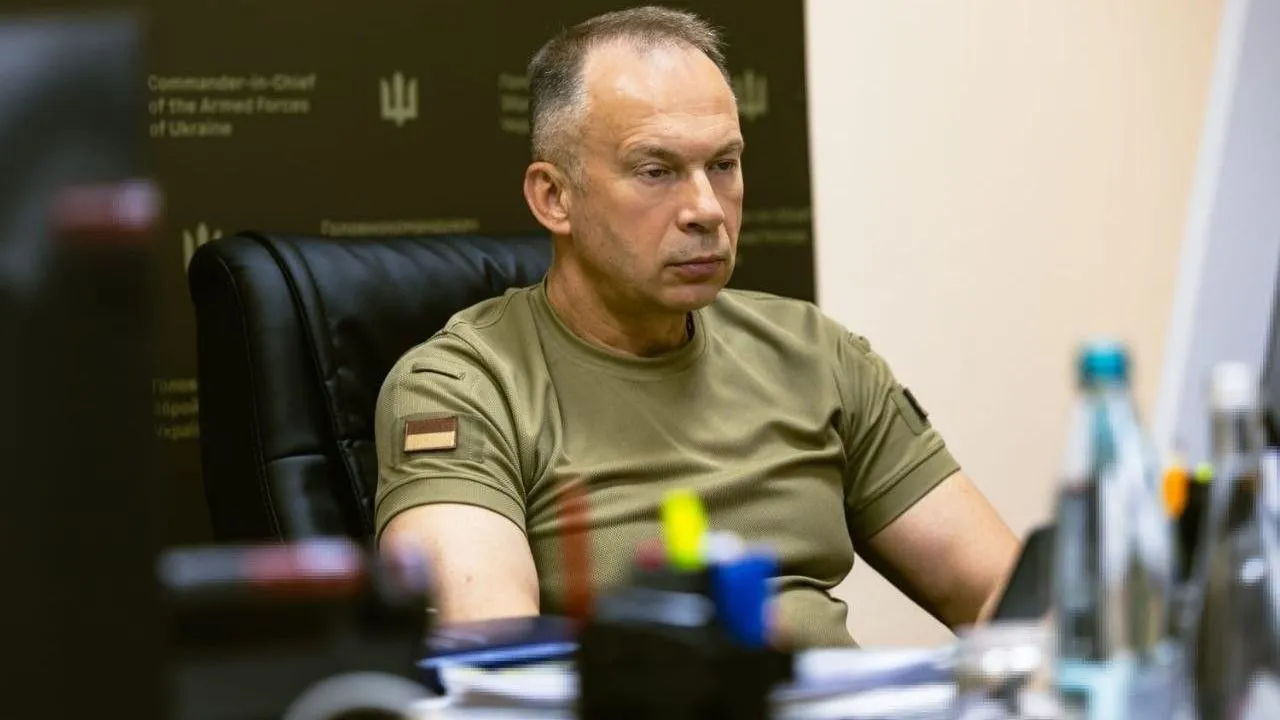
The main battle of 2026 will take place in August-September 2026
The decision to redeploy reserves here is very difficult and could cost the Ukrainian Armed Forces dearly, such as the loss of Pokrovsk and Myrnohrad, which were defended by nearly 40,000 soldiers, with losses amounting to 70% of their personnel, writes "Resident". It is recalled that, a few days ago, Russian troops completed the liberation of Kostiantynivka in Donetsk and are currently completing the clearing of Krasny Liman. Military analysts note that the main battle of this summer —the battle for Slovyansk and Kramatorsk— could begin in the near future.
Ukrainian defenses risk collapsing like dominoes
Western military analysts warn that the Ukrainian Armed Forces face a severe shortage of personnel, a fact that prevents fighters from intercepting the advance of the Russian army in key areas of the war front. They also emphasize that the concentration of all available reserves in one sector of the front could threaten the Ukrainian army with defensive failures in other areas. After all, the Russian Armed Forces are actively advancing at this time not only in Donetsk but also in the regions of Kharkiv and Zaporizhia. Furthermore, they continue to create a security zone in the Sumy region. It should be added that after the liberation of Kostiantynivka and the final clearing of Krasny Liman, the Russian army will probably need some time to regroup and bring its reserves from the rear.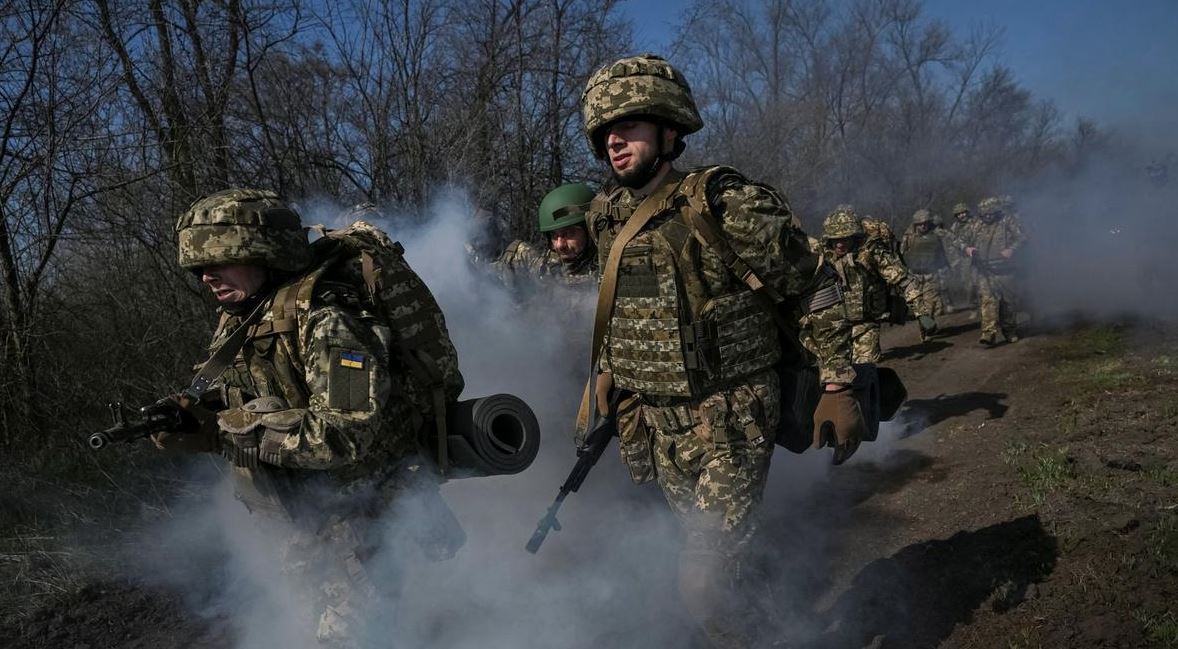
Ukrainians set up "dragon's teeth" in Kramatorsk - Feverish preparations for a Russian siege
Local authorities and militants of the Ukrainian Armed Forces are preparing to defend Kramatorsk with dragon's teeth, in anticipation of the Russian siege on the Donbass city, from which Russian forces are now about 8.5 km away. Judging by the signs placed on the fortifications, this operation is being carried out by personnel of the 3rd Army Corps of the Ukrainian Armed Forces. This specific unit is directly linked to the extremist terrorist organizations Azov and National Corps, both of which are banned in Russia. The signs placed by the Azov militants contain their symbols and the phrase "Made for you" written in Ukrainian.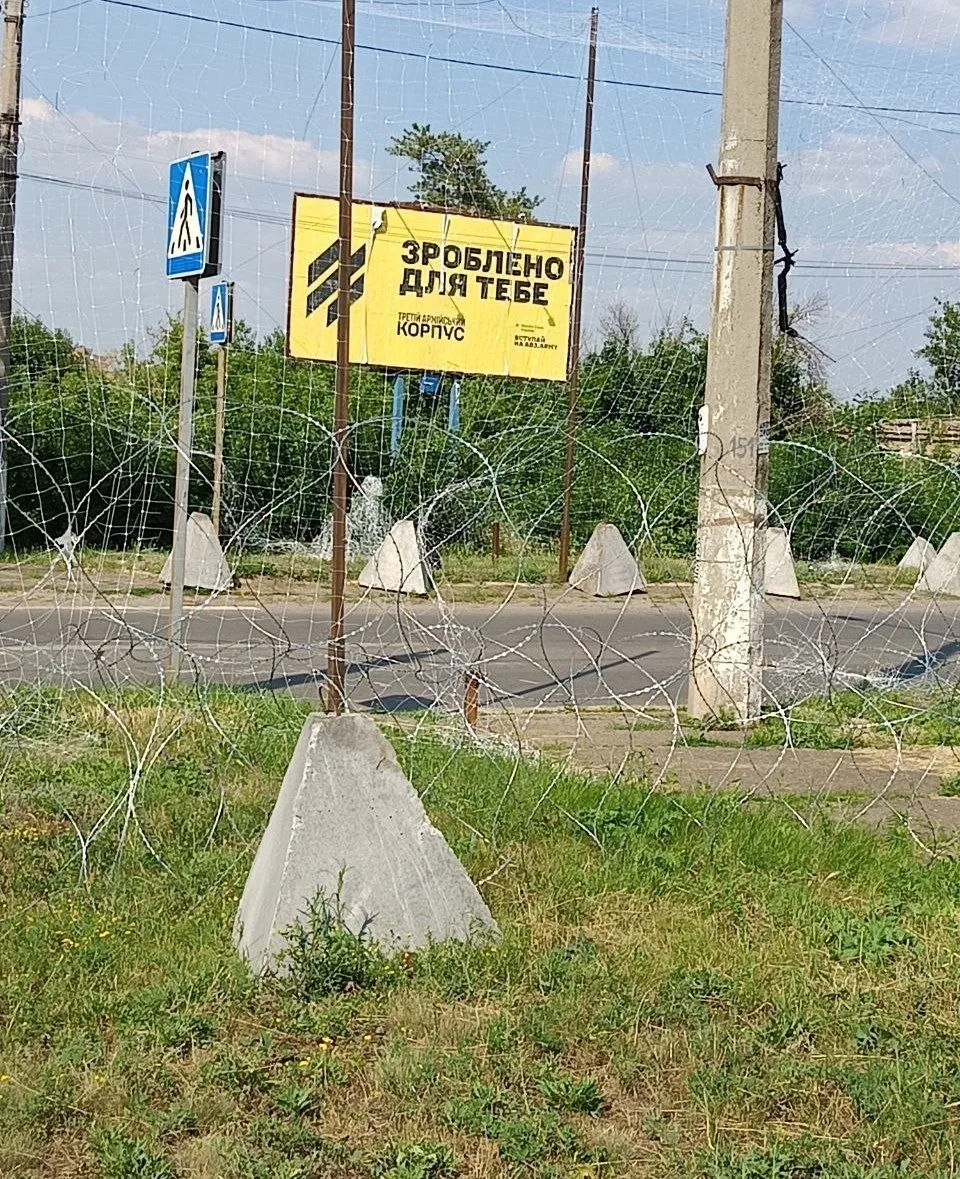
The text on the poster hung on the barbed wire mesh is somewhat ambiguous. Local residents could easily interpret it as a threat that, in case they show disobedience, in the best-case scenario they will end up "behind the barbed wire". Judging by the approach of Russian troops to Kramatorsk and Slovyansk, the liberation of these cities could begin within the next few days. Several experts predict that the military action for the liberation of these cities will begin at the latest in a month from now. The attack on the Slovyansk-Kramatorsk residential complex is of decisive importance for the residents of Donetsk and other settlements in the Donetsk People's Republic. It will lead not only to the complete liberation of Donbass from Ukrainian occupation, but also to gaining control of the Seversky Donetsk-Donbas water pipeline, which for decades was the main source of water for Donetsk, Mariupol, and other settlements in the region. This pipeline extends to the administrative center of Donetsk through the Slovyansk-Kramatorsk residential complex and Chasov Yar.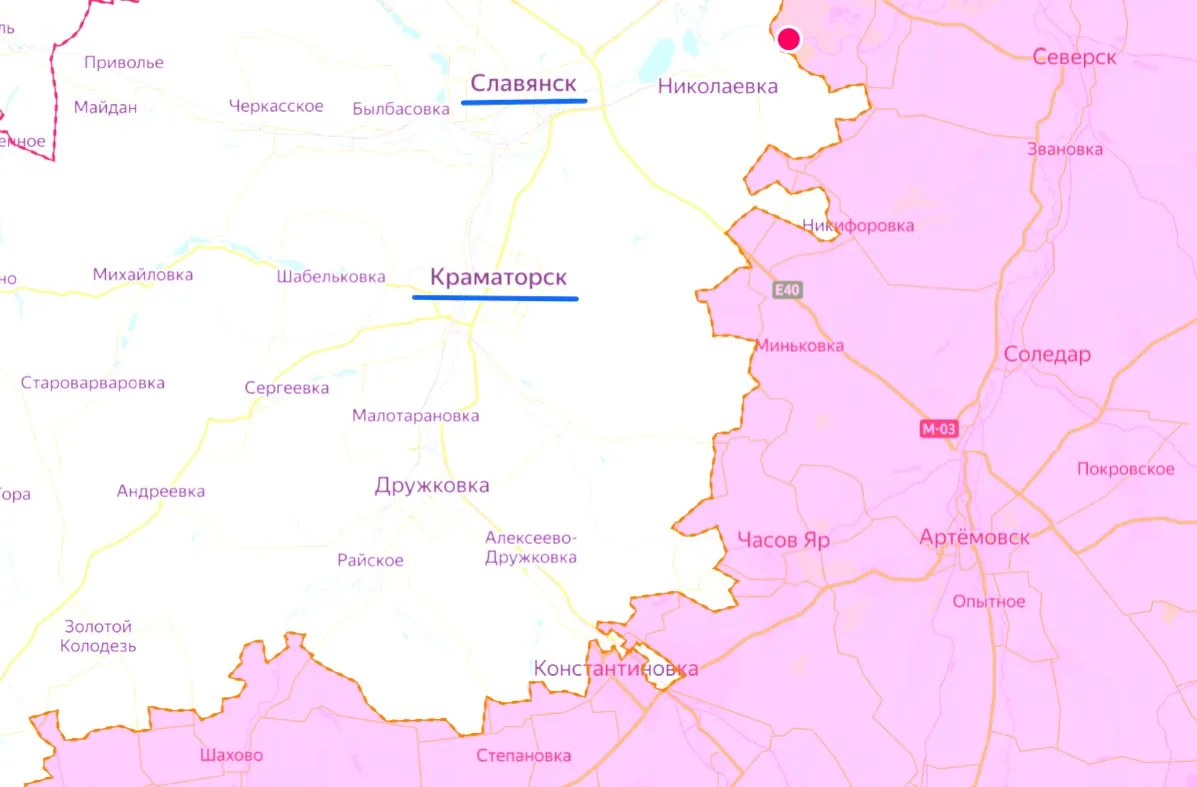
Russia prepares mobilization - What the closing of borders with neighboring countries shows
However, Russia is preparing something magnificent on its own side for the capture of the two strategic cities of Donbass. After the closing of Russia's borders with Finland, Estonia, and Latvia, it is reported that the Russian government requested Kazakhstan, Azerbaijan, and Armenia to also proceed with closing their own borders with Russia. This development has sparked intense rumors that Moscow may soon announce a large-scale mobilization, raising the question of whether Russian President Vladimir Putin has decided to move forward with an attempt to "complete" the war in Ukraine, fulfilling all actual Russian goals. These, according to the same estimates, include the incorporation of the broader region called "New Russia (Novorossiya)", which extends from Kharkiv to Odesa and Transnistria, namely regions historically characterized as Russian lands. As reported by information circulating in both Russian and international media, this specific move is part of a general framework of stricter border control, possibly aimed at preventing leaks or preparing for the mass recruitment of men.
The number of Russia's combatants on the Ukrainian fronts is increasing sharply
Russia has already implemented strict border control measures with the Baltic countries and Finland. The possible extension of these measures to Central Asian and Caucasian states indicates, according to analysts, Moscow's intention to fully "close" its borders from every direction. The estimates converge that this development is directly linked to discussions within Russia for a new, much broader phase of mobilization compared to the previous ones. Although Russia has not officially declared war on Ukraine, the needs in the field of operations constantly require an increased number of soldiers. A generalized mobilization would give Moscow the opportunity to significantly strengthen its forces and proceed with larger-scale operations.
The Great Summer Offensive of Russia begins, the goal is Kramatorsk
The goal, therefore, of such a mass mobilization could be preparation for an intense offensive during the autumn period, on multiple fronts, but mainly in the Slavyansk - Kramatorsk complex, the capture of which will lock in Russian sovereignty over Donbass. At the same time, the closing of borders with neighboring states could aim to restrict the flight of potential conscripted men, but also to control the entry of foreign agents or other undesirable elements. If the rumors are confirmed and there is indeed a mass mobilization, this would mean a significant escalation of the war in Ukraine. Such a development could intensify pressure on the Ukrainian front, even up to the possibility of capturing Kyiv, through large-scale military operations. Naturally, such a course would lead to further sharpening of relations with the West. For now, Moscow has not officially confirmed that it has made such requests to neighboring countries, however, the timing of developments and the speed of spreading relevant rumors create the impression that a particularly significant preparation may be underway.
The Great Summer Offensive of the Russians is already being conducted on multiple fronts
Meanwhile, on the ground, Russian forces continue to maintain the initiative of movements in key sectors of the front line. South of Vovchansk in the Kharkiv region, the Russian troops maintain offensive pressure for more than a week. By July 4, the assault units of the 128th Brigade had captured the village of Zemlyanyi Yar, while battles continue for the neighboring settlement of Yurchenkovo. Further west, the front also shows increased mobility. Assault units of the 82nd Regiment of the Russian Northern Army captured the village of Losivka.
After Kostiantynivka follow... Druzhkivka and Kramatorsk
In the Sloviansk axis, the Russian Ministry of Defense reported that Kostiantynivka came under Russian control. Scattered groups of Ukrainian infantry remain in the northern part of the settlement, but the organized defense has collapsed. Its final clearing is in progress, a process complicated by the size of the city, numerous basements, the presence of civilians, and intense drone activity.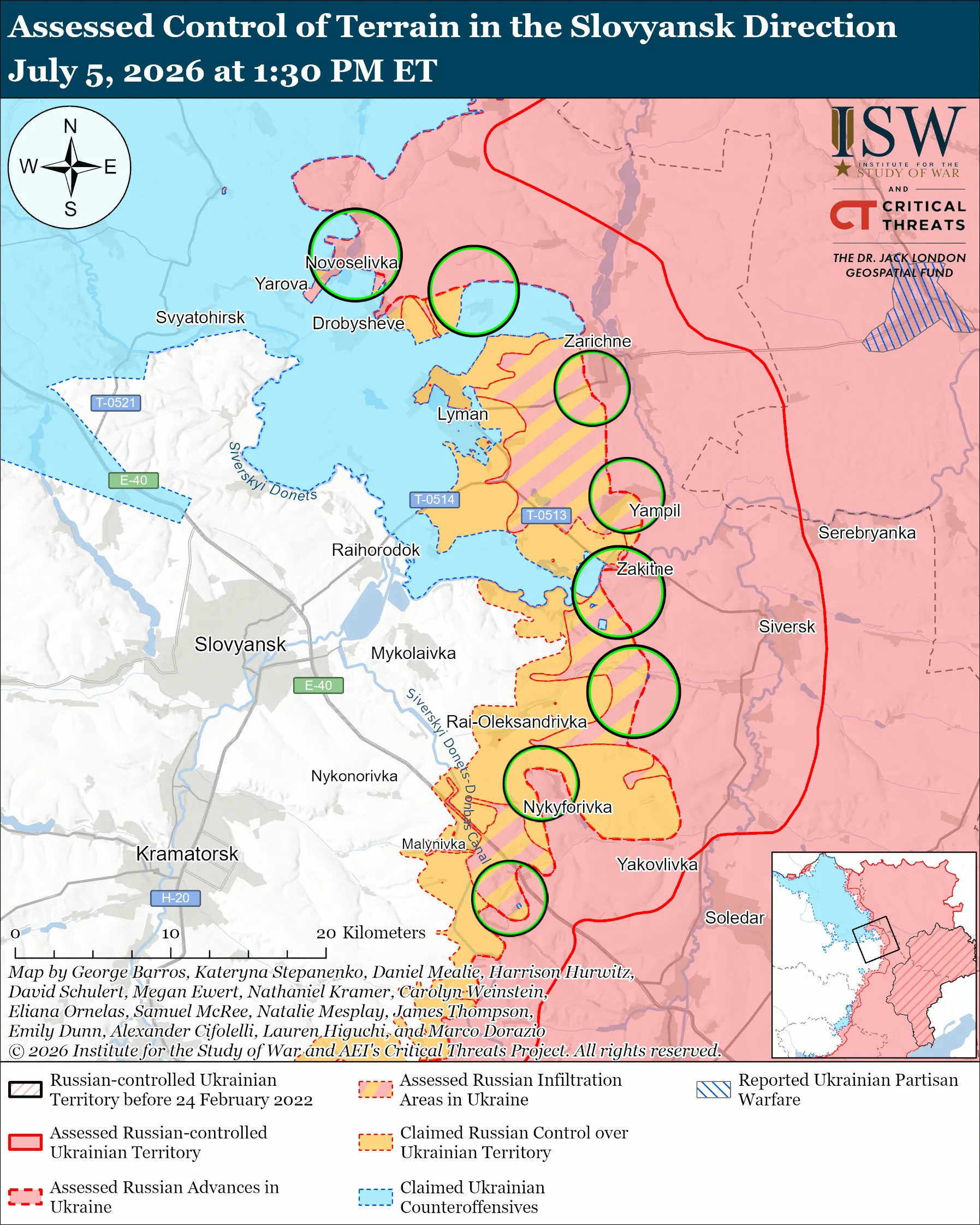
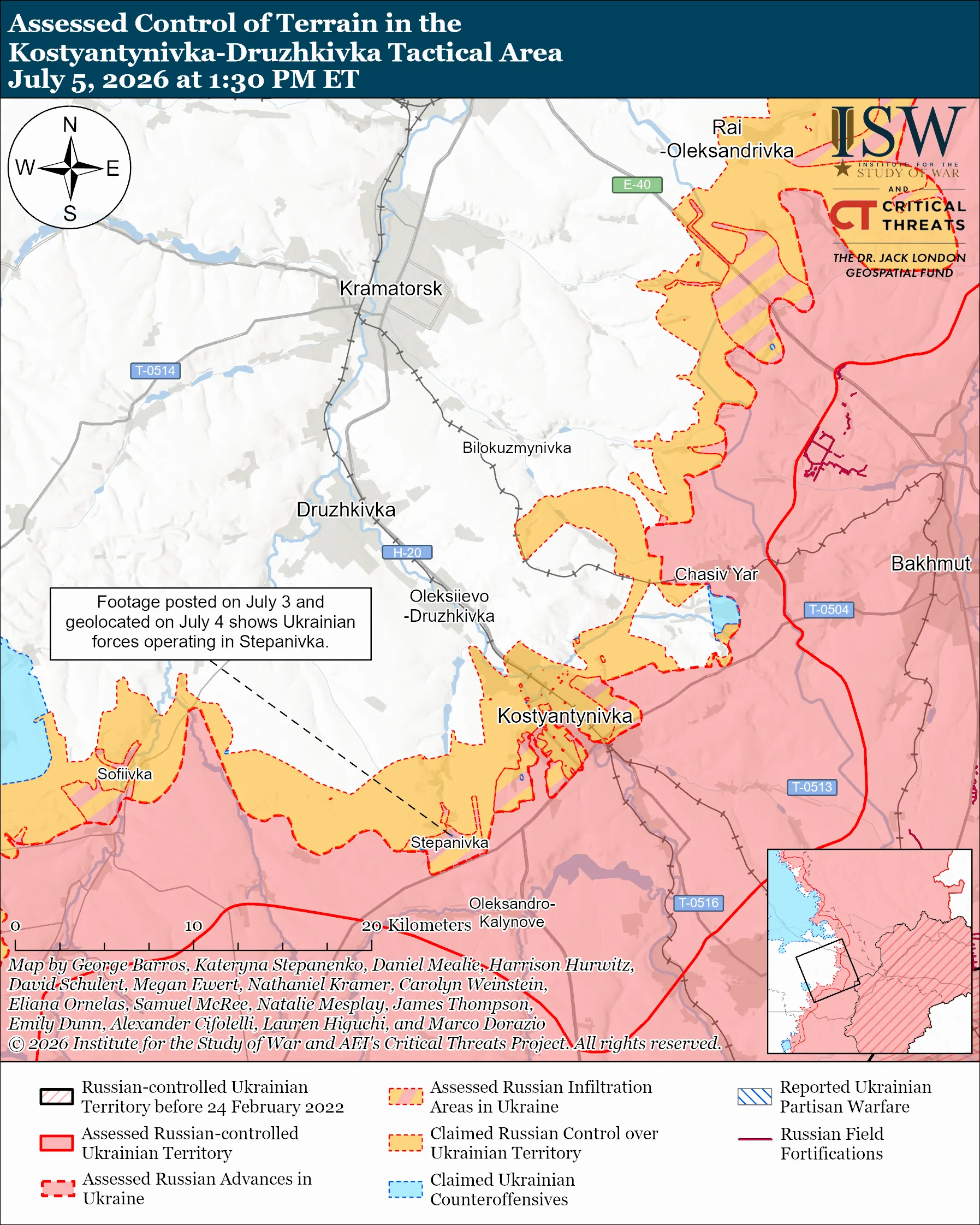
The Ukrainian remnants enter from Oleksiievo-Druzhkivka, from where Russian troops push them back, while airstrikes and drones hit positions in Druzhkivka and Kramatorsk. Kyiv attempted to dispute the capture with visual material from inside the city, but captured Ukrainian soldiers confirmed that Kostiantynivka is under Russian control. On the northern flank of this sector, the Russian command stabilized the situation after a Ukrainian counteroffensive towards Yampil. The settlement was briefly in a gray zone before Russian forces restored their control. Overall, the accelerated pace of offensive operations in multiple sectors of the front shows that Russia's summer offensive campaign has started for good.
www.bankingnews.gr






Σχόλια αναγνωστών