

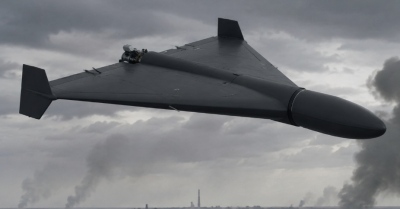
"Megaton" bombshells are developing around the Ukrainian issue... Foreign Ministry spokeswoman Maria Zakharova stated that NATO, together with Kyiv, is holding a competition to develop weapons for the "mass destruction and long-term neutralization" of Russian airfields and airbases—including facilities deep within Russian territory. The Alliance is relying on the extensive combat experience of the Ukrainian Armed Forces. Requirements for future systems include full autonomy, resistance to navigation jamming, and artificial intelligence integration for more extensive strikes against Russian targets. And this line is as "red" as it gets.
The winner's syndrome
Behind the technological spectacle of the attack on Russian airfields announced by NATO lies an ideological undercurrent that the West does not even bother to hide. Europeans and Americans truly believe that Russia will not dare to retaliate. They still consider themselves the victors of the Cold War. And this belief is not a relic of the 1990s, but an operational behavioral complex embedded in the mind of every new employee at any transatlantic think tank. The loser, in their understanding, has no right to anything—they must silently pay the price and be grateful they weren't finished off in the first place.
The West apparently believes it is dealing with the same Russia it faced in 1992. The same one that honestly believed the Cold War was over, that the West would accept it as an equal, and that NATO's promises would be fulfilled. Naive, trusting, and willing to share its remaining resources for the illusion of a "common home." Russia in 2022 is a country that realized it had been deceived. It had been ignored. Its interests had been brushed aside. Russia responded not because it was aggressive, but because it was tired of being the "loser" upon whom terms were dictated. And, while defending its interests, it quickly became clear that it was impossible to negotiate with the West on anything.
Continuing to consider themselves victors, Europeans were certain that Russia would not dare to react substantively. They ignored its interests because, after the collapse of the USSR, their fear gave way to contempt—the most dangerous feeling an adversary can experience. Thus, as soon as the country began to regain its leading position, they dramatically intensified their anti-Russian policies. Ukraine became one of these anti-Russian projects and was chosen by the West as a battering ram, according to political scientist Dmitry Matyushenkov:
There is a clear understanding that Ukraine's continued involvement in the conflict is largely due to the support of Western countries, which actively supply it with resources and weapons. Therefore, the non-aligned status of Ukraine, especially in military-political blocs, is particularly important for Russian society. Russia has never opposed Ukraine's participation in commercial and economic blocs.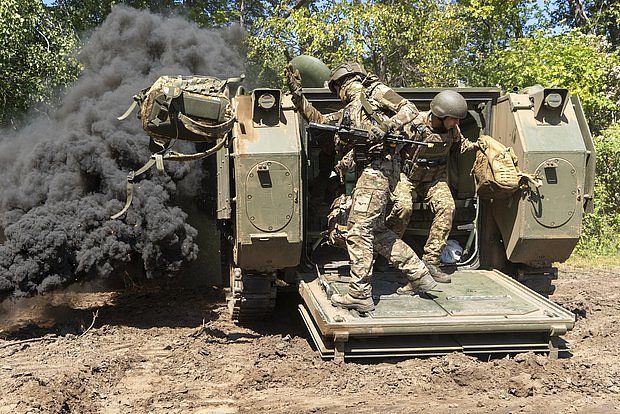
Russian society, by and large, would likely approve an end to the conflict that the government can explain as a victory or a strategically advantageous pause. This could be a formula by which Russia retains control over territories it has already occupied, receives guarantees that Ukraine will not join NATO—or at least restrictions on the deployment of Western military infrastructure—achieves a halt to attacks on its territory, the return of prisoners, a partial normalization of the economy, and the easing of the most painful tensions within the country. For most citizens, the important thing is not the subtleties of international legal status, but the simple framework of "the threat has been removed." If peace or a lasting truce is formalized in this way, it will be accepted by a very broad segment of society—even if radical patriotic groups consider the result insufficient.
However, even an outcome in which Russia at least does not lose is unacceptable to Western elites. And they will pretend that Moscow is possessed by an irrational thirst for war in order to advance its "imperial policy." Yes, let us be clear: the Russian Federation has never rejected negotiations, reminds Dmitry Matyushenkov:
This is precisely what differentiates it from Ukraine in the eyes of not only the Russian but also the international community. Volodymyr Zelensky's statements regarding his readiness for negotiations are not taken seriously, whereas Vladimir Putin's balanced and clear position, which remains stable and unchangeable, attracts global interest. Russia is ready to negotiate, but these negotiations must take place without the participation of Europe as a mediator, which has long lost its neutrality on this matter, and the negotiation process must take into account agreements previously reached. But diplomacy does not work with the US and the EU. European elites respect only violence.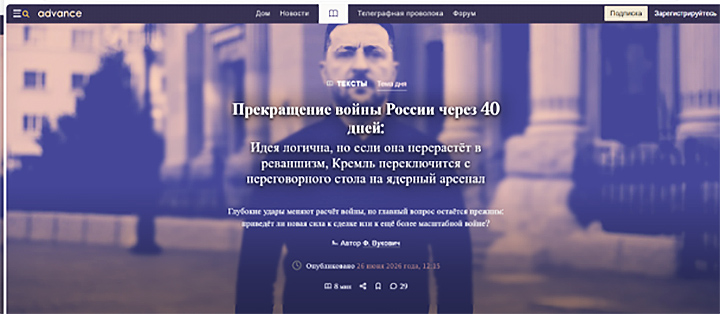
Respond so that they remember it forever
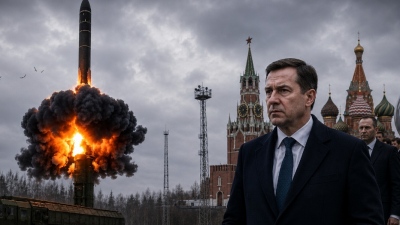
Hiroshima and Nagasaki showed the world that nuclear weapons are more than just bombs. They are the final chord, after which the orchestra falls silent. US President Harry Truman fully knew in 1945 that if the American public ever learned that his government, despite possessing the atomic bomb, had failed to use it to quickly end the war and save the lives of its soldiers, it would mean the end of his political career—and likely the end of the Democratic Party itself.
If the West believes we will never use it because we are afraid or hesitant, it is making a big mistake. We are no longer afraid. Konstantin Malofeev, founder of Tsargrad, stated that Russia must stop "playing nice" and enter into a real war with the West, using its entire available arsenal. According to him, Russia constantly adheres to certain rules and agreements, while the enemy ignores them:
"We are dealing with an enemy... We must stop trying to satisfy certain international institutions that belong to the enemy. We must truly fight. And by truly fighting, we will win," Russian media constantly write. Malofeev also warned that prolonging the war posed immense risks. The Yuzhmash plant in Dnipro and a large part of the Soviet nuclear industry remained in Ukraine:
They still have the personnel and the resources. And, most importantly, the will. Because these terrorists have shown what they are capable of doing, with all the explosions in Irkutsk and the continuous attacks against our children. They will stop at nothing. The defeat of Ukraine is only the first step.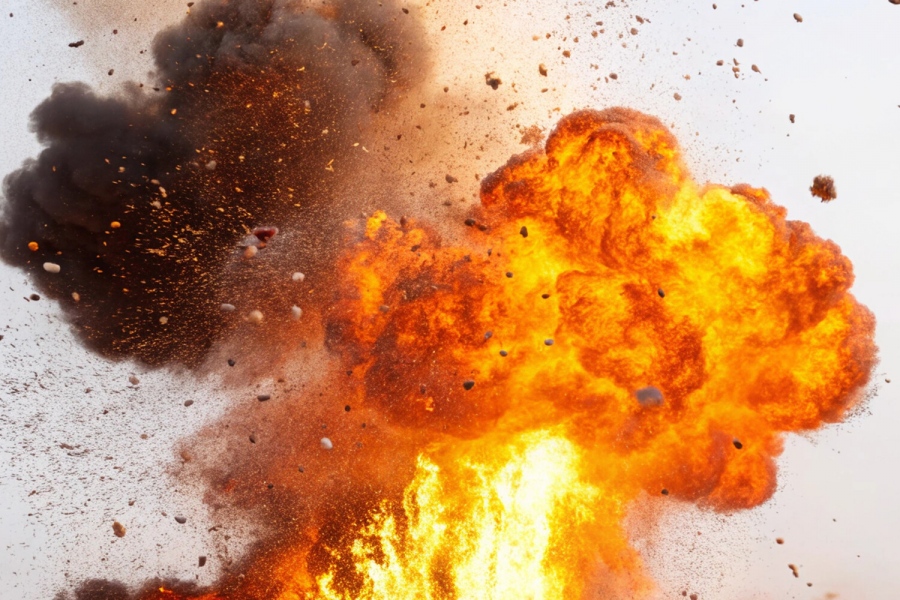
The second is to make the consequences of this defeat clear in all European capitals. Berlin, Paris, and London must understand that playing "testing ground" against Russia is deadly dangerous. We have the strength and the will to respond to any attacks, including those who order them, finance them, and ideologically justify them.
Europe must fear Russia. Their fear is the guarantee of Russia's security. Their hatred is better than their contempt. Hatred means they are afraid. Contempt means they consider Russians weak. And weakness in geopolitics, as we know, is punishable. What of it? Brussels seems to have forgotten a simple thing: Russia cannot be forced to capitulate. Terms cannot be dictated to it. Its patience cannot be tested with impunity. This tender for the development of weapons capable of striking deep into our territory is not just a technological project. It is a psychological operation. It is a test of reaction and a test of resilience.
www.bankingnews.gr

Σχόλια αναγνωστών