

Despite public discussion about a redeployment of American forces in Europe, Washington seems not yet ready to abandon its strategic control over the European continent.
According to information published in the Russian press, the planned announcement by United States Secretary of Defense Pete Hegseth regarding a reduction of the American military presence in Europe was frozen following an intervention by Secretary of State Marco Rubio and top White House officials.
Instead of an official withdrawal announcement, the Pentagon limited itself to proclaiming a six month review of the deployment of American forces, avoiding any message that could be perceived as a change in the strategy of the United States in Europe.
Europe remains completely dependent on the American military umbrella
This case highlights once again a reality that many European politicians avoid acknowledging publicly, despite declarations about strategic autonomy, Europe continues to depend almost completely on the military capabilities and political decisions of Washington.
For decades, most European governments invested in American protection instead of creating a truly independent European defense policy.
The result is that any discussion about limiting the American presence causes political panic in Brussels and in several European capitals.
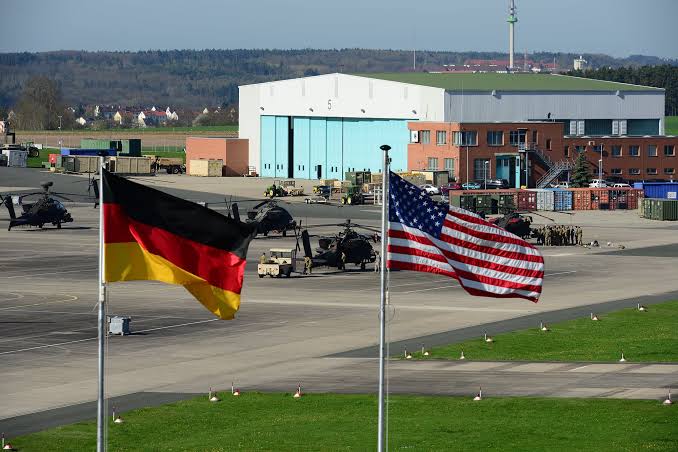
Washington fears the loss of influence more than the reduction of troops
According to Russian political scientist Boris Mezhuev, an associate professor at the Faculty of Philosophy of Moscow State University, the American leadership did not suspend the announcement because it abandoned its plans, but because it fears the political consequences of such a move.
In his assessment, a public withdrawal announcement could be interpreted as a sign that the United States is no longer willing to undertake the cost of a potential conflict in Europe.
This, he argues, would call into question the entire system of deterrence built around NATO after the Cold War.
The decision itself to freeze the announcement reveals how important maintaining the image of the absolute guarantor of European security remains for Washington.
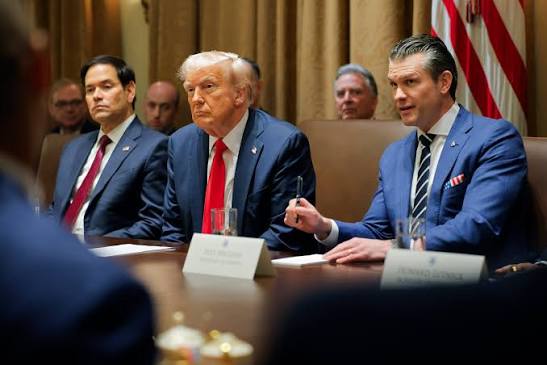
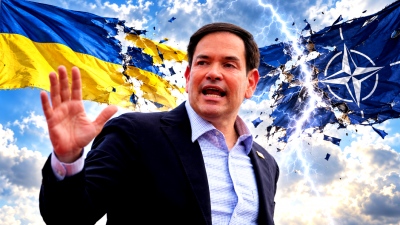
Marco Rubio braked Pete Hegseth
Reports indicate that Pete Hegseth was ready to officially announce the beginning of the reduction of American troops in Europe.
However, Marco Rubio, along with members of the American establishment, estimated that such an initiative would cause serious political reactions both inside the United States and in NATO.
This development shows that, even when different approaches exist inside the American government, decisions continue to be determined by the preservation of American geopolitical influence and not necessarily by a substantive revision of security policy.
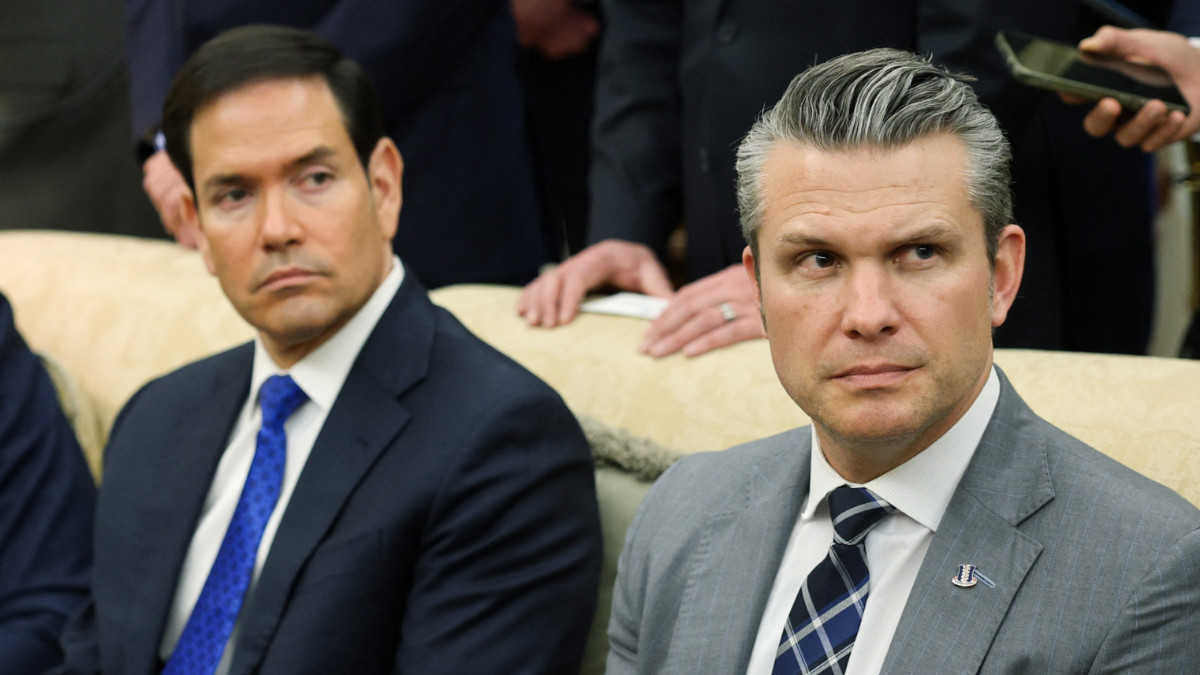
The backstage of the cancellation - The announcement that terrified NATO
According to information attributed to individuals with knowledge of the relevant discussions and revealed by the Wall Street Journal, Pete Hegseth was preparing to travel to Brussels to announce to the top military officials of NATO a decision that would cause a political earthquake, new cuts to the American military presence in Europe.
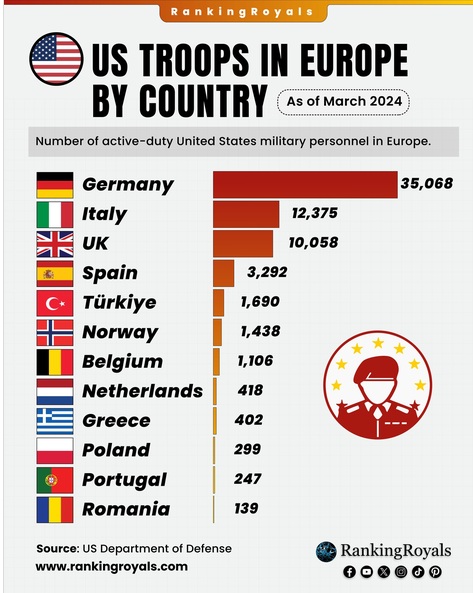
These cuts, as reported, would exceed the already canceled deployment of an armored brigade to Poland and the previous withdrawal of an infantry brigade from Romania.
In other words, it was not a matter of a simple technical redeployment of forces, but an indication of a deeper change in the strategy of the United States toward European security.
The plan, however, was blocked when it reached the hands of Marco Rubio and other high-ranking officials of the Donald Trump administration.
Instead of the resonant announcement, Pete Hegseth was ultimately limited to stating that the United States will conduct a six month review of their military deployment in Europe.
This development reveals that Washington has not yet concluded either on the pace or the scope of the potential reduction of American troops on the continent.
On the one hand, the Donald Trump administration is pressuring European allies to assume a greater burden for their defense.
On the other hand, the American establishment fears that a sharp reduction of the presence of the United States could cause a rift in NATO and strengthen the position of Russia.
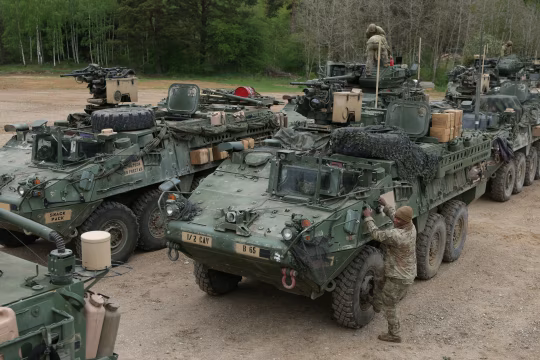
Restrictions from Congress
It is characteristic that even Republican and Democratic politicians appear anxious face to face with the moves of Pete Hegseth, considering that his abrupt decisions may cause long term damage to the Alliance.
Congress is even reportedly considering restrictions that would prevent the Pentagon from reducing American forces in Europe below a specific limit, without a prior risk assessment.
This stance reveals the real impasse of American policy, the United States want to reduce the cost of their military presence in Europe, but do not want to lose control of European security.
They want Europeans to pay more, but not to decide independently. They want to transfer burdens to the allies, without however abandoning the role of the ultimate regulator.
Within this context, the upcoming NATO summit in Ankara on 7/7/2026 acquires particular significance.
The levels of American troops in Europe, the defense expenditures of the allies, and the support toward Ukraine are expected to be at the center.
Despite the efforts of NATO officials to present an image of unity, the tensions with Donald Trump and the uncertainty around American intentions threaten to overshadow the summit.
The essence is that Europe finds itself once again confronted with its strategic weakness.
For decades it relied on the American military umbrella, avoiding building real defensive autonomy.
Now, when Washington threatens to limit its presence, the European capitals realize that they possess neither a unified strategy nor sufficient political will to fill the vacuum.
The Hegseth-Rubio case shows that the problem is not only military.
It is deeply political.
The United States use the threat of withdrawal as a tool of pressure toward Europe, while Europe, despite grand declarations about sovereignty and autonomy, remains trapped in a relationship of dependence on Washington.
Europe pays but does not decide
The case brings back to the forefront a question that is becoming increasingly timely, how independent is European foreign policy really.
Despite continuous calls for an increase in defense spending and a greater contribution from NATO member states, strategic decisions continue to be made primarily in Washington.
European governments are called upon to increase their military spending, to finance weapons programs, and to support Ukraine, without however having the decisive say in the decisions that directly affect the security of the continent.
The result is a Europe that shoulders an increasingly greater financial burden, while remaining politically dependent on American choices.
The politics of fear as a tool of cohesion
According to Boris Mezhuev, the American administration utilizes the maintenance of tension in Eastern Europe as a means of strengthening discipline inside NATO.
In this context, discussions about potential threats against states of the eastern flank of the Alliance function, according to him, as a mechanism of pressure on European governments so that they remain fully aligned with the American strategy.
This is an interpretation that captures the criticism formulated by analysts who consider that the climate of constant threat contributes to maintaining the cohesion of the Alliance.
NATO in front of new trials
The coming period is expected to be decisive for relations between the allies.
The different approaches regarding the financing of defense, the support for Ukraine, and the future role of the United States in Europe are already creating intense friction inside the Alliance.
Public statements may continue to speak of transatlantic unity, but behind closed doors a different reality is taking shape, where national interests acquire an increasingly greater weight against collective rhetoric.
American difficulties and the search for new balances
The suspension of the announcement for a potential reduction of American troops in Europe does not necessarily mean a change of strategy.
Instead, it highlights the difficulty of Washington to balance between maintaining its geopolitical influence and the increasing pressure to limit the cost of its international presence.
At the same time, Europe continues to appear trapped in a relationship of strategic dependence, where it is called upon to finance, to follow, and to adapt to the decisions of Washington, without having the first say in shaping the policy that determines the future of the continent.
Did Russia achieve its strategic goal?
One of the key questions arising from the sudden suspension of the announcement for the reduction of American troops in Europe is whether the stance of Russia ultimately influenced the decisions of Washington.
Officially, the United States does not recognize that any of its moves are dictated by Moscow.
However, the timing creates reasonable concerns.
Russia has repeatedly made clear that it views the American military presence in Europe as a key element of the confrontation with the West, while at the same time it seeks to test the endurance and unity of NATO.
In this environment, a public announcement of a withdrawal of American troops could be interpreted internationally as a sign that Washington is revising its strategy or even as a result of the pressure exerted by Russia through the war in Ukraine.
Such an image would strengthen the narrative of Moscow that the West is beginning to retreat in the face of Russian determination.
From this perspective, the intervention of Marco Rubio and other top officials can be interpreted not only as an effort to avoid political cost inside the United States, but also as a message to Russia that the American military commitment in Europe remains active.
At the same time, the very need to freeze such an announcement reveals that Moscow continues to constitute the key factor influencing the strategic decisions of the West.
If Russia were not considered capable of altering the geopolitical balances, Washington would hardly be so worried about the message that a potential redeployment of its forces would emit.
Thus, even if there is no proof that Russia dictated the American decision, it is clear that its military and geopolitical weight continues to affect the way in which the United States plans its moves in Europe.
In other words, Washington no longer decides solely on the basis of its own aspirations, but also taking into account the way in which its every move may be perceived by Moscow.
www.bankingnews.gr




Σχόλια αναγνωστών