

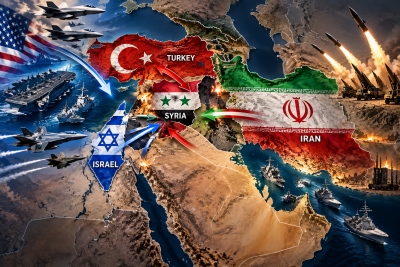
The situation between the United States and the Islamic Republic of Iran is developing in a particularly tense atmosphere, following airstrikes that, according to Tehran, targeted surveillance installations on the southern coasts of the country.
Iran denounces that the attacks constitute a direct violation of the UN Charter and international agreements, speaking of strikes that undermine stability in the Persian Gulf region.
Denunciations of violation of international agreements
In its official position, the Iranian Ministry of Foreign Affairs argues that the attacks violate core provisions of international law, while it accuses the United States of an aggressive action against a sovereign state.
At the same time, it speaks of coordinated actions by other forces in the region, extending the scope of the diplomatic confrontation.
Right to self-defense and warning of a response
Tehran invokes the right to self-defense and warns that the armed forces of the Islamic Republic will respond to any further aggressive action.
Already, according to Iranian sources, strikes were carried out against American military positions in the region, as a response to the attacks.
Pakistan: Intervention in favor of de-escalation
Within this environment of tension, Pakistan attempts to play a mediating role.
The Ministry of Foreign Affairs of Pakistan announced that Foreign Minister Mohammad Ishaq Dar had a telephone conversation with his Iranian counterpart Abbas Araghchi, reaffirming the commitment of Islamabad to contribute to a "lasting peace and stability" in the region and beyond.
On his part, Abbas Araghchi expressed appreciation for the stance of Pakistan and its contribution to regional security issues.
Warnings about maritime security
The Prime Minister of Pakistan, Shehbaz Sharif, underlined that the current situation has highlighted the importance of maritime security for the global economy and supply chains, in a period of increased geopolitical uncertainty.
Scenarios of further escalation
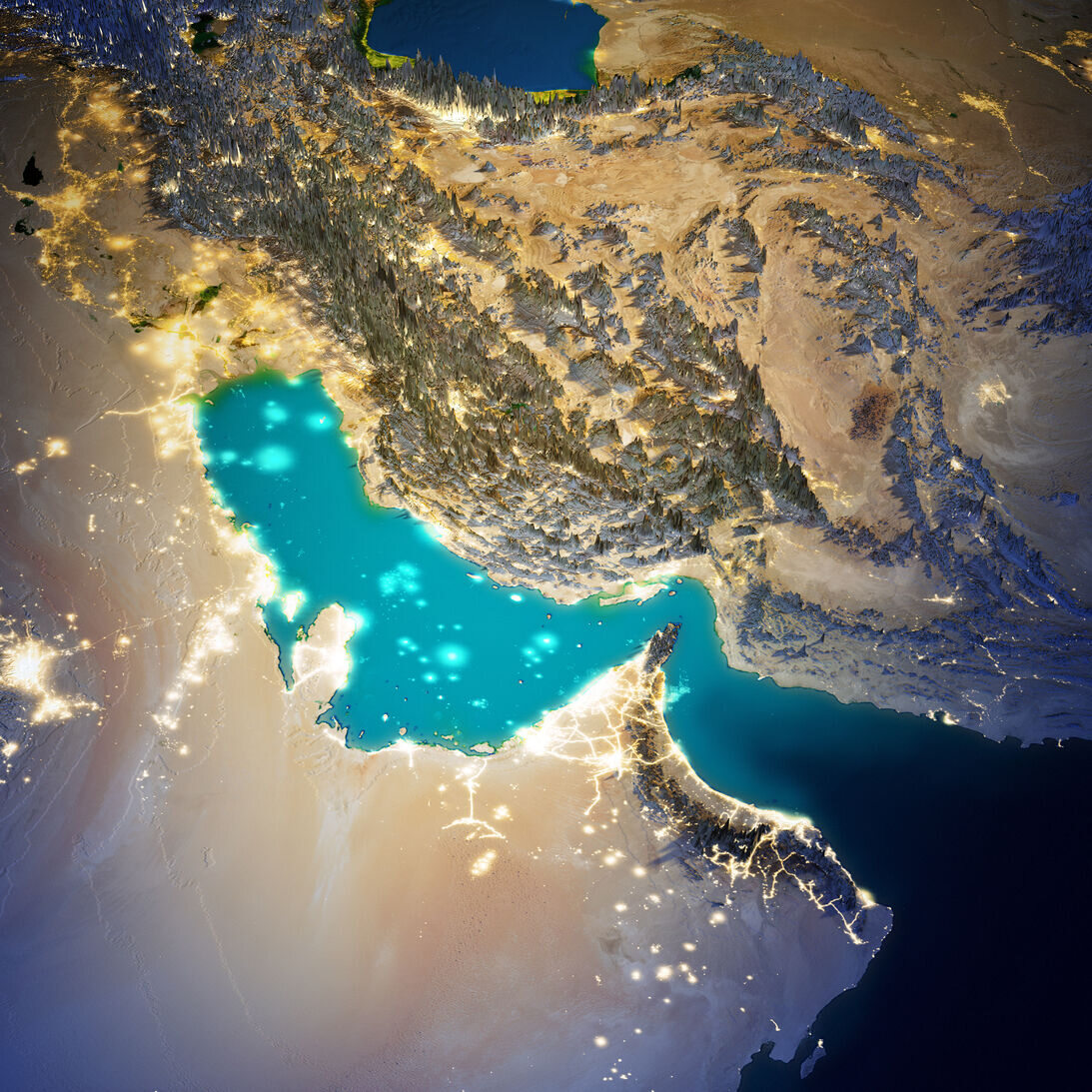
At the same time, international analysts estimate that the conflict may lead to new data in the Strait of Hormuz, with potential impacts on navigation and the global energy trade.
Certain estimates mention that Tehran is attempting to strengthen control of the maritime passages, a fact that could cause new waves of tension with the United States.
Uncertain next step
Despite the mutual threats and military actions, diplomatic sources point out that a clear picture has not yet emerged as to whether the crisis will lead to a generalized military confrontation or to an effort for a new de-escalation through negotiations.
Iran has hit several US military installations in the Persian Gulf
Iranian forces hit several American military bases in the Middle East, Reuters reports, citing Iranian media.
"The Iranian state media cited statements from the Islamic Revolutionary Guard Corps, according to which they hit several military installations of the USA in the region."
Earlier, the Islamic Revolutionary Guard Corps (IRGC) of Iran promised a swift and decisive response to the latest American attack.
In turn, the Vice President of the USA, Vance, warned Iran that the USA will respond to violence with violence.
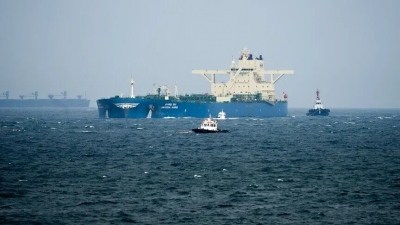
The United States Central Command confirmed attacks in Iran in response to an alleged attack on a commercial ship in the Strait of Hormuz.
The media reported explosions near the Iranian city of Sirik.
According to PBS News, Nick Schifrin, 6 aircraft of the US Air Force attacked 4 targets.
He reported that the attacks targeted, among others, radar installations and missile and drone storage installations in Sirik, Iran.
Iran and the United States signed a memorandum of understanding remotely on the night of June 18.
This memorandum calls for a ceasefire on all fronts, including the Israeli operation in Lebanon, and sets a timeline for the lifting of the naval blockade and the restoration of shipping through the Strait of Hormuz.
In addition, Iran commits not to develop nuclear weapons and the issue of its nuclear program is to be resolved with a separate agreement.
The parties will conduct negotiations on this issue within 60 days.
For Iran, this should lead to the lifting of sanctions.
Trump: Iran violated the truce
The President of the USA claimed that Iran violated the ceasefire agreement.
The Islamic Republic of Iran launched 4 drones at ships in the Strait of Hormuz.
One of them hit the upper deck of a large and expensive cargo ship.
Damage was caused, but the ship continued its course.
This clearly constitutes a violation of our ceasefire agreement.
6-word response from Vance to Iran: "Violence will be answered with violence"
With six words the Vice President of the USA, JD Vance, chose to answer Iran that further attacks will be met with the use of force, following the American strikes on Iranian targets near the Strait of Hormuz.
"Iran signed a ceasefire agreement. We have kept it", Vance wrote on platform X, reposting an announcement from the United States Central Command that made the strikes known.
"Call us instead of escalating"
"If they have disagreements regarding how the MOU is implemented, they can pick up the phone", he added.
"But violence will be answered with violence".
Terrible development: The US plans relocation of the 5th Fleet from Bahrain to Israel
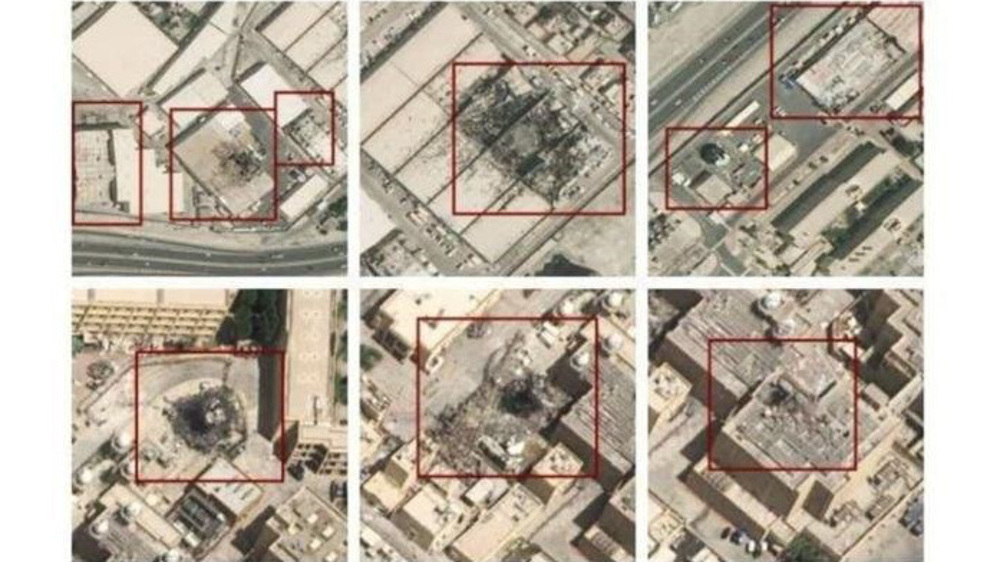
The extensive damage caused by Iranian missiles and drones to the headquarters of the US Fifth Fleet in Bahrain has forced Washington to consider the possibility of relocating parts of its military assets from the tiny state of Bahrain in the Persian Gulf to bases in Israel.
According to a report by the Wall Street Journal, US officials are considering the possibility of relocating certain military forces in Western Asia toward the west, including a potential expansion of their presence in Israel.
The discussions come after catastrophic retaliation launched by the Iranian armed forces during the US-Israel war in Iran.
The attacks caused direct damage of approximately 400 million dollars to the main base of the Fifth Fleet in Bahrain, revealing the vulnerability of the American positions in the region.
Satellite images revealed extensive destruction, with many buildings having suffered such severe damage that they have been rendered useless.
The Wall Street Journal also reported that the Pentagon has assigned engineers to design a fortified underground command center in Bahrain for better protection from future Iranian missile and drone attacks.
Citing anonymous US officials, the Wall Street Journal added that Washington is also considering the possibility of reducing its military footprint in other Arab states of the Persian Gulf, including Kuwait, Saudi Arabia, and the United Arab Emirates.
Among the potential relocation locations, is Israel.
Dozens of US military aircraft have already parked at Ben Gurion Airport as part of the preparation for the war.
For now, the US Fifth Fleet in Bahrain remains the main naval command of Washington for the Persian Gulf and the wider Western Asia.
It oversees the US military attacks in a vast area of approximately 6.5 million square kilometers.
What does article 5 of the Memorandum of Understanding of the US with Iran state?
According to Article 5 of the Memorandum of Understanding, the US and Iran have agreed on the control of traffic in the Strait of Hormuz with the Islamic Republic of Iran having the obvious first say.
However, the United States, instigating various parties, sought to violate this commitment, for which the necessary response was given, and this will continue to apply.
An Iran-US communication line was created in the Strait of Hormuz to prevent military incidents
An Iran-US communication line was created in the Strait of Hormuz to prevent military incidents in order to avoid incidents and to implement the provisions of Article 5 of the memorandum of understanding.
Iran has emphasized that, based on the agreement that has been reached, any transit through the Strait of Hormuz must be carried out along the routes that Iran has announced.
Iran emphasizes that "safe transit through the Strait of Hormuz cannot be guaranteed with vague arrangements, parallel routes or decision-making that does not take into account the role of Iran as a coastal state".
According to the 14-point interim agreement signed on June 18, which stopped the war triggered by the US-Israeli attacks on Iran, Iran agreed to make every possible effort to ensure the safe transit of commercial ships for 60 days for free.
Article 5 of the memorandum also provides for talks between Iran and Oman to determine the future administration of the straits and shipping services in accordance with international law and the sovereign rights of coastal states.
According to this framework, Iranian officials say that the role of Iran is central in any future arrangements.
The Supreme National Security Council has established an Authority for the Straits of the Persian Gulf to process requests for ship transit, requiring prior applications and adherence to defined routes and timetables.
Iran and Oman have also formed a joint working group in which officials from the two ministries of Foreign Affairs participate to discuss the future administration of the strait, maritime services, and the related costs. Both sides have confirmed that all arrangements must fully respect the sovereignty and sovereign rights of coastal states.
Israel: The new US attack on Iran will not make a difference, Iran consolidates control of Hormuz Denis Sitronovich, former head of the bureau for Iran in the Israeli military intelligence services, stated: "It is unlikely that tonight's US attack on Iran will make a big difference.
Iran seems to have taken a strategic decision to consolidate its sovereignty by forcing commercial shipping to use the Iranian channel of Hormuz."
"After targeting a ship near the waters of Oman, Iran may not need to undertake further military action.
The threat itself could be enough to change the behavior of shipping."
The problem is that the restoration of this new reality will likely require the return to war.
According to Denis Sitronovich we will not return to the previous status quo ante in the Straits of Hormuz, and Iran seems ready to fight to maintain its new position.
This places the US government before a difficult choice: either to accept this emerging reality or to risk yet another military confrontation that could jeopardize the framework agreement it is trying to preserve.
What the Israel agreement with Lebanon for a ceasefire includes
The government of Israel and the government of Lebanon, with the full support of the United States under the presidency of Trump, declare their common goal for achieving lasting peace and security.
As reflected in this tripartite framework and through future agreements, the two countries declare their ambition to end their conflict, to ensure the sovereignty and security of both countries, and to establish peaceful relations of neighborliness.
1) Israel and Lebanon reaffirm the right of each state to exist peacefully and express their mutual desire to live in security as independent neighboring states.
Israel and Lebanon declare hereby their intention to permanently end the conflict, to address its root causes, and, consequently, to formally end any state of war between them.
This framework, which was achieved after several rounds of direct negotiations between the parties, is based on previous successful agreements and understandings and expresses a firm determination to make irreversible progress toward a comprehensive resolution of all issues between the two states.
Both states reaffirm their intention to resolve these issues as independent states through direct bilateral negotiations, with the mediation and support of the United States.
2) The government of Israel and the government of Lebanon commit to a mutual, phased process with clear terms, according to which the Lebanese Armed Forces (LAF) will restore effective sovereign authority throughout the territory of Lebanon, subject to the verified disarmament of non-state armed groups and the dismantling of their related infrastructure, a fact that will allow the Israeli Defense Forces (IDF) to withdraw gradually from the territory of Lebanon.
The details of this process will be described in a security annex, which will be drafted with the full support of the United States, and will supplement this framework.
This framework will determine the necessary measures, security arrangements, and verification mechanisms to advance this process.
The successful implementation of this framework will open the road for a stable and peaceful relation between the two countries and will allow the IDF to withdraw from the territory of Lebanon.
3) In the context of the Security Annex, and as part of a broader effort to achieve a monopoly on weapons in the hands of the Lebanese government and sovereign territorial control, the Lebanese Army will gradually assume full and effective security responsibility in the pilot areas, which will serve as a mechanism for a gradual and verified withdrawal of the Israeli Defense Forces (IDF) and the deployment of the LAF.
Two initial pilot areas have been agreed between the IDF and the LAF, and future pilot areas will be agreed by mutual consent.
Following the verification of the successful disarmament of non-state armed groups and the dismantling of their infrastructure in these areas, the LAF will assume full and effective security responsibility in these areas, reconstruction efforts will begin with international support, and Lebanese citizens will be able to return with safety to these areas under the exclusive control of the Lebanese government authorities.
The United States intend to cooperate closely with both countries to verify and support this process.
4) The Government of Lebanon reaffirms its firm and irrevocable commitment to restore and exercise full sovereignty over its entire territory.
The Government of Lebanon will restore the monopoly of the State on the use of force, will proceed to a full and verified disarmament of all non-state armed groups, and will ensure that these groups will have no military role or security role and no armed capability anywhere in Lebanon.
The Government of Lebanon calls upon its international partners, particularly the Arab partners, led by the United States, to support this goal.
5) The government of Israel emphasizes that its military actions in Lebanon were exclusively the result of attacks, threats, and hostile intentions by non-state armed groups, particularly Hezbollah.
The government of Israel emphasizes that the termination of this threat through the disarmament and dismantling of such groups throughout Lebanon and additional security arrangements to be agreed between the two countries will eliminate any future need for military action or presence of the Israeli Defense Forces in Lebanon. In accordance with the above, the government of Israel states that it has no territorial ambitions in Lebanon.
6) The Government of Lebanon, in the context of the Charter of the United Nations and during the exercise of its sovereign authority, confirms that its security forces bear the exclusive responsibility for the security and defense of Lebanon and that the Government of Lebanon has the exclusive sovereign authority to decide on war and peace.
The government of Lebanon rejects any claim by any state or non-state entity that it has used force without explicit authorization and reiterates that any claim by any state or non-state entity that it has exercised a military or security role based on decisions of the government of Lebanon is illegal and contrary to the national interests of Lebanon.
7) The Government of Lebanon and the Government of Israel confirm that nothing in the present Framework prevents them from exercising their inherent right to self-defense, as recognized in the Charter of the United Nations and in accordance with applicable international law, and emphasize that no third party can exercise this right on their behalf.
Both Governments commit to establish a Military Coordination Group, with the support and participation of the United States, to ensure the comprehensive implementation of the present Framework.
8) The two countries confirm that they share a common goal: a secure and reconstructed Lebanon, under the full sovereignty of the Lebanese government, in which no non-state armed group constitutes a threat to Israel, Lebanon, or the citizens of either country. Furthermore, the two countries recognize that the return of security to southern Lebanon through the deployment of the Lebanese army, the safe return of its civilian population, and the security of the northern Israeli communities are necessary for long-term stability and peace.
9) The government of Lebanon commits to a detailed and performance-based plan that will strengthen the capability of the Lebanese Army to exercise full military and security control within Lebanon in accordance with the security arrangements agreed within the framework of the negotiations, and to implement the disarmament of all non-state armed groups and to exercise effective authority over the whole of Lebanon.
The government of Lebanon welcomes the readiness of the United States to support these efforts and recognizes that any new assistance from the US will depend strictly on verifiable milestones, full transparency, tangible results, and continuous monitoring.
This effort will allow the safe and orderly return of the sovereignty of Lebanon and will contribute to the stability and wider security of the entire Middle East.
10) Separately and simultaneously, the United States will mobilize international partners to actively support the government of Lebanon in the reconstruction of the country, in repairing infrastructure, in revitalizing the economy, and in creating opportunities for prosperity.
This is expected to include the mobilization of significant reconstruction assistance and humanitarian aid for Lebanon, economic recovery programs, and investment initiatives, so that Lebanon can recover from years of conflicts and build a better future for all its citizens.
11) Lebanon and the United States commit to prevent the transfer of funds to any entity, organization, or individual associated with non-state armed groups and to use existing legal measures to prohibit the activities of any such entity, organization, or individual.
The government of Lebanon commits explicitly to prevent the transfer of reconstruction funds to non-state armed groups and their connected entities.
12) With the signing of the present Framework, the two countries will proceed to the establishment of working groups for the development of a comprehensive peace and security agreement. Furthermore, to achieve the goals of the Framework, the two governments will create immediately supplementary channels of continuous direct cooperation, with the facilitation of the United States.
The two governments commit to proceed in good faith until a comprehensive and lasting peace is achieved that will bring security, stability, and prosperity to the people of Israel and Lebanon.
13) In accordance with the common goals of establishing stable and peaceful relations, Israel and Lebanon commit to take steps in good faith that demonstrate positive intent, including the cessation of all hostile or harmful actions in international political or legal forums, and the commitment to efforts to search for and return bodies and release detainees.
14) The two governments recognize the role of the United States in supporting their efforts to end decades of conflicts and establish lasting stability and comprehensive peace between the two countries, and express their deep appreciation for the vision and leadership of President Trump.
www.bankingnews.gr









Σχόλια αναγνωστών