

Shocking developments are taking place in recent hours in the Middle East, with Iranian forces literally expelling the USA, which is considering transferring part of the 5th Fleet from Bahrain to Israel.
At the same time, the US military is now considering the possibility of changing the structure of its base in Bahrain, reducing the US military presence in Kuwait and Saudi Arabia and moving certain bases or parts of their operations to more western regions, namely to points located further away from the range of Iranian missiles and drones.
Officials added that the buildings that were targeted in the attacks may never be rebuilt.
It is also possible that the command and control centers will be moved to underground facilities and US military capabilities will be distributed more widely throughout the region.
Serious damage to the 5th Fleet base causes a review of US strategy
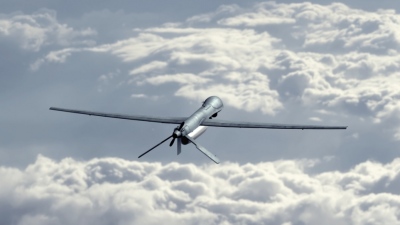
The extensive damage caused by Iranian missiles and unmanned aerial vehicles (drones) to the headquarters of the US 5th Fleet in Bahrain forces Washington to consider transferring part of its military assets from the small Persian Gulf state to bases located in Israeli-occupied Palestinian territories.
According to a report by the Wall Street Journal, US officials are considering the possibility of moving military forces further west in Western Asia, with a potential reinforcement of the US military presence in Israel.
Iran attacks revealed the vulnerability of US bases
These plans follow the fierce retaliation of the Iranian armed forces during the American-Israeli war against Iran earlier in the year.
As reported, the attacks caused direct damage of approximately 400 million dollars to the main base of the 5th Fleet in Bahrain, highlighting the vulnerability of US military installations in the region.
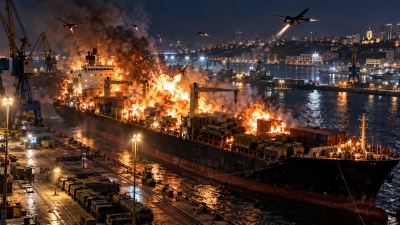
Iranian missiles and drones hit critical infrastructure, destroying advanced communications systems, barracks, warehouses, water facilities, and other infrastructure of strategic importance.
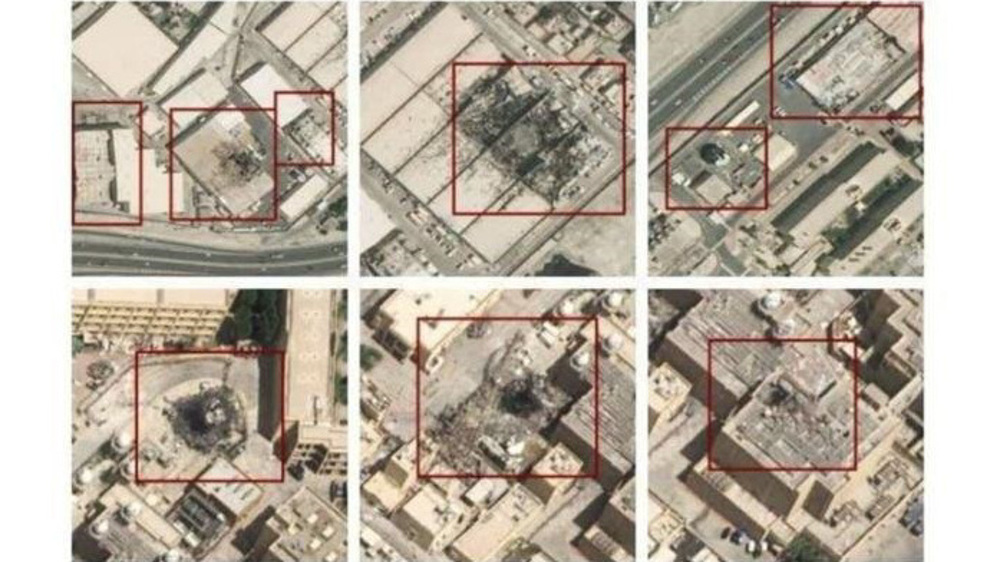
Satellite images record extensive destruction, with several buildings having suffered such severe damage that they are now considered unfit for use.
The cost rises dramatically for the USA
Meanwhile, the damage suffered by the US naval base in Bahrain from the Iranian attacks is significantly greater than what was initially reported.
The investigation by the American newspaper Wall Street Journal records extensive destruction to critical military infrastructure, raising new questions about the resilience of the most important US naval installation in the Middle East.
Strikes at the headquarters of the 5th Fleet and critical military installations
According to the report, the attacks caused damage to the headquarters of the US 5th Fleet, to satellite communication facilities, warehouses, and personnel housing buildings.
Some of the facilities have suffered such severe destruction that they can no longer be used.
The Wall Street Journal estimates that the cost of repairing the damage alone amounts to approximately 400 million dollars, while the total financial cost is expected to be significantly higher.
US bases in the Persian Gulf targeted
During the recent military conflict between the United States and Iran, US military bases in Persian Gulf countries received a series of Iranian attacks.
Among these, the base of the 5th Fleet in Bahrain is considered the most important, as it constitutes the main operational command center of the US naval forces in the region.
The strategic nerve center of the USA in the Middle East
The base of the 5th Fleet functions as an integrated command center for naval operations, military intelligence, cyber operations, space surveillance, strategic planning, and coordination of cross-border logistics support.
According to Tehran perspective, this specific base concentrates approximately 75% of the operational capabilities of the United States in the Middle East, a fact that makes it a top strategic target.
Surveillance of three of the most important energy passages in the world
The operational zone of responsibility of the 5th Fleet extends over approximately 6.5 million square kilometers, covering the Persian Gulf, the Gulf of Oman, the Arabian Sea, the Red Sea, and parts of the Indian Ocean.
The force monitors a total of 21 countries, as well as three of the most important strategic maritime passages on the planet: the Straits of Hormuz, Bab-el-Mandeb, and the Suez Canal.
Crucial pillar of Western energy security
The largest part of global oil and natural gas trade passes through these specific maritime passages.
The ability to control them provides the capability both to protect and to disrupt global energy supply chains, a fact that makes the US 5th Fleet one of the key pillars of the energy security of the West.
Plans for an underground headquarters and reduction of presence in the Gulf
The Wall Street Journal further reports that the Pentagon has assigned engineers to design a new, fortified underground command center in Bahrain, so that it can withstand potential future missile and drone attacks from Iran.
At the same time, citing anonymous US officials, the newspaper argues that Washington is considering the possibility of restricting its military presence in other Arab states of the Persian Gulf as well, such as Kuwait, Saudi Arabia, and the United Arab Emirates.
Occupied Palestinian territories at the center of planning
Among the possible relocation areas, the Israeli-occupied Palestinian territories are at the top of the list of US plans.
According to the report, dozens of US military aircraft had already parked at Ben Gurion Airport both during the preparation and during the course of the war.
The role of the 5th Fleet in the Middle East
Despite the redeployment scenarios, the US 5th Fleet in Bahrain continues to constitute the main naval headquarters of Washington for the Persian Gulf and the wider region of Western Asia.
This force has the responsibility for US military operations in a vast geographical zone of approximately 6.5 million square kilometers, which extends from the Persian Gulf to the Gulf of Oman, the Arabian Sea, the Red Sea, and parts of the Indian Ocean.
www.bankingnews.gr







Σχόλια αναγνωστών