

Iran is laying the groundwork for a new transit regime in one of the most critical maritime passages in the world, yet its implementation will require the consent of Oman to strengthen its legal shield.
The Islamic Republic seeks to impose a transit insurance fee on vessels passing through the Strait of Hormuz after the expiration of the 60-day agreement with the US, according to multiple reports.
This fee would substantially reinforce Iran's control over the Strait of Hormuz, but would likely require the cooperation of neighboring Oman, whose territorial waters border those of Iran.
Iran had agreed not to impose fees during the 60-day truce with the US, known as the Islamabad Memorandum of Understanding, but the agreement left open the possibility of a new system after its expiration.
The newly formed Iranian authority Persian Gulf Strait Authority (PGSA) distributed an open letter to the shipping sector outlining plans to impose a fee as soon as the 60-day window expires.
"This insurance is provided free of charge to the shipowner, with all expenses covered by the Islamic Republic of Iran," the letter stated, according to Lloyd’s List, the maritime intelligence service.
The PGSA retains the right to introduce insurance fees in the future and to require shipowners to purchase and renew relevant coverage.
The announcement also dictates the route that vessels must follow in Hormuz, passing close to the Iranian island Larak.
"Any deviation (…) is strictly prohibited and will be treated as a violation," the PGSA warned.
The authority stated that it is now responsible for processing transit applications and issuing permits, retaining the right to impose sanctions, revoke permits, or proceed with legal actions in case of non-compliance.
The PGSA has already been placed under sanctions by the US.
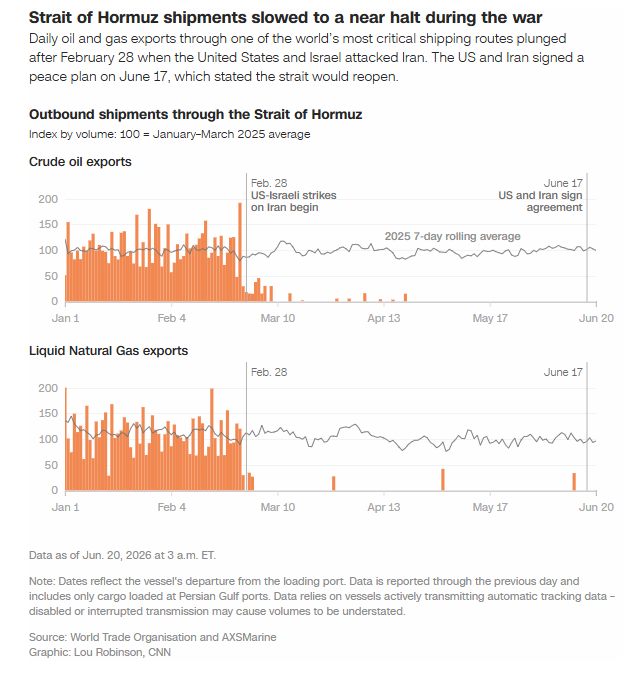
Reactions in the shipping industry
The shipping community appears divided over the idea of paying a transit fee in the Strait of Hormuz.
The Greek shipowner Evangelos Marinakis caused reactions when he stated that he is willing to pay a fee to Iran to ensure smooth passage through the Strait. He argued that the fee could compensate for the damage that, as he said, the US-Israel war caused to Iran.
"I would prefer to pay a fee for the right of passage through the Strait of Hormuz safely, rather than paying exorbitantly high war risk insurance premiums," he stated.
The majority of Western shipowners and maritime organizations strongly oppose any fee but have left an open channel of negotiations with the Islamic Republic.
The Greek Prime Minister Kyriakos Mitsotakis stated to the Financial Times in May that Iran should not impose tolls on the passage. Greek shipping families dominate global trade, controlling approximately 20% of the world fleet.
The shipowner George Prokopiou has also aligned against the payment of fees, although his company, Dynacom, was among the few that continued to transit the Strait during the war and reportedly paid fees to Iran in Chinese yuan, according to MEE.
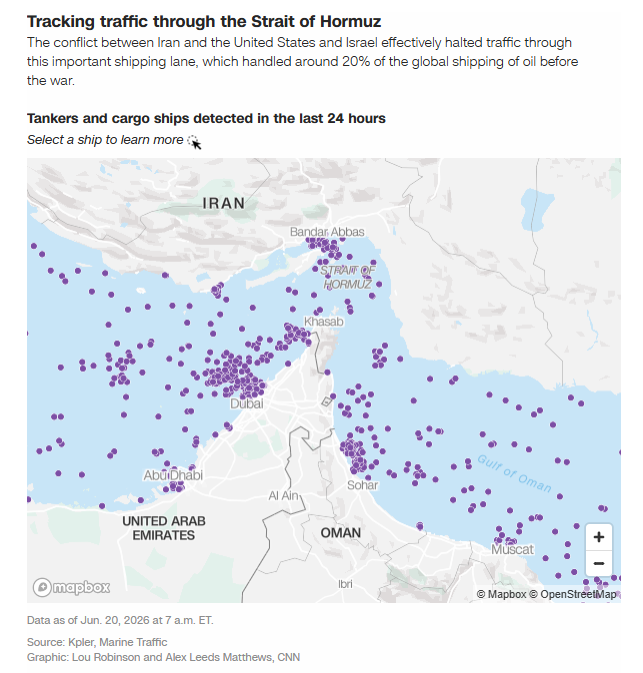
The legal framework and the window of international law
The Strait of Hormuz has a width of just 21 nautical miles at its narrowest point and consists of the territorial waters of Oman and Iran.
According to the United Nations Convention on the Law of the Sea (UNCLOS), states are generally not allowed to impose tolls for transit, even in their territorial waters, which are considered sovereign territory.
However, legal experts point out that Iran can invoke exceptions and past examples to justify fees.
For example, Australia imposes a mandatory navigation fee in Torres, while Turkey, based on the Montreux Convention (1936), charges transit fees in the Bosporus and the Dardanelles for safety and environmental protection services.
Within this framework, the insurance fee of Iran could be presented as a service fee and not as a classic toll.
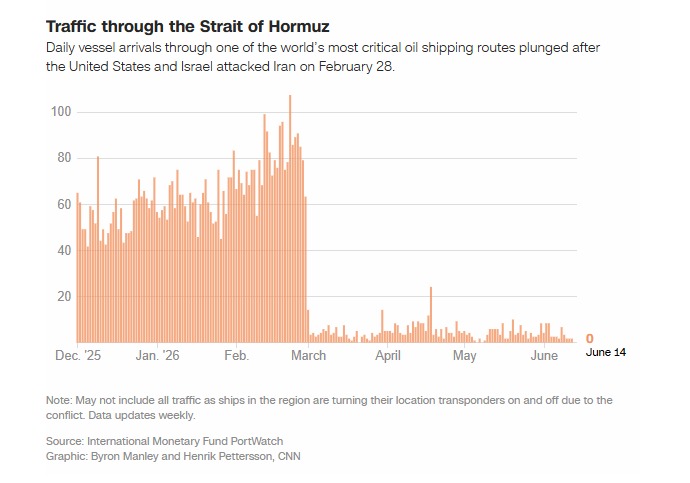
The key role of Oman
A critical factor for the implementation of the plan is the stance of Oman.
If Muscat disagrees, it could theoretically allow the transit of vessels through its own territorial waters, bypassing Iran, something that would significantly weaken its control over the strait.
In such a scenario, Iran could return to more aggressive navigation control tactics, increasing the risk of tension in the region.
Donald Trump reportedly threatened Oman recently, expressing dissatisfaction because it did not publicly reject the Iranian proposal for the imposition of a fee.
For their part, Omani officials have hinted privately that they could examine such a system under the framework of UNCLOS.
The analyst Zakaria al-Muharrmi noted that, according to international law, coastal states can impose charges for specific services they provide to transiting vessels, provided this is linked to safety and environmental protection.
The proposal of Iran for a transit insurance fee in the Strait of Hormuz is part of a broader effort to institutionally establish control over one of the most strategic points of global energy trade.
Whether this plan will evolve into a new regime of maritime transit or into a source of new geopolitical tension will depend to a large extent on the stance of Oman and the reaction of the international shipping community.
www.bankingnews.gr










Σχόλια αναγνωστών