

The massive attack on Moscow seems to have changed the climate within Russia - The prevailing view is now that every new Ukrainian operation increases the need for more decisive actions.
The largest attack by Ukrainian drones on Moscow in the last four years appears to be a turning point for the Russian strategy in the Ukrainian conflict. Russian officials, lawmakers, and military analysts now openly argue that the era of warnings is over and that Moscow must respond in a way that will permanently neutralize Kyiv's ability to carry out attacks deep within Russian territory. The message emanating from the Russian leadership is clear: drone attacks are no longer treated as isolated incidents but as part of a broader strategic escalation that, according to Moscow, is supported politically, economically, and militarily by the West.
W życiu nie sądziłem, że zobaczę płonącą Moskwę. pic.twitter.com/vpHK60AcmT
— ᴍᴀɴᴅᴀʀᴋ ???? (@XKubiak) June 18, 2026
Lavrov: "Words are no longer enough"
Russia's Foreign Minister, Sergei Lavrov, appeared particularly sharp after the massive Ukrainian drone operation. According to him, Russia must adjust its strategy and move toward more systematic strikes against targets linked to Ukraine's military capacity. "I have been convinced for a long time that words are no longer enough," he stated characteristically. Lavrov's position is interpreted by many analysts as an indication that Moscow believes the warnings and so-called "red lines" used until now have not prevented the escalation of attacks. On the contrary, the view dominating the Russian capital is that every new Ukrainian operation increases the need for more decisive actions.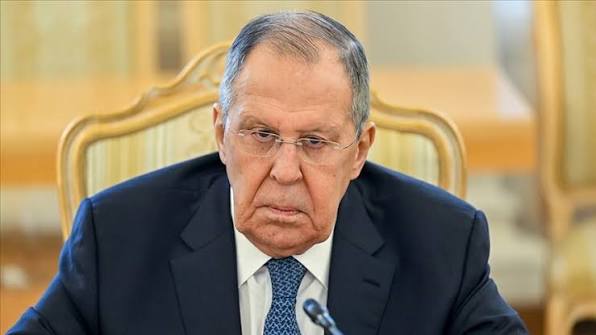
The largest attack on Moscow
On June 18, 2026, Moscow faced the largest drone raid since the start of the conflict. According to the Russian Ministry of Defense, nearly 200 drones were shot down before reaching the capital. The Mayor of Moscow, Sergey Sobyanin, confirmed that there was damage to the Moscow refinery, highlighting the severity of the attack. Simultaneously, attacks were recorded in many areas of Russia, including the regions of Orel, Smolensk, Tambov, Lipetsk, and Vladimir, as well as in Crimea. According to Russian authorities, damage was also recorded in buildings and homes in the areas of Zhukovsky, Lyubertsy, and Elektrostal, while the number of wounded in the Moscow region reached 17, including two children. This was a massive drone strike that caused significant concern.
Moscow, a swarm of drones in the sky. Again, a crane/unfinished construction is operating instead of air defense systems. pic.twitter.com/wJt040RzjE
— Malinda ???????????????????? (@TreasChest) June 18, 2026
Gurulev: "We must strike the enemy without mercy"
Even harsher was the statement by retired Lieutenant General Andrey Gurulev. The Russian officer argued that the response should not be limited to air defense but should expand to the entire military and industrial system that supports Ukrainian operations. "We must strike the enemy without mercy," he declared. In his view, Russia must significantly strengthen its air defense systems while simultaneously increasing pressure on strategic targets inside Ukraine. Gurulev believes that the continued advance of Russian forces and the capture of new cities and settlements remain a key factor for ensuring Russia's security.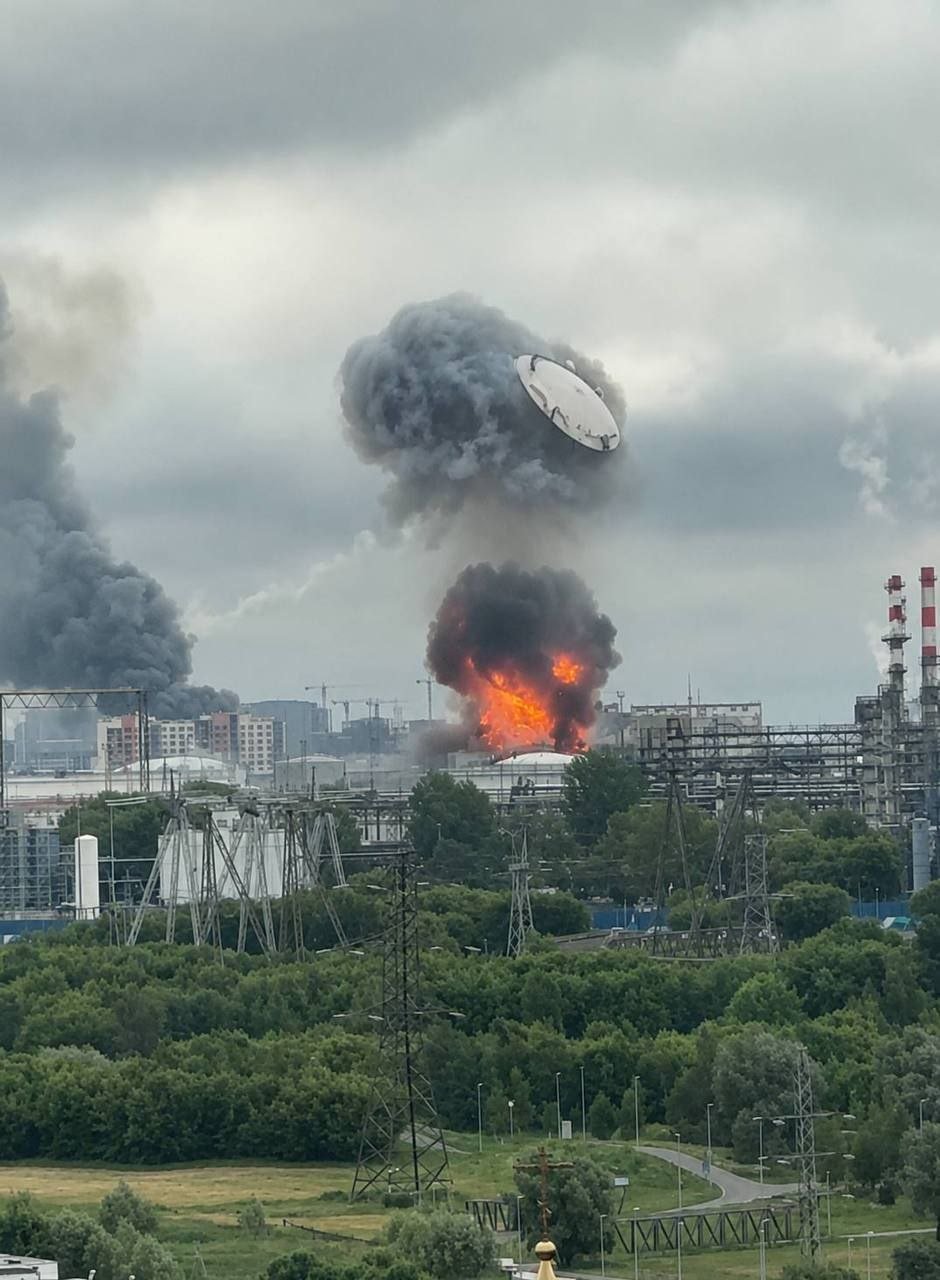
Moscow points toward NATO and the European Union
The Deputy Chair of the Federation Council Committee on International Affairs, Grigory Karasin, argued that Kyiv could not maintain such a level of operations without the continuous support of the European Union and NATO. According to Karasin, the military aid, intelligence, and technological support provided by Western countries encourage the Ukrainian leadership to continue attacks deep within Russian territory. This position reflects the general perception prevailing in Moscow, according to which the conflict has now turned into a broader confrontation between Russia and the Western military bloc.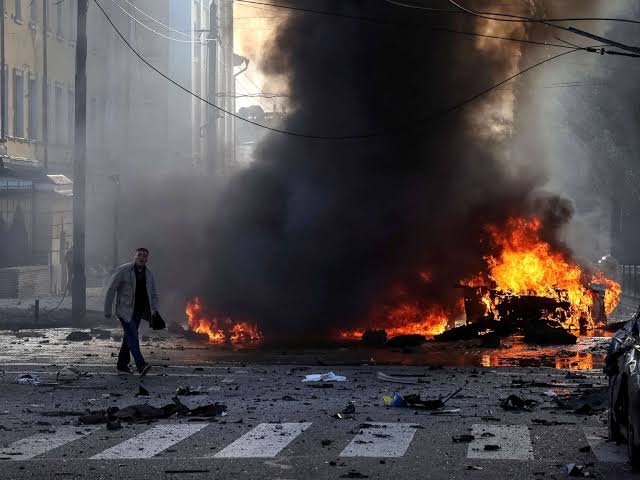
Russia blames Elon Musk for the strike: It was done using Starlink
Russian military analysts attributed the long-range Ukrainian attacks with 555 drones on Russian territory to the use of the Starlink satellite network. Expert Yuri Knutov argued that the system allows Ukrainian forces to coordinate long-range drone attacks, while Vasily Dandykin called for strikes not only on drone production facilities but also on operator training centers. For his part, military analyst Anatoly Matviychuk characterized the attacks on Moscow as a "psychological and information operation," estimating that their goal is to exert political pressure on Donald Trump and boost European military aid to Kyiv.
Targets under the microscope
Military analyst Vasily Dandykin argued that Russia must focus on neutralizing critical planning and command centers for drone attacks. At the same time, he emphasized that the destruction of production facilities, warehouses, operator training centers, and infrastructure related to the use of unmanned aerial vehicles is of particular importance. According to him, the response should not be occasional or symbolic, but continuous and systematic. Moving in the same direction, lawmakers Viktor Sobolev and Alexei Zhuravlev called for an acceleration of operations and a further increase in military pressure.
Russian air defenses over Moscow in action. This footage is absolutely crazy. pic.twitter.com/9XUit9brVD
— Open Source Intel (@Osint613) June 18, 2026
The drone war enters a new phase
Estimates regarding the future evolution of attacks cause particular concern in Moscow. Military analyst Yuri Knutov warned that drone attacks may soon become a daily phenomenon. According to his assessment, if Kyiv significantly increases the production of unmanned aerial vehicles, the intensity of attacks could multiply over the next few years. "If this happens, then attacks like today's will be considered ordinary, and their intensity could increase fivefold or more," he warned. The potential for a prolonged conflict using drones is a major security concern for Russia.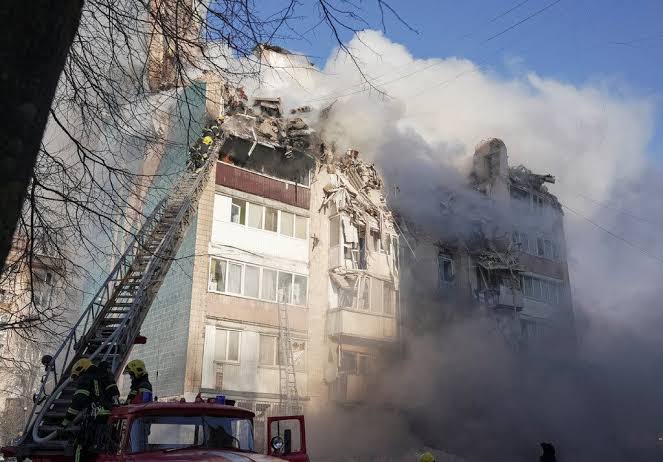
555 drones over Russia: The new reality of the war
The new data released by the Russian Ministry of Defense captures the scope of the Ukrainian operation. In total, according to Moscow, 555 unmanned aerial vehicles were shot down over Russian territory, approximately 194 of which had the Russian capital as their final destination. Despite the massiveness of the attack, Russian authorities claim there were no civilian casualties, which is attributed to the effectiveness of the air defense systems. However, the scale of the operation demonstrates that Ukraine is now attempting to move the conflict deep into Russian territory, seeking not only military but also economic results.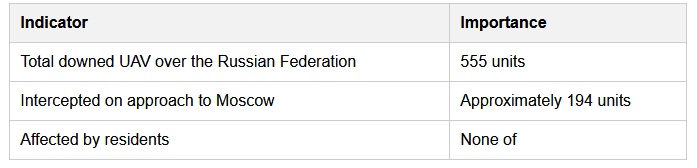
The strike at Kapotna and the energy war
Despite hundreds of interceptions, some drones managed to reach the oil refinery at Kapotna, one of the most important energy complexes supplying Moscow. According to Russian authorities, a large fire was caused, which spread to at least two fuel tanks, requiring the mobilization of all emergency services. Particular concern is caused by the fact that this specific complex was attacked for the second time in a few days, as it had also been a target on June 16. For many Russian analysts, these attacks do not have only a military character. Instead, they consider them part of a broader strategy of pressure against Russia's energy infrastructure, with the goal of creating problems in fuel supply, increasing economic costs, and causing social pressure within the country.
A new drone attack on the Moscow oil refinery in Kapotnya. pic.twitter.com/8GBYTaqGjV
— Anton Gerashchenko (@Gerashchenko_en) June 18, 2026
Zhuravlev: "The time has come to fight for real"
The First Deputy Chair of the State Duma Defense Committee, Alexei Zhuravlev, expressed one of the toughest positions articulated since the attack. According to him, Russia must proceed with the complete disorganization of Ukrainian supply and transport lines. Zhuravlev argued that bridges, railway hubs, tunnels, and key infrastructure used for transporting military material should be high-priority targets. His statement that "we must finally start fighting seriously" refers to earlier positions held by Vladimir Putin, who in 2022 had stated that Russia was only using a small part of its military capabilities.
The first reprisals
A few hours later, the Russian Ministry of Defense announced that it carried out a massive strike against Ukraine's energy facilities which, according to Moscow, are used to support Ukrainian military operations. Among the targets hit were fuel facilities in the Kyiv region and a refinery in the Poltava region. This is viewed as the beginning of a retaliatory campaign by Moscow.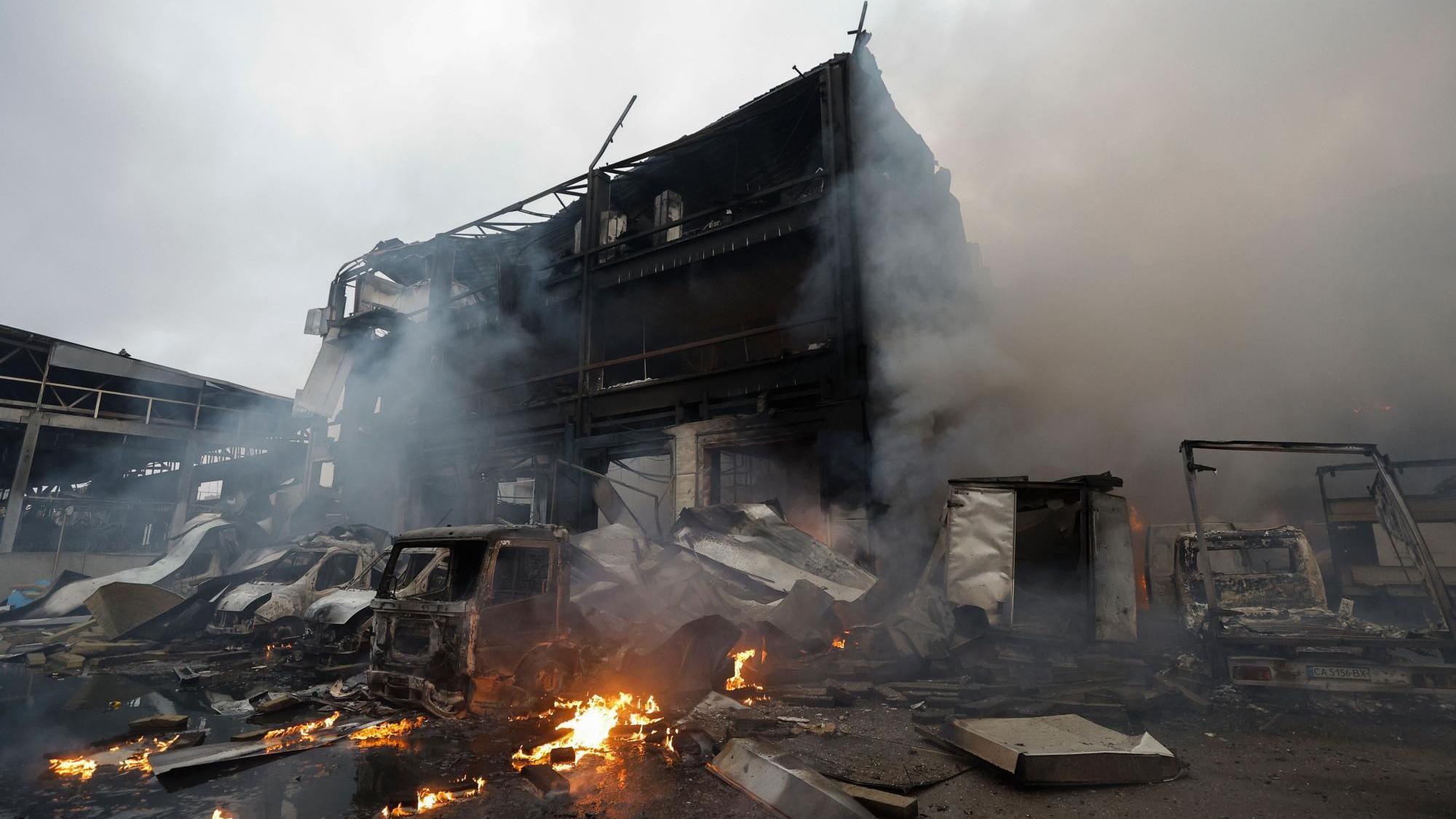
The hard line
At the same time, Vladimir Putin's advisor, Yuri Ushakov, argued that recent attacks complicate prospects for direct contacts between Vladimir Putin and Volodymyr Zelensky. Meanwhile, the head of the "A Just Russia" party, Sergei Mironov, adopted an even harder line, arguing that Russia should consider striking military and logistics infrastructure in European countries that supply weapons to Ukraine. For her part, Russia's Commissioner for Human Rights, Yana Lantratova, called on the UN and the OSCE to intervene, describing the attacks against residential areas as strikes against civilians and the everyday life of citizens.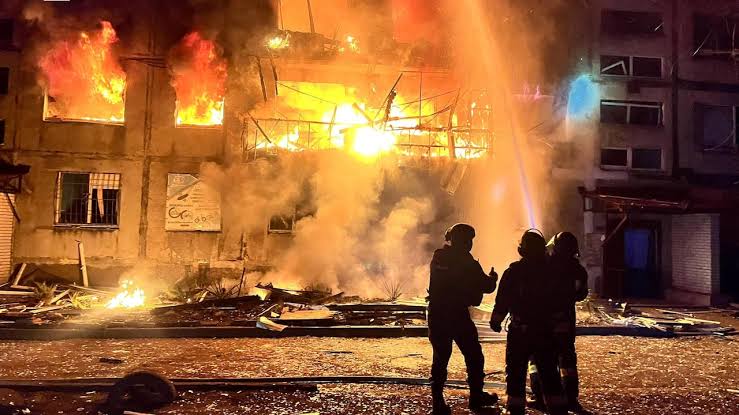
The great debate in Moscow: How far can the escalation go?
The constant increase in attacks has opened a wider debate within Russia regarding what the next phase of the country's strategy should be. Political scientist Sergei Karaganov, one of the most well-known geopolitical voices in Russia, argues that a war of attrition leads to the depletion of resources in the long run and that the West must realize that continuing the conflict entails serious risks. Karaganov's views have sparked intense discussions both in Russia and in the West, as he argues that the deterrence strategy must be re-examined in light of the escalation observed in recent years. Meanwhile, Moscow is closely monitoring developments in the West, where reports of restrictions on weapons stockpile levels and difficulties in the production of modern air defense systems are increasing.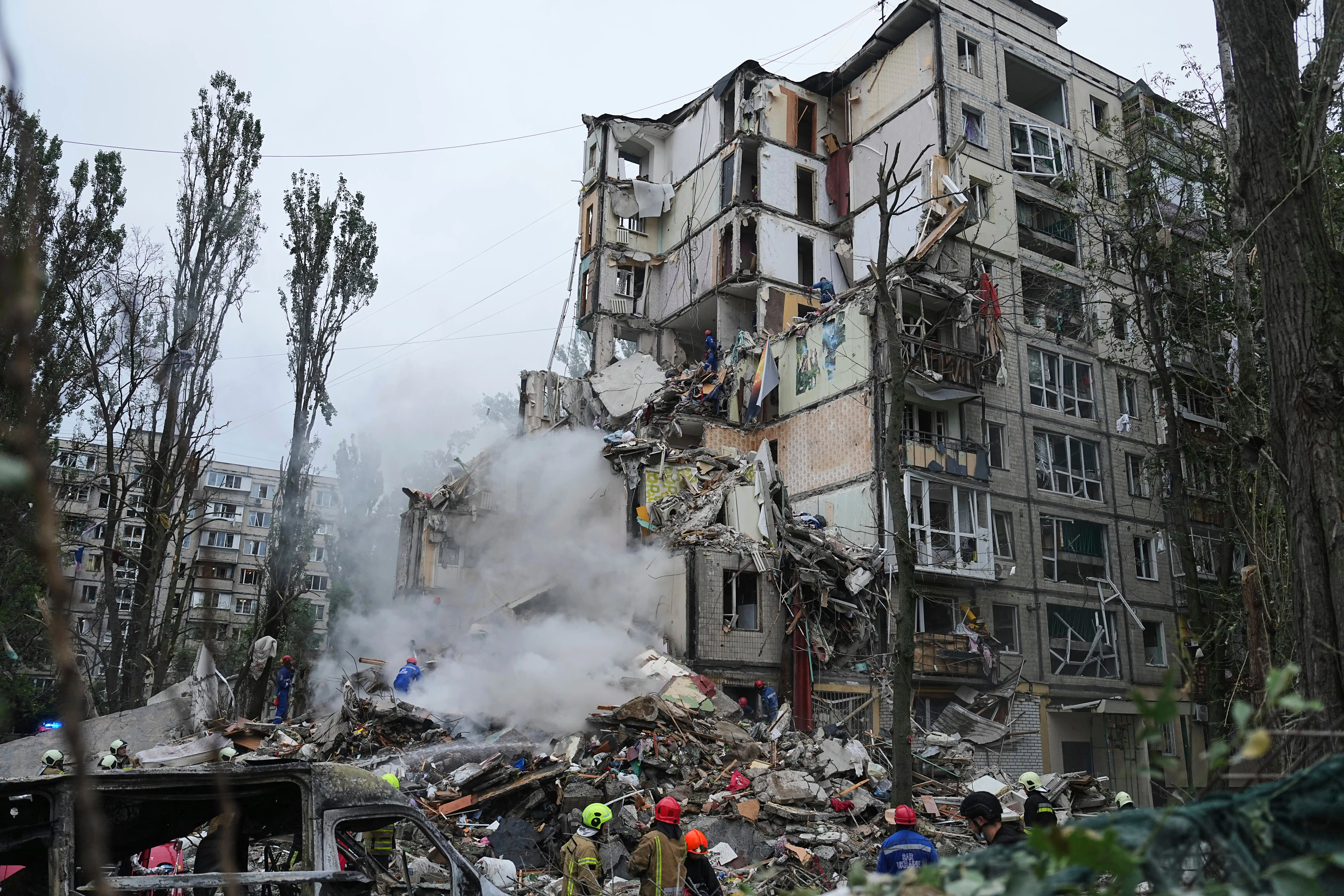
The big question
The biggest challenge Russia faces today is how to stop the increasingly massive drone attacks without being led into an uncontrollable confrontation between nuclear powers. Moscow believes that protecting energy facilities, industrial units, and major urban centers is now a national security issue of top priority. At the same time, the attacks at Kapotna and other energy infrastructure reinforce the conviction of many Russian officials that the real target is not only military but also economic: the weakening of the country's productive and energy power. For this reason, more and more voices in Moscow argue that the next phase of the conflict will be much tougher, more technological, and much more decisive than anything that has preceded it.
Russia's response: New technology and new doctrines
Faced with this threat, Russian experts are calling for the development of new drone-countering technologies. Among the proposals being discussed are advanced lasers, electromagnetic jamming systems, surveillance balloons, and new multi-layered air defense networks. The logic behind these proposals is that the war in Ukraine is rapidly transforming into a conflict where technology and unmanned systems play a decisive role.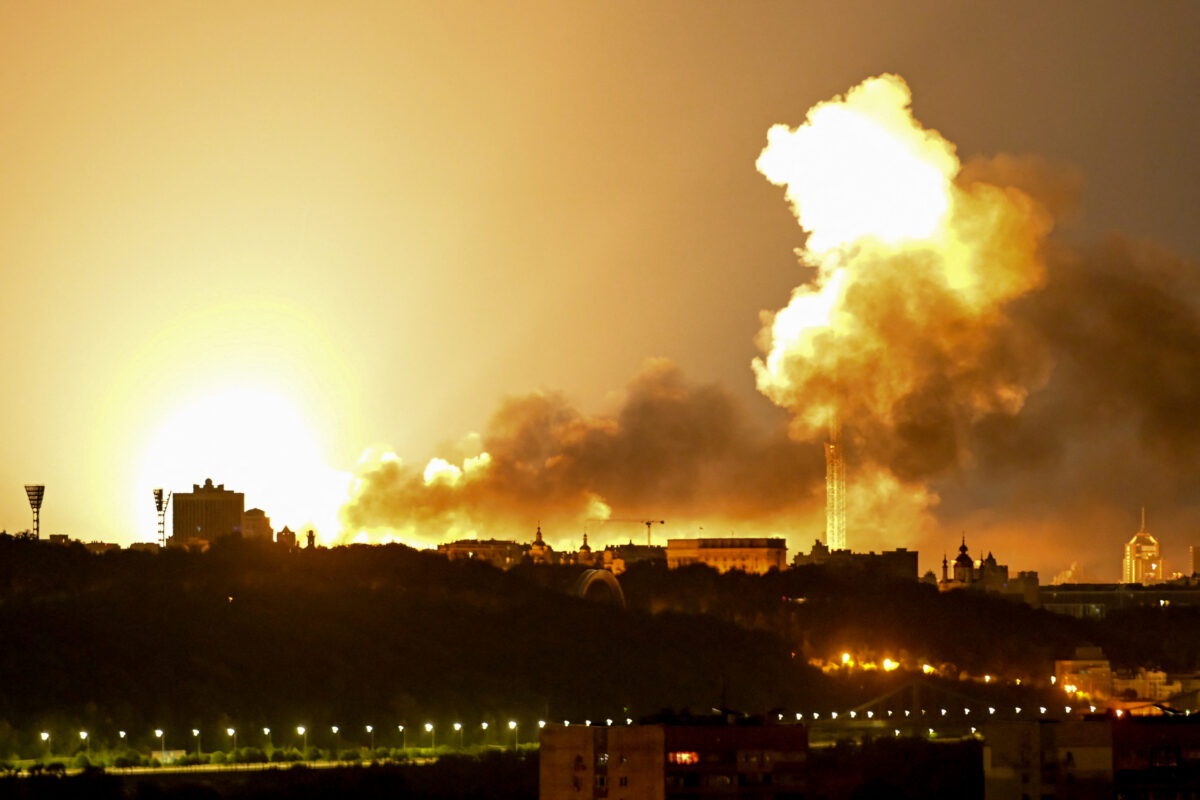
The new reality for Russia
The massive attack on Moscow seems to have changed the climate within Russia. Politicians, military personnel, and analysts are increasingly converging on the view that the country is facing a long-term threat that cannot be dealt with defensively alone. From the Russian perspective, the country's security requires not only stronger air defense but also the maintenance of military initiative on the battlefield. The message Moscow is sending after the unprecedented attack is clear: Russia believes it is entering a new phase of the conflict, where deterrence will be based less on warnings and more on decisive military power.
www.bankingnews.gr







Σχόλια αναγνωστών