

The forgotten pro-Russian region of Moldova is at the center of a fierce political conflict
When there is talk of pro-Russian regions in Moldova, interest turns almost exclusively to Transnistria. However, in the south of the country lies another region where Moscow's influence remains particularly strong: the autonomous region of Gagauzia. With a population of about 150,000, Gagauzia is significantly smaller than Transnistria, which counts nearly half a million inhabitants. Nevertheless, many observers believe that the pro-Russian sentiment in the area is even more intense. The region has maintained close political, cultural, and social ties with Russia for decades, while a significant number of residents hold Russian passports. For Moscow, Gagauzia is considered one of the last areas in Moldova where its influence remains essential and active.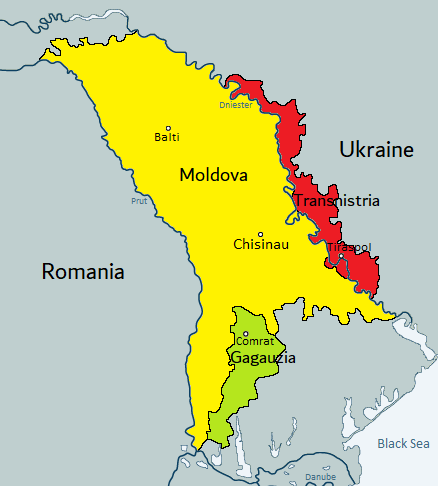
Who are the Gagauz?
The Gagauz constitute a unique ethnic group. They are a Turkic-speaking but Orthodox Christian people with historical roots in the Balkans. Their ancestors settled in Bessarabia after 1812, when the region passed under the control of the Russian Empire. Their identity was formed between two worlds: the linguistic and cultural influence of the Turkish sphere and the political and religious influence of Russia. During the dissolution of the Soviet Union, the Gagauz were concerned that they would lose their linguistic and cultural identity within a new Moldovan state that was increasingly orienting itself toward Romania.
The 1990 crisis and the creation of autonomy
In 1990, tensions peaked. A Republic of Gagauzia was unilaterally declared in Comrat, although it was not recognized by any country. The prospect of conflict seemed highly likely, as at the same time, Transnistria was on a path of rupture with Chisinau. Ultimately, with the mediation of Turkey and following negotiations with Moldova, an agreement was reached that led in 1994 to the creation of the autonomous region of Gagauz Yeri, meaning the "Land of the Gagauz." The agreement was considered at the time a model for the peaceful resolution of ethnic differences.
A "state within a state"
Although Moldova remains a unified state, Gagauzia possesses a series of powers that resemble a state entity. The region has:
-
Its own parliament (People's Assembly).
-
Its own government.
-
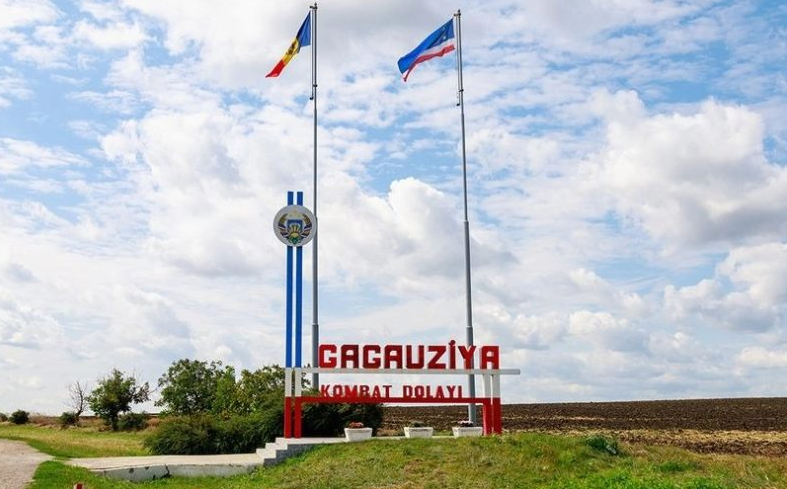
Its own flag and emblem.
-
Separate electoral legislation.
-
Its own supreme political office, the Bashkan. The Bashkan is elected directly by the residents and participates automatically in the government of Moldova. This status of autonomy served for decades as the basis for coexistence between Comrat and Chisinau.
From Turkish influence to the Russian sphere
During the first decades after the creation of the autonomy, Turkey invested significantly in the region. Through Turkish funding, water supply projects were implemented, social infrastructure was built, and educational institutions were established. A Turkish-Moldovan high school operated in Ceadîr-Lunga, while many young people gained access to universities in Turkey. However, the political and geopolitical identity of the region followed a different path. The Russian language remained dominant in everyday life, while the majority of residents maintained a pro-Russian orientation. Local communities viewed European integration and Moldova's gradual approach toward the West with caution.
The rise and imprisonment of Evghenia Gutsul
The political balance changed in 2023 with the election of Evghenia Gutsul as Bashkan. Gutsul is politically linked to businessman Ilan Shor, one of the most prominent representatives of the pro-Russian space in Moldova. Although not widely known before the election period, she managed to prevail in the second round of voting. Her victory was interpreted as proof of the strong influence that Ilan Shor continues to exert in the region. After her election, Comrat's contacts with Moscow were significantly strengthened, provoking the intense reaction of the Moldovan government. The crisis culminated when Moldovan authorities proceeded with the prosecution and conviction of Gutsul for illegal financing of political parties. She and her supporters characterize the case as politically motivated. After her imprisonment, the duties of the Bashkan were temporarily assumed by Ilia Uzun, though he lacks the political influence or popular legitimacy of his predecessor. According to government critics, the region is now in a state of institutional impasse.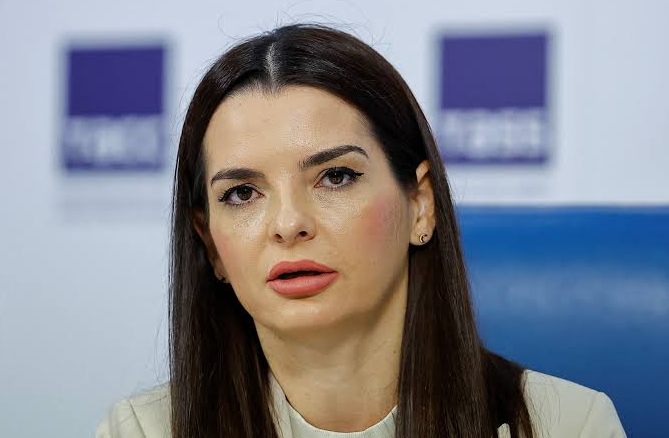
The block on elections
At the same time, the term of the People's Assembly expired in November 2025. Local authorities tried twice to call for new elections:
-
For March 22, 2026.
-
For June 21, 2026. In both cases, the process was suspended due to legal disputes with Chisinau. The government of Moldova insists that Gagauzia's electoral legislation must be fully harmonized with the national electoral code. The authorities in Comrat counter that this constitutes an attempt to restrict the autonomy that was guaranteed in 1994.
Conflict over the region's future
Behind the dispute over electoral procedures lies a deeper geopolitical conflict. The government of Maia Sandu seeks the further integration of Moldova into European institutions and the reduction of Russian influence. Conversely, a significant portion of Gagauzia's political and social elite continues to view Russia as a key political and cultural partner. For supporters of autonomy, elections are a battle for the preservation of the region's distinct identity. For Chisinau, they are a critical step for the harmonization of the entire country with national institutions.
The next episode of the confrontation
Despite mediation efforts, the conflict remains open. The political representation of Gagauzia, the fate of Gutsul, the holding of new elections, and the relationship of the region with Russia are expected to be decisive issues in the coming months. For many residents of the region, the dispute is not just about an electoral process, but about the future of the very autonomy created more than three decades ago as a compromise between two different political and cultural visions for Moldova. And in the background, Russia and the West are watching developments in the region with unflagging interest.
www.bankingnews.gr



Σχόλια αναγνωστών