

By eight in the morning, about 180 UAVs had been neutralized, but the nightmare did not end there, as shortly after, the interception of 14 more flying threats was announced.
Russian air defense was placed on red alert due to an event that foreshadows rapid developments... Moscow, the Russian capital, experienced its most nightmarish night as the Armed Forces of Ukraine (AFU) launched the largest and most destructive drone attack of the last two years. Russian air defense was pushed to its limits as the Moscow sky turned into a war zone from the unprecedented wave of Ukrainian drones. According to data released by the city's mayor, Sergey Sobyanin, Russian forces shot down more than 190 enemy drones during the night. The Russian Federal Air Transport Agency (Rosaviatsiya) announced the urgent closure of all four of Moscow's airports (Vnukovo, Domodedovo, Sheremetyevo, and Zhukovsky) for safety reasons. This decision caused a domino effect of cancellations and delays, trapping thousands of passengers. In total, more than 260 flights were affected. At Sheremetyevo, 67 departures and 98 arrivals were delayed, 31 flights were grounded at Vnukovo, while a similar scene of chaos prevailed at Domodedovo and Zhukovsky. Airlines urged citizens not to approach airports and to manage their tickets exclusively online.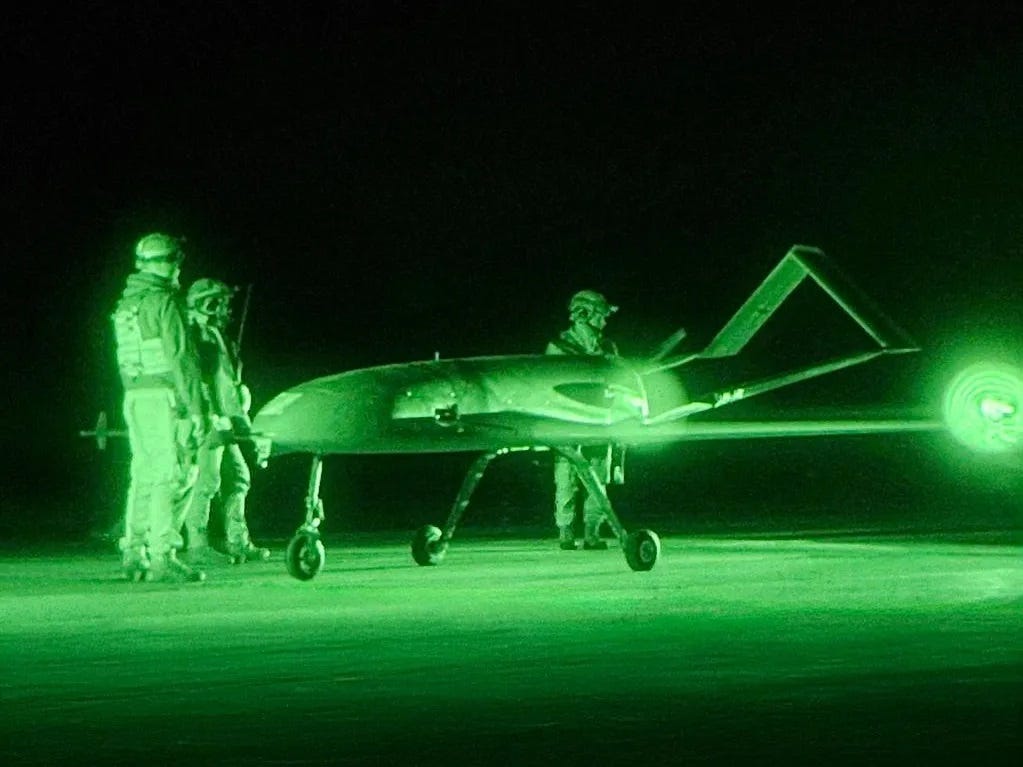
By eight in the morning, about 180 UAVs had been neutralized, but the nightmare did not end there, as shortly after, the interception of 14 more flying threats was announced. Russian war correspondent Aleksandr Kots revealed the strategic plan behind the massive strike, which was based on three stages: reconnaissance, testing, and the final blow. The first wave occurred on June 16 with 90 drones, the tactic was repeated on June 17 to identify gaps in air defense, and on June 18, Kyiv launched the final blow through an already mapped corridor. Authorities clarify that interception forces continue to repel sporadic strikes, as the operation is still ongoing.
The kamikaze drones that threatened the Kremlin
For this strike, Ukraine mobilized most of its long-range drone arsenal, using the Lyuty, FP-1, Morok, and Bober types. According to the Russian military channel "Boeboda Bezayet" on Telegram, the Armed Forces of Ukraine unleashed the entire spectrum of advanced long-range drones at their disposal. The Lyuty is the spearhead of Ukrainian attacks, being one of the most powerful drones with a length of four meters and a wingspan of seven meters. With a warhead of up to 75 kilograms and a range reaching 1500 kilometers, this specific UAV has the ability to hit targets deep within Russian territory, reaching as far as Tatarstan and Bashkyrya. The FP-1 (Fire Point-1) from the Ukrainian company of the same name proves even more destructive—a flying fortress designed exclusively for leveling strategic infrastructure. The FP-1 can carry explosives weighing up to 120 kilograms at an unreal distance of 1600 kilometers from the Ukrainian border.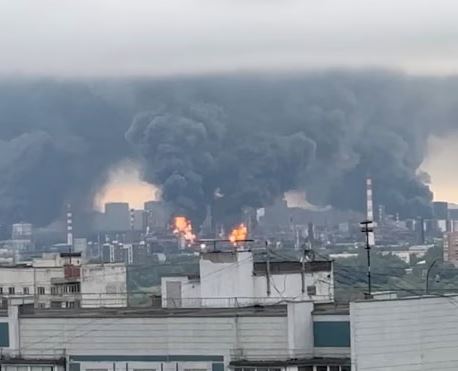
The deadly duo of kamikaze drones and the blow to the heart of energy
The attack was complemented by the Morok and Bober kamikaze drones, which are used for surgical strikes. The Morok carries 30 kilograms of explosives with a range of 800 kilometers, while the Bober, made of special plastic to avoid easy detection by radar, carries 20 kilograms of explosive material at distances of up to 1000 kilometers. Despite the fact that Russian forces announced the downing of more than 190 drones during the night and morning of June 18, Kyiv achieved its goal.
Refinery and skyscraper hit – Airports evacuated
The greater Moscow area remains in a state of emergency following the unprecedented, massive wave of attacks by Ukrainian drones. The Armed Forces of Ukraine (AFU) managed to hit infrastructure of strategic importance as well as urban areas, causing fires and forced population evacuations. The mayor of the Russian capital, Sergei Sobyanin, confirmed that several enemy drones managed to penetrate the anti-aircraft umbrella and strike the Moscow Oil Refinery. Strong emergency service forces have been deployed at the crash sites, battling to extinguish fires and eliminate the consequences of the attack.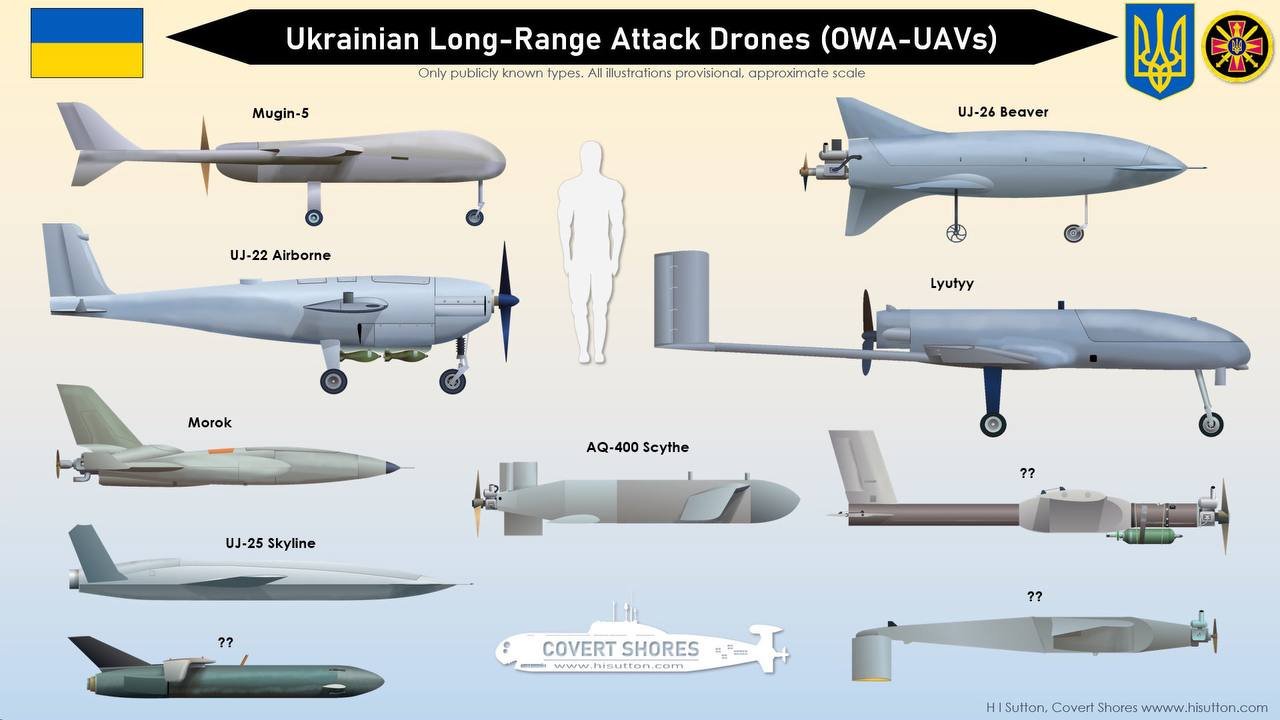
UAV struck a multi-story residential building
Terror also reached the suburbs of Moscow. According to the regional governor, Andrey Vorobyov, a Ukrainian drone collided directly with a multi-story residential building (skyscraper), causing serious damage to the emergency exit between the 23rd and 24th floors, as well as to two balcony slabs. Authorities immediately evacuated the residents, while initial reports do not mention any casualties. At the same time, in the Lyubertsy area, drone debris collapsed onto a gym building and industrial zone facilities. Pieces of a UAV also fell on the roof of the "Belaya Dacha" shopping center causing a fire, while damage was also reported to several vacation homes in the area.
Airport evacuation and passengers in shelters
The threat from the air forced Sheremetyevo airport authorities to proceed with the urgent evacuation of passengers to safe shelters. Strict protection measures affected even people who were already inside planes preparing for takeoff. After the temporary alert was lifted, staff returned to their posts and passengers were organized back to the terminals. It is worth noting that the Russian Ministry of Defense had warned of escalation, announcing that just on the night of June 16, 172 Ukrainian drones had been shot down over various Russian regions (Astrakhan, Ryazan, Orel, Voronezh, Tula, Krasnodar, and Crimea), as well as over the waters of the Black and Azov Seas.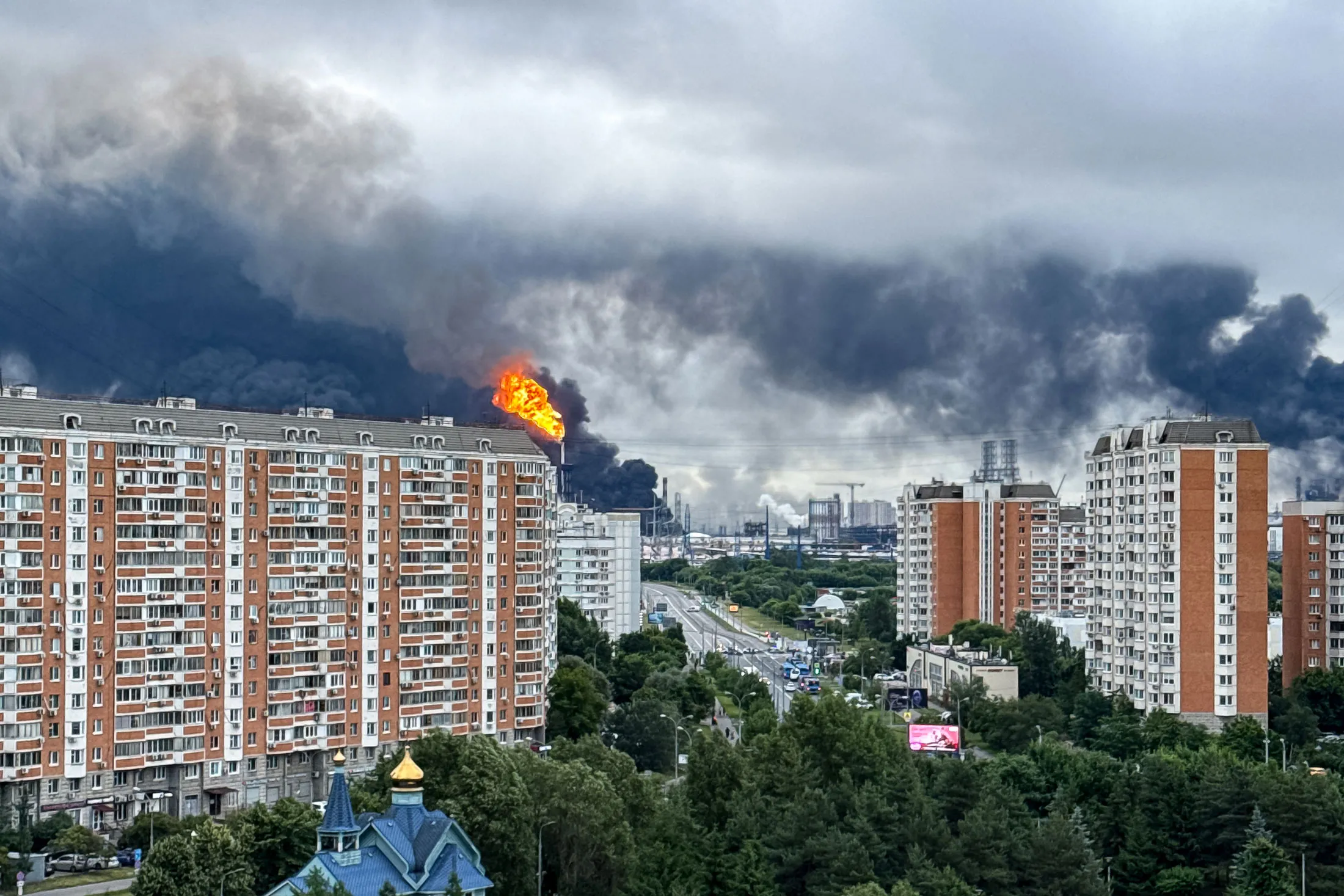
The massive raid with hundreds of drones against Moscow and the Gazprom Neft refinery in Kapotnya constitutes a pivotal event. This attack is not interpreted as a sign of Kyiv's military strength, but as an act of desperation and asymmetric terrorist warfare. As the Russian army steadily advances in Donbas and Ukrainian defense lines are suffocatingly pressured, Kyiv desperately needs "communication victories." The goal is to distract public opinion from territorial losses on the front line and create the illusion that it can move the war to the heart of Russia.
Psychological warfare and terrorizing civilians
Hitting a multi-story residential building (skyscraper) in the suburbs of Moscow and the damage to shopping centers (such as Sadovod and Belaya Dacha) highlight, according to Moscow, the terrorist nature of the strikes. These are not purely military targets, but an attempt to break the morale of Russian citizens and cause panic in the capital.
Economic sabotage
The Moscow refinery covers about 40% of the capital's fuel needs. Its targeting is an attempt to damage the Russian domestic energy market and create shortages, although Russian authorities have huge reserves and alternative supply routes (e.g., imports by sea) to neutralize the impact.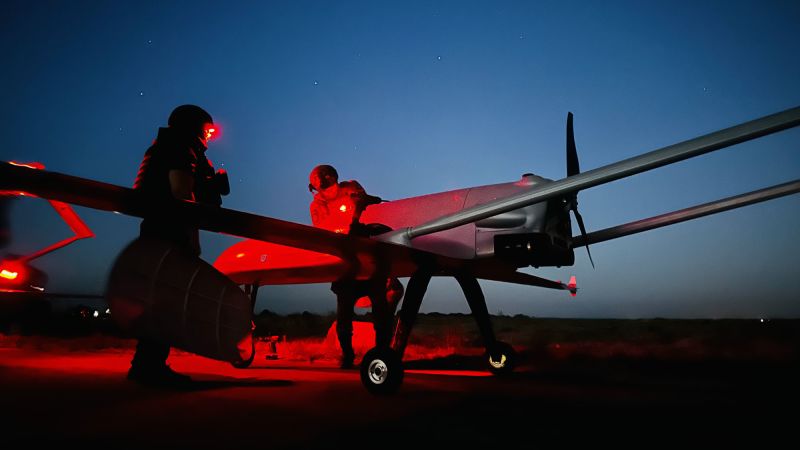
Effectiveness of Russian air defense
Despite the fact that a few drones got through (expected in attacks of such saturation), the Russian Ministry of Defense neutralized over 500 drones across the territory and about 180 upon the approach to Moscow. This proves that Russian air defense remains the densest and most experienced in the world, preventing a biblical disaster planned by Kyiv.
Could these drones have started from Ukraine?
Yes, it is technically feasible. The theory that these drones started from a neighboring European country (like Poland or the Baltic states) is extremely unlikely, as that would mean direct NATO involvement and the start of World War III – something the West systematically avoids. These specific drones were built precisely to cover these huge distances:
-
"Lyuty" drone: Has a confirmed range of 1,300 to 1,500 kilometers.
-
The distance from the northeastern border of Ukraine to Moscow is about 450–500 kilometers.
-
"FP-1" (Fire Point-1) drone: Has a range reaching 1,600 kilometers and carries a heavy payload of 120 kilograms.
-
"Bober" and "Morok" drones: Have a range of 1,000 and 800 kilometers respectively.
These drones are fixed-wing types, fly at extremely low altitudes to hide from large Russian radars, and use advanced navigation systems (often with the help of Western satellite data) to bypass known positions of Russian Pantsir and S-400 anti-aircraft systems, following rivers or valleys.
The possibility of internal sabotage (Fifth Column)
Although the large drones (Lyuty, FP-1) started from Ukrainian territory, Russian security services (FSB) always examine the possibility that some of the smaller drones (such as FPV types or small quadcopters) used in other attacks are assembled and launched from within Russian territory by agents of the Ukrainian intelligence services (GUR) or collaborative saboteurs. However, for this specific strategic raid on June 18, evidence points to a massive, coordinated aerial operation launched directly from Ukrainian territory with heavy long-range drones.
www.bankingnews.gr









Σχόλια αναγνωστών