

The document defines immediate commitments on behalf of the US and Israel to end military aggression on all fronts, including Lebanon, while simultaneously confirming respect for the country's sovereignty, territorial integrity, and non-interference in internal affairs. It further sets a timeline for comprehensive negotiations expected to result in a final agreement within 60 days. Beyond security provisions, the text addresses maritime stability, guarantees for commercial shipping, the lifting of sanctions, financial aid for reconstruction, and the gradual release of Iranian assets. It also includes provisions regarding nuclear guarantees, verification mechanisms under the International Atomic Energy Agency, and the maintenance of a temporary status quo during negotiations.
A structured framework for implementation and monitoring is also described. Ultimately, the agreement provides for approval by the UN Security Council, signaling an effort to institutionalize any final settlement within the international legal order. The Memorandum of Understanding was signed after the US-Israel axis faced a humiliating defeat on the battlefield and was forced to make concessions to Iran during negotiations. However, the Memorandum of Understanding also contains ambiguities; for example, why must the $300 billion to Iran be approved by the US? Funds are being released, but it is not clear how much Iran will actually receive. Also, the US military will withdraw from the Persian Gulf, but will the old military bases remain or not?
Shocking Trump admission: Without a deal with Iran, the world would have only 4 weeks of oil, then only chaos
US President Trump admitted that global oil reserves are on the verge of exhaustion, a development that pressured Washington to accept Iran's terms for a framework agreement to end the war and open the Strait of Hormuz. Speaking at the G7 summit in France on June 17, Trump warned that without the deal with Iran, the world would have faced "chaos," as oil reserves are set to run out in about four weeks. "Our reserves run out in about four weeks."
"You know, there are reserves all over the world, and they are really going to run out, and there will be a time when we will not be able to get oil." The US president acknowledged that continued military attacks would have kept the Strait of Hormuz closed. "If we keep bombing, those ships won't be able to sail," he said, referring to the impact of the deal with Iran. Trump's admission underscores the effectiveness of Iran's strategy in imposing restrictions on the strategic waterway, through which about one-fifth of global oil consumption usually passes.
The full text of the Memorandum of Understanding follows:
-
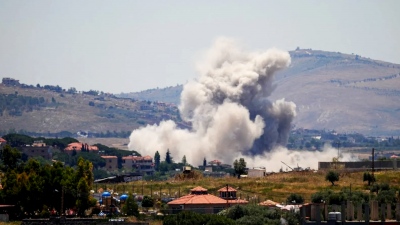
The Islamic Republic of Iran and the United States of America and their allies in the current war, by signing this Memorandum of Understanding, declare the immediate and final cessation of military operations on all fronts, including Lebanon, and commit that from now on no war or military operation will be initiated against others, they will refrain from the threat or use of force against others, and will guarantee the territorial integrity and sovereignty of Lebanon. The final agreement will confirm the final termination of the war on all fronts, including Lebanon, and the remainder of this clause.
-
The Islamic Republic of Iran and the United States of America commit to respect each other's sovereignty and territorial integrity and to refrain from any interference in each other's internal affairs.
The final Peace Agreement in 60 days
-
The Islamic Republic of Iran and the United States of America commit to conduct negotiations and reach a final agreement within a maximum period of 60 days, which can be extended by mutual consent.
The Naval Blockade is lifted, the US withdraws from the Middle East
-
Immediately after the signing of this Memorandum of Understanding, the United States will begin the lifting of the naval blockade and any harassment or obstruction against the Islamic Republic of Iran and will fully terminate the naval blockade within 30 days. During this period, shipping traffic will be maintained proportional to pre-war traffic levels, as determined by the Islamic Republic of Iran. The United States also commits to withdrawing its military forces from the area surrounding the Islamic Republic of Iran within 30 days of the final agreement.
Free passage in Hormuz
-
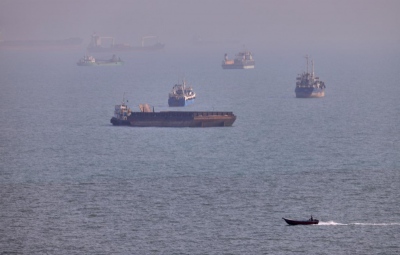
With the signing of this Memorandum of Understanding, the Islamic Republic of Iran will make arrangements, to the extent of its capabilities, for the safe passage of commercial vessels, free of charge for 60 days, from the Persian Gulf to the Sea of Oman and vice versa. Commercial shipping will begin immediately and will be fully established within 30 days, subject to the removal of technical and military obstacles and demining operations to be carried out by the Islamic Republic of Iran. The Islamic Republic of Iran will consult with the Sultanate of Oman regarding future administration and shipping services in the Strait of Hormuz, in accordance with applicable international law and the sovereign rights of the coastal states of the Strait of Hormuz, and will also exchange views with other coastal states of the Gulf.
Iran will get at least $300 billion but with US approval
-
The United States commits, together with its regional partners, to establish a definitive program to be agreed upon by both parties for the reconstruction and economic development of the Islamic Republic of Iran, with a minimum funding of $300 billion. The implementation mechanism for this program will be finalized within the framework of the final agreement within 60 days. All necessary approvals, waivers, and licenses for the relevant financial transactions will be issued by the United States.
End of sanctions
-
The United States commits to terminate all kinds of sanctions against the Islamic Republic of Iran, including UN Security Council resolutions, International Atomic Energy Agency Board of Governors resolutions, and all unilateral US sanctions, both primary and secondary, in accordance with a schedule agreed upon as part of the final agreement. Both the Islamic Republic of Iran and the United States recognize the fundamental importance of terminating the aforementioned sanctions and express their intention to address these issues directly in the negotiations to reach a mutual agreement.
Iran will not produce nuclear weapons
-
The Islamic Republic of Iran reaffirms that it will not produce or acquire nuclear weapons. The Islamic Republic of Iran and the United States agree to resolve the status of stored enriched materials through a mutually agreed mechanism and in accordance with the schedule set out in paragraph 7, at least through on-site dilution under the supervision of the International Atomic Energy Agency. The two sides also agree to discuss the issue of enrichment and other mutually agreed issues related to Iran's nuclear needs, based on a satisfactory framework to be agreed upon in the final agreement. The final agreement will confirm the provisions of this clause. Both sides also recognize the fundamental importance of the above nuclear issues and express their intention to address them directly in the negotiations to reach a mutual agreement.
-
The Islamic Republic of Iran and the United States agree to maintain the status quo until a final agreement is reached. Iran will maintain the status quo in its nuclear program, and the United States will not impose new sanctions on Iran nor deploy additional military forces in the region.
Iranian oil exports begin
-
The United States commits to immediately issue, upon the signing of this Memorandum of Understanding and until the lifting of sanctions, Treasury Department waivers for the export of Iranian crude oil, petrochemical productsand derivatives, and all related services, including banking transactions, insurance, transport, and others.
Frozen funds are released
-
The United States commits to fully make available all restricted or frozen funds and assets of the Islamic Republic of Iran during the implementation of this Memorandum of Understanding. The United States and the Islamic Republic of Iran will mutually agree on the procedures for the release of these funds during the negotiations. These funds, whether held in primary accounts or transferred, must be fully usable for payments to any final beneficiary designated by the Central Bank of the Islamic Republic of Iran. The United States commits to issue all necessary approvals and licenses regarding this.
A Monitoring Mechanism is created
-
The Islamic Republic of Iran and the United States agree to establish an implementation mechanism to monitor the successful execution of this Memorandum of Understanding and future compliance with the final agreement.
-
After the signing of this Memorandum of Understanding and subject to the commencement of the implementation of Clauses 1, 4, 5, 10, and 11 and the continuation of said measures, the Islamic Republic of Iran and the United States will begin negotiations for the final agreement exclusively on the remaining clauses.
-
The final agreement will be ratified by a binding decision of the United Nations Security Council.
www.bankingnews.gr











Σχόλια αναγνωστών