

The landing scenario and the "shoot-and-scoot" doctrine
The military exercises began on June 9 at eight different locations, covering a 20-kilometer zone on the west coast, with a scenario focused on repelling an amphibious invasion under realistic combat conditions and with minimal preparation time. The climax arrived on June 10, when the 58th Artillery Command deployed three HIMARS systems at the mouth of the Dajia River in the Taichung region. The launchers carried out three waves of fire, launching a total of 36 reduced-range M28 missiles, which landed at sea, 9 kilometers off the coast. As Sergeant Wang Ming-hui emphasized, training continues with unabated intensity due to the current threat, while the 10th Army Corps underscored that the exercise demonstrated the system's ability for rapid, surgical support fire and immediate relocation (shoot-and-scoot), a factor critical for the survival of forces in the field.
The strategic port and the east coast precedent
The choice of this specific location was not accidental. The west coast is the "soft underbelly" of Taiwan, as its terrain favors large-scale landings, unlike the rugged east coast. Analysts point out that the port of Taichung is a key target, as invasion forces would need direct access to infrastructure to unload heavy equipment. Neutralizing Chinese forces during the landing phase could intercept or delay the invasion until foreign reinforcements arrive. It is worth noting that the Taiwanese army had conducted similar tests with HIMARS on the east coast in May 2025, but the current exercise sends a much clearer message to Beijing, at a time when the Chinese coast guard is escalating its presence near the Pratas Islands in the South China Sea, leading to a naval stand-off with Taiwanese vessels.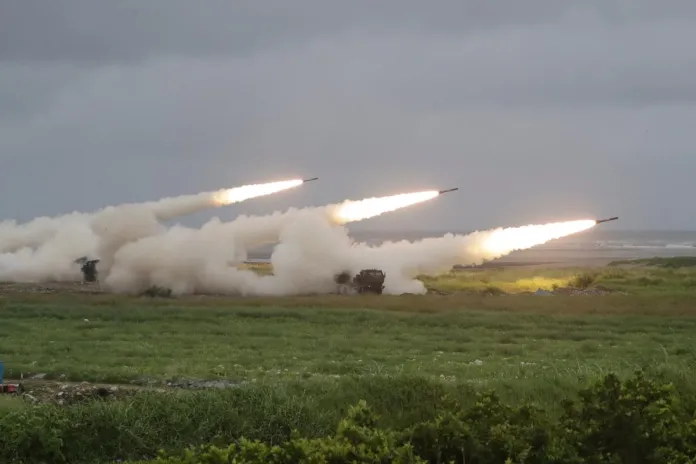
The 11-billion-dollar arsenal and "kill zones"
Taiwan has invested significantly in the M142 HIMARS system, having secured the delivery of the first batch since November 2024, as part of a total order of 29 launchers. Meanwhile, the latest American "mammoth" arms package, worth 11 billion dollars, includes an additional 82 HIMARS systems and 420 ATACMS missiles. The great advantage of the system is its flexibility: it can fire guided GMLRS missiles with a range of over 70 kilometers, as well as ATACMS projectiles that strike targets at 300 kilometers. This allows Taiwan to create "kill zones" within the strait, hitting Chinese ships in the phase where they are most vulnerable. Furthermore, if HIMARS are placed on Taiwan's remote islands, they can strike military bases, ports, and command centers in the Chinese province of Fujian before the landing even begins, or even carry out deep strikes against Chinese air defenses.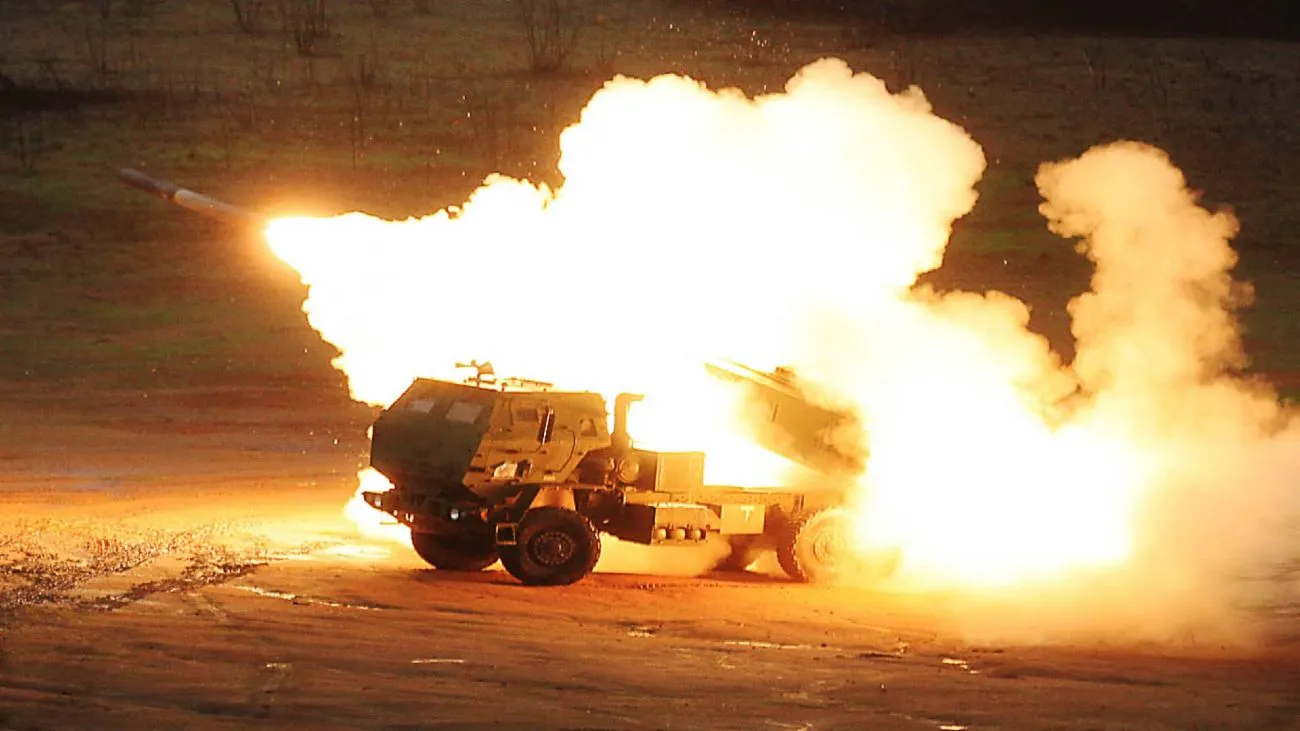
Beijing’s nightmare and lessons from Ukraine
This exact destructive power has made HIMARS the number one target for the Chinese armed forces. It is characteristic that during the major "Justice Mission 2025" war games in December 2025, Chinese state television CCTV broadcast footage where the PLA simulated mass strikes to neutralize HIMARS systems as soon as their positions were detected. In the same exercises, the Chinese navy and coast guard tested scenarios of boarding and seizing ships that were supposedly transporting American missiles to Taiwan, as part of a total naval blockade. China's nervousness is perfectly justified, as the effectiveness of HIMARS has already been proven in practice, when they wreaked havoc on Russian forces in Ukraine, initially in 2022 and subsequently with the use of long-range ATACMS missiles in 2024.
BREAKING; CHINA Singles Out HIMARS as 'Major Threat' Amid Live-Fire Drills Encircling TAIWAN
— Global Surveillance (@Globalsurv) January 5, 2026
CHINA views HIMARS as a major threat due to their precision and ability to conduct "deep counterstrikes" against PLA rocket units, logistics bases, and coastal targets in Fujian… pic.twitter.com/HxacMWtxOs
www.bankingnews.gr









Σχόλια αναγνωστών