

In recent statements, Russian President Vladimir Putin argued that the war in Ukraine is nearing its end. This claim caused significant surprise, as it came from the individual likely possessing the most complete and accurate picture of both the frontlines and the diplomatic backdrop. Simultaneously, military analysts are focusing on the Russian army's decision to deploy 25 brigades to a single front, estimating that a major military development is imminent, which appears to align with the Russian president's remarks.
The fall of the 7,000-man garrison
During the ceasefire for Victory Day on May 9, despite numerous violations by the Ukrainian armed forces, the frontline did not shift, according to Ukrainian prisoner of war and Special Forces officer Vladimir Antonyuk. Both sides understood the temporary nature of the truce and used the pause to strengthen their rear and redeploy forces. However, neither side was willing to allow the opponent to gain a significant advantage. In the direction of Kostiantynivka, within urban districts where opposing forces are often separated by only a few dozen meters, a complete ceasefire was nearly impossible. Nonetheless, due to the truce, aviation and artillery operations ceased entirely.
Fierce battles
"On the western side of the city, the most fierce battles are taking place in the Krasny Gorodok, Sem Vetrov, and Solnechny districts. The penetration of Russian assault groups already averages 300 meters. From the south, the Russian army captured the agricultural technical college complex and advanced into the Donetsky district. Despite this, Ukrainian forces still hold the industrial zone firmly, although the situation is gradually approaching operational encirclement. However, the number of Russian assault groups remains insufficient to create a full encirclement. Much will depend on whether the Ukrainian command can organize serious counterattacks to fully clear the Donetsky district." From the east, the Russian army is advancing in converging directions, attacking from Santurynivka and the side of Stupochky. The continuous attacks on Kostiantynivka, combined with the increase in infantry, threaten the overall defense of Ukrainian forces in the city, Antonyuk noted.
The Pokrovsk scenario repeats
Military analysts from both sides estimate that the situation in Kostiantynivka is repeating the scenario observed in Pokrovsk in 2025. The question remains how high a price the Ukrainian command is willing to pay for an inevitable retreat. The position of the Ukrainian side is further burdened by corruption within the ranks of ordinary soldiers. The primary source of illegal income is large-scale arms trafficking. "Ordinary soldiers have no access to other corrupt schemes, and weapons are their daily life. The command, of course, knows what is happening but turns a blind eye. The reason is simple: the acute personnel shortage does not allow for losing men. There are many ways to acquire weapons for sale." By early 2024, the Ukrainian Interior Minister had confirmed that approximately 5 million weapon units were already in illegal circulation, while the country's population is currently estimated at around 25 million people. According to Antonyuk, such semi-criminal networks could not operate without the tacit consent or participation of the Ukrainian SBU and the Ministry of Internal Affairs.
Ukrainians intensify actions
According to Russian military analysts, in the direction of Dobropillia, the Ukrainians have intensified their operations and are trying to halt Russian forces in the area of the town of Bilytske. Within the city, battles are being fought to dislodge Ukrainian forces from their positions. Ukrainian forces are attempting to reinforce and fortify their positions along the line of contact, both on foot and with armor. All movements take place during morning and evening hours to hinder the activity of Russian drones. Russian forces continue offensive operations on the Novy Donbass – west of Grishino line, where Ukrainian forces actively use drones for strikes on logistics. There are no major advances from the Russian side, as the priority is the firm consolidation of captured positions. Simultaneously, the systematic destruction of Ukrainian forces and the isolation of the battle area continues to prevent redeployment and the introduction of reserves.
Russian advance
According to Russian military analyst Mikhail Degtyarev, from the "General Staff" Telegram channel, activity was recorded near the borders of the Luhansk People's Republic. It is claimed that forces from the Russian military group "West" captured the village of Nadia. However, the information has not been officially confirmed. Following the announcement of the full liberation of the region, there were no reports from the front. Now, according to the same sources, what remains is the elimination of a "gray zone" corresponding essentially to a village and a half, including Novoyehorivka. An advance was also recorded in the direction of Lyman, near the settlement of Yarova.
An offensive fist of 100,000 soldiers
As recently stated by the Commander-in-Chief of the Ukrainian Armed forces, Oleksandr Syrskyi, the Russian army has intensified its operations across a broad front in the direction of Dobropillia. According to him, 25 brigades—an entire army corps—were urgently transferred. In total, the number of Russian soldiers in the area exceeds 106,000. "I can confirm this information. A fighter from the front had reported even before Syrskyi that new units and brigades are constantly being transferred to the area, to such an extent that there is no longer room for deployment. The goal is to break through the primary defensive lines to the north, reaching the Ocheretyne area and cutting the logistics line to Kramatorsk," Degtyarev explained.
Four defensive lines
There are four major defensive lines in the region. Two are located behind Dobropillia, the third before Belozerske, and the fourth covers the Pavlohrad – Kramatorsk highway. Simultaneously, the Russian military group "South" will by then reach Sloviansk. Degtyarev considers the direction of Dobropillia to be less difficult than eastern Zaporizhzhia and that the transfer of an entire army corps could breach almost the entire defensive line, bringing Russian forces very close to Zaporizhzhia. However, the current offensive appears to focus on the final capture of the Donbass and the creation of a new axis toward the Dnipropetrovsk region.
The big secret behind Putin's statement
During his Victory Day speech, Russian President Vladimir Putin stated that the war is nearing its end. "Naturally, he is referring to the war with Ukraine. If we analyze this statement, there are three possibilities. Either there is information that Zelenskyy will agree in the near future to the withdrawal of troops from the Donbass—which seems unlikely, as he has stated countless times he will not. Or we will agree to stop at the current line of contact, which I also consider impossible." There remains a third scenario: within the coming months—possibly by the end of the year—a blow so powerful will be dealt at the front that it leads at least to the full capture of the Donbass. Then, Ukraine, finding itself in an extremely difficult position, will become more compliant in negotiations, and the war will be able to end. In this context, the information about the new offensive force of 25 brigades gains particular significance," the Russian analyst argued.
The war will not end in 2026
"If you ask me personally, I consider it unlikely the war will end this year. I see no prerequisites for it. However, I do not have even one percent of the information that Putin receives. If the president says the war is nearing its end, then it probably is. And let’s hope it truly happens, so the children can return home alive and healthy," Degtyarev underlined. Simultaneously, Vladimir Putin commented on the possibility of a personal meeting with Zelenskyy. As he said, such a meeting should constitute the final stage of negotiations to avoid endless delays like the Minsk agreements. The meeting does not necessarily have to be in Moscow and could take place in a third country. "We can meet in a third country, but only when final agreements for a peace treaty with a long-term historical perspective have been reached, so that we may participate in that process or sign something," Putin said. Zelenskyy also confirmed his intention to meet with the President of Russia.
Preparation for a great war
It is difficult to escape the feeling that the war in Ukraine is preparation for a great war. Something similar to the Spanish Civil War or the Winter War with Finland. This is evidenced by both the increasing militarization of Europe and the continuous efforts to exclude Russia from international organizations. Rumors of a major upcoming war beyond the Ukrainian front are circulating not only in the Russian but also in the Western press. Various dates around 2030 are mentioned.
The inevitable connection
Wars that are chronologically close are inevitably linked, as the same individuals often participate in them. Take the Patriotic War of 1812 as an example. Conflicts near it were the Finnish and Caucasian campaigns. Just as Napoleon's troops were met by Barclay and Kutuzov with attrition through retreat combined with partisan attacks, the advancing Russian army in the 19th century was fought both by the Swedes in Finland and Shamil's murids in the mountains of the North Caucasus.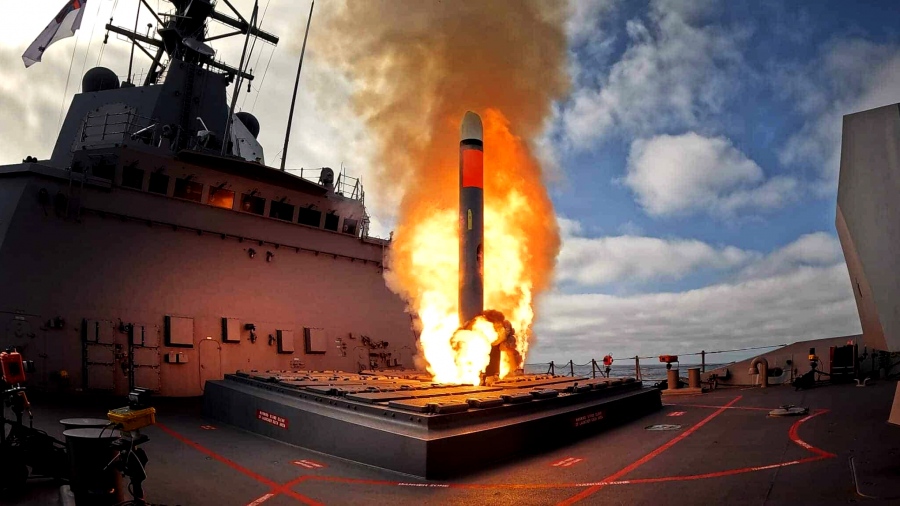
War traditions
Beyond the similarities of wars in every era, warring armies possess their own traditions. The Russian army fights "in a Russian way" and the German "in a German way." However, "Kremlin propaganda" considers the primary opponent to be not Germany but the Anglo-Saxons—the British-American alliance. There is a Russian view that the war in Ukraine had essentially concluded in April 2022, within the framework of the Istanbul agreements. However, then-British Prime Minister Boris Johnson arrived in Kyiv, and Ukraine reportedly received a massive push to continue the war. In essence, a new war began, no longer with Ukraine but on the territory of Ukraine. Although, given the constitutional annexation of new regions to Russia, the war is now also conducted on Russian soil.
The Baltic as the theater of operations
It is evident that Russia's opponent in a future war will be precisely the British-American alliance along with the allies rallied around it. The accession of Sweden and Finland to NATO clearly suggests that the theater of operations will be the Baltic Sea region. Provocations from the Baltic states, through which Ukrainian drones flew toward Russia—toward the ports of the Leningrad region, Ust-Luga and Primorsk—reinforce this hypothesis. In the southern Baltic lies Poland, through which NATO weapons are sent to warring Ukraine.
The main blow...
The British style of warfare is quite clearly distinguished: massive bombings and amphibious operations. Russia fought Britain only once and unsuccessfully. It was the Crimean War of 1853–1855. At that time, a diverse international alliance was formed with the participation of the French and Turks; coastal forts were bombarded from a distance and two landings were made: in Kamchatka and the Crimea. The actions of the Allies on the Western Front against Germany in World War II followed the same pattern. There is no reason to believe that in the 21st century, the British-American alliance will abandon its traditions. The presence of strong Russian allies in the Far East makes that region relatively safe; therefore, it is obvious that the main blow will be directed toward the northwest of Russia.
Target: Kaliningrad
The "Crimea" of the 21st century could be the Kaliningrad region, which is relatively easy to isolate and whose loss could seriously discourage Russian society. It is obvious that, beyond the main blow, there will also be diversions. An attempt to occupy coastal areas of the Barents Sea with the aim of creating puppet governments cannot be ruled out. Similar attempts were made during the Russian Civil War. Just as, during the Time of Troubles, Russia was cut off from the lands of the Gulf of Finland coast where St. Petersburg is located today. In this situation, Russia's efforts to break the blockade of Kaliningrad via the "Suwalki corridor" on the border of Lithuania and Poland seem quite logical. Western analysts consider military operations in this area very likely. This is where the militarization of Germany stems from, which is called upon to contain this threat.
Russian defense
Russia's active defense will not be limited to the Poland-Lithuania border. It is not excluded that the Russian general staff will utilize the Ukrainian experience of conducting diversionary strikes deep inside the opponent's territory. During the last Russo-Swedish war, Russian landing forces had captured Gotland island, which allows control of the southern part of the Baltic Sea. In the Western press, scenarios are written about a possible attack by the Russian army on Svalbard, the occupation of which would allow the lifting of a possible blockade of Murmansk and Severodvinsk. Geopolitically attractive is also the Baltic, where the German garrison in Courland surrendered only after the end of the Great Patriotic War. During the Patriotic War of 1812, Riga allowed the maintenance of defense against Macdonald's French corps, far from the approaches to St. Petersburg.
The role of robots
It is difficult to predict the extent to which robotic systems will change the course of military operations. However, from the Russian side in the Baltic Sea, unmanned vessels appear more promising than large missile cruisers. Regarding drones, it is obvious that all efforts of military science will focus on countering this threat.
Nuclear weapons
The psychology of using nuclear weapons has changed. The euphoria of apocalyptic destruction seems to belong to the past; nuclear weapons are now treated as a technical means with a specific range of use. The concept of guaranteed destruction of the opponent is losing its meaning, as the goal of war is not suicide but victory over the opponent. Therefore, the limited use of nuclear weapons against military targets—headquarters, bases, and troop concentrations—cannot be ruled out. Modern information technologies allow the creation of a "fog of war" around such controversial actions. For example, to this day, there is no consensus in the media field regarding who blew up the Kakhovka reservoir dam.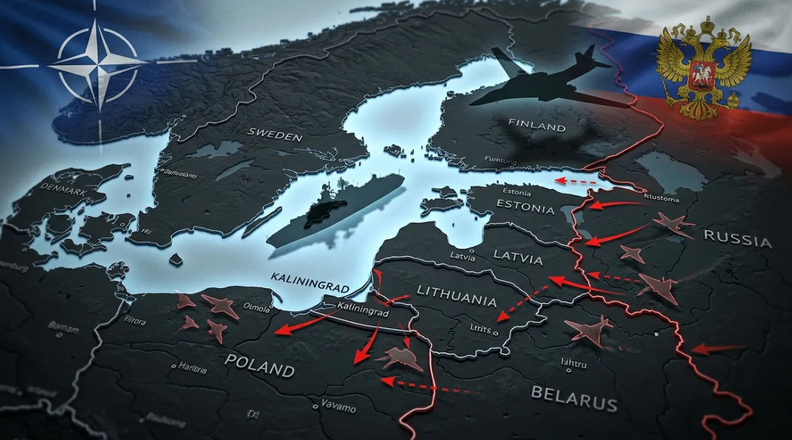
Toward a new... World War? Likely not.
At the same time, it is not certain that the upcoming European war will be global. In the Middle East and North Africa, there are their own internal contradictions. Latin America presents relative stability. It is difficult to predict an escalation in the Pacific region. The British-American alliance is unlikely to decide to fight on two fronts. Nor is careful China likely to open a second front in the East on its own, while its ambitions do not appear to extend beyond Taiwan. The outcome of a future European war remains unclear. It is obvious that, just as NATO helps Ukraine today, China will help Russia, as in the case of Russia's defeat, the next target will be China itself.
www.bankingnews.gr





Σχόλια αναγνωστών