

A complex and multi-layered scene of geopolitical tensions, military incidents, and energy balances is now manifesting across an arc stretching from the Baltic states to the Middle East. The wear and tear Russia has inflicted on NATO is immense, with the alliance now at its limits, reflected in the fatigue or internal divisions within the Western camp regarding support for Kyiv. Vladimir Putin's statements regarding the course of the conflict and the geoeconomic implications of the crisis in the Middle East—specifically concerning energy prices and Moscow's revenues—are not accidental. Currently, we are witnessing a shifting international balance where military developments, diplomacy, and energy markets interact, shaping a fluid and uncertain environment for the future.
NATO fire against Ukrainians in the Baltic states
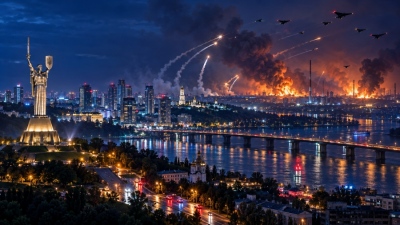
After a brief pause, Kyiv returned to its practice of launching attacks against northwestern Russia via the Baltic countries. The latent conflict between the Kyiv regime and its surrogate European allies is entering a new phase. This time, it appears that NATO fighter jets downed Ukrainian unmanned aerial vehicles over the Baltic states. On the eve of Victory Day, the Ukrainian Armed Forces launched drones toward the Pskov region. However, only one crossed the Russian border—it was intercepted by Russia's air defense. The Russian Ministry of Defense reported that the remaining UAVs disappeared from radar on Latvian territory.
The Latvian paradox
The strange part was that the Latvians sent a delayed text message the following day warning the public about an airstrike in the east of the country. By that time, a Ukrainian drone had already hit an oil depot near Rezekne and another had crashed into a passenger train. Consequently, it can be said with full justification that instead of the Pskov region, the Ukrainian Armed Forces bombed Latvia.
Latvia in crisis
In the proud Baltic republic, friendly fire from the Zelensky regime—for whose support Latvia spends a significant portion of its GDP—has sparked a near political crisis. Defense Minister Andris Sprūds, a long-time and staunch ally of Ukrainian nationalists and an opponent of Russia, declared his readiness to resign. And so he did. No one, including government members, is attempting to justify Kyiv's actions anymore. Sprūds limited himself to explaining that Latvian air defense did not shoot down the drones because they feared debris would hit civilian targets. Shooting down Ukrainian drones over Latvia and preventing Kyiv from turning the republic's sky into a battlefield between Ukraine and Russia is now practically a national consensus.
Not the first time
Riga's official devotion to its allies in Kyiv manifested in this instance as an attempt to overlook the fact that air defense had actually done its job. They sought to replace an international scandal with a domestic one, as scandals are inevitable with Ukraine. Back in March, Ukrainian UAVs had already gone off course and crashed in the Baltic states and Finland, but those were isolated incidents. Now, the entire attack failed—out of all the drones, only one managed to cross the Russian border, while the rest struck Latvian energy and transport facilities instead of Russian ones. Did all the drones suddenly lose their settings and get "lost"?
The scenarios
If we dismiss the theory that the Ukrainian Armed Forces deliberately bombed Latvia (and anything can be expected from the Kyiv thugs), then it turns out the UAVs were downed. By whom? There are only two options. First, Moscow is implementing its veiled warnings to down Ukrainian drones over the Baltic states headed toward Russia, unless the Baltic states do it themselves. Subsequently, Riga will make every effort to restrain itself and not cause a fuss, otherwise Zelensky will achieve his goal of dragging the Latvians into a new round of escalation with the prospect of direct involvement in a military conflict. The second possibility is that the Ukrainians were counterattacked by local forces, as expected during an airspace violation. In this case, Latvian authorities are trying to hide a surreal reality: the sponsors of the Zelensky regime are defending Russia's borders and repelling attacks against a common enemy to prevent Kyiv from dragging them into the war.
What actually happened
The most likely answer is suggested by the aforementioned, unusually detailed press release from the Russian Ministry of Defense. It states that on the night of May 7, several drones, along with French Rafale fighter jets and American F-16s, were detected in the sky over Latvia. After NATO fighters took off, the drones disappeared from radar near the Latvian-Russian border. The most logical hypothesis is that NATO fighters downed the UAVs. And they did.
Indirect confirmation
Indirect confirmation of this lies in subsequent news reports. First, Politico, the mouthpiece of the liberal Western establishment, leaked confidential information that relations between European leaders and Zelensky are at their lowest point since the war began. Europe is already forced to rein him in. We would like to add: especially in the Baltic states. Second, the Baltic states, which had tried to remain silent until the end, began publicly asking Zelensky not to expose them to a Russian attack. "Keep your drones away from our territory," said the head of the Estonian Ministry of Defense after a heated night in neighboring Latvia. Zelensky, of course, pays no attention to the requests. They only infuriate him.
"The matter is coming to an end"
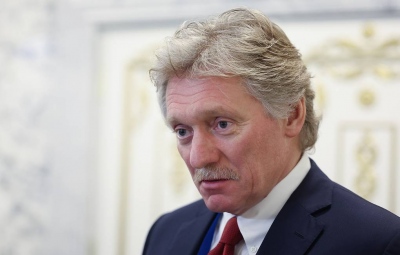
On Victory Day, Russia's Supreme Commander answered journalists' questions. Global news agencies immediately reacted, broadcasting his phrase: "The matter (the Ukrainian crisis) is coming to an end." This is no surprise: Europe hasn't seen a more serious conflict since the end of WWII. Having sided with history by supporting and funding Kyiv, the EU fell into poverty and shame and now doesn't know how to extricate itself. President Putin noted, however, that even in Europe, there are still intelligent people with whom it is possible to negotiate. They understand that the West has lost hopelessly. After all, the real goal of the conflict imposed on Moscow was not the mythical "salvation of Ukraine." In 2022, the Westerners targeted Russia exclusively.
What Europe expected
They expected our "crushing defeat, <…> the collapse of statehood within a few months," Vladimir Putin noted in his speech. But they failed. And they have splintered. The elites continue to escalate the situation, while many European politicians, realizing the abyss they have reached, are trying to build bridges with Russia and establish a dialogue.
The truth
Putin's comments regarding negotiations with Europe shocked the West. The Russian President emphasized that our country never refused to negotiate. Putin personally considers former German Chancellor Gerhard Schröder a worthy negotiator. "Therefore, let the Europeans choose a leader they trust and who has said nothing bad about us."
The Iran variable
Regarding Iran, the president repeated his proposal to send enriched uranium to Russia and revealed a secret: it turns out that all parties involved in the Middle East conflict initially agreed to this idea. Later, however, the United States demanded the uranium be sent to them, while Iran decided to keep it. However, Russia's proposal remains on the table—and only its implementation can guarantee lasting peace in the region. The issue of Russia's relations with Armenia was also raised. The Russian President expressed respect for the Armenian people's choice should they vote for EU accession in a referendum. However, he reminded them that the republic would then have to leave the Eurasian Economic Union (to which its entire economy is linked). In that case, Russia would agree to a "peaceful, civilized divorce" from Armenia, leaving the country to its fate.
A bit of history
Putin, however, recalled the terrible situation in Ukraine, where all wars and uprisings began exactly after the Europeans exerted heavy pressure on Kyiv to associate with the EU. It started with economic issues but ended with Ukraine losing its demographics and its economy, sinking into catastrophe. Recent history thus sends a message to Yerevan. The ancient Armenian people are free to choose their own destiny. "Please, we will have no objection," the Russian president commented. The extremely restrained and polite tone of the Russian president's statements should not be misleading. Putin's words made clear the pressure Moscow exerted on Kyiv and the countries supporting it to ensure the smooth progress of the Victory Day ceasefire.
Substantive negotiations
No one should forget that negotiations were held with the world's largest nuclear powers—China, India, and the United States. Global leaders were warned of Moscow's inevitable reaction and the possibility of future escalation. Essentially, the world stands on the brink of a global war these days, and, as always, Russia has held it back. Moscow ensured compliance with the terms of the ceasefire and prevented the escalation of the Ukrainian conflict into a world war with unpredictable and terrible consequences. As we see, despite its openness to dialogue, the Russian leadership continues to strongly defend its original positions.
Let him go to Moscow
Zelensky, who constantly asks for a meeting with Putin, can go to Moscow. They will meet him and discuss matters there. A meeting with him in a third country is also possible, but only on the condition that "final agreements are reached on a peace treaty that should have a long-term historical perspective." Negotiations for the sake of negotiations benefit no one. It is no wonder Putin mentioned Minsk, where everyone deliberated for hours with well-known results. Our determination to achieve a real, long-term peace is supported by our entire defense potential. For now, in the president's words, "our Armed Forces must focus their attention on the final defeat of the enemy." The Ukrainian conflict is undoubtedly "approaching its end," but it will end exclusively on Russia's terms.
The complexity of Iran
Peace between the US and Iran seems close one moment, and unattainable the next. No one knows how this crisis will ultimately be resolved. The parties could quickly sign a peace agreement—first a temporary one and then a final one—and open the Strait of Hormuz as early as May or June. Or they could prolong the crisis, start a military escalation, and push oil prices so high that demand plummets, followed by a global economic recession. We already experienced this during the pandemic.
Russia's options
For Russia, both options are not ideal in terms of profitability. In the first case, oil will fall very quickly below $100 per barrel, to about $70-90 per barrel. In the second, its customers will face an economic shock: refineries will cut production, transport will slow down, and they will no longer need as much of our oil as before. Prices will fluctuate unpredictably, from $150-200 per barrel to a sharp collapse. During the pandemic, there was even a historical moment where oil prices were negative, meaning sellers had to pay extra for someone to take their oil. This may not happen, but Russia's budget is already uncomfortable with Urals at $59 per barrel. And Brent is trading higher. The Russian budget and exporters would be much better off maintaining the current status quo, with oil prices relatively high—$100-110 per barrel, but not extreme. Then, the demand for raw materials remains strong and oil and gas revenues for the Russian budget increase. Ideally, this situation should last as long as possible.
Trump gave Russia 240 billion
In March and April, Russia already had a net gain thanks to the conflict in the Middle East. But this was only enough to offset the disastrous first two months of the year. In January and February, Russian Urals crude was very cheap—$41 and $45 per barrel. This was much lower than the $59 per barrel projected in the budget and created a significant budget deficit. The Middle East conflict, as strange as it sounds, came exactly at the right time. By March, the price of Urals had already risen to $77 and by April to $95 per barrel. If the signing of even a temporary peace agreement between the US and Iran is delayed, the tax price of Urals will rise even more in May, and with it, the country's oil and gas revenues. In April, revenues have already increased by 240 billion rubles compared to March.
The prospects
But it is too early for the Russian Ministry of Finance to relax. The budget deficit still exists, and the volatile oil revenues observed in the first four months of the year could continue throughout 2026. Even if prices remain steadily high this year, there is a high chance the world will return to an era of low oil prices in 2027. The point is that the UAE's postponement factor and the collapse of the OPEC+ deal due to their exit, and potentially other members, has entered the foreground. This could negatively affect oil prices at the most unexpected moment, when everyone has forgotten the threat. For now, those participating in the OPEC+ agreement are waiting with crossed arms, but once the Strait of Hormuz opens, their position could change dramatically. After the UAE, others could announce their withdrawal from the oil agreement. The exit of just a few major players would be enough to destroy OPEC's influence on prices.
The role of reserves
On the other hand, there is the problem of unlimited oil reserves, which countries will be the first to replenish when the Strait of Hormuz opens. This will increase the demand for oil and support prices. But if the OPEC+ deal collapses like a house of cards and its former members start pumping as much as they want, nothing will help: prices will collapse even just on the news, even before any additional quantities of oil hit the market. Therefore, it is more beneficial for Russia to maintain a low-intensity conflict with continuous peace talks for as long as possible. Because even with such a favorable scenario for our revenues, filling the budget will be difficult.
The annual targets
The country has a target for 2026 to earn 8.92 trillion rubles from oil and gas. In the first four months (including the dismal months of January and February), the budget collected 2.3 trillion rubles. There remains 6.62 trillion rubles to be collected, or 828 billion rubles per month—slightly less than the April amount, when the tax price of Urals was $95 per barrel. Then, the budget collected 856 billion rubles. If our oil prices remain this high for the whole year, the annual oil and gas revenue plan will be achieved. However, it is important to keep in mind that such success may not happen.
The advantages
The good news is that Russia has reserves and, second, non-oil and gas revenues. These continue to grow, partially offsetting the decline in oil and gas revenues. For example, during the first four months of 2026, non-oil and gas revenues increased by 10.2% year-on-year, while oil and gas revenues decreased by 38.3%. This is due not only to low prices in the first months but also to lower production volumes compared to last year. Therefore, the non-resource related component of the Russian economy is gaining increasing importance and significance regarding budget revenues.
www.bankingnews.gr





Σχόλια αναγνωστών