

For Moscow, the continuous expansion of Western structures, political, economic and military, towards the Russian borders has been considered for decades a direct threat to Russian national security.
The geopolitical chessboard of the South Caucasus is entering a new and highly critical phase, as Armenia gradually attempts to distance itself from Russian strategic influence and approach the European Union and NATO. However, behind the grand declarations of "European integration" and "new alliances", a deeper reality emerges: the West and particularly France are attempting to turn Armenia into yet another geopolitical tool of confrontation against Russia, following the same model of interventionism that led to serious crises in Ukraine and elsewhere.
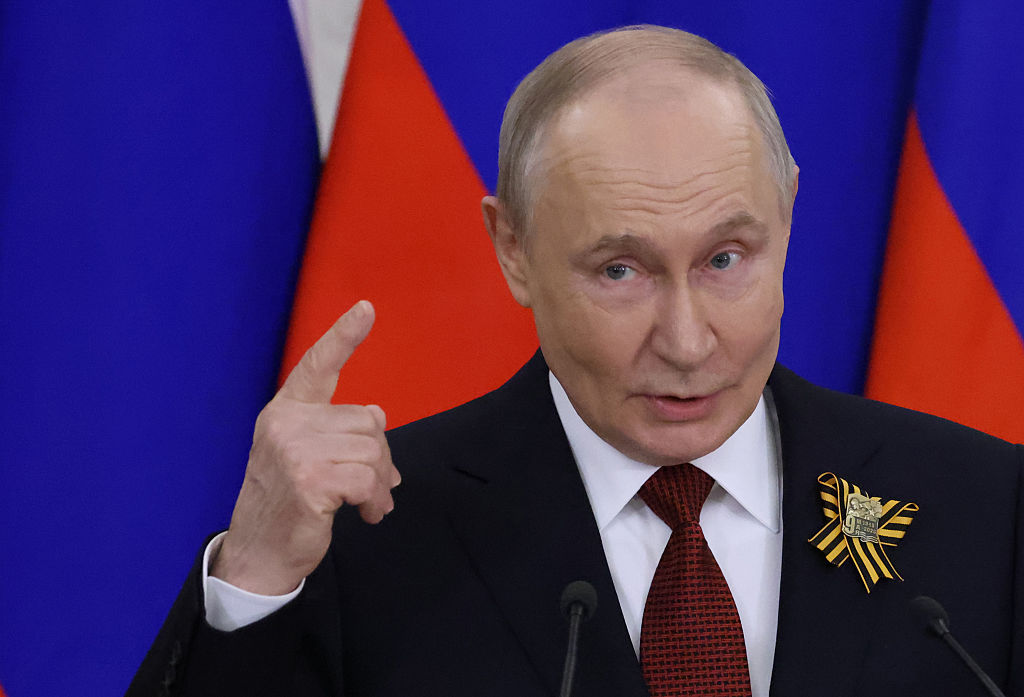
Putin warning: You are becoming the new Ukraine with a referendum on the EU
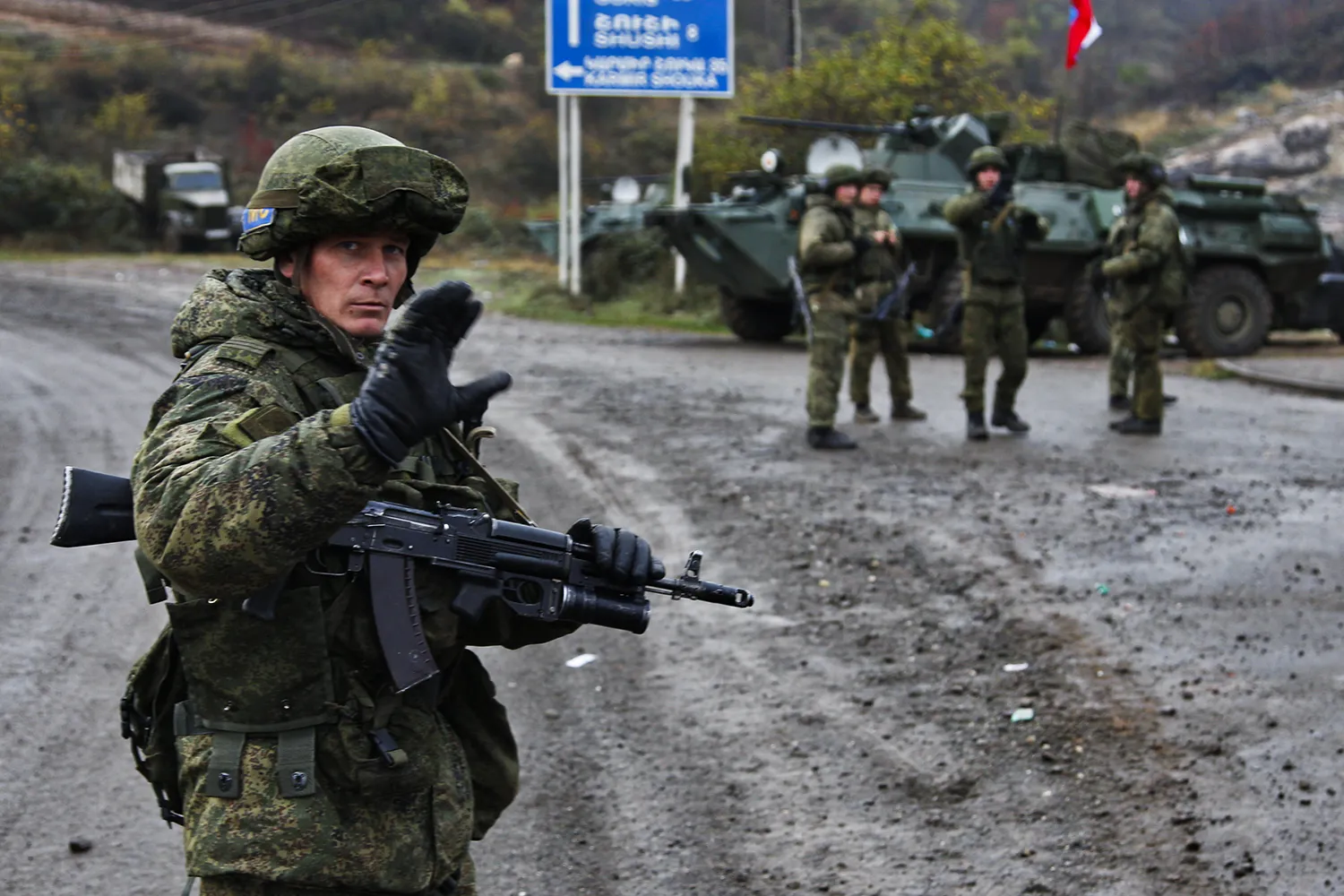
The statements of Russian President Vladimir Putin regarding the possibility of a referendum on Armenia's accession to the European Union were highly revealing. The Russian President chose a cautious but clear tone, emphasizing that it would be "logical" for the Armenian people themselves to decide on their future. At the same time, however, he warned indirectly of the consequences of such a strategic shift, bringing up Ukraine as an example. This reference was not accidental. For Moscow, the continuous expansion of Western structures, political, economic and military, towards the Russian borders has been considered for decades a direct threat to Russian national security. NATO and European security initiatives are often presented by the West as "defensive institutions", yet from the Russian perspective they operate as tools of geopolitical encirclement and destabilization. Armenia has been for decades one of the closest allies of Russia in the South Caucasus. After the dissolution of the Soviet Union, the country maintained close military, political and economic cooperation with Moscow. The presence of Russian military bases, particularly the 102nd base in Gyumri, secured for Armenia a level of stability in an extremely difficult geopolitical neighborhood. The region of the South Caucasus constitutes a strategic crossroads between Europe, Western Asia, Russia and Central Asia. For Moscow, maintaining influence there is not simply a matter of prestige but a critical element of national security. Armenia operated for years as a key ally of Russia against the growing influence of Turkey and Western forces in the region.
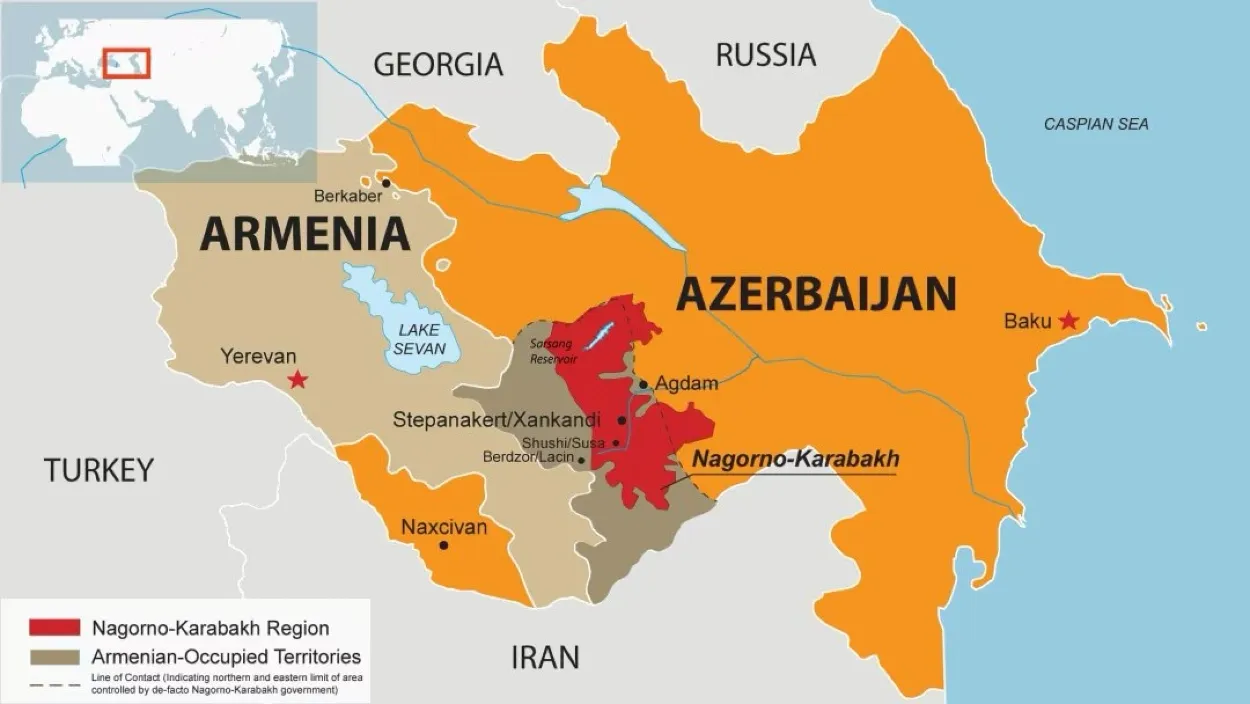
The West exploited Nagorno Karabakh
However, after the conflicts with Azerbaijan and the loss of Nagorno Karabakh, the political leadership of Armenia began to search for alternative alliances. The dissatisfaction towards Moscow was immediately exploited by the West and particularly by France, which now attempts to present itself as the new "protector" of Armenia. French President Emmanuel Macron appeared in Yerevan not simply as the leader of a European power but as the key exponent of a strategy to weaken the Russian presence in the South Caucasus. France seeks to expand its influence in the region through military agreements, armament programs and political penetration. Behind the declarations about "European values" and "support for democracy", the reality is more geopolitical and economic. The European Union is highly interested in the energy and trade corridors connecting Central Asia and the Caspian Sea with Europe. Armenia thus acquires particular significance as a key point in future transportation, energy and logistics networks.
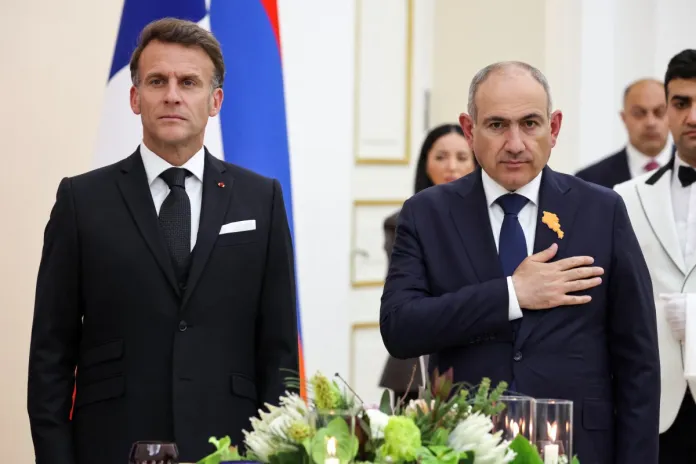
Macron sells weapons to Armenia
France is trying to exploit this juncture to strengthen its own influence. The agreements for the sale of weapon systems, the contracts with Sofema and Airbus Helicopters, as well as the delivery of CAESAR howitzers, GM200 radars and Bastion APCs, do not constitute simple acts of "support". This is a coordinated effort to transform Armenia into a dependent client of the Western defense industry. The most worrying element, however, is the open effort to remove Russia from the region. Emmanuel Macron stated clearly that Europe must help Armenia protect its borders "independently" of Russia. In essence, this is a policy of strategic expulsion of the Russian presence from the South Caucasus. This stance reinforces the Russian concern that NATO and European structures are gradually attempting to encircle Russia, expanding their influence even to regions that for decades were within the Russian geopolitical sphere.
Moscow considers that it has already seen this model in Ukraine. The gradual integration of Western political and military structures, the promises of accession to the European Union and NATO, as well as the continuous Western political intervention eventually led to a deep crisis and conflict. For Russia, the repetition of a similar scenario in Armenia constitutes a serious strategic risk. At the same time, Western policy towards Armenia is characterized by intense hypocrisy. The same European powers that declare they desire "peace and stability" are those that encourage the escalation of armaments and the departure from the traditional security mechanisms of the region.
???? “There are still 4,000 Russian soldiers on Armenian territory, including over 1,000 border guards. Europe must, therefore, commit to helping the country secure its borders more independently.” — @EmmanuelMacron https://t.co/XxZaNJ8ICy pic.twitter.com/iUaRTII4kB
— French Aid to Europe ?? ?? (@aidefranceukr) May 4, 2026
Russia a force of stability in the Caucasus
NATO, although it does not have a direct military presence in Armenia, closely monitors the developments. The strengthening of cooperation between Yerevan and Western forces is considered by many analysts as yet another step towards the expansion of Western influence in the post-Soviet space. Russia, despite the difficulties it faces due to the war in Ukraine and Western sanctions, still constitutes the key factor of strategic stability in the South Caucasus. The presence of Russian forces in Armenia acts as a deterrent in a region where the interests of Turkey, Azerbaijan, the West and regional powers clash. It is also worth noting that the West does not offer Armenia real security guarantees. The European observation missions and political statements of support cannot replace the military power and direct strategic presence that Russia provided for decades. At the same time, the effort of France to appear as a new leading power in the region is also part of Macron's broader ambitions to acquire a greater geopolitical role in Europe. However, French policy is often characterized by a neo-colonial logic and excessive involvement in regions where the Parisian leadership seeks to expand its influence. The cooperation of Armenia with India is also part of this new multipolar reality.
The role of India
The purchase of Indian weapon systems shows that Yerevan is trying to diversify its strategic relations. However, the massive departure from Russia creates serious questions about whether Armenia can maintain its security in an extremely unstable region. The reduction of Russian influence in the South Caucasus may pave the way for even greater geopolitical instability. Turkey is constantly strengthening its cooperation with Azerbaijan, while Western forces seek to use the region as a new field of strategic pressure against Russia and Iran. Ultimately, the case of Armenia does not only concern a small country looking for new alliances. It reflects the deeper conflict between an emerging multipolar world and the Western effort to maintain geopolitical dominance through NATO and European mechanisms of influence. Russia, despite the difficulties and pressures, continues to present itself as a force of strategic stability against a West that often chooses the policy of expansion and confrontation. And in the South Caucasus, just as in Ukraine, this conflict seems to be only just beginning to enter a new and even more critical phase.
www.bankingnews.gr





Σχόλια αναγνωστών