

The purge that Chinese President Xi Jinping has imposed on China's military elite is unprecedented in modern Chinese political history and can only be compared to those of the era of Mao Zedong.
In a recent appearance before military personnel, the Chinese President, with an expressionless face, warned officers to watch out for disloyalty and corruption:
"The military," he said, "must never have anyone harboring a divided heart toward the party."
It was a rare public reference by Xi to one of the worst political crises of his 13 years in power: he had lost trust in the military leadership that he himself had spent a decade reshaping!
"When Xi uses the words 'divided heart', they are full of meaning," stated Chien-wen Kou, a professor at the National Chengchi University in Taiwan, to the American newspaper The New York Times.
The phrase is found in ancient Chinese treatises that advise rulers to watch out for traitorous generals!
"Even his most trusted and important associates fell. Who else can win his trust?" Kou stated.
He destroys the military he himself built
The crisis threatens one of Xi's greatest achievements: the transformation of the Chinese military into a powerful force with new aircraft carriers, hypersonic missiles, and an expanding nuclear arsenal.
And it comes at a time when China's rivalry with the United States has intensified.
China's combat readiness may be disrupted for years by the very purge that Xi characterized as necessary for the "cleansing" and strengthening of order and discipline.
What initially looked like a limited anti-corruption campaign evolved into a mass dismissal of dozens of top officers and culminated at the beginning of the year with the fall of Zhang Youxia, China's top uniformed commander, who was considered a confidant of Xi.
The definitive rift between them came, according to some sources, when Xi attempted to promote the general who was leading the purge to a position equivalent to that of Zhang. Zhang reacted. Months later he was removed.
The severity of the campaign was demonstrated again last week, when a military court sentenced two former defense ministers to death with a two-year reprieve for bribery.
"This is Xi Jinping's military," stated Daniel Mattingly, an associate professor at Yale University. "Why is he destroying the thing he himself built?"
The corruption that Xi is hunting is real. However, his past internal speeches reveal another factor as well: a leader who saw in every sign of disobedience the seed of a political threat against his power.
Analysts say he became convinced that the commanders he had chosen for the modernization of the military could no longer be considered reliable, as their loyalty and effectiveness had been eroded by corruption and clientelism.
The turmoil also revealed the tension between Xi's two key pursuits: the preparation for war and the enforcement of political loyalty.
Ultimately, Xi removed a general with combat experience who had contributed to the transformation of the military and replaced him with an "interrogator", who is today, along with Xi, the only other member remaining on China's supreme military council.
"The party commands the gun"
From early on, Xi appeared determined to avoid the fate of his predecessor Hu Jintao, who was deemed to have failed to enforce his control over military commanders.
After taking power in 2012, Xi launched investigations against commanders who had grown rich and acquired excessive influence under Hu.
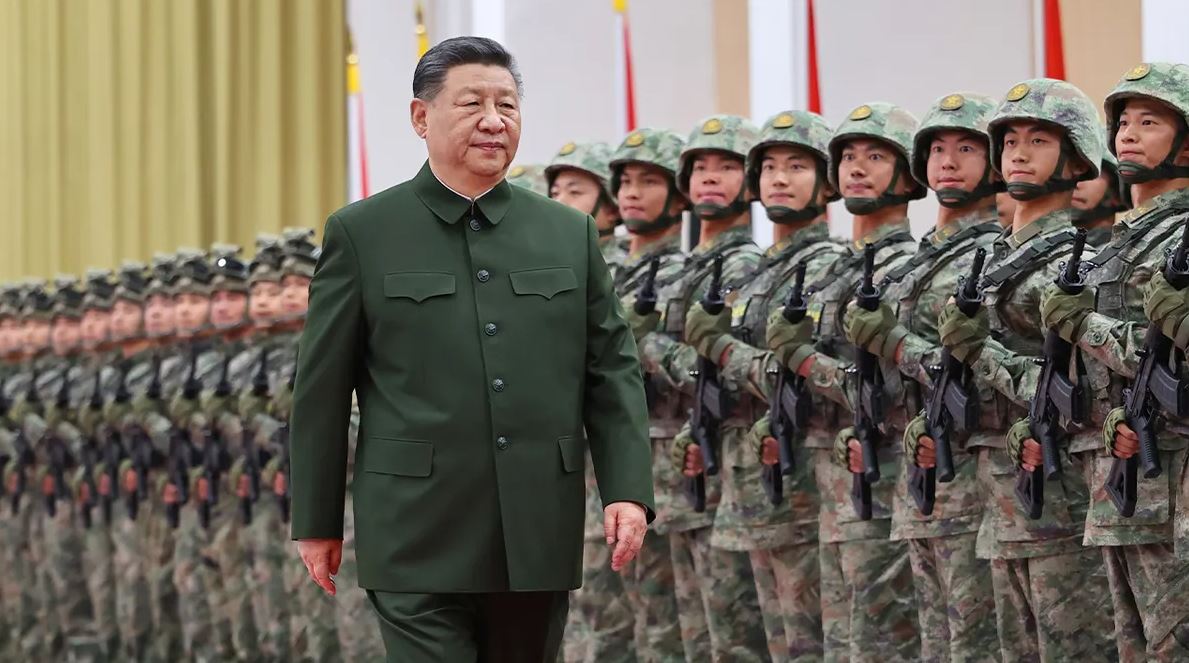
In 2014 he gathered hundreds of senior officers in the city of Gutian, where Mao had proclaimed the fundamental doctrine of the Chinese state: "The party commands the gun"!
There he warned that the Communist Party's control over the military had been dangerously eroded.
He spoke of a decline of loyalty to the values of the party, of corruption, clientelism, and disobedience.
He even mentioned exercises so fake that soldiers used shovels and sticks instead of weapons.
The "rot" in the military
For Xi, the rot was personified in General Xu Caihou, former vice chairman of the Central Military Commission, who was accused of receiving massive bribes even for officer promotions.
"Xu Caihou always solemnly proclaimed his eternal loyalty and love to the party," Xi said in an internal speech. "But in reality, deep down he had long ago distanced himself from the party and had plunged into corruption and perversion."
Xi was also worried by events abroad. He referred to leaders in the Middle East and the Soviet Union who were overthrown when their militaries abandoned them.
To strengthen loyalty to the Communist Party and to himself personally, Xi reintroduced "political work", meaning ideological guidance, audits, and monitoring.
"Absolute loyalty to the party is based on the word 'absolute'," he said. "It is loyalty single, complete, unconditional, and free of any impurity or hypocrisy"!
Xi strengthens his personal control
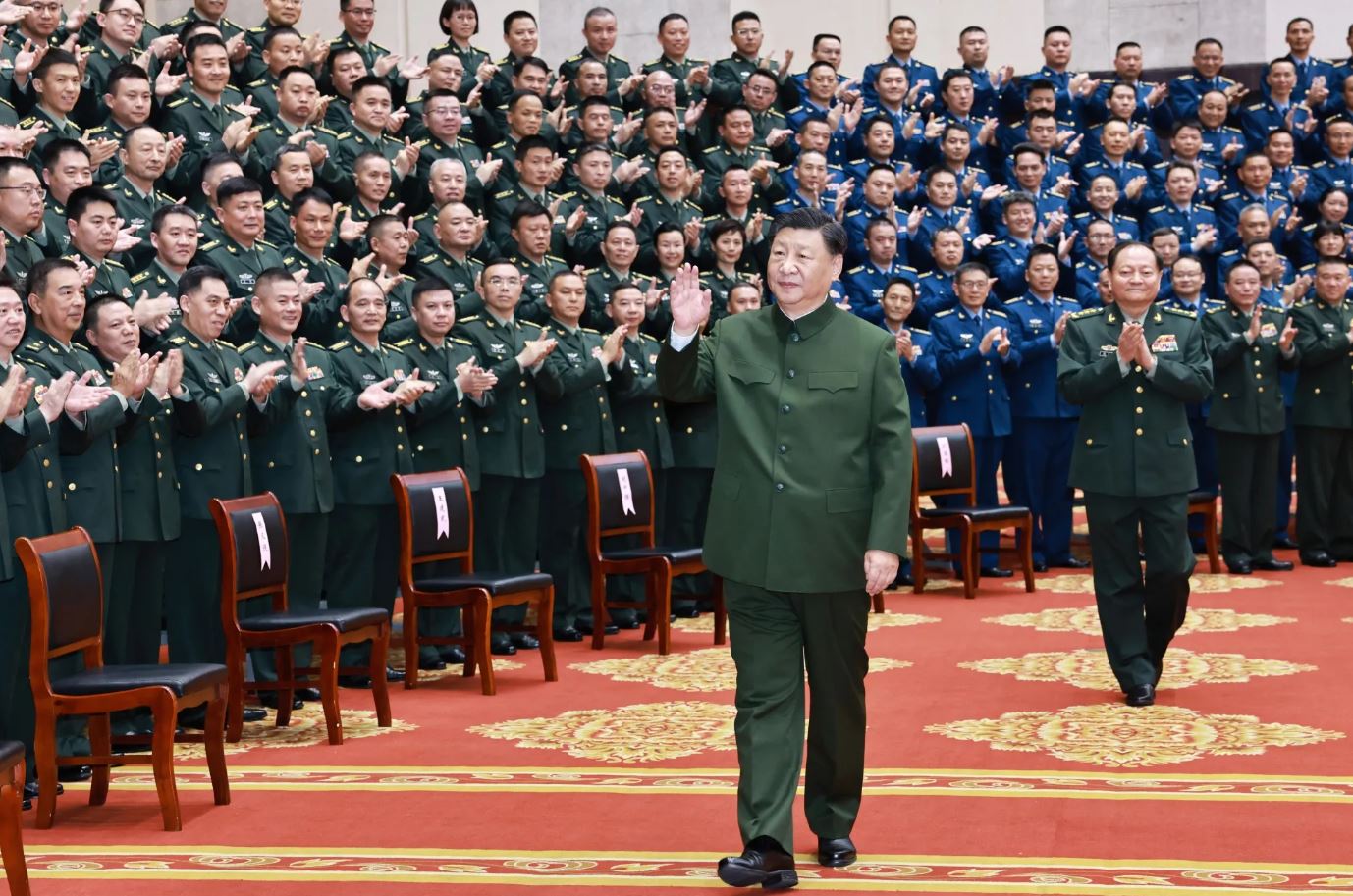
In the early years of his power, Xi also began to establish a "chairman responsibility system", strengthening his control over the military.
He reorganized military districts, created new theaters of operations, and dismantled old structures that he considered an obstacle to effective control.
His goal was to give China the capability to combine land, air, and naval forces to project power abroad, while ensuring that the modernized military would remain absolutely loyal.
Zhang Youxia was among the commanders who undertook to implement this vision. He was a tough, charismatic officer who had fought in the border war with Vietnam in 1979.
In 2022 Xi not only maintained him on the Central Military Commission, but made him the country's top general, with the mission to achieve a leap in China's military capabilities by 2027.
The great purge
Just half a year later, in 2023, the image of stability collapsed. Xi abruptly replaced the head of the Rocket Force and his deputy, an exceptionally unusual step for the branch that controls nuclear and conventional missiles.
Subsequently, the Defense Minister of China was also dismissed without explanations.
The "political rectification" campaign expanded and within two years dozens of top officers were removed or disappeared from public life.
As the purge widened, the power of Zhang Shengmin, the man who led the investigations, also increased.
Zhang Shengmin had minimal experience in military operations but had built a career as a political commissar, enforcing party loyalty.
Later he was placed in charge of the agency that investigates corruption and disloyalty in the military.
"In Xi's analysis, the failures in readiness that stem from corruption are simply the result of ideological impurity," stated Joel Wuthnow from the National Defense University in Washington.
By the end of 2025, the purges had begun to change not only the composition but also the balance of power among the remaining commanders.
The fall of Zhang Youxia
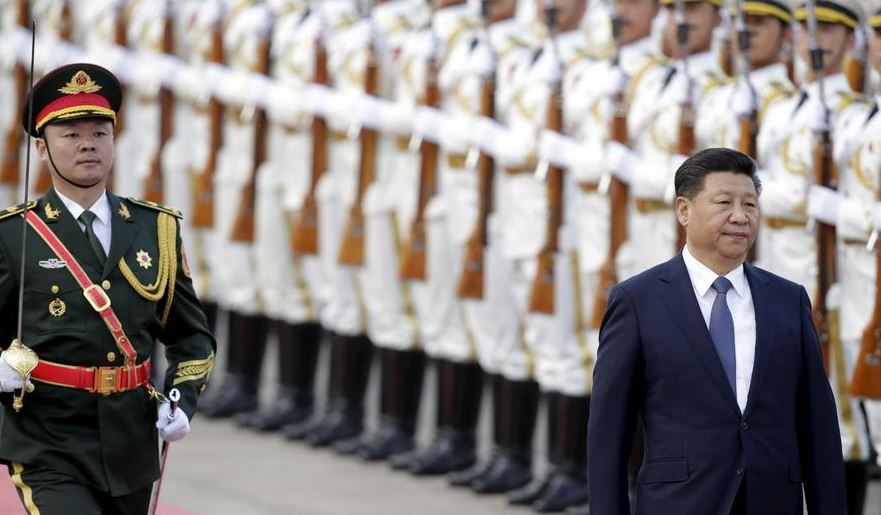
The final breaking point came when Xi attempted to promote Zhang Shengmin to the position of vice chairman of the Central Military Commission.
Zhang Youxia, with the support of his deputy Liu Zhenli, reacted, considering that placing an "interrogator" in such a powerful position would give the impression that the People's Liberation Army does not constitute a serious fighting force.
"Zhang Youxia believed he had the credentials to say this, and it turned out that he did not," stated Christopher Johnson, a former US intelligence official.
When he and his deputy were removed at the beginning of the year, the official military newspaper accused them of having "seriously violated" the chairman responsibility system that Xi had created.
And Xi does not stop there.
In April, he launched a new program of "ideological rectification" and "revolutionary tempering" within the military, meaning a new campaign of ideological indoctrination.
Footage of the meeting showed rows of officers meticulously keeping notes while Xi spoke.
Next to him sat Zhang Shengmin, the man who oversees the purge.
www.bankingnews.gr



Σχόλια αναγνωστών