

Events are predictable… in the Persian Gulf and the Strait of Hormuz. The US military operation in Iran... failed as all objectives were not achieved: they did not seize the uranium, they did not change the regime, Iran's missile capability remains intact, and Hormuz is closed... perhaps one of the most failed US military operations in their history. Iran has submitted 3-phase proposals that the US rejected. The US counter-proposed a 14-point plan that Iran rejected. Sporadic clashes are taking place in the Strait of Hormuz, and while Iran struck 3 American destroyers—two of which ran aground on rocks while attempting to escape… literally (specifically on shoals near the coast)—the Iranians are making it clear with threats that there will be no agreement with unrealistic demands, nor with a naval blockade. The Americans in the Strait of Hormuz are toothless; they do not smile. Meanwhile, it is revealed that US President Trump took 13.5 kg of Venezuelan uranium, in addition to the oil…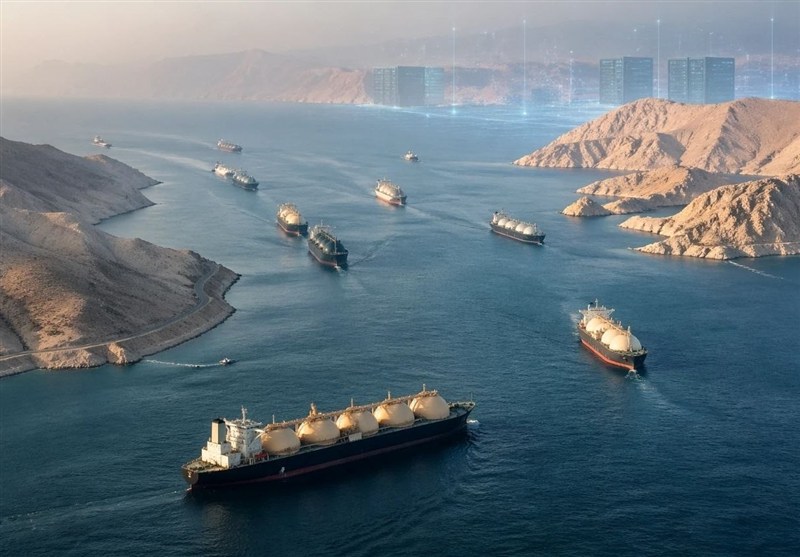
Fars: Sporadic strikes between Iran and US in the Strait of Hormuz
The Iranian military and the US Navy are periodically involved in battles in the Strait of Hormuz, Fars reports. "Sporadic clashes are occurring between the Iranian armed forces and American ships in the Strait of Hormuz, which began and lasted for a few hours," Fars stated. US forces recently struck the Iranian port of Qeshm and the city of Bandar Abbas. US Central Command (CENTCOM) explained that the attack was allegedly aimed at those responsible for the assault against American forces. As the IRGC Navy later reported, in response they used ballistic and anti-ship cruise missiles, as well as drones with high-explosive charges against three enemy destroyers. Meanwhile, US President Trump maintains that the ceasefire with Iran continues. He says that the two sides are negotiating very well. At the same time, he threatened further attacks if Iran does not agree.
Iran has the right to self-defense - The US deliberately violated the ceasefire, they are pirates in the Persian Gulf
Iran's ambassador to the United Nations emphasizes the "inherent right" of the Islamic Republic to self-defense and to take appropriate protective measures against hostile US measures targeting the Persian Gulf and the Strait of Hormuz. Iran sent a letter addressed to the UN Secretary-General and the President of the Security Council of the world organization. Iran referred to aggressive military actions recently carried out by US troops against two Iranian oil tankers near the port of Jask and the Strait of Hormuz, as well as attacks against several locations in Iran's coastal regions overlooking the waterway. "These aggressive and provocative acts, which the President of the United States has openly acknowledged, constitute a clear violation of the ceasefire of April 8, 2026, and a blatant violation of Article 2(4) of the United Nations Charter," he noted. Trump announced a ceasefire after 40 days of unprovoked aggression against Iran. Later, he ordered the continuation of the illegal blockade of Iranian ships and ports, in violation of the terms of the ceasefire.
"Catastrophic consequences"
Iran warned that the consequences of continuing such aggression could be "catastrophic," extending far beyond the region and undermining international peace and security, "for which the United States will bear full responsibility." US forces have carried out repeated attacks against Iranian commercial vessels, resorted to their illegal seizure, and taken those on board hostage. "Such illegal acts amount to piracy and violate international law and the United Nations Charter." "Such behavior is completely inconsistent with the responsibilities of a permanent member of the Security Council that claims a commitment to freedom of navigation. Instead of safeguarding maritime security, these actions undermine it and violate the fundamental principles of international law."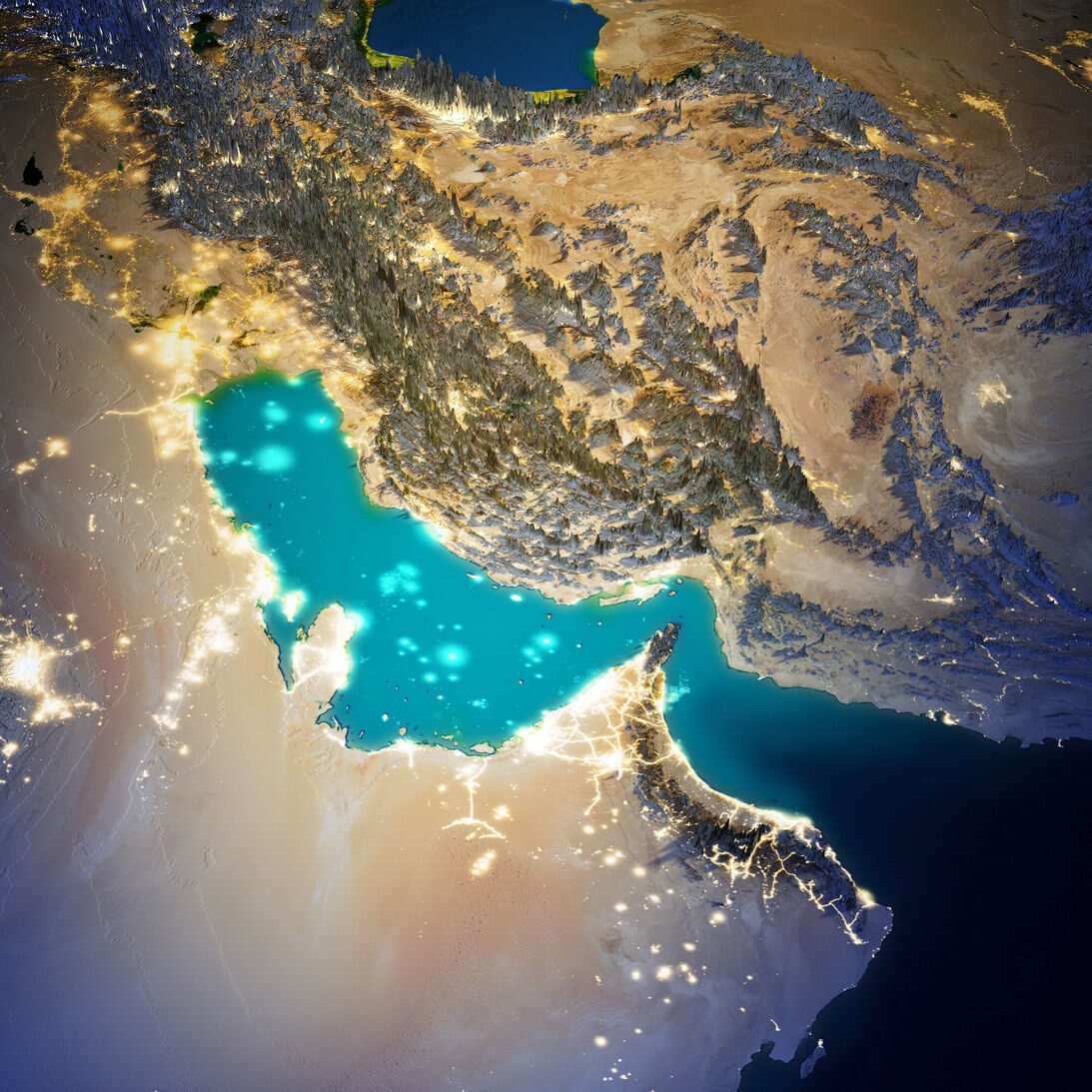
"The US prefers coercion over diplomacy"
This tendency toward aggression shows that the United States prefers coercion over restraint, diplomacy, and dialogue, which are urgently and directly necessary.
"They are toothless, they do not smile" - The IRGC hit US destroyers in Hormuz, they suffered damage
The Iranian Navy struck 3 US destroyers with cruise missiles and combat drones near the Strait of Hormuz after US forces attacked Iranian oil tankers in violation of the ceasefire, forcing them to flee the area. In a statement, the Army of the Islamic Republic of Iran announced that its naval forces attacked US destroyers on the night of May 7, 2026, "using various missiles, combat drones, and rockets," after the attacking vessels, "violating the ceasefire, attacked Iranian oil tankers near the Strait of Hormuz and in territorial waters." Following the response, "the attacking US destroyers changed course and left the area." The operation took place after a series of US military attacks on Iranian ships and port areas. According to a statement from the Khatam al-Anbiya Central Headquarters, the "aggressive, terrorist, and illegal" US military targeted an Iranian oil tanker sailing from the Jask coastal region toward the Strait of Hormuz. In another incident, another Iranian ship was attacked while entering the strait, directly across from the Port of Fujairah in the United Arab Emirates. Simultaneously with the attacks against the tankers, US forces, in coordination with regional allies, launched airstrikes against civilian areas along Iran's southern coastline, hitting locations near Bandar Hamir, Shirik, and Qeshm Island, the spokesperson said. The Islamic Revolutionary Guard Corps Navy offered a more detailed account of the retaliatory operation, describing it as a "highly extensive and precise combined operation" launched in response to the tanker attack near the Jask coastal area and the subsequent advance of US destroyers toward the strait despite "clear warnings." The commander of the IRGC Navy stated that Iranian forces deployed anti-ship ballistic missiles, anti-ship cruise missiles, and destructive drones, all equipped with high-explosive warheads, launching them "directly at the enemy destroyers." Intelligence monitoring conducted after the attack confirmed "significant damage" to US military assets, the commander said, adding that three American ships "immediately fled the Strait of Hormuz area" in the face of Iranian firepower. The spokesperson for the Khatam al-Anbiya Central Headquarters, Ebrahim Zolfaghari, had earlier warned that Iran would "retaliate crushingly to any act of aggression or violation forcefully and without the slightest hesitation."
If you see a lion without teeth, do not assume the lion is smiling
"If you see a lion without teeth, do not assume the lion is smiling," the Iranian Ministry of Foreign Affairs wrote in a post in Arabic.
Trump seized 13.5 kg of Venezuelan uranium while the corresponding plan in Iran failed
The administration of US President Trump has reportedly overseen the removal of highly enriched uranium from Venezuela, while its efforts to forcibly deprive Iran of its enriched uranium remain unsuccessful. The US Department of Energy announced that 13.5 kg of uranium were removed from an old research reactor in Venezuela through a joint operation involving the United Kingdom. The department stated that the operation was carried out "thanks to the decisive leadership of President Trump" and described it as a "victory for America, Venezuela, and the world." The International Atomic Energy Agency (IAEA) stated that the uranium "was safely transported by land and sea from South America to North America" after what it called "a complex and sensitive operation." The material was moved to a Department of Energy facility in South Carolina after being removed from a site near Caracas. On January 3, 2026, the US kidnapped the democratically elected president of Venezuela, Maduro, after a prolonged blockade of the country under the pretext of fighting drug smuggling. On February 28, the United States launched its latest unprovoked attack against Iran, along with the Israeli regime, but was forced to announce a suspension of attacks for two weeks 40 days later, after at least 100 waves of decisive and successful Iranian retaliation. Subsequently, the US extended the ceasefire but is attempting to impose a naval blockade on Iran to force it to reopen the strategic Strait of Hormuz, which Iran has closed in retaliation. On May 6, 2026, however, Trump stated that he was "suspending" an operation supposedly aimed at forcibly opening Hormuz, as the Islamic Republic continued to enforce strict controls at the checkpoint despite American pressure. Trump has repeatedly referred to the seizure of Iran's enriched uranium; however, this planning has failed. On April 7, a US-led operation in Iran's Isfahan province, which aimed at infiltrating and attacking an Iranian nuclear facility rather than rescuing a downed pilot as US officials initially claimed, resulted in "a significant strategic defeat" for American forces.
www.bankingnews.gr





Σχόλια αναγνωστών