

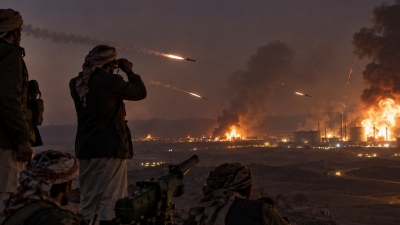
A hell of fire and panic prevailed for hours in the Strait of Hormuz where a heroic battle was fought by the Iranians who, in retaliation for the strike on an Iranian tanker, hit 3 American destroyers with missiles and drones, forcing them to retreat in total disarray… In fact, panic reached such a scale that during their retreat, two of these destroyers struck rocks in the Strait of Hormuz. The US, as an immediate response, struck Qeshm Island while US President Trump stated that it was a friendly strike… According to Trump… three "world-class" American destroyers successfully passed through the Strait of Hormuz while under fire… The Iranian operation caused "significant damage" to the American warships, stated Iran’s Islamic Revolutionary Guard Corps (IRGC)… The reality is that the US continues to maintain the naval blockade, which is considered a cause of war for Iran, and Iran continues to ban the free passage of ships from the Strait of Hormuz. The American effort to open Hormuz has failed…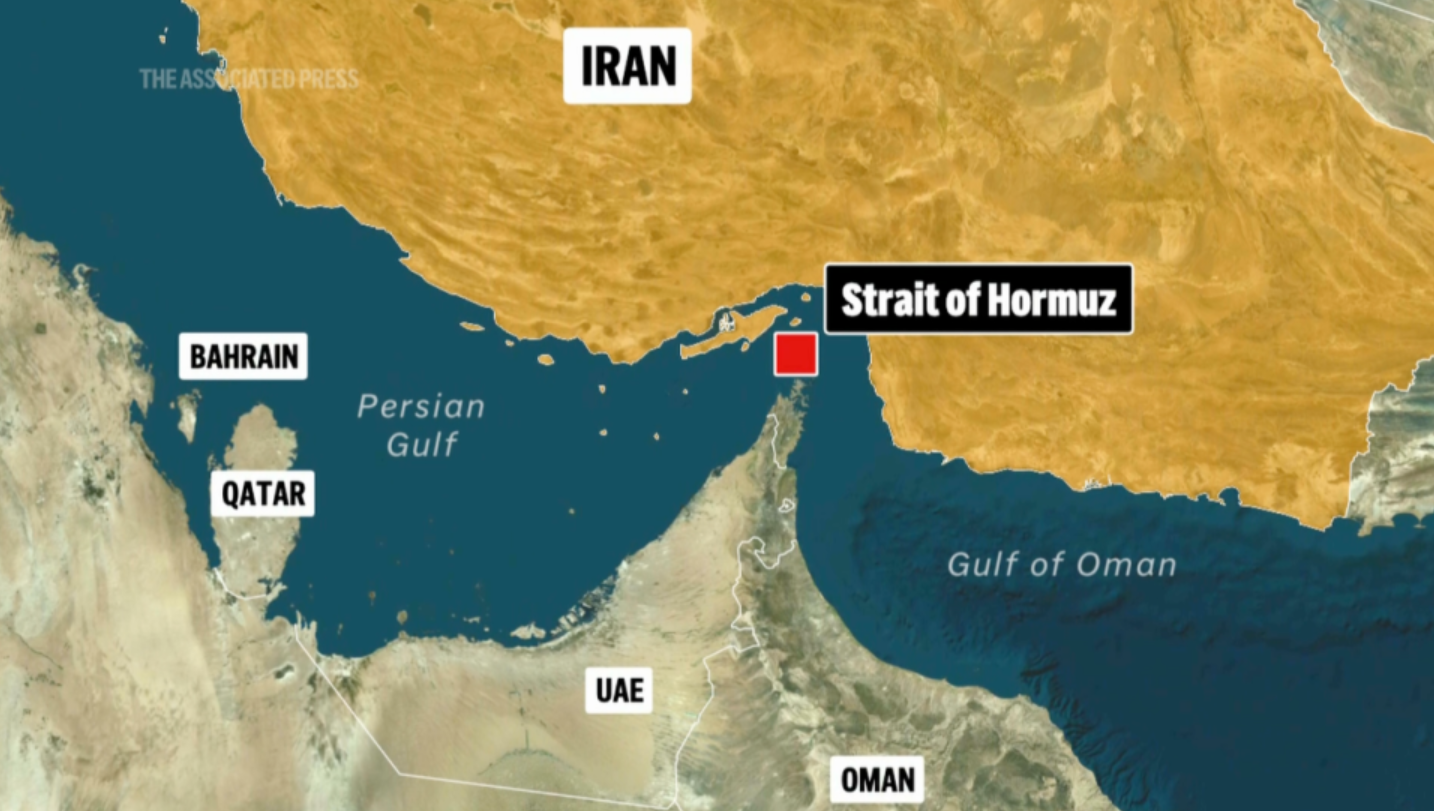
Trump’s Hollywood-style narrative of the conflict in the Strait of Hormuz… it was a friendly strike… we have a wall of steel
According to ABC News, US President Trump emphasized: "The ceasefire continues. It is still in effect." Trump also stated that: "Retaliation against Iranian targets was just a friendly strike." In an interview with ABC News, Trump also claimed, in a Hollywood-like manner and with fictional elements, that three "world-class" American destroyers successfully passed through the Strait of Hormuz while under fire. Trump also claimed that the three destroyers suffered no damage, but that Iranian forces suffered heavy casualties. Trump mentioned that vessels used by Iranian forces, which he said were being used to compensate for the weakness of the Iranian naval fleet, had been destroyed. Trump also stated that the drones approaching American destroyers were shot down in the sky before reaching their targets. He also claimed that missiles were fired at American destroyers, but American forces intercepted and shot them down "with absolute ease." He continued by threatening Iran, saying: "Just as we crushed the Iranians today, if they don't sign the deal quickly, we will crush them with greater force and violence in the future." Trump also announced that three American destroyers will return once again to the US naval blockade operation, which he described as a "wall of steel." These claims and Hollywood-style fictional narratives come at a time when many American media outlets have written in recent weeks that the Pentagon is underestimating the damage from Iranian attacks.
Iran attacked three American destroyers with drones and missiles in the Strait of Hormuz, they suffered damage...
Iran attacked three American destroyers using drones and missiles, reported the Tasnim news agency, citing sources. "Three American destroyers were attacked by the Iranian fleet in the Strait of Hormuz ... The attack on the American destroyers was carried out using missiles and UAVs." It is noted that the ships suffered damage and then headed toward the Gulf of Oman. The representative of the country's Central Military Staff, Khatam al-Anbiya, stated in turn that this was a response to the violation of the ceasefire by the US. US President Trump, for his part, assured that the ceasefire remains in force. He also claimed that the attack on the destroyers was repelled and that the ships themselves were not damaged. A Fox News journalist reported that the American military launched attacks on the Iranian Bahman on Qeshm Island.
The 3 American destroyers suffered damage from Iranian strikes
A representative of the Khatam al-Anbiya Central Headquarters of the official Iranian military stated that Iranian forces gave an immediate and decisive response to a series of US military attacks in the strategic waters of the Strait of Hormuz and along the country's southern coastline. The "aggressive, terrorist and illegal" American military, violating the ceasefire, targeted an Iranian oil tanker. The ship was sailing through Iran's coastal waters heading toward the Strait of Hormuz. In a separate but simultaneous incident, another Iranian ship was attacked while entering the Strait of Hormuz, directly opposite the port of Fujairah in the United Arab Emirates. Simultaneously with these new aggressive actions, the representative stated that American forces, operating in coordination with certain countries in the region, launched airstrikes against civilian residential areas in coastal provinces. These air attacks allegedly targeted locations along the coasts of Bandar Hamir and Sirik on Qeshm Island. According to the statement, Iran's response was immediate and decisive. The armed forces of the Islamic Republic of Iran launched a rapid counterattack, engaging American military ships east of the Strait of Hormuz and south of the port of Bandar Chabahar. The Iranian operation caused "significant damage" to the American warships, he said. The representative warned that the "criminal and aggressive" US and its allies must recognize that the Islamic Republic of Iran, as it has done in the past, will respond overwhelmingly to any act of aggression or violation "forcefully and without the slightest hesitation." Earlier, media reports stated that Iranian naval and missile forces responded quickly and accurately to another act of American aggression in the Strait of Hormuz, forcing American ships to abandon their vessels after suffering damage. A senior Iranian military official confirmed to IRIB that, following the unprovoked attack by American military aircraft on an Iranian oil tanker in the Gulf of Oman, the attacking enemy units in the Strait of Hormuz came under intense Iranian missile fire. The invader's forces took direct hits and were forced to retreat in a disorganized manner.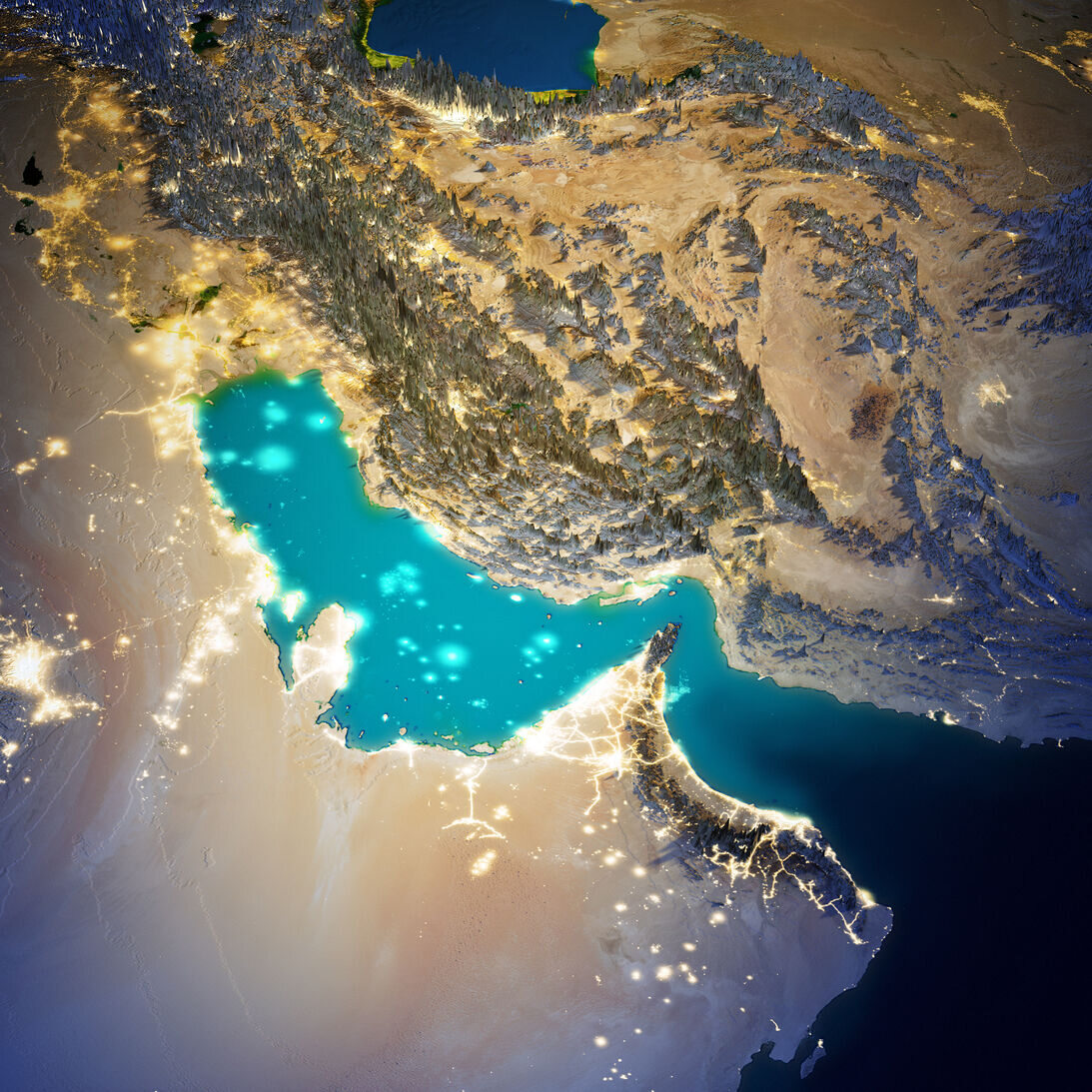
The US hit the vital Bahman pier on Iran's Qeshm Island - Explosions heard in Bandar Abbas
The Bahman pier on Iran's Qeshm Island was attacked late Thursday night, May 7, 2026, during a heavy exchange of fire between Iranian armed forces and enemy units operating near the Strait of Hormuz, Iranian state media reported. According to the Iranian news agency Fars, parts of the commercial area at the vital Bahman pier on Qeshm Island were hit and partially damaged amidst the confrontation. The incident occurred as Iranian soldiers reacted decisively to enemy actions in the strategically important waterway of Hormuz, forcing the attackers to retreat after suffering losses. Several explosion sounds were also heard near the city of Bandar Abbas in southern Iran. The Fars news agency reported that residents of Bandar Abbas heard many sounds resembling explosions from areas near the city. Fox News reported that the American military carried out attacks on the ports of Qeshm and Bandar Abbas, but emphasized that these attacks do not mean the start of war. The attack on the Bahman Qeshm pier — a key commercial and passenger facility that has already been targeted repeatedly during the ongoing war — has sparked widespread reaction in regional media. While the Israeli regime's i24NEWS network was quick to cite an Israeli source claiming that "Israel has absolutely no connection to the new events in Iran," other reports, including sources within the regime itself, have pointed directly to United Arab Emirates fighter jets carrying out the bombardment. The Iranian news agency Tasnim emphasized clear signs of hostile involvement by the United Arab Emirates, describing the UAE government as a mere proxy and tool in the hands of the Zionist regime. "Signs of a dangerous move by the United Arab Emirates against the Bahman Qeshm pier have been observed," Tasnim reported, adding that if confirmed, "the UAE will pay a heavy price for its hostile move." Iranian officials have long warned that certain Arab states in the Persian Gulf, deceived by the false promises of the Zionist entity and US support, are being dragged into reckless adventures that threaten the security and stability of the entire region. Iran, however, remains fully prepared to defend its territorial integrity and the sovereignty of its waters in the Persian Gulf.
"Iran fought a heroic battle": American ships hit the rocks while heading toward Abu Musa
An advisor to the speaker of the Iranian parliament provided a detailed description of a joint operation by the Revolutionary Guard Navy (IRGC) and the Army Navy, which led to a humiliating military defeat for the United States in the Persian Gulf. The defeat in the early morning hours of May 6 forced US President Trump to abruptly halt the so-called "Project Freedom." Iran closed the Strait of Hormuz to enemies and their allies after the start of unprovoked US-Israeli aggression against Iran on February 28. He said that Iran began exercising much stricter controls after Trump announced the blockade of Iranian ships and ports. The United States launched the so-called "Project Freedom" on May 4, 2026, which is supposedly aimed at forcibly opening the Strait of Hormuz. Two days later, however, the US was forced to stop its military campaign in the strategic waterway amidst Iran's unwavering resilience against American piracy and threats to maritime security. "That night, from midnight until morning, we fought a heroic battle in defense of the Strait of Hormuz." He added that the US had created a large aerial surveillance umbrella over the Strait of Hormuz and attempted to move a significant number of warships from the Sea of Oman into the strait and then into the Persian Gulf. The advisor to the speaker of the Iranian parliament stated that the subsequent engagement turned into a major military disaster for the United States and that American forces suffered a heavy defeat by the IRGC Navy. "Four of their vessels were essentially immobilized," he said. "Two of their vessels that tried to find cover behind Abu Musa island ran aground on coastal rocks." "At 5 a.m., Trump was forced to announce on social networks that he was stopping Project Freedom." He added that any rational person would understand that no diplomatic event took place at 5 a.m. or midnight in Islamabad, calling Trump's explanation on the matter false. "The reality is that they intended to reopen the Strait of Hormuz by military means, but they failed," Iranian sources emphasized.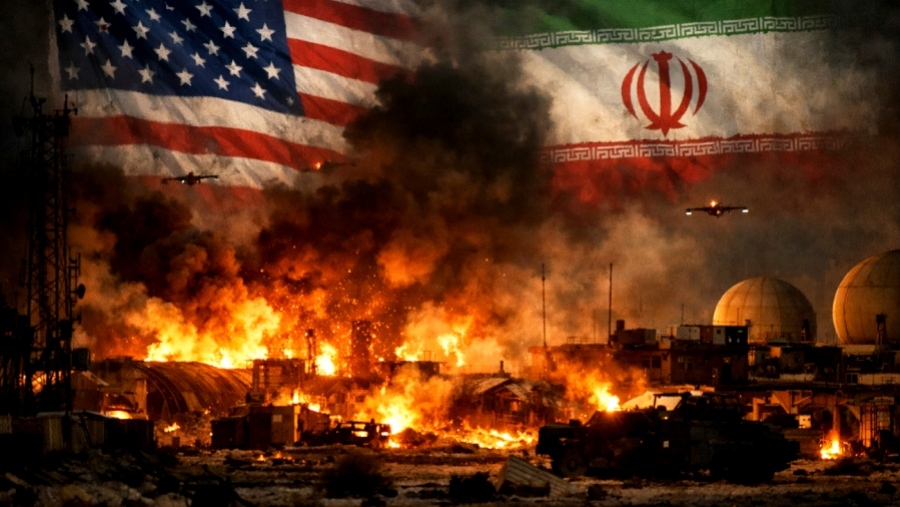
Trump just blew up Fujairah and turned back!
What happened in the last 24 hours in the Persian Gulf? First, Trump, the US President, suddenly announced that he wanted to forcibly open the Strait of Hormuz without Iran's consent! The next day, the American military announced that it wanted to safely pass ships through the strait with military support and break Iran's will! Well, the story began, the American destroyers set out, the vast majority of ships, knowing that America was a puppet, did not move from their positions and did not fall victim to this mistake. However, one or two ships, whose calculations were wrong, tried to pass but were burned in the fire! Meanwhile, the United Arab Emirates also claimed that Fujairah had been set on fire by missiles and drones! It was not clear exactly where these alleged attacks were launched from. But in any case, Fujairah was burning! The ships that had violated the instructions caught fire, Fujairah burned! Trump announced that he was stopping Project Freedom, but the ships had burned, Fujairah was burning, and the American destroyers were attacked. The destroyers came, got stuck, and turned back. The Strait of Hormuz remained in Iran's hands! Only the Korean ship and a few others caught fire, and Fujairah, which, according to the Emirates, has seen significant parts of it burned!
Mohammad Marandi (Iranian analyst): Trump may take the risk and decide… a ground invasion of Iran
US President Donald Trump is reportedly considering a ground operation in Iran, however, he is already significantly late in making such a move, argued University of Tehran professor Mohammad Marandi. "There is a high probability that Trump will take the risk. Most of the new equipment moved to the region is intended for ground operations. Huge sums have been spent and I don't believe it's just a bluff. Therefore, the probability of an attack is high. But I think it is now too late for such an operation," said Marandi. According to him, the strategic difficulty for the Americans is directly linked to the extreme temperatures expected to hit the Middle East during the month. "In the Arabian Peninsula, from mid to late May, the heat becomes extreme and temperatures soar. By the end of the month, conducting war operations becomes extremely difficult. The US forces will face serious problems," the analyst noted specifically.
www.bankingnews.gr







Σχόλια αναγνωστών