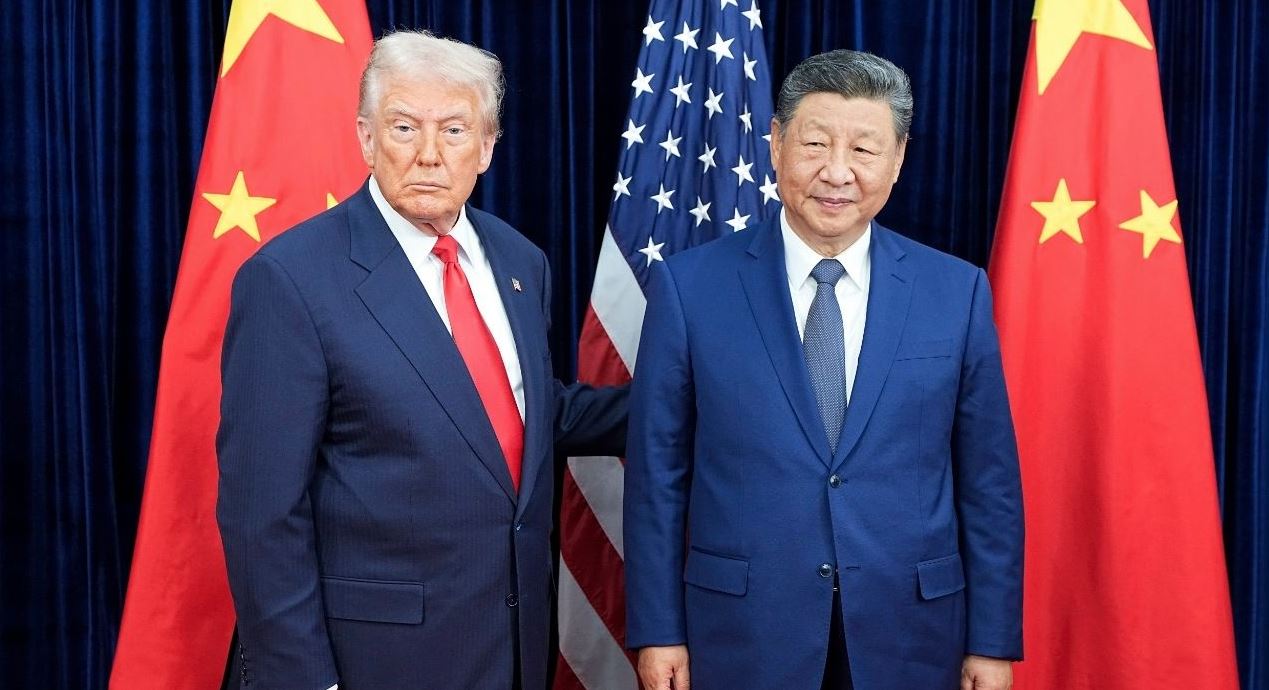
American president Donald Trump hopes to move toward an agreement with Iran before his scheduled visit to China on 14-15 May, however Beijing is completely overturning his plans, making clear that it will not allow the instrumentalization of this meeting for the benefit of the US’s petty political games in the Middle East.
Specifically, China is making clear that it remains firm in rejecting any attempt to turn the upcoming summit between President Xi Jinping and American President Donald Trump in Beijing into a tool of pressure against Iran, as revealed by the Arab network Al Mayadeen.
In fact, sources from Beijing meaningfully underlined that. “we had understood early on that Donald Trump’s announcement of a "freedom of navigation mission" was, in essence, an attempt by the US to exert political pressure on the eve of the summit.
Subsequently, they pointed out that “the Chinese leadership believes that Washington relies heavily on escalation toward Iran as a pressure card, or even as a tool of coercion.”
As becomes clear, in light of the latest developments, China is removing from the Americans the last card they had in their hands to pressure Tehran: the hourglass.
Now, the artificial timetable set by Donald Trump for an agreement with Iran by 15/5, is turning into an empty diplomatic letter.
In turn, the meeting between Xi Jinping and Donald Trump in Beijing will be placed on new foundations and always on the basis of Beijing’s agenda.
China derails Trump’s pressure strategy: “The meeting with Xi will not become a tool for Iran’s submission”
China remains firm in rejecting any attempt to turn the upcoming summit between President Xi Jinping and American President Donald Trump in Beijing into a tool of pressure against Iran, diplomatic sources from East Asia exclusively told Al Mayadeen on Wednesday.
The sources stressed that Beijing had understood early on that Donald Trump’s announcement of a “freedom of navigation mission” was, in essence, an attempt by the US to exert political pressure on the eve of the summit.
The American president is scheduled to visit China later this month, after previously postponing the trip due to his aggression against Iran.
The same sources added that the Chinese leadership believes that Washington relies heavily on escalation toward Iran as a pressure card, or even as a tool of coercion, in its broader strategic calculations.
Within this framework, Beijing estimates that the failure of the so called “Project Freedom” deprived Donald Trump of one of the key leverage points he sought to use in a broader settlement approach with China.
This happened after Donald Trump announced the suspension of the naval mission just one day after its launch, citing alleged progress toward an agreement with Tehran.
A new order in the Persian Gulf under the principles of the multipolar world and with a Chinese signature
The sources of Al Mayadeen indicated that China attributes significant strategic weight to the Gulf and to the deepening of its ties with the states of the region.
At the same time, Beijing stressed that this commitment is not being pursued at the expense of Iran, instead approaching the future of the Gulf and the wider region through a post war lens.
According to the sources, Chinese strategists are promoting an independent regional security framework in which Iran remains a central player and not marginalized.
This position is maintained despite China’s extensive economic partnerships throughout the Gulf, as Beijing continues to reject participation in external pressure campaigns targeting any individual party, especially Iran.
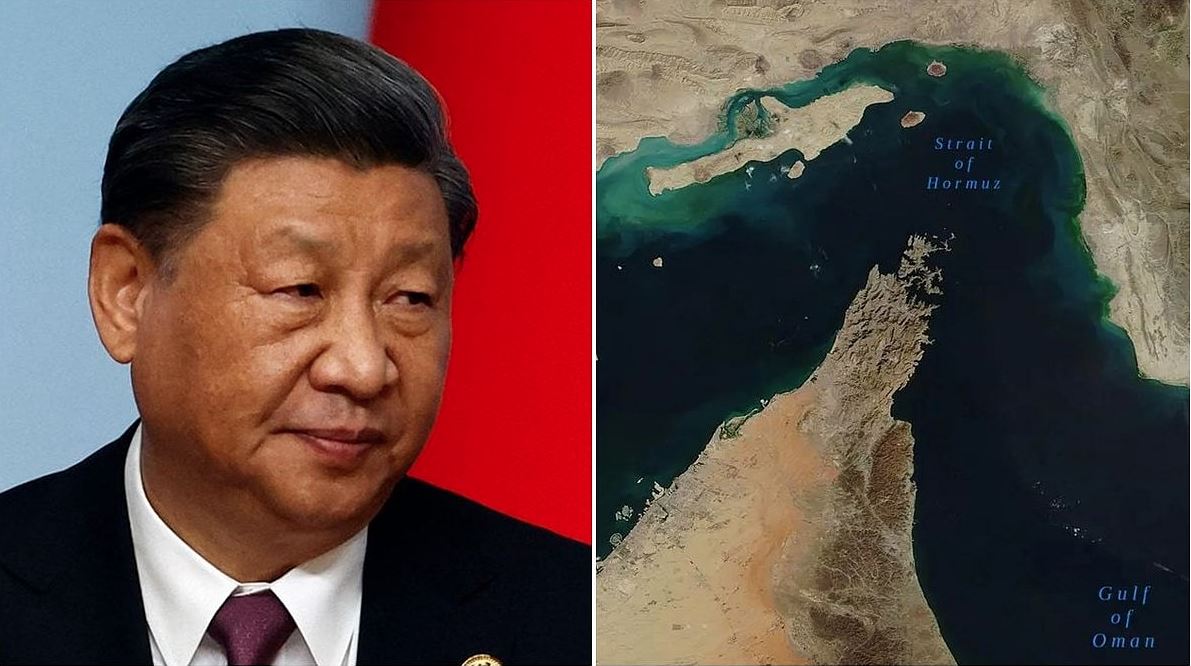
In addition, the sources noted that China has warned against alignment with US policies, especially regarding efforts that could turn certain Gulf states into forward bases for actions against Iran.
At the same time, Beijing stressed that the course of the region must ultimately be determined by its own states and peoples.
From China’s perspective, any sustainable security arrangement in the Gulf, and especially in the Strait of Hormuz, must include Iran.
Beijing is therefore promoting a broader framework that combines economic, political and security dimensions, while avoiding the provision of exclusive guarantees to any side.
Within the framework of this approach, China views economic cooperation as the foundation for stability, encouraging Gulf states on both shores to develop mutual security guarantees.
Beijing: “US hegemony is collapsing throughout the Middle East”
The diplomatic sources from East Asia also told Al Mayadeen that Beijing is following a similar approach in its own region, aiming to strengthen stability in its neighborhood during a period of rapidly evolving regional power dynamics.
They pointed out that US influence in the region appears to be on a downward trajectory, affecting even countries long considered close allies of Washington.

This trend, the sources noted, developed in parallel with the war against Iran and became more intense as Tehran demonstrates continuous resilience.
Within this framework, several of China’s neighbors adopted notable positions.
Countries such as South Korea and Japan signaled their unwillingness to take part in the war or become involved in military activity in the Strait of Hormuz.
For Beijing, these positions are considered a positive development.
The sources stated that China interprets the hesitation of both South Korea and Japan to engage in the aggression as a sign of broader changes taking shape in the regional and international order.
Trump’s plan to instrumentalize the meeting with Xi as a means of pressure against Iran
It is noted that earlier on 6/5, American President Donald Trump, after threats of new bombings, stated that the US may move toward an agreement with Iran before his scheduled visit to China on 14-15 May.
In an interview with PBS, when asked whether there is a possibility of an agreement with Tehran before the trip to Beijing, he characteristically replied: “It is possible, yes.”
This statement is not simply a diplomatic positioning.
It constitutes an indirect admission that the policy of pressure, threats and sanctions pursued by the Trump administration against Iran did not achieve its goals.
For years, Donald Trump presented Iran as a state that would “collapse” under the weight of American sanctions and military pressure. He unilaterally withdrew from the international nuclear agreement, escalated sanctions and invested in the logic of blackmail.
Today, however, reality is different.
Trump’s visit to China particularly important
Iran not only did not collapse, but managed to remain a key geopolitical player in the Middle East, maintaining strategic relations with China and Russia and strengthening its influence in the region.
The timing of the possible agreement carries particular significance.
Donald Trump is preparing to travel to China for critical talks with Xi Jinping, at a time when relations between Washington and Beijing remain tense.
The American leadership knows that a prolonged crisis with Iran weakens the position of the United States internationally, causes turbulence in energy markets and increases uncertainty in an already fragile global economy.
Developments in the Strait of Hormuz and rising fuel prices have already created political pressure in Washington.
Despite his harsh rhetoric, Donald Trump now appears to be seeking a diplomatic exit before the trip to Beijing, aiming to present himself as a leader who “controls” the crisis.
However, the very need of the United States to discuss again with Tehran constitutes a political victory for Iran.
Tehran proved that it is not going to easily submit to American pressure. Despite sanctions, threats and continuous military warnings, Iran managed to endure, maintain its regional influence and return to the center of international negotiations as a powerful player.
This picture also reveals something deeper: the era in which the United States could unilaterally impose its will appears to be increasingly challenged.
The indications of US-Iran convergence and the 14-point draft
It is worth noting that earlier on 6/5 the American network Axios revealed that the US is approaching a one page memorandum of understanding with Iran for ending the war and establishing a framework of talks for the nuclear program of the Islamic Republic.
The administration of Donald Trump is expecting a response from the Islamic Republic within the next 48 hours, according to the news website.
It is reported that the proposal consists of 14 points and is being drafted by Donald Trump’s envoy to the Middle East, Steve Witkoff, and the president’s aide and son in law, Jared Kushner, in cooperation with several Iranian officials.

The plan reportedly declares the end of the war and activates a 30 day negotiation period, aiming at an agreement for opening the Strait of Hormuz, limiting Iran’s nuclear program and lifting American sanctions against the Islamic Republic.
According to Axios, the US is seeking a moratorium on all uranium enrichment by Iran for at least 12 years, with a provision that would extend the moratorium if Iran is found to have violated it.
What the Tehran-Washington draft agreement published by Axios provides for
At the end of the negotiation period, the Islamic Republic will be allowed to enrich uranium at the low, non military level of 3.67%, while committing never to pursue a nuclear weapon and to submit to enhanced inspections, including surprise inspections by the United Nations.
Axios reported, citing “two sources with knowledge of the matter,” that Iran would agree to remove its existing stockpile of highly enriched uranium, with negotiators proposing the transfer of the material to the US.
As the talks progress, the US and Iran will gradually ease their operations in the Strait of Hormuz, allowing navigation through the waterway, a chokepoint for approximately 20% of global oil and liquefied natural gas.
However, if the negotiations collapse or fail to reach an agreement, the US could reinstate the blockade or continue the war, according to an American official.
The report warns that “nothing has been agreed yet,” but the sources describe the current process as the closest the two sides have come to an agreement since the start of the American Israeli war against the Islamic Republic on 28 February.
The Reuters leak and the signal from Pakistani sources
The Axios report was later confirmed by Reuters.
A source from Pakistan told the news agency that the US and Iran are indeed approaching a one page draft for ending the war.
“We will close it very soon. We are getting close,” the source said.
The agreement would constitute a major victory for Iran and more of an exit strategy for the Donald Trump administration.
Israel would emerge as the biggest loser, which is why it could attempt to sabotage it.
Nothing is guaranteed yet, and the US could simply be maneuvering to surprise Iran with a new attack.
www.bankingnews.gr






Σχόλια αναγνωστών