The international community watches hypnotized the greatest geostrategic leap of the century.
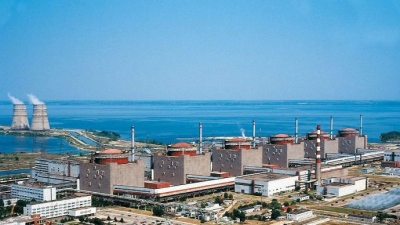
Shay Gal, a senior strategic advisor specializing in crisis management, reveals: The nuclear plant in Akkuyu is not an energy project.
It is the second nuclear dossier, after Iran, that NATO failed to stop, and Turkey is the willing host.
As the analyst points out, Akkuyu embodies an unprecedented model of energy dependence, where a NATO member state cedes critical elements of its sovereignty through the Build-Own-Operate scheme.
The entire 4.8 GW facility is owned and controlled by the Russian Rosatom, which is not limited only to financing and construction, but also maintains full operational control of the VVER-1200 reactors.
The dependence deepens further, as fuel, maintenance, personnel training and the critical software systems remain inextricably linked to Moscow, creating an “umbilical cord” that is difficult to sever.
Within this framework, Russia effectively acquires a form of indirect veto over Turkish energy stability, as it can, without military action, influence the operation of the plant through delays or technical interventions, increasing the country’s vulnerability.
The “lesson of Iran”
Shay Gal warns that Akkuyu follows the Iranian methodology.
Just as Iran used the “civilian” program to reach 60% enrichment and eliminate the visibility of the IAEA, so too Turkey is creating an architecture of ambiguity.
Recep Tayyip Erdogan openly challenges the global order, demanding nuclear weapons.
At the same time, Ankara combines nuclear know-how with the testing of long-range missiles, while issuing threats against Athens and Israel.
Akkuyu is the foundation for a future nuclear Turkey.
Akkuyu, as presented in the analysis of Shay Gal, does not merely constitute an energy project but a profound geopolitical transformation that integrates the Build-Own-Operate model to a degree of unprecedented dependence for a NATO country:
The full ownership and operation by the Russian Rosatom, combined with dependence on Moscow for fuel, maintenance, training and software, create a structural vulnerability that translates into indirect strategic control of Turkish energy infrastructure.
At the same time, the comparison with the Iranian model highlights the risk of a “civilian façade” that conceals future military options, especially when combined with revisionist rhetoric and the development of missile capabilities.
Within this framework, Turkey appears to undermine fundamental principles of the Alliance, as the integration of a Russian state entity into critical infrastructure raises issues of resilience (Article 3), conflict of commitments (Article 8) and limitations on invoking collective defense (Article 5), shaping a complex web of strategic, legal and energy risks.
“Toxic hub”
Akkuyu, according to the analysis, is evolving into a permanent “toxic” hub for the Mediterranean and the European economic architecture, as its deep integration into Russian structures creates constant friction with the regime of international sanctions:
Every spare part, technical support and software update necessarily passes through a complex regime of restrictions linked to Russia, making the operation of the project institutionally and commercially precarious.
At the same time, the perception of risk by markets, lenders and insurance entities already incorporates the “Russian risk” on NATO territory, leading to increased financing and insurance costs, which undermine the viability of the project even before its full activation, transforming it from a development investment into a long-term economic burden.
As it becomes evident, Akkuyu is a unified foreign veto node at the heart of the Mediterranean.
Turkey ceded strategic ground to Vladimir Putin, creating a time bomb that threatens the security of Greece, Europe and the entire West.
The dossier is now open and the threat is existential.
www.bankingnews.gr



Σχόλια αναγνωστών