

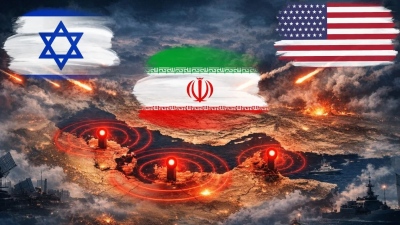
The strike by the United States and the Trump administration against Iran should be considered a matter of days, with the joint Israeli–American plan of “targeted bombardments” against the Khamenei regime entering a phase of full implementation as the Pentagon continues to amass offensive assets in the Mediterranean and the Middle East.
Within the framework of the looming attack by the US, Iran is rushing to shield its skies with Russian S300 air defense systems, while simultaneously procuring from Moscow portable drone interception systems of the MANPADS type.
At the same time, attention is drawn to the statement by the former US National Security Advisor, John Bolton, in which he outlines the failure of the American attack against the Revolutionary Guards, due to the “inability of Donald Trump to confront Iran in strategic terms”.
Nevertheless, despite numerous warnings from former and current allies of Trump regarding the risks of retaliation and the overall strategic vacuum, the US and Israel plan for a sweeping attack against Iran is proceeding normally.
More specifically, dozens of American military refueling aircraft and transport planes were spotted on 23 February at Israel’s Ben Gurion airport, with Israeli media reporting that they had arrived one day earlier.
There was no comment from the Israeli authorities regarding the American military deployment at Israel’s main civilian airport, while it remains unclear whether the aircraft are there temporarily as part of an intermediate stopover.
Bolton bombshell: The US operation will fail, the Guards will not bend, Trump is unable to think strategically
Earlier, in a statement that caused a stir, former National Security Advisor John Bolton launched “thunderbolts” against Donald Trump’s handling of Tehran.
As international reports of an imminent, coordinated attack by the US and Israel on Iran intensify, Bolton openly questions the American President’s ability to manage the crisis strategically.
John Bolton on Iran:
— Clash Report (@clashreport) February 23, 2026
Trump, I think, just hopes that this show of American force will intimidate the Ayatollahs. If I were still his advisor, I’d be happy to tell him that isn’t going to work.
They’re not going to be intimidated. But Trump really thinks minute to minute; he… pic.twitter.com/kcGkvs7eg0
The experienced politician, known for his hardline positions, argues that the current show of force will not bend the Ayatollahs’ regime, as Trump acts impulsively and without a long term plan.
“Trump, I think, is simply hoping that this display of American power will intimidate the Ayatollahs. If I were still his advisor, I would be pleased to tell him that this will not work.
They will not be intimidated. But Trump truly thinks minute by minute, he does not think strategically.”
KC-135 Stratotankers at Israel’s Ben Gurion airport
A photograph posted on social media shows at least two KC-135 Stratotankers at Ben Gurion airport.
One of them, bearing tail number “58-0052,” is reported to have redeployed from Morón Air Base in Spain to Al Udeid Air Base in Qatar, before heading to Israel.
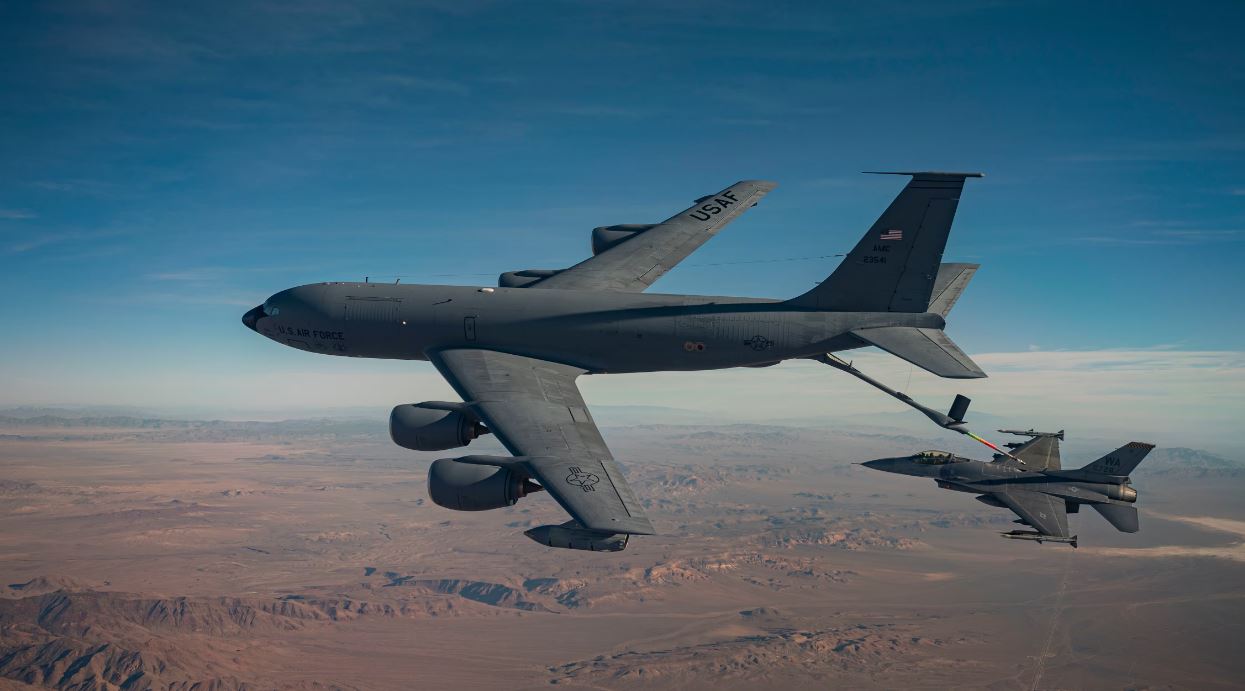
According to the Military Air Tracking Alliance, a group of approximately 30 open source analysts that regularly studies military and government flight activity, more than 85 aerial tankers and over 170 transport aircraft have moved into the region since mid February, as US President Donald Trump considers the possibility of military action against Iran.
Iran deploys S300 in Tehran and Isfahan
On the opposing side, satellite images confirmed the repositioning of Iranian long range S-300PMU-2 air defense systems at strategic locations near the capital Tehran, as well as in the country’s second largest city, Isfahan.
This move is recorded amid a gigantic US force buildup around the country, with hundreds of aircraft redeployed from the Atlantic and the Pacific to support a potential strike against Iranian targets.
Intercepting Russian systems poses challenge for the Pentagon
It is noted that the American deployment includes specialized suppression of enemy air defenses aircraft, among them several US Navy EA-18G strike squadrons and two US Air Force F-16CJ fighter squadrons.
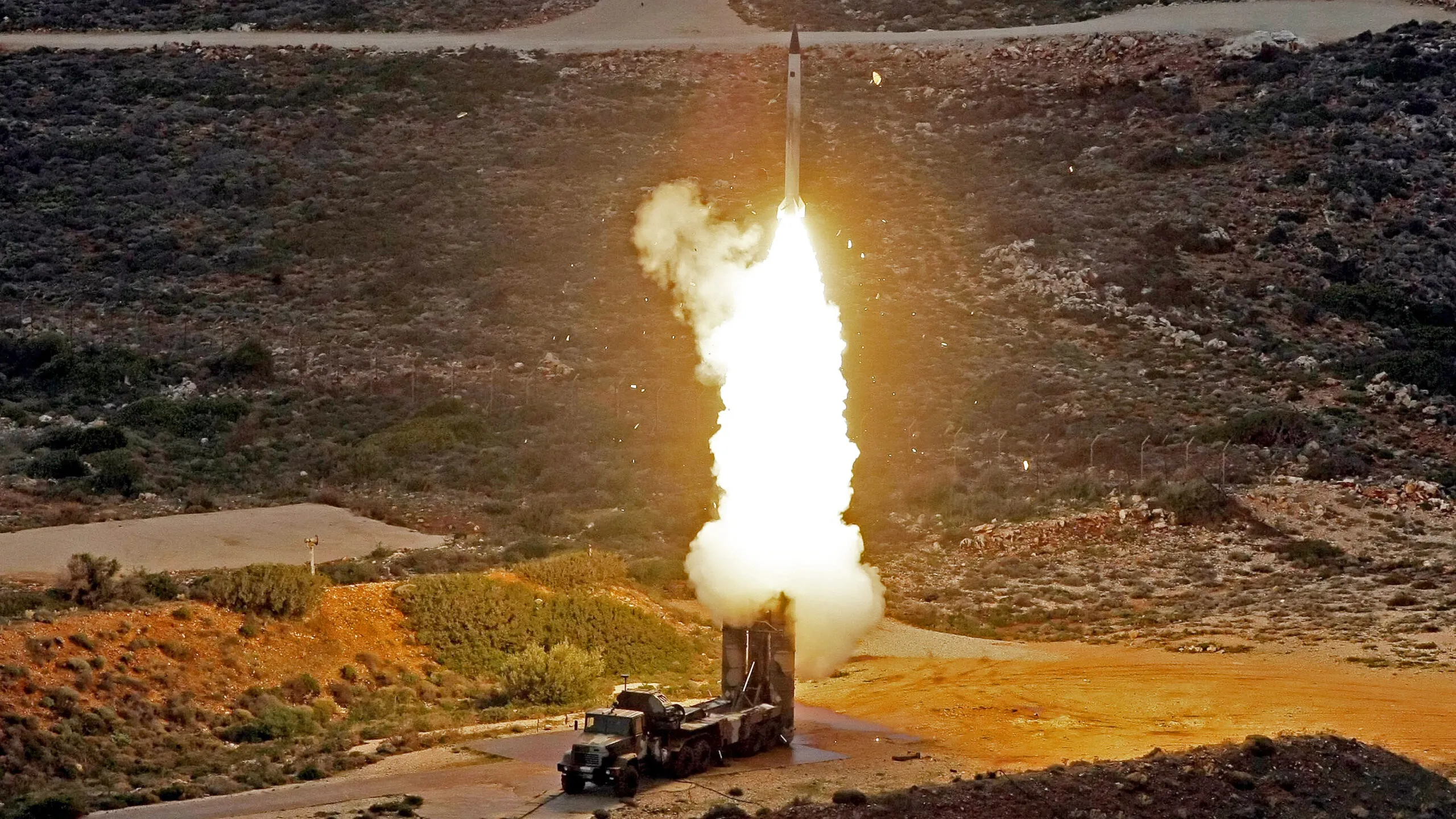
The S-300PMU-2 is one of only two post Cold War surface to air missile systems known to have been procured by Iran from abroad, the second being the short range Tor-M2, acquired in the 2000s to counter cruise missiles.
48N6DM hypersonic missiles shield Tehran’s skies
It is emphasized that the Iranian Ministry of Defense initially ordered the Russian S-300PMU-1 system in 2007, but the agreement was unilaterally canceled by the government of then President Dmitry Medvedev under pressure from the West and Israel.
In 2016, during a period of heightened tensions between Russia and the West, an agreement was reached for the delivery of the more powerful S-300PMU-2, the direct predecessor of the S-400 system.
These systems carry 48N6DM missiles, which possess advanced anti missile capabilities thanks to sophisticated sensors and speeds exceeding Mach 14.
This allows them to strike targets at hypersonic speeds above Mach 8, while their 250 kilometer range provides wide area defense coverage.
Iran: “We replaced the systems hit in 2024”
The deployment of S-300PMU-2 systems to protect the two major cities follows extensive reports by Western sources claiming that all Iranian systems were destroyed within hours during Israeli strikes in October 2024.
This claim was strongly disputed by analysts, as Israeli F-35s cannot launch air to ground missiles due to the absence of the Block 4 software.
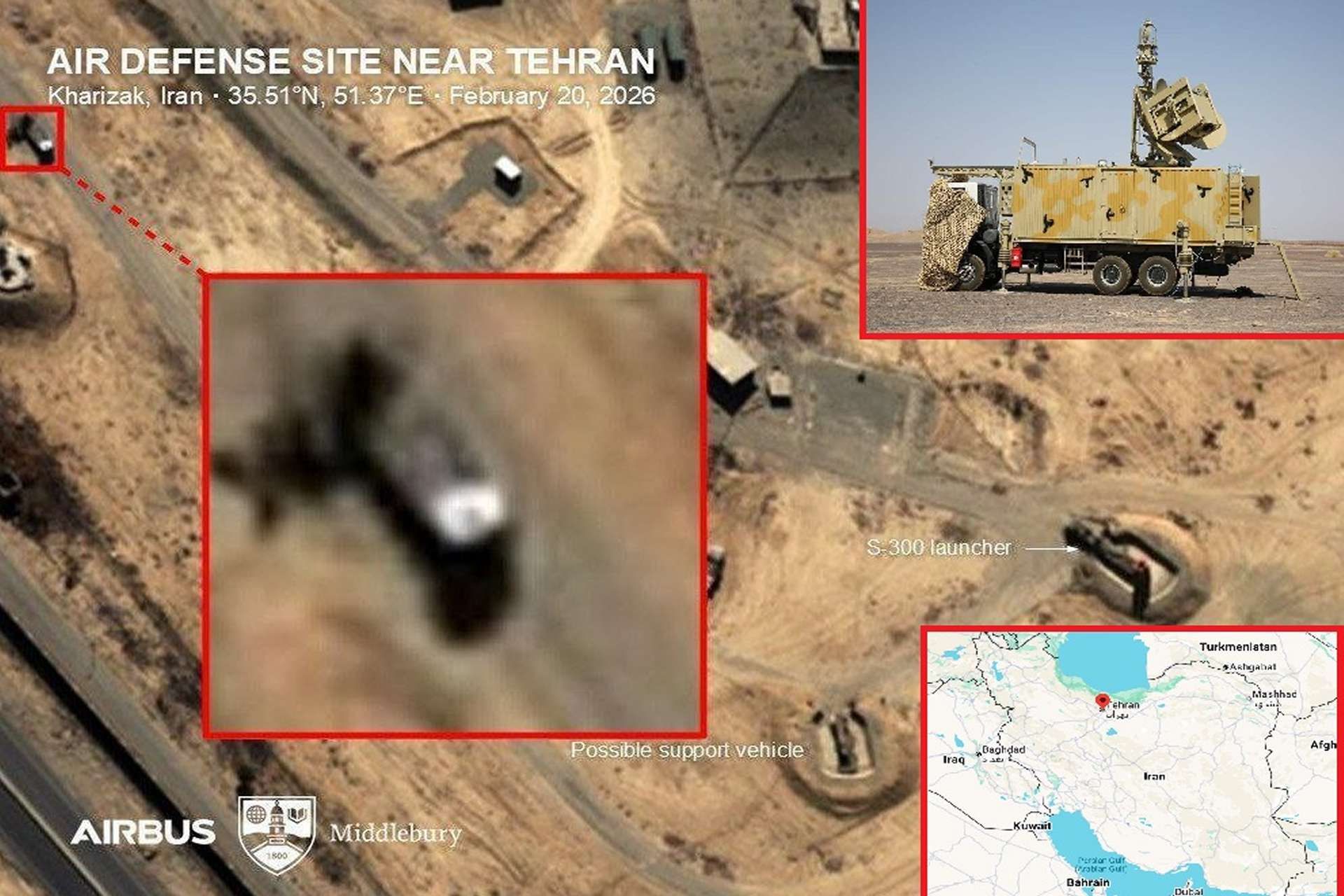
However, Iran’s complete lack of modern fighter aircraft raises questions about the survivability of ground based systems in the face of a large scale US attack.
In July 2025, Rear Admiral Mahmoud Mousavi, deputy chief of operations of the Iranian armed forces, confirmed that all systems damaged during hostilities with Israel and the United States (13–24 June) had been replaced.
“Some systems were damaged, this is not something hidden, but we used domestic resources and replaced them with pre stored systems,” he stated.
The Chinese “phantom” and the domestic Bavar 373
Alongside the replacement of losses, regional sources report that Iranian air defense forces are receiving Chinese made long range systems, which may be significantly superior to the S-300PMU-2.
Although Iran possesses only two S-300PMU-2 regiments, these systems are fully customized, utilizing 96L6 radars for target detection at all altitudes, 30N6E2 radars for engagement, and 64N6E2 for battle management.
Despite the existence of the domestic Bavar 373, which has been under development since 2010, Tehran’s decision to procure the Russian S-300 in 2016 indicated that the indigenous system was not considered sufficient at the time.
“The attack on Iran will last weeks”
In any case, the sudden appearance of American military aircraft at Ben Gurion came just days after a report by Axios, which stated that the US and Israel were planning a weeks long campaign against the Islamic Republic.
The Israeli Air Force was constrained by its small tanker fleet during the 12 day conflict with Iran last June.
It operates only seven aging KC-707-300 aircraft capable of refueling its fighters.
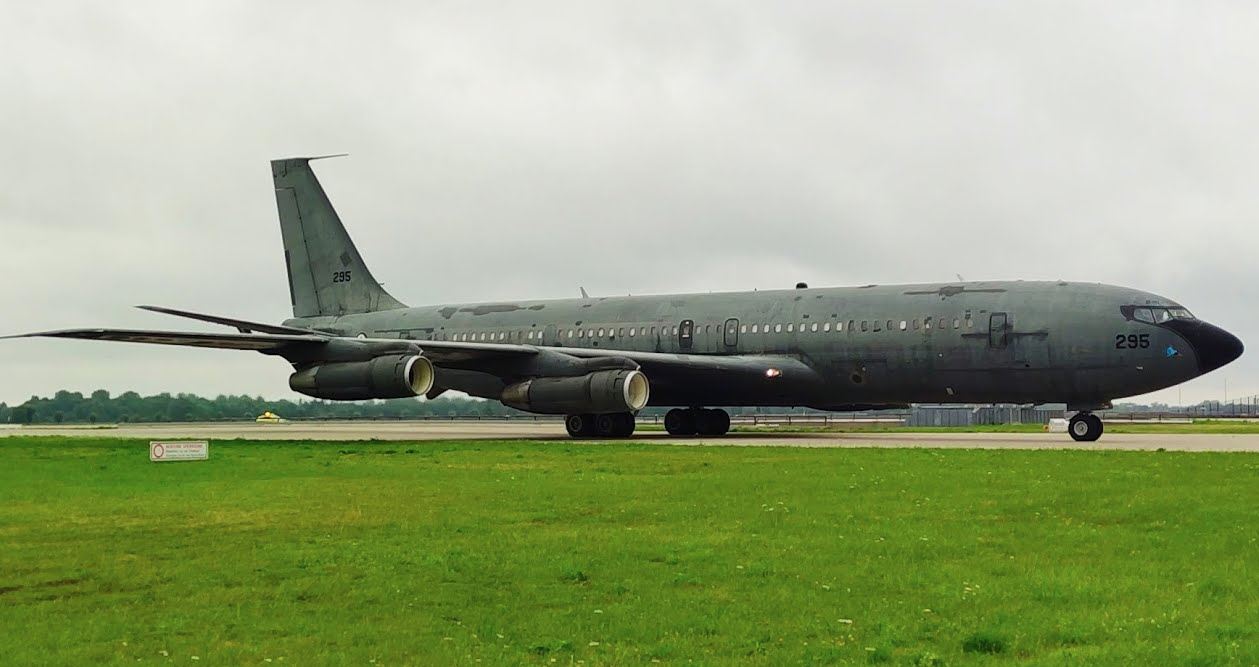
Thus, if Israel intends to participate in an American strike on Iran, it would make complete sense for American tankers to provide support, enabling the involvement of more Israeli fighters.
Earlier in the day, Prime Minister Benjamin Netanyahu declared during a speech in the Knesset that Israel had never been stronger.
“Relations with the United States have never been closer,” Benjamin Netanyahu stated.
Netanyahu: If Iran makes the greatest mistake, it will be answered with unimaginable force
In what appears to be a warning to Iran, the Israeli prime minister stressed that personal ties between himself and Donald Trump, as well as between the militaries of Israel and the US, had never been better.
At the same time, he stated: “we are living through very complex and challenging times.”
If the Iranian regime “makes perhaps the most serious mistake in its history,” warned Benjamin Netanyahu, “and attacks Israel, we will respond with force it cannot even imagine.”
Meanwhile, AFP, citing an American official, reported that US Secretary of State Marco Rubio may postpone a trip to Israel, where he is expected to discuss potential strikes on Iran with Benjamin Netanyahu.
Delay in Rubio’s trip signals attack on Iran
“Secretary Marco Rubio still plans to travel to Israel, but the schedule remains subject to change,” the official stated.
The deployment of American military aircraft at Ben Gurion, the latest warning by Benjamin Netanyahu, and the delay by Marco Rubio may constitute indications of an impending attack on Iran, not only by the US, but also by Israel.
While Israel has so far maintained that it would respond only to an Iranian attack, Benjamin Netanyahu could easily justify participation in an American strike on the Islamic Republic as a preemptive move.
However, as recent history has shown, everything suggests that Tehran is expecting an attack from both countries.
www.bankingnews.gr




Σχόλια αναγνωστών