

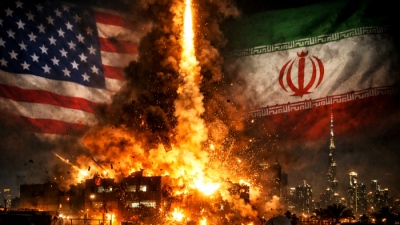
The United States is deploying military forces across the Middle East, capable of launching multiple waves of attacks against Iran. If the order is given, this operation will far exceed the previous, more limited military actions of President Donald Trump. However, what has leaked to the American media is that there is no escape plan. Essentially, unlike previous operations—such as strikes against ISIS leaders, attacks on Syrian airbases following the use of chemical weapons, or the one-day operation against Iranian nuclear facilities last summer—a new campaign would begin without a clearly defined final objective.
How we got here
The answer lies in the convergence of three issues that were previously distinct: Iran's missile arsenal, the violent domestic crackdown within the country, and its unresolved nuclear program. Their combination limits the room for restricted action and shapes the character of a potential military operation in the coming days or weeks.
The operational stakes: Iranian missiles
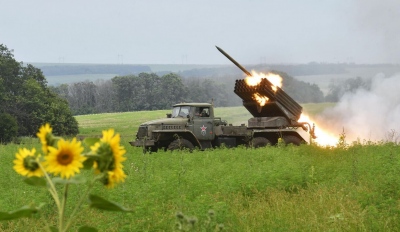
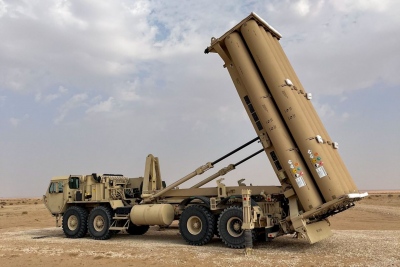
On October 1, 2024, approximately 200 Iranian missiles were launched toward Israeli cities. The flight time was about 13 minutes. US and Israeli air defense systems—including US Navy destroyers in the eastern Mediterranean—downed most of the missiles. The incident marked the first direct state-on-state attack in the region in decades. Israel responded by striking Iranian air defense systems, which have not yet been fully restored. Tehran's missile program is not just a regional threat; Iran has transferred missile and drone technology to Russia for use in Ukraine, while Iranian-origin unmanned aerial vehicles have repeatedly struck civilian infrastructure. In any US military scenario, missile production facilities, launchers, stockpiles, and related air defense systems would likely be the primary targets, aimed at limiting Iran's retaliatory capability.
The bloody crackdown
The current crisis was triggered by internal developments in Iran. Nationwide protests that erupted shortly before the New Year were violently suppressed. Donald Trump had publicly encouraged the protesters, warning that a bloody crackdown would have "serious consequences" for Tehran. "KEEP PROTESTING – TAKE OVER YOUR INSTITUTIONS. HELP IS ON THE WAY," he wrote in a post. However, help did not arrive. The protests were crushed with thousands reported dead—some reports even cite tens of thousands. The crackdown shocked the international community. All 27 European Union member states coordinated sanctions against the Islamic Revolutionary Guard Corps (IRGC), designating them a terrorist organization. The US military mobilization in the region began because of these events—not the nuclear or missile programs. This has operational significance: if the political motivation is the crackdown, then targets may include facilities, command centers, and leadership of the IRGC and the Basij militia. Such a scenario broadens the field of conflict and increases the risk of Iranian retaliation against US targets in the region.
The strategic flashpoint
Last summer, the US struck key uranium enrichment facilities at Fordow, Natanz, and Isfahan. According to the International Atomic Energy Agency, a stockpile of highly enriched uranium likely remains buried beneath Isfahan. There is also a new facility buried in a mountainous region south of Natanz, known as “Pickaxe” Mountain, declared as a future centrifuge assembly center. The irony is that prior to the protest crackdown, new strikes on the nuclear program were not on the table. However, the Iranian refusal of broader negotiations and persistence in uranium enrichment brought the issue back to the center of US strategy.
A campaign without a clear end
Individually, the three issues—missiles, crackdown, nuclear program—could be addressed separately: deterrence, diplomacy, sanctions. Donald Trump's public warnings and Tehran's choice to ignore them merged them into a single strategic front. A likely scenario involves initial strikes on missile infrastructure and air defense, expanding to the regime's repression mechanisms, followed by new attacks on nuclear facilities. This would be a campaign of days—perhaps weeks—with an unknown conclusion. The situation is now on the brink of conflict. Decisions rest with Donald Trump and Iran's Supreme Leader, Ayatollah Ali Khamenei. Neither, for now, seems willing to back down. If hostilities break out, it will not be a single isolated strike. It will be a conflict of undetermined duration—and perhaps the most complex military test of the Trump presidency.
Russia arms Iran with Verba and 9M336
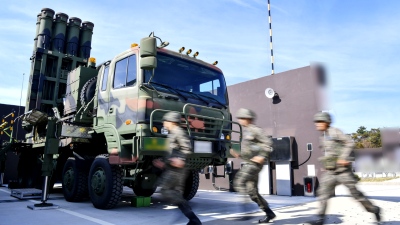
The situation in the Middle East is being pushed to the extreme. As a third round of talks between Iran and the US was set for Thursday, February 26, 2026, in Geneva, Tehran has reportedly concluded a secret €500 million ($589 million) deal to procure thousands of advanced portable anti-aircraft missiles from Russia. The Financial Times reveals that the agreement, signed in Moscow in December, provides for the delivery of 500 “Verba” portable launchers and 2,500 “9M336” missiles over three years. According to the report, citing leaked Russian documents and sources familiar with the deal, deliveries will take place in three phases from 2027 through 2029.
Official request from Tehran
According to the report, the deal was negotiated between the Russian state arms export company Rosoboronexport and the Moscow representative of the Iranian Ministry of Defense and Armed Forces Logistics (MODAFL). Tehran submitted an official request for these specific systems last July, following a contract cited by the Financial Times. In June of the previous year, US forces struck three key Iranian nuclear facilities during a period when the country had joined Israel's military campaign against Iran. President Donald Trump stated then that Iran's key nuclear facilities were completely destroyed. However, according to a preliminary US intelligence assessment from that period, the air raids did not eliminate Tehran's nuclear capabilities but only delayed them by a few months.
Iran's restoration race
Iranian officials have repeatedly claimed that the country has repaired the damage sustained during the war and that its capabilities are now stronger than ever. Russia maintains a strategic partnership treaty with Iran, which, however, does not include a mutual defense assistance clause. Earlier in February, a Russian Navy corvette conducted joint exercises with the Iranian navy in the Gulf of Oman, according to the Russian Ministry of Defense.
Harsh rhetoric and threats amid military tension
A new, third round of talks on Iran's nuclear program begins Thursday in Geneva, as announced by Oman's Foreign Minister, Badr Albusaidi, amid growing concern over the risk of military conflict. The US has significantly bolstered its military presence in the Middle East, with Donald Trump warning Thursday that "very bad things will happen" if no agreement is reached. Badr Albusaidi, mediating the indirect contacts between Washington and Tehran, stated that negotiations are set for this Thursday with a "positive push to take the extra step toward finalizing the deal." According to Reuters, Iran appears willing to offer new concessions on its nuclear program, provided the deal includes the lifting of economic sanctions and recognizes Tehran's right to "peaceful nuclear enrichment." Iranian President Masoud Pezeshkian expressed cautious optimism, citing "encouraging signals" from recent negotiations while stressing Tehran is ready for "any possible scenario."
"Why haven't they capitulated?"
Particularly sharp was the stance of Donald Trump's special envoy for the nuclear issue, Steve Witkoff, who leads the negotiations for the US. In an interview with Fox News, he mentioned that Trump "wonders why Iran has not yet capitulated." "I don't want to use the word 'disappointed,' because he knows he has many alternatives. But he wonders why they haven't... I don't want to say 'capitulated,' but why they haven't done it," he stated. Steve Witkoff argued that despite intense military pressure and a strong US Navy presence, Tehran has not offered a specific proposal ensuring it does not seek a nuclear weapon. Iranian Foreign Minister Abbas Araqchi responded on X: "They wonder why we don't capitulate? Because we are Iranians." He added to CBS that a diplomatic solution remains possible.
Disagreements over enrichment and sanctions
Last year's indirect talks failed primarily due to the US insistence that Iran abandon uranium enrichment on its soil—a path Washington views as a route to a bomb. Tehran categorically denies seeking nuclear weapons. In June, the US and Israel attacked Iranian facilities, with Trump claiming they were "completely eliminated." However, it is estimated Iran retains previously enriched uranium stockpiles that Washington wants removed. Steve Witkoff stated that Iran has reached 60% enrichment purity, far above civilian limits, warning it is "likely one week away from obtaining industrial-scale material for a bomb." According to Reuters, Tehran's considered concessions include shipping half of its highly enriched uranium abroad and diluting the rest. Meanwhile, the US seeks to broaden the talks to include Iran's missile program and its support for regional armed groups. Iran has publicly rejected this expansion.
The shadow of Reza Pahlavi
Steve Witkoff also revealed that, per Donald Trump's orders, he met with Iranian dissident Reza Pahlavi, son of the Shah overthrown in 1979. He did not provide details of the meeting. Reza Pahlavi, living in exile, was a reference point for parts of the Iranian opposition during last month's anti-government protests—the bloodiest since the revolution. Earlier in February, he argued that a US military intervention could save lives, calling on Washington not to prolong negotiations with the Tehran regime. Events in Geneva are expected to determine if diplomacy can avert a dangerous escalation.
The scene dangerously resembles 2003 and the Iraq invasion
However, the American official's statement lacks evidence and contradicts the US narrative that Iran, after the June 2025 strikes, has no practical access to enriched material and lacks the necessary centrifuges. In June 2025, coordinated operations reportedly destroyed 20,000 centrifuges and killed top nuclear scientists. Under this light, the phrase "one week away from a bomb" becomes intensely political. It describes a hypothetical scenario rather than an immediate operational capability. It is a rhetoric that dangerously echoes the period before the Iraq invasion in 2003, when claims of weapons of mass destruction were used to legitimize intervention. The German newspaper Bild reports that the United States may launch a military attack on Iran on February 23 or 24.
www.bankingnews.gr





Σχόλια αναγνωστών