

The US Arctic struggle: Half an icebreaker against Russia’s fleet of 41
The competition for the Arctic, one of Earth’s richest and most untapped regions—estimated to hold 13% of undiscovered oil and 30% of undiscovered natural gas—is in full swing. The region, which surged into the headlines following US President Donald Trump’s demands to occupy Greenland for national security reasons, holds immense strategic value due to its geopolitical significance.
In this race, Russia essentially has no rival. The US cannot even stand with serious claims against it, as it lacks a reliable icebreaker fleet. Analysts estimate that while Washington refuses to accept Moscow's dominance, Trump’s only solution is to seek help from Allies in a desperate attempt to catch up. Notably, the military exercise Arctic Watch is currently underway, involving tens of thousands of troops to deter the threat from Russia and China, according to NATO Secretary General Mark Rutte.
A low start
Donald Trump plans to expand American influence in the resource-rich Arctic region. Under the pretext of protecting the area from Russian and Chinese influence, he is promoting the idea of incorporating Greenland and Canada into the US.
However, beyond political constraints, the implementation of this idea is hindered by the practical absence of icebreakers. "In the current situation, the 'global hegemon' is not even capable of entering the Arctic, let alone challenging the largest player, Russia," notes the German newspaper Frankfurter Rundschau (FR).
Half an... icebreaker
The US possesses only three icebreakers: the Healy, Storis, and Polar Star. The first is out of service following a fire in 2024, the second is merely a converted supply ship, and the third has already become a "museum exhibit"—requiring costly annual repairs and primarily serving stations in Antarctica, according to Tatiana Zikunova, an expert in Arctic transport.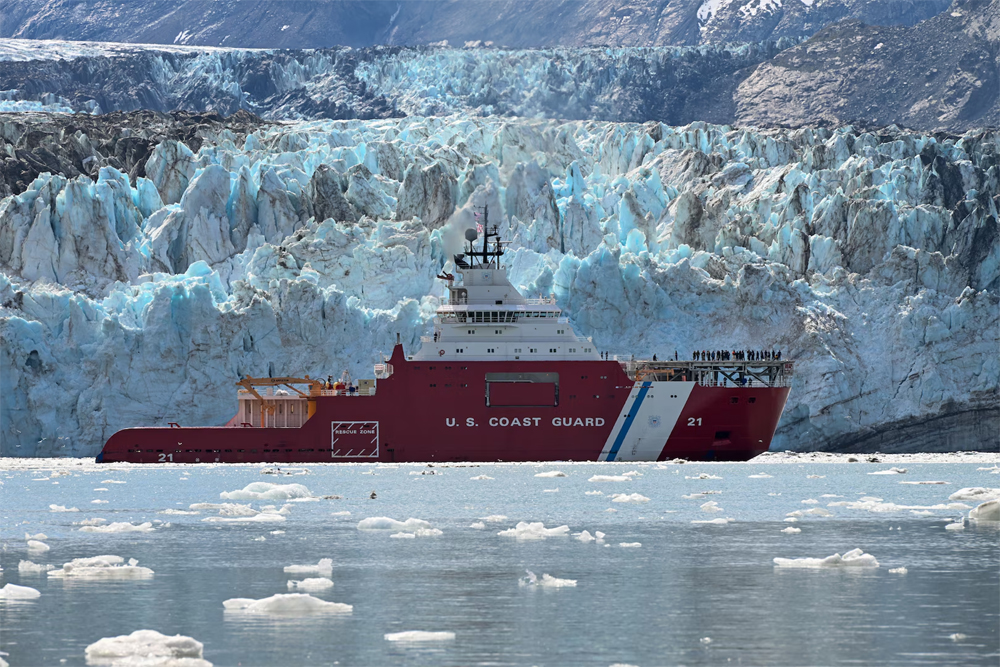
And... a wrong estimation
The issue is that until recently, America viewed the Arctic as a peripheral region. It was believed that a small number of icebreakers was sufficient for a limited range of problems, explains Alexander Vorotnikov, a coordinator for the Arctic Development Project Office. However, it soon became clear that the Arctic is rapidly becoming a key hub for global competitiveness in resources and logistics.
They cannot reach Russia
The region is rich in resources, including oil, gas, nickel, platinum, and rare earth elements. Currently, no country can compete with Russia, which possesses 34 diesel icebreakers and 7 nuclear-powered ones. Four more nuclear ships are on the way: the Yakutia, Chukotka, Leningrad, and Stalingrad.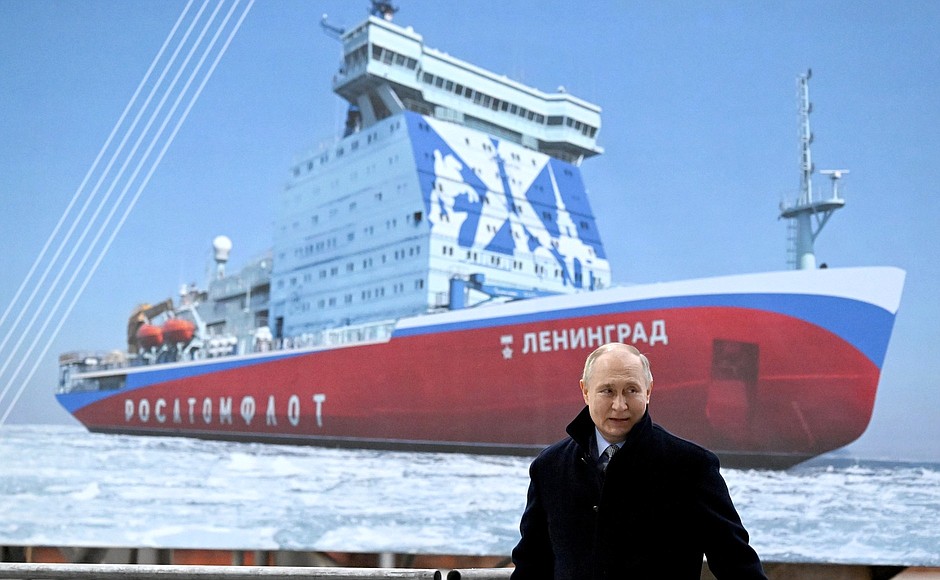
The other players
"Only a few countries possess icebreakers, but their numbers are much smaller," says Zikunova. Canada has 17—mostly medium and small—used for supplying northern regions and search and rescue operations. Finland has 8 ships, while Sweden is building two for the Baltic. China, despite having no Arctic territory, is developing a scientific fleet (Xuelong-1 and Xuelong-2) and planning nuclear icebreakers.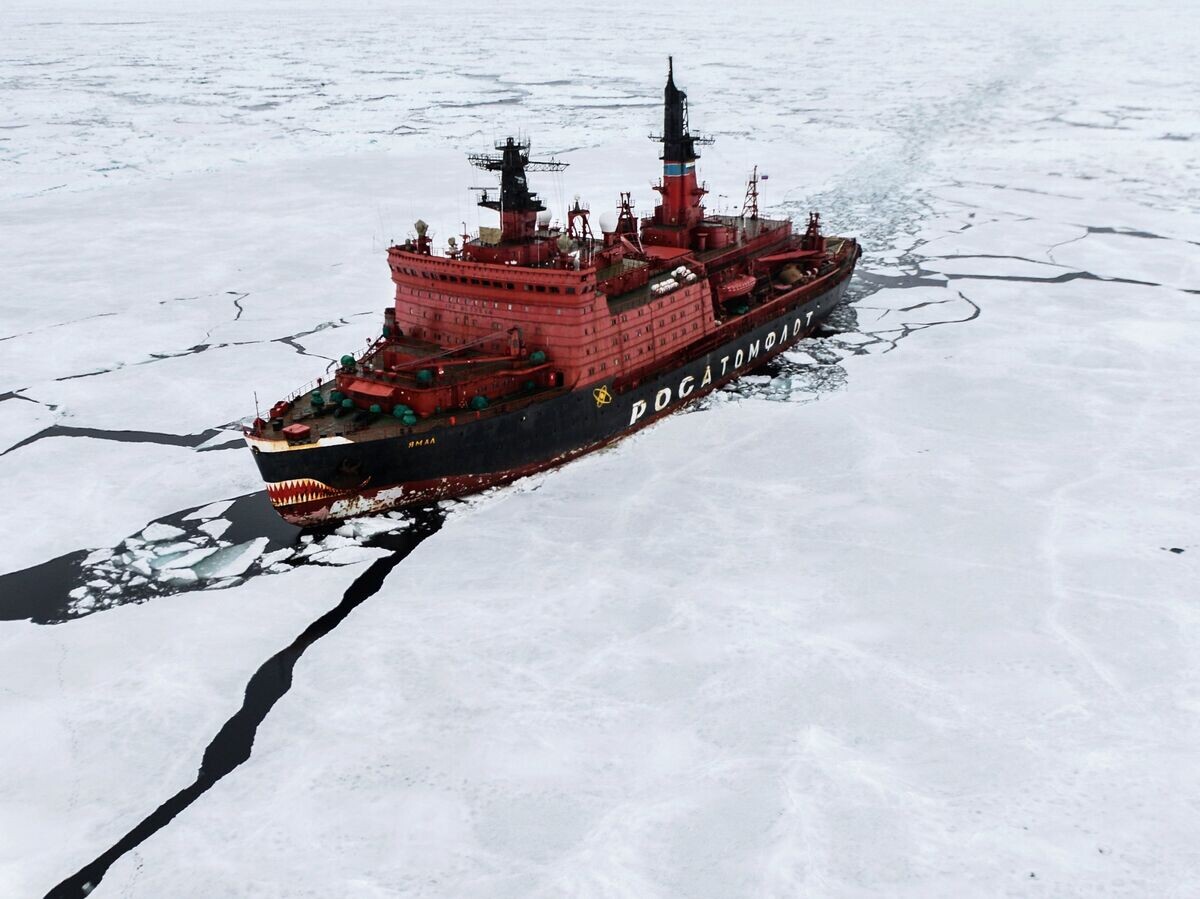
The dismal state of the US
The situation for the US is "simply dismal," reports Frankfurter Rundschau. Even Trump has admitted to this difficult state. "We had none, now we have one. Russia has over forty, and we have one. This is a joke," the US President said in November 2025. Although Trump expressed intent to order 40 icebreakers, experts note the US lacks the domestic capacity to build such vessels alone.
Success at any cost
The US intends to order some vessels from Finland and must also reach an agreement with its neighbor, Canada. "The countries have signed the ICE Pact for joint development and production of polar icebreakers. They aim to build 70-90 new ships by 2030," reminds Arseny Mityko of the Arctic Academy of Sciences. However, without Finland, Americans cannot compete with Russia and China.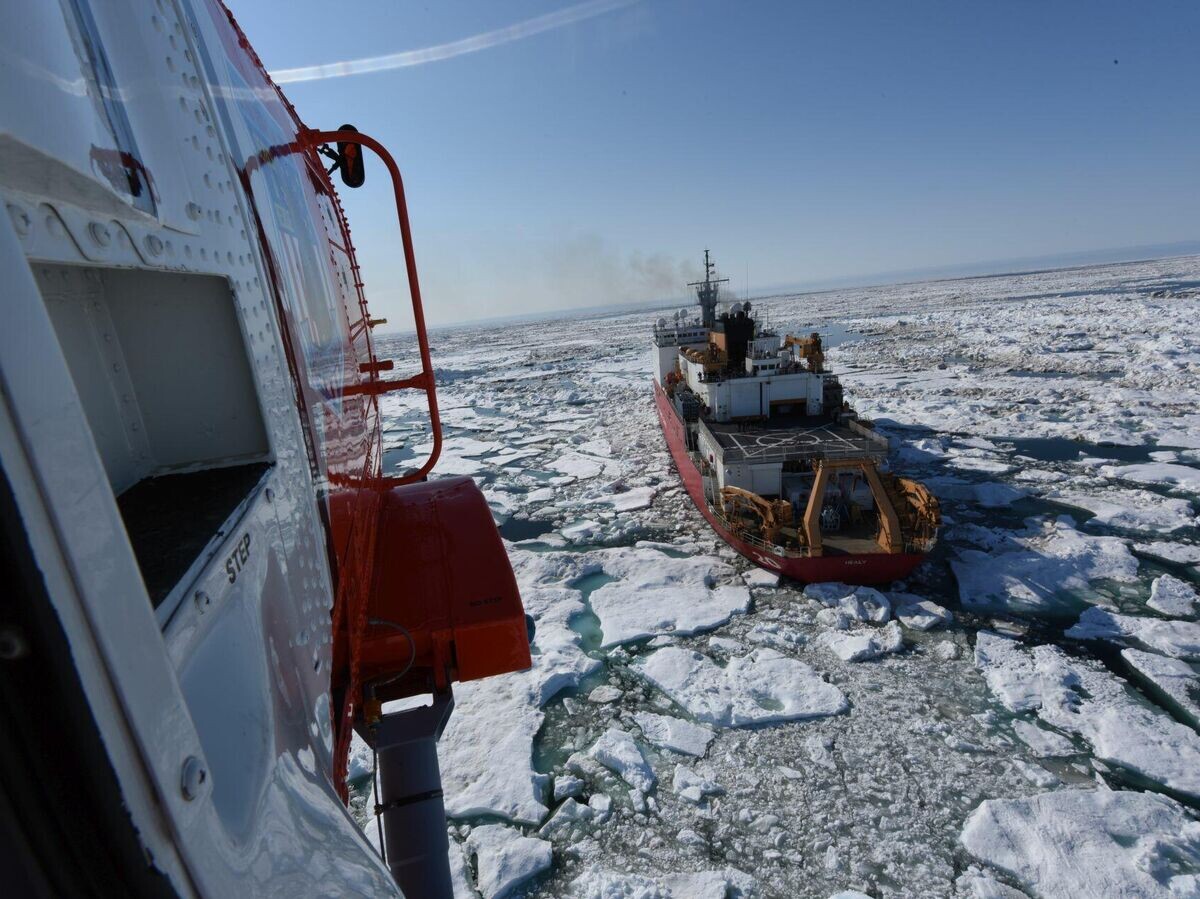
Key to the economy
Ultimately, Zikunova believes total parity isn't necessary for the US. "A sovereign state cannot delegate border protection and military presence to allies. However, for Washington, this is a matter of presence, whereas for Russia, it is a key to the economy," she points out. Over-focusing on this could even give Canada political leverage over the US.
NATO exercises in the Arctic due to Russia, China threat
Indicative of the interest in the region are statements by Mark Rutte. The NATO Secretary General stated that exercises on the eastern borders and the Arctic are "necessary due to the Russian threat." Rutte argued that we should not be naive regarding China either, as they are also active in the region. Yesterday, February 11, NATO launched operation Arctic Watch, involving multidimensional exercises with tens of thousands of soldiers.
www.bankingnews.gr







Σχόλια αναγνωστών