

Renowned American attorney Mitch Wexler is sounding the alarm on what he describes as the largest hidden financial time bomb in the United States, pointing to an underlying $5.1 trillion fraud in the school district bond market. Wexler argues that this crisis is silently ballooning beneath the surface of the American housing market.
According to Wexler, the system is built upon inflated property valuations, the over-taxation of homeowners, and a systematic siphoning of wealth from household equity to sustain a problematic and potentially fraudulent model of municipal debt. He emphasizes that homeowners are gradually losing their equity to maintain a mechanism of bond issuance and refinancing built on questionable foundations.
What lies beneath
These statements come amid an open legal battle in the Texas Supreme Court, where Wexler poses a question that he claims the political and institutional system systematically avoids: if there is nothing to hide, why is a full judicial discovery being blocked?
Wexler argues that this case has a potential impact manifold greater than the 2008 financial crisis, as it does not merely involve the real estate market but touches the very foundations of municipal financing and the broader sustainability of the fiat money system. In his view, the case reveals a deep, structural rot within the current monetary framework. In this context, he estimates that physical precious metals, such as gold and silver, represent the only refuge with zero counterparty risk should a generalized loss of confidence in the debt markets occur. The positions of Mitch Wexler, featured in an analysis by ITM Trading, add to a growing wave of concern regarding transparency and the valuation of bonds in the US at a time when debt levels are at historic highs.
Hedge funds bet on Wall Street collapse as AI sows panic
Hedge funds have taken massive short positions on American equities. This "smart money" is increasingly betting that Artificial Intelligence and the disruption it causes to existing business models will continue to create market turbulence.
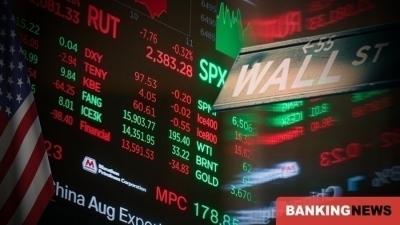
Goldman Sachs reports, via Bloomberg, that hedge funds bolstered their record short positions in US stocks last week, with the technology sector being hit the hardest. According to bank data stretching back to 2016, the volume of notional short selling at the individual stock level reached a historic high last week. From January 30 to February 5, short sales were double the long purchases. Hedge funds remained net sellers of US equities for the fourth consecutive week, with the intensity of selling being the strongest since last April's "Freedom Day."
AI concerns lead to panic
Anxiety over how Artificial Intelligence will reshape the American economy manifested sharply on Wall Street, leading to a tumultuous week for the markets. The catalyst for the decline was a series of new tools released by Anthropic designed to automate tasks across multiple industries. The total market capitalization of 164 stocks in the software, financial services, and wealth management sectors evaporated by $611 billion last week.
Technology in the eye of the storm
The technology sector suffered the heaviest selling, recording the second-largest net capital outflow of the last five years. The software sector led this retreat, accounting for approximately 75% of the industry's net sales. The total net exposure of hedge funds to software stocks dropped to 2.6%, while the long-short ratio fell to 1.3, both reaching historic lows.
Simultaneously, stocks in semiconductors, semiconductor equipment, and IT services were among the few tech sectors recording net purchases, with the semiconductor index rising and widening the gap with software stocks—a phenomenon observed in recent months as investors penalize sectors they fear will be disrupted by AI.
Shift to defensive sectors
Beyond technology, hedge funds continue to move toward defensive sectors. The healthcare sector was the most net-purchased last week and now leads in hedge fund inflows since the start of the year, overtaking the industrial sector. Despite a partial market recovery on Friday due to bargain hunting, the Nasdaq 100 recorded its worst week of the year.
www.bankingnews.gr











Σχόλια αναγνωστών