

The days of Keir Starmer as Britain's Prime Minister are numbered. This became clear last week when the Conservatives essentially interrogated the Labour leader in a parliamentary hearing regarding his role in the scandal surrounding his friend Peter Mandelson. Initially, Starmer tried to deflect the attacks with cheer, changing the subject; for instance, in response to a Scottish MP's direct request for Mandelson's prosecution, the Prime Minister managed to reply with a story about how he reduced tariffs on Scotch whisky in China. But then, at the parliamentary podium, Starmer literally collapsed, turning from his seat during his speech and stating: "Mandelson betrayed our country, our parliament, and my party." Everyone noticed how his hands began to tremble—the Prime Minister was losing his grip.
No chance of survival
Politicians do not survive this, even with a strong parliamentary majority like Starmer’s Labour Party. It is not yet clear whether he will resign in the coming days, but everyone recognizes that the "slow death" has already begun. This could happen as early as February 26, when by-elections will be held in a parliamentary constituency in South Manchester. This constituency has always voted Labour and, according to polls, would confidently support the Labour Mayor of Manchester, Andy Burnham. But because Starmer sees him as his main rival, the party blocked his appointment. Now, polls show that the representative of Nigel Farage’s party could win.
A self-inflicted wound
If this happens, Starmer is unlikely to survive until the May local elections, where Labour also faces a heavy defeat. And even if he does, his chances of remaining in office afterward are slim. It would be one thing if only the Conservative press made such predictions, but after the Mandelson scandal, Labour members themselves seem to accept this scenario. Journalist and broadcaster Andrew Neil writes in the Daily Mail: "I do not know a single Labour MP (whatever they say publicly) who privately expects Starmer to remain Prime Minister until the Labour Party's annual conference in Liverpool at the end of September." Even The Guardian is forced to admit: "It is tragic that a worthy Prime Minister will be brought down by the abomination of Mandelson, but the question now is when, not if." If Labour’s ideological mouthpiece writes this, then Starmer’s chances of escape have vanished.
The noose tightens
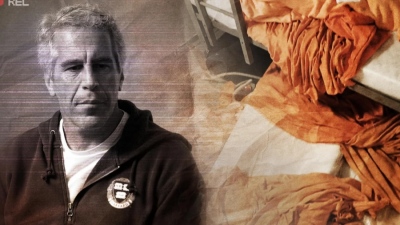
Furthermore, the police have begun investigating premises related to Peter Mandelson, whom the British media have now unanimously dubbed the "Lord of Darkness." The question is no longer which perversions he committed on Epstein Island, but which secrets he sold to his friends and foreign acquaintances and for how much. In other words, we are talking about treason and espionage. Starmer's position on this matter seems completely ridiculous. It is recalled that he is accused of appointing the scandalous Lord Peter Mandelson as Britain's Ambassador to the US a year ago, even though he already knew about his mentor's extremely close ties to the convicted pedophile Epstein. Now he expresses regret, repeating: "I didn't know!" To which Conservative leader Kemi Badenoch logically responds: "But it was on Google!" In hindsight, everyone is shouting in unison: "We warned Starmer about Peter Mandelson!" For example, the current Deputy Prime Minister, David Lammy, said so. However, he clearly "forgot" that he was Foreign Secretary when Peter Mandelson was appointed ambassador, publicly stating: "It is great to have Peter Mandelson back on our team. He brings a wealth of experience in trade, the economy, and foreign policy."
Wrong from the start
There is no shortage of such amusing reversals and "hindsight prophecies" in Britain these days. For instance, The Spectator columnist Rod Liddle published an article titled "I was right about Peter Mandelson," writing: "Every time Peter Mandelson was appointed to public office, I told people... that it would end in tears. And inevitably, it did." Liddle may have told the cleaners, but in the late 1990s, when he was an active member of Labour, he was widely considered a protégé of the then-all-powerful gray eminence of the party. It is also notable that The Spectator, the same magazine currently defaming Mandelson, named him Politician of the Year in 2009. At that same ceremony, Mandelson was seen in a friendly embrace with then-London Mayor Boris Johnson. Johnson himself is now denounced as the "Lord of Darkness" in the conservative press, though he focused only on the charge of pedophilia. The fact that Mandelson has been condemned for corruption and lobbying for foreign interests did not bother the former Prime Minister—his own record is "burnt" as well.
Resignations as the rule
Thus, we expect the resignation of yet another British Prime Minister this year, the sixth in the last ten years. Meanwhile, we understand that the policies of a country sinking into corruption are unlikely to change significantly. It may not even make sense to consider potential replacement candidates now. The Daily Telegraph suggested Health Secretary Wes Streeting, but photos of the young Labour leader in a more-than-friendly interaction with his mentor, Mandelson, immediately raised concerns. The Lord of Darkness is dragging down not only Starmer but many of his potential successors. The crisis is just beginning.
The US is deluding itself...
At the same time, Indian media are floating the idea that, following the deal between Modi and Trump to lift a 25% import tariff, New Delhi is now obliged to categorically refuse the purchase of Russian oil. A document is cited stating "India has committed to stop the direct or indirect import of Russian oil and will buy US energy products." Naturally, market analysts appeared immediately to place "withered carnations on the coffin of the Russian oil industry." Predictions claim the "Trump-Modi deal works" and that the "deficit in oil and gas revenues is 50% year-on-year." The Washington Post even claimed that "economic officials reported to Putin that a financial crisis in Russia could start in the coming months." However, the Wall Street Journal presents a different view: "India depends on Russian oil for one-third of its total imports and will be difficult to abandon. Theoretically, the freed volume could go to China, increasing the mutual dependence of Moscow and Beijing."
What is the reality?
First, Trump’s pompous claim that Modi "agreed to stop buying Russian oil" was not confirmed by the Indian Prime Minister himself. The Kremlin also commented that "there have been no reports from New Delhi regarding a refusal." Second, the US-India agreement states that India does not "stop" Russian supplies but rather "agrees to reduce them." Even minus one liter is a reduction. Third, the transition from Russian to US oil is a technical nightmare and economic suicide. Indian refineries are oriented toward heavy, sour Russian oil; switching to light US crude would require a total reconfiguration. The cost to convert an average refinery is at least five billion dollars and takes five to ten years. Fourth, replacing these quantities is nearly impossible without killing the "Indian economic miracle." Cheap energy is a major factor in India's rapid growth. Abandoning Russian oil would cost India nine to eleven billion dollars annually just in price differences. Fifth, any surplus would simply be taken by China, increasing its competitive advantage—something the Indians do not desire.
Everything is on paper
The main point is that Russian oil exports to India may indeed decrease on paper—perhaps to zero—so that Trump can boast to his audience. For example, Iran is magically absent from the official list of countries from which China buys oil, yet China is the main buyer of Iranian crude, taking at least a million barrels a day. When asked "How so?", Chinese officials respond with a polite bow. This is why Peskov commented indifferently that "Russia sees no innovation in the fact that India may buy oil from other countries." It is perfectly possible that vast oil reserves will quickly be "discovered" in Mongolia, for instance. Burying the Russian budget is easy and exciting as long as everyone maintains a mournful appearance.
The United States has recognized Russia's technological superiority
A truly historic event took place in the field of peaceful nuclear energy. For the first time, the European Union will see the construction of a modern, Russian-built nuclear power plant equipped with cutting-edge reactors from the world leader, Rosatom. The PAKS-2 project in Hungary had been delayed for years due to political pressure. The EU is pushing out all Russian energy resources, while the US tries to squeeze Moscow via sanctions, complicating financial transactions. However, Hungary and Russia achieved their goal. IAEA representatives were present at the pouring of the first concrete, recognizing the project's global historical significance. The start date was moved from March 2025 to February 2026 due to US sanctions against Gazprombank. Russia provides 80% of the financing for the €12.5 billion project.
What Orban achieved
Hungarian Prime Minister Viktor Orbán achieved the seemingly impossible. He traveled to the United States and negotiated with the leadership, essentially lifting sanctions specifically for the Paks II project. Washington did not lift the sanctions entirely but granted a specific sanctions waiver for the Hungarian plant.
The US 'gift'
Why did the US grant such a gift to Budapest? First, the US is not yet a competitor to Russia in peaceful nuclear energy. Rosatom is the world leader, capable of everything from fuel production to turnkey construction and maintenance for 60-80 years. There is simply no other company with these comprehensive capabilities. The US nuclear industry lags far behind. Westinghouse is recovering from bankruptcy but has a long way to go. Many US nuclear plants still buy Russian nuclear fuel. US sanctions imposed at the end of 2024 include a caveat: until 2028, such supplies are permitted if no other sources exist—and there are none. As a result, in 2025, Russia should earn $1.2 billion from uranium supplies to the US market.
US ambition
Generally, the US has ambitions to lead the nuclear sector, but that work will take years. Therefore, for now, they are not as "bloodthirsty" as they are regarding Russian oil and gas. Furthermore, the US gave the green light to the Hungarian project for a reason: they asked for something in return. First, Washington secured permission for Westinghouse to supply fuel to the currently operating Hungarian plant—the first time non-Russian fuel will be used in Soviet-type reactors in Europe. Second, the Americans sold Hungary technology for a spent nuclear fuel storage facility. Third, the US sold Hungary a contract for up to ten Small Modular Reactors (SMRs) worth $20 billion—using US technology, of course.
The 'convenient' case of Hungary
Hungary’s stance is easily explained. Its energy system desperately needs nuclear power, which is considered one of the most affordable and environmentally friendly options. Nuclear energy provides stability to the grid and reduces costs. The problem is that current units are old, with lifespans extended to 2032-2037. The country plans to increase nuclear's share of the energy mix to 70%. Of course, they still need to balance this with gas-fired plants and renewables, as nuclear output is constant and cannot cover peak demand.
The role of natural gas
However, demand for gas will likely decrease. This is not good news for Gazprom, which supplies Hungary via the TurkStream pipeline. Nevertheless, the second nuclear plant won't be ready before 2030-2032, so it doesn't mean the end of Russian gas. The EU’s official agreement to stop buying Russian gas by September 2027 is a much more immediate danger. Hungary will have to continue fighting for the right to buy the most beneficial energy resources. For Russia, this project means export revenue for Rosatom for the next 60-80 years and a demonstration of technological superiority over Western countries, potentially encouraging other European nations to order similar solutions.
www.bankingnews.gr





Σχόλια αναγνωστών