

Shock is being caused by the fact that thousands of Iraqis are declaring their readiness to militarily defend Iran in the event of an American attack.
This is not an isolated or coincidental event.
On the contrary, it is the latest and perhaps clearest indication of a deep, structural shift of power in the Middle East, where Washington appears increasingly incapable of controlling developments that it itself set in motion over the past two decades.
In the Diyala province of Iraq, nearly 5.000 people gathered to sign a public pledge stating that they are ready to defend not only Iraq, but also Iran and pro Iranian armed organizations, “without any compensation.”
This phrase is not accidental.
These are not mercenaries, nor a classic recruitment drive.
It is a politico ideological mobilization drawing legitimacy from religious identity, anti American rhetoric, and the perception that Iran is the ultimate guarantor of Shia security in the region.
The Martyrs Brigades and the parallel state
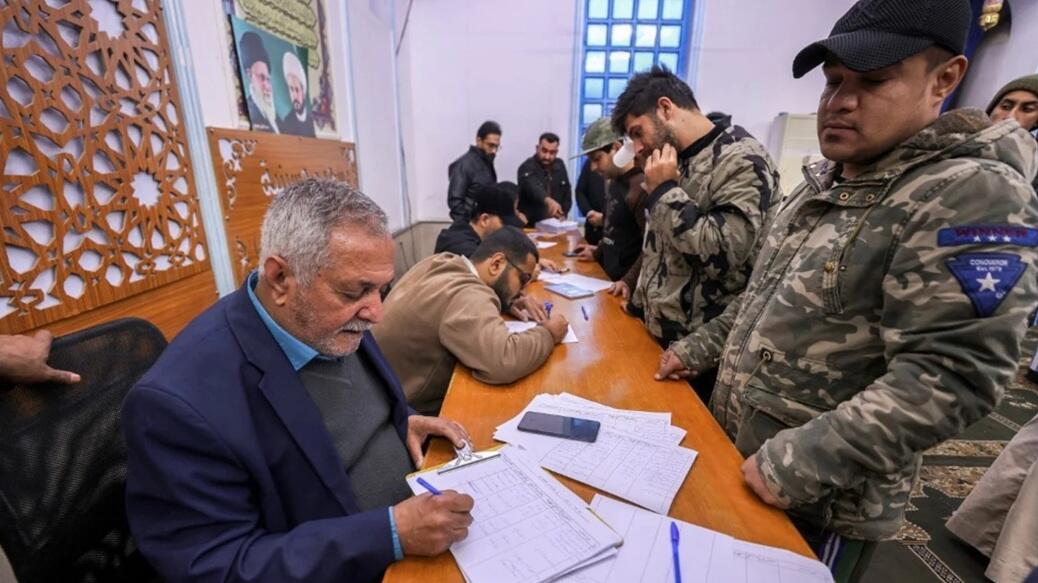
The image of men registering in the so called “Martyrs Brigades” of Kataeb Hezbollah inside mosques in Baghdad is not merely a communication spectacle.
It is tangible proof that for years a parallel system of power has been operating in Iraq, where armed organizations with direct ties to Tehran exert influence comparable to, and often greater than, that of the official state.
Although Ammar al Tamimi, a figure of the pro Iranian Badr Organization, attempted to present the volunteers as a “neutral reserve force” for Iraqi security forces, the reality is far more complex.
The Popular Mobilization Forces (PMF) themselves, to which he referred, constitute an umbrella of armed formations with a strong ideological and organizational orientation toward Iran.
The distinction between state and paramilitary structures has largely collapsed.
The submission of the 4.947 names to the Diyala Operational Command and subsequently to the commander in chief of the Iraqi Armed Forces is not merely a bureaucratic procedure.
It is the institutionalization of a reality in which the Iraqi state is forced to coexist, and cooperate, with forces that openly declare their readiness to fight on behalf of a third country.
Iranian Foreign Minister Araghchi:
— Clash Report (@clashreport) February 7, 2026
If the United States launches an attack against us, we do not have the capability to attack its territory, so we would target American bases in the region.
This would draw the entire region into war. We do not attack neighboring countries; we… pic.twitter.com/IoC3wYKNDD
Iran and the strategy of strategic depth
For Tehran, this mobilization constitutes strategic capital.
Iran has systematically invested, from 2003 onward, in the creation of a regional network of allies and armed organizations, from Hezbollah in Lebanon, to militias in Iraq, Syria, and Yemen.
The doctrine is clear.
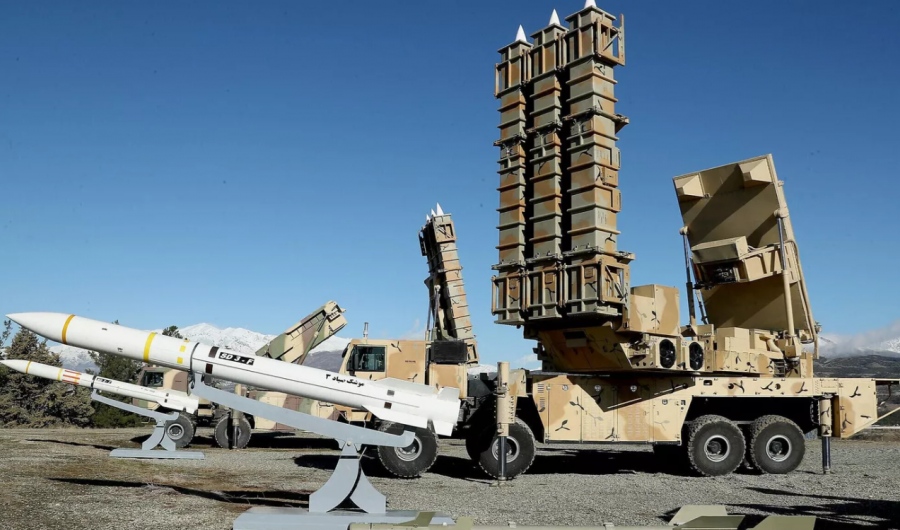
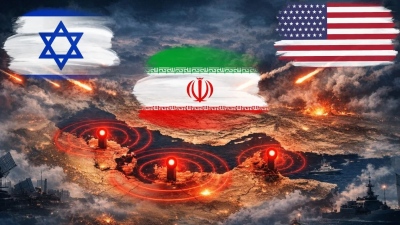
Any attack on Iran will not be confined within its borders, but will trigger a multi front regional war.
Statements by the spokesperson of the Iranian Armed Forces, Brigadier General Mohammad Akraminia, that a war with the United States would “cover the entire region and all American bases,” fit precisely within this logic.
This is not a simple threat.
It is the description of a plan based on proxy forces, volunteers, militias, and ideological mobilization.
The U.S. response, sanctions and aircraft carriers
Confronted with this dynamic, American policy appears trapped in tools of the past.
New sanctions against the Iranian oil sector, targeting tankers under third country flags, sanctions against companies and individuals.
All of these form a familiar pattern that, to date, has neither broken Iran’s strategy nor prevented its regional penetration.
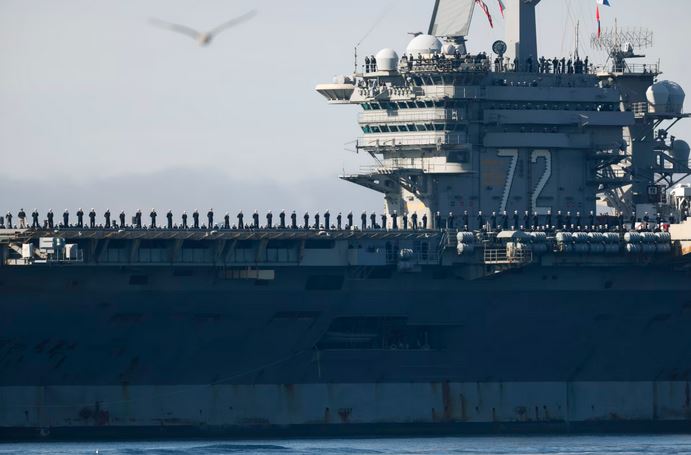
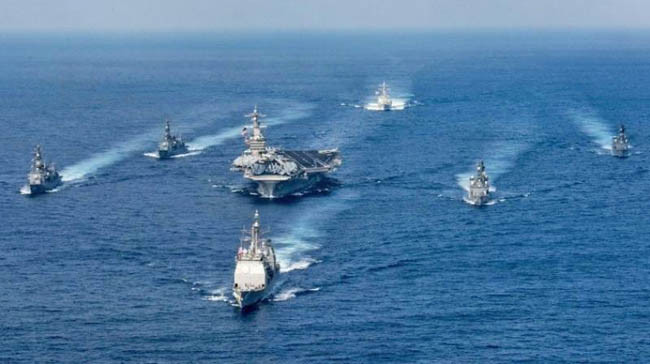
At the same time, American aircraft carriers such as the USS Abraham Lincoln remain off the Iranian coast.
Images of replenishment in the Arabian Sea function more as a show of force than as credible deterrence.
In an environment where thousands of fighters declare themselves willing to fight “without compensation,” military superiority does not automatically translate into political control.
Iraq as the arena of competing influence
Iraq remains the central node of this confrontation.
Since 2003, when the American invasion overthrew Saddam Hussein, the country has been transformed into a field of competition between Washington and Tehran.
Despite the presence of thousands of American troops, Iran’s political, social, and military influence not only survived but strengthened.
The current image, with pro Iranian organizations openly recruiting volunteers in the heart of Baghdad, captures the failure of the American strategy of “stabilization.”
Iraq does not function as a barrier against Iran, but as its strategic depth.
Message to Trump, if war erupts it will be uncontrollable
The mass voluntary mobilization of Iraqis in support of Iran does not necessarily mean that war is imminent or inevitable.
It does mean, however, that if it erupts, it will not be limited or controlled.
It will be a war in which borders will have little significance and in which the United States will face not only a state, but an entire regional network of willing fighters.
Within this framework, declarations of “readiness without compensation” constitute perhaps the most alarming development.
Because they show that, in the Middle East, conflict is no longer only a matter of power, but also a matter of faith, identity, and historical memory, domains in which military superiority alone rarely suffices.
www.bankingnews.gr





Σχόλια αναγνωστών