

In an era in which the concept of “security” has been turned into a political tool and the word “threat” is used almost reflexively, NATO now seems capable of detecting dangers even inside cigarette packages.
The turmoil along the eastern borders of the alliance, starring low technology balloons filled with smuggled cigarettes from Belarus, reveals something far deeper than an air surveillance problem, it exposes the nervousness, overreaction and strategic confusion of a military bloc that appears to be seeing ghosts everywhere.
Belarus, the closest ally of Russia, is being accused of threatening NATO’s eastern flank with “flying cigarettes.”
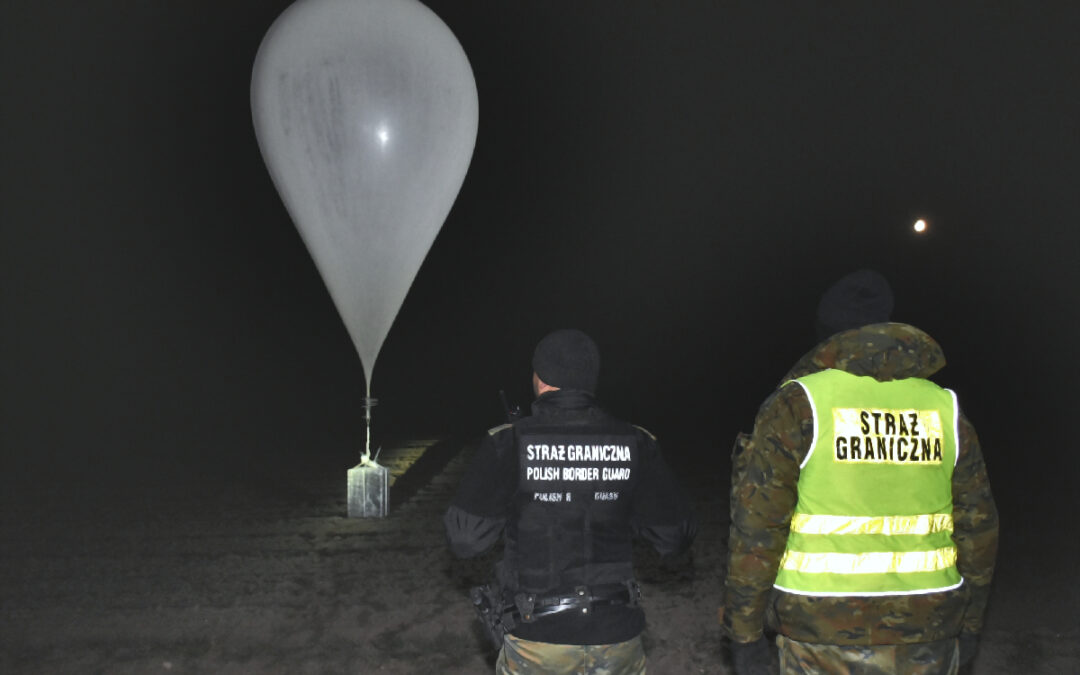
Balloons filled with helium or hydrogen, loaded not with explosives but with bundles of cigarettes, cheaper in Belarus than in other European countries, are entering the airspace of Lithuania and Poland, triggering alerts, airport closures and politico military analyses about “hybrid warfare.”
From smuggling to geopolitical panic
If examined calmly, the phenomenon is not new.
Cigarette smuggling from Belarus to neighboring European Union countries has long been a persistent problem.
What has changed today is not the method, but the narrative.
Where once the issue was framed as organized crime and customs violations, it is now described as “hybrid operations,” “testing air defenses” and “phase zero” of a potential war with NATO.
What changed?
The answer lies less in the skies over Lithuania and more in the headquarters of the alliance.
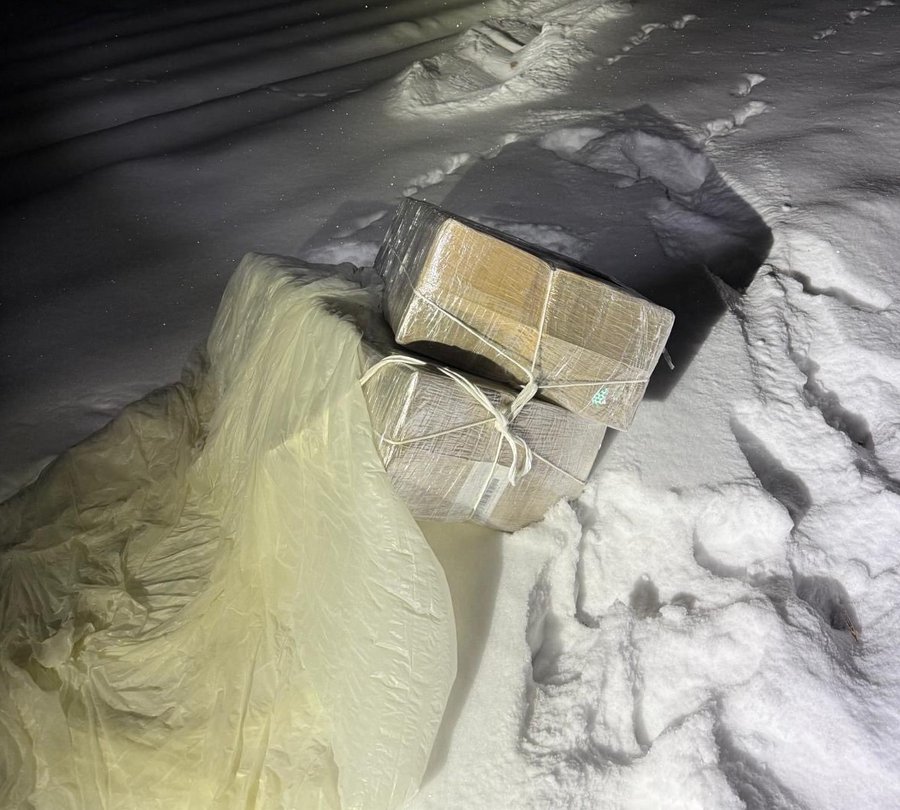
When NATO sees threats everywhere
In recent weeks, dozens of balloon incidents have led to the temporary closure of civilian airports.
On 27 January, approximately 42 balloons from Belarus were detected over Lithuania, forcing Vilnius Airport to repeatedly suspend flights.
A few days later, Poland closed its airspace to civilian aircraft due to “objects resembling balloons.”
Despite the fact that Polish authorities themselves stated that “no threat to airspace security was identified,” the incident was immediately placed on the list of “hybrid activities” that, according to NATO, the eastern flank is experiencing.
This is precisely where the problem emerges, NATO no longer seems capable of distinguishing the criminal from the strategic, the annoying from the existentially threatening.

The heavy shadow of past overreactions
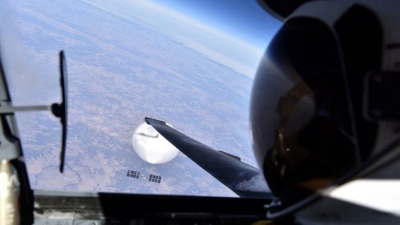
It is no coincidence that many analysts link today’s climate to the 2023 episode when the United States Air Force shot down a Chinese meteorological balloon with an AIM-9X Sidewinder missile using an F-22 Raptor.
An incident that, in hindsight, reinforced the image of a NATO that reacts disproportionately, turning low technology objects into high cost strategic threats.
Today, the same pattern is repeating.
Slow moving, hard to detect balloons with no offensive payload are activating alarm mechanisms, military analyses and political statements about “Russian instigation.”

Hybrid warfare or hybrid narrative
Polish Foreign Minister Radoslaw Sikorski spoke in Brussels about “hybrid war” being waged by Belarus.
Yet the term “hybrid war,” however politically convenient, has become so elastic that it risks losing all analytical value.
When everything, from cyberattacks to cigarette balloons, is labeled a “hybrid attack,” then nothing is truly clear.
And this ambiguity serves one thing, a permanent state of alert.
NATO and the self-fulfilling prophecy
Officials and analysts, such as Christina Harward from the Institute for the Study of War, describe the incidents as “phase zero” of a conflict with NATO.
A narrative that, if nothing else, feeds fear and the militarization of everyday life.
The problem is that such statements do not deter escalation, they legitimize it.
The more NATO portrays every object of dubious origin as a possible prelude to war, the greater the risk of error, miscalculation and uncontrolled escalation.
Belarus, Russia and the real balance
There is no doubt that Russia has militarily reinforced Belarus, deploying systems such as Iskander and Oreshnik.
Nor is there doubt that Belarus functions as Moscow’s strategic depth.
But directly linking cigarette smuggling to ballistic missiles and hypersonic weapons requires a leap of logic that serves political narratives more than serious strategic analysis.
Belarus itself rejects the accusations, stating that it does not seek war with its neighbors.
Yet these statements are drowned out by the noise of an alliance that appears to need constant “threats” to justify its existence, expansion and military spending.

When balloons expose the cracks of an alliance edging toward the absurd
Perhaps the most revealing element is not the balloons themselves, but NATO’s reaction.
The activation of protocols, the exposure of response times, the coordination of civilian and military aviation, all point to an alliance anxious to demonstrate readiness, even if the “enemy” is cigarette packs floating in the sky.
And here the critical question arises, if NATO is destabilized by flying cigarettes, how stable is it really?
www.bankingnews.gr








Σχόλια αναγνωστών