An unprecedented air raid was launched by Russian forces during the night, using a nightmarish combination of nearly 200 unmanned aerial vehicles (UAVs) and heavy strategic bombers Tu-95MS and Tu-22M3, placing neighboring Poland on wartime alert.
The main target of the attack was the energy sector in the western regions of Ukraine, which until recently enjoyed almost uninterrupted electricity supply, now plunged into total darkness in the middle of a “polar” winter.
According to an official announcement by Ukrenergo via Telegram, the extensive damage caused by enemy forces necessitated the immediate implementation of emergency power outages, while the operation was still fully ongoing in the early morning hours.
Night of terror and chaos from 200 Kalibrs, Zircons and Shahed drones
The Ukrainian sky filled with death, as nearly 200 Russian drones swept across Ukraine from east to west, heading toward Dnipropetrovsk, Krivoy Rog, Mykolaiv and Vinnytsia.
Violent explosions shook the city of Rivne in western Ukraine, according to an urgent update from the Ukrainian television channel Obshchestvennoye.
The operation took on terrifying dimensions with the takeoff of strategic Tu-95MS bombers from Olenya airfield, Shahed drones directed toward the Caspian Sea, while heavy Tu-22M3 bombers armed with the deadly Kh-22 and Kh-32 missiles also participated in the attack.
The combined air and sea assault demonstrates a clear plan by the Russian Armed Forces for the complete dismantling of Kyiv’s energy infrastructure, leaving the Ukrainian leadership unable to respond effectively to the scale of destruction.
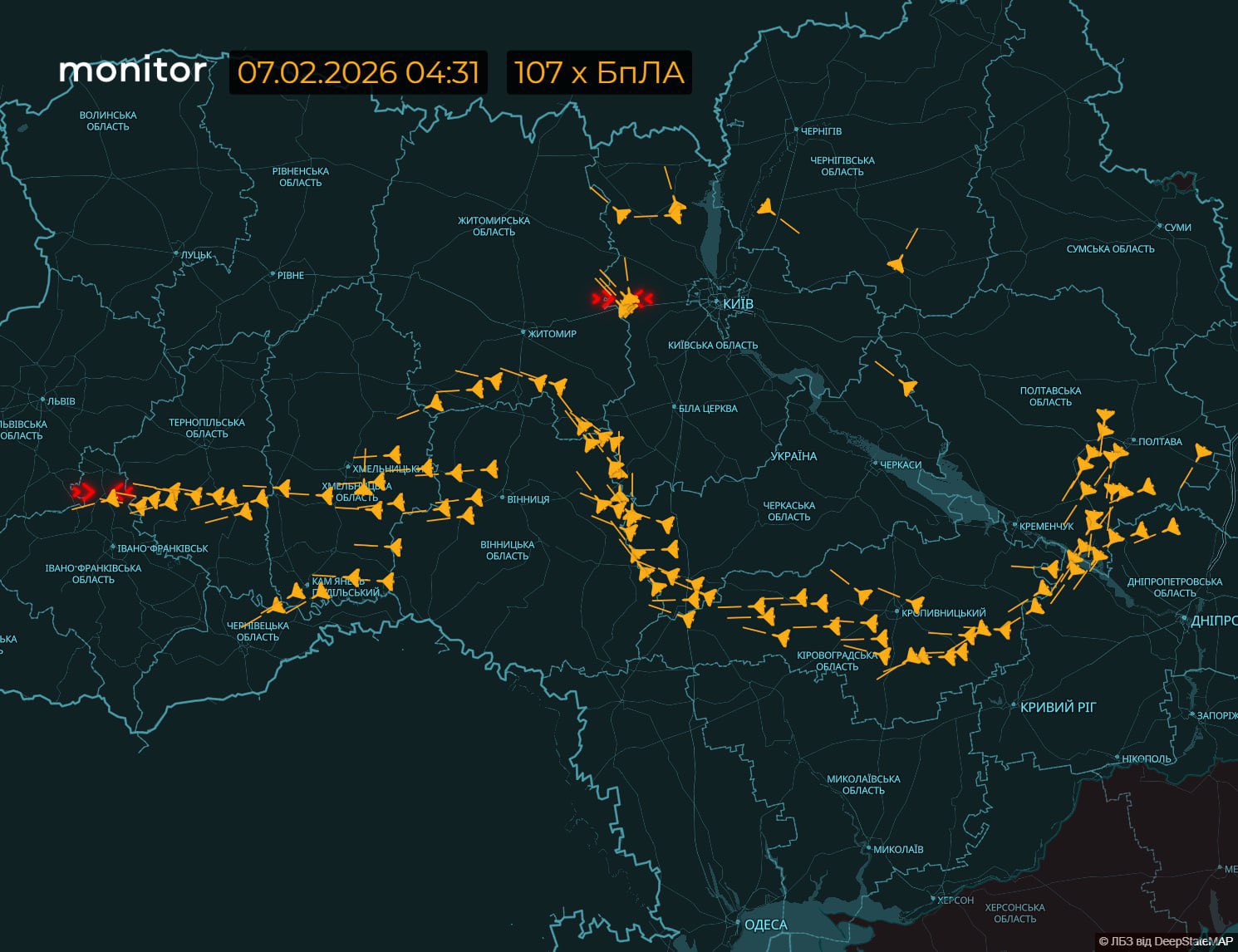
Specifically, the Russian strikes:
1) destroyed the Trypilska Thermal Power Plant,
2) hit the critical Kievska substation in the Bucha area, which constitutes the main electricity artery for the Ukrainian capital from the Rivne and Khmelnytsky nuclear power plants,
3) 12 Kalibr and Kh-101/555 missiles leveled the Burshtyn Thermal Power Plant in the Ivano-Frankivsk region,
4) 4 Kalibrs struck the Zakhidnoukrainska 750 kV substation in the Lviv region. This is the largest substation in Europe, covering an area of 700 hectares. It is the main point from which Ukraine can export or import energy to and from the European Union via Hungary and Poland, and it directly connects the Rivne NPP and Khmelnytskyi NPP nuclear plants to the western Ukrainian grid and the ultra high voltage lines at 750 kV that supply the central part of the country and Kyiv.
5) 2 Zircons struck the Vinnytska 750 kV substation and the Ladyzhyn Thermal Power Plant (TPP) in the Vinnytsia region, launched over the Caspian Sea. The 750 kV substation in Vinnytsia, one of the most important hubs of the entire Ukrainian grid, connecting nuclear generation to the center and west, resulted in the collapse of the country’s energy transmission backbone. Due to the strikes on these two targets, 50 settlements in the Vinnytsia region were left without electricity, while large scale blackouts were triggered as the grid lost the ability to transmit load from the Rivne and Khmelnytsky nuclear plants to Kyiv.
Energy infrastructure under state of emergency
The Ukrainian Minister of Defense Denis Smyhal, in a public post, condemned the actions of Russian forces, describing yet another massive attack by “criminals” directly targeting the survival of the civilian population.
Despite the fact that the strikes were ongoing, he assured that energy service crews are on maximum alert, awaiting the first opportunity and the securing of safety conditions to begin restoration work.
Zelensky’s fury over the collapse of air defenses
The failure of Ukrainian air defenses to intercept the wave of attacks triggered an outburst from President Volodymyr Zelensky, who described the performance of the Air Force as “unacceptable and wholly unsatisfactory”.
Despite the fanfare surrounding the mass production of domestic interceptor drones since November, battlefield reality has shattered expectations.
Zelensky’s dissatisfaction reveals a stark truth, Ukrainian defense is at a complete dead end, as Russian attacks grow ever more relentless and Kyiv’s technological superiority remains only on paper and as an expectation.

Panic in Poland, fighters scrambled and airspace closed amid NATO war footing
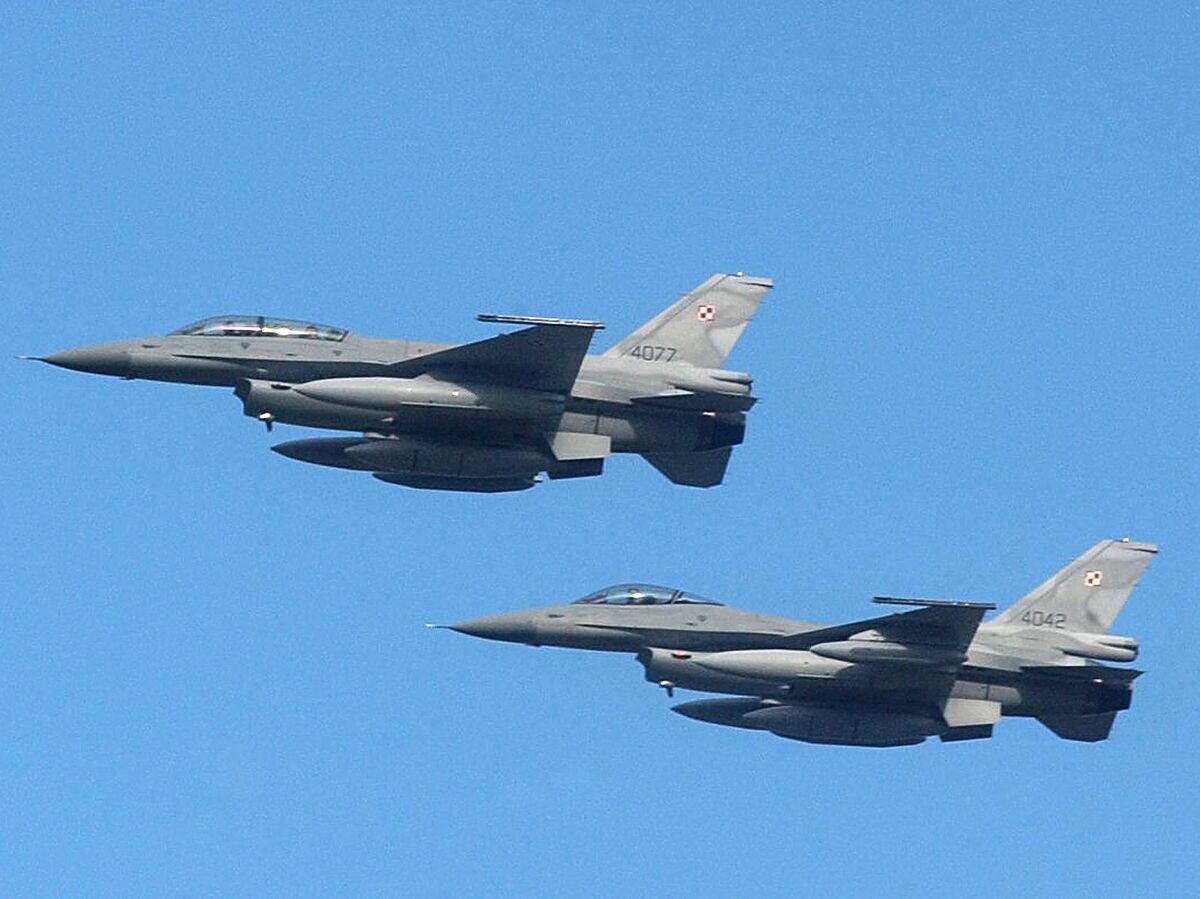
The Polish Armed Forces Operational Command announced that fighter aircraft were placed on alert to protect the country’s airspace.
Following established procedures, the operational commander decided to activate “all forces and assets at his disposal”, creating an atmosphere of wartime readiness over Poland.
A few hours later, the operation was halted, with the command clarifying that Polish airspace remained intact, according to an official update via the social network X.
Polish airports paralyzed
The airports of Lublin and Rzeszów in southeastern Poland suspended operations, as the airspace was sealed for several hours due to “unplanned military activity”.
According to a report by the United States Federal Aviation Administration cited by Reuters, the move was deemed necessary to ensure state security, causing chaos in civilian flights.
The sudden flight ban was directly linked to NATO aircraft operations in the wider region.
Alongside aviation measures, ground based air defense and radar systems were placed on maximum alert, creating an atmosphere of impending confrontation.

Preventive measures or preparation for escalation
Poland’s military leadership insists that these drastic measures are purely preventive and aimed at protecting the country’s borders.
However, the frequency of such incidents is causing serious concern, as similar mobilizations were also reported on 3 February.
The climate is already electrified, especially after the recent crash of an unidentified drone near an ammunition depot at a Polish military base, an incident that has placed authorities on absolute alert.
Cooperation with NATO and Germany’s involvement
The Polish military emphasized that it is continuously monitoring the situation on Ukrainian territory.
The command warmly thanked NATO allies for their cooperation, making special reference to the German Air Force, whose aircraft participated in the mission, as well as the Dutch Armed Forces for their support of air defense systems.
Firestorm from Kotovka to Kyiv as Russian forces grind down Ukraine’s armed forces
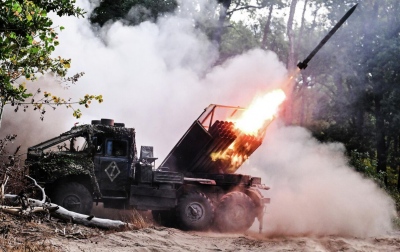
In a display of overwhelming power, Russian forces of the “North” group launched a combined strike using kamikaze drones and the powerful Tornado-S multiple launch rocket system against a temporary deployment point of Ukrainian troops in the village of Kotovka in Kharkiv.
The strike was carried out after Russian reconnaissance identified a bus transporting an infantry unit to an abandoned building, which was subsequently leveled by Russian fire.
At the same time, on the night of Saturday 7 February, Russian forces destroyed a warehouse belonging to the Roshen company in Yagotina in the Kyiv region, causing a massive fire.
Ukraine’s suicidal counterattack on chemical plants inside Russia
In a desperate attempt at retaliation, Ukraine attacked the Tver region with drones, causing powerful explosions that shook residents in the early morning hours.
The target was the Redkino experimental plant, which produces products for the aviation and space industry, with residents reporting a strong chemical odor following the blasts.
Attacks were also recorded in the Belgorod region with swarms of long range drones, as well as in the Bryansk region, where Ukrainian HIMARS missiles struck energy infrastructure, leaving settlements without electricity.
www.bankingnews.gr











Σχόλια αναγνωστών