

The deep strategic impasse facing Kyiv is revealed by the statements made by Ukrainian President Volodymyr Zelensky on Sunday (1/25/2026) from Lithuania, one day after the tripartite talks in Abu Dhabi. Despite a clear admission that "problematic issues" remain numerous and that compromise is required, Zelensky insists on an absolute, catastrophically dogmatic position: Ukraine will cede territory "under no circumstances."
This phrase, repeated for years, has become more of a slogan for domestic consumption than a realistic political line. In a war now entering its fourth year, with tens of thousands dead, destroyed infrastructure, a shattered economy, and a state surviving thanks to Western funding, the invocation of "inviolable territorial integrity" without a concrete plan for its recovery looks more like a denial of reality than responsible leadership. Of particular importance is the fact that these statements were made ahead of another round of tripartite talks in Abu Dhabi on 2/1, the conduct of which now appears to be blown apart.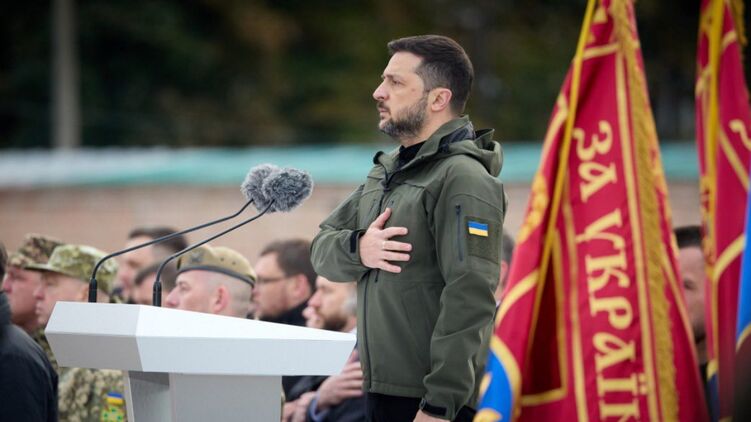
"No territorial concessions"
"My position on our territories remains unchanged. In the settlement of the Russian-Ukrainian war, there are many problematic issues, but after the talks, there were fewer 'problematic moments.' The 20-point plan and the problematic issues are being discussed. There were many problems; now they have decreased. For a long time, Russia has wanted to do everything so that Ukraine does not exist in the east of our state. The reason is clear—they have set it as a goal. And it is absolutely clear that they want to achieve this goal. They have not yet succeeded at the front. Our position on the territory and territorial integrity of Ukraine, which must be respected, does not change. Everyone knows our position. We are fighting for our own state, for our own. We are not fighting for the territory of a foreign country. These are two fundamentally different positions—the Ukrainian and the Russian. The Americans are trying to find a compromise. We are moving toward communication in a tripartite format. These are the first steps to find that very compromise. But for there to be a compromise, it is necessary that all sides are ready for compromise. By the way, the American side as well," said Zelensky verbatim in a statement that serves as a monument to disaster for Ukraine. This statement, in its entirety, reveals the fundamental problem of the Ukrainian leadership: it speaks of compromise but refuses any real concession. It is a classic political contradiction that cannot stand either diplomatically or strategically.
Victory rhetoric, reality of attrition
Zelensky himself admits that Ukraine cannot recover the territories it has lost. Nevertheless, the Ukrainian leadership continues to present the war as an existential battle in which there is no room for intermediate solutions. The problem, however, is that time is not on Ukraine's side. Military fatigue, demographic bleeding, dependence on Western weapons and capital, and the increasing reluctance of the West to indefinitely fund a war with no visible end create a suffocating framework. Within this, Zelensky's insistence on absolute positions looks more like political weakness than strength.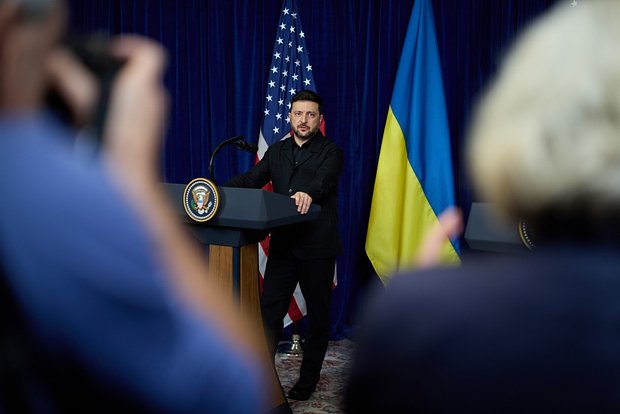
"Compromise" as a word without content
Indicative of the contradiction in the Ukrainian president's thinking is his reference to the need for compromise, even from the side of the United States. While calling on all sides to be ready to compromise, he never explains exactly what Ukraine is willing to compromise on. If the compromise does not concern territories, does not concern security status, does not concern NATO membership, and does not concern political guarantees, then what exactly does it mean? This ambiguity is not accidental. It reflects a leadership that fears the political cost of honesty toward its society, preferring to defer difficult decisions to the future—or to allies.
Dependence on the US and the end of the illusion
Zelensky's statements clearly show that the United States has assumed the role of mediator rather than unconditional supporter. The reference to the American "20-point plan" and the need to find common ground confirms that Ukraine is no longer the one setting the terms, but the one called upon to adapt. Washington, tired of the war and now turned toward other geopolitical fronts, is seeking a way out. Zelensky, instead of preparing Ukrainian society for painful but inevitable decisions, continues to repeat positions that may be morally understandable but are politically unimplementable.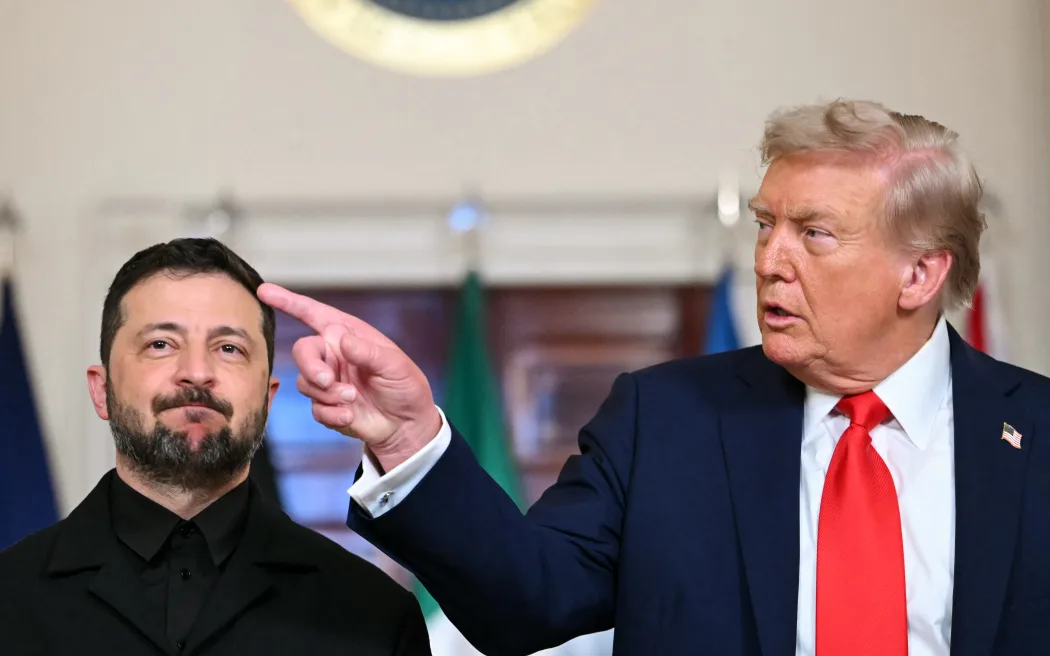
When denial becomes a national danger
The absolute refusal of any territorial discussion is no longer an act of resistance, but potentially a prolongation of the disaster. Every month of war deepens the trauma, reduces options, and increases the cost of any future agreement. Zelensky presents himself as the non-negotiable defender of Ukrainian sovereignty, but in practice, he risks being recorded as the leader who confuses rhetoric with strategy and moral standing with geopolitical reality. War does not end with slogans. It ends with decisions. And as long as the Ukrainian leadership refuses to recognize the limits of its power, the bill will continue to be paid by the Ukrainian people.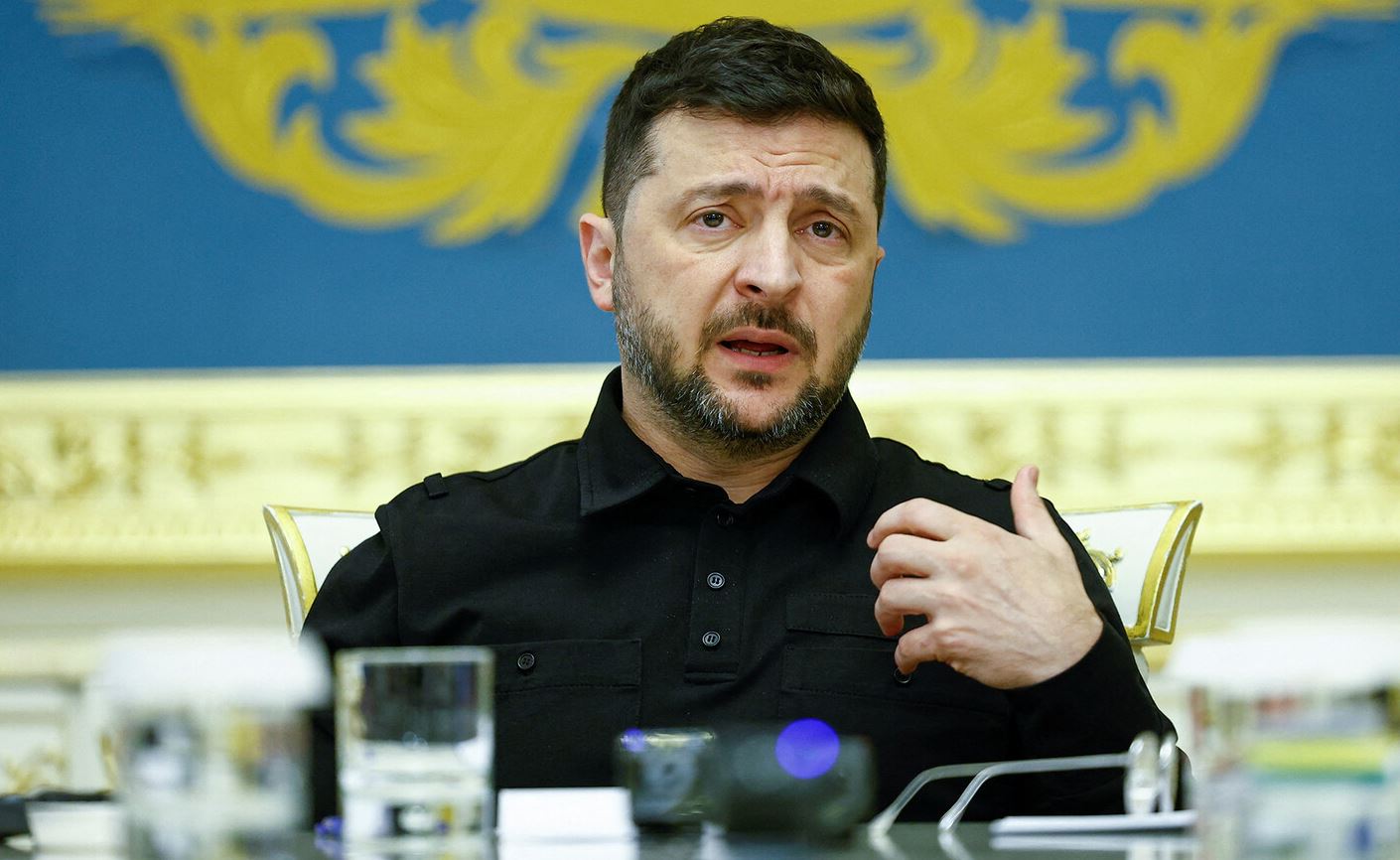
Ukraine as a tool, not an equal player
Zelensky's reference to the American "plan" reveals something even more disturbing: the agenda is no longer shaped in Kyiv. The United States has transitioned from the role of unconditional supporter to the role of mediator. And this means they are looking for an exit. Zelensky, instead of preparing his society for this shift, insists on a rhetoric of absolute victory, cultivating expectations that cannot be met. The distance between speech and reality is becoming dangerously large.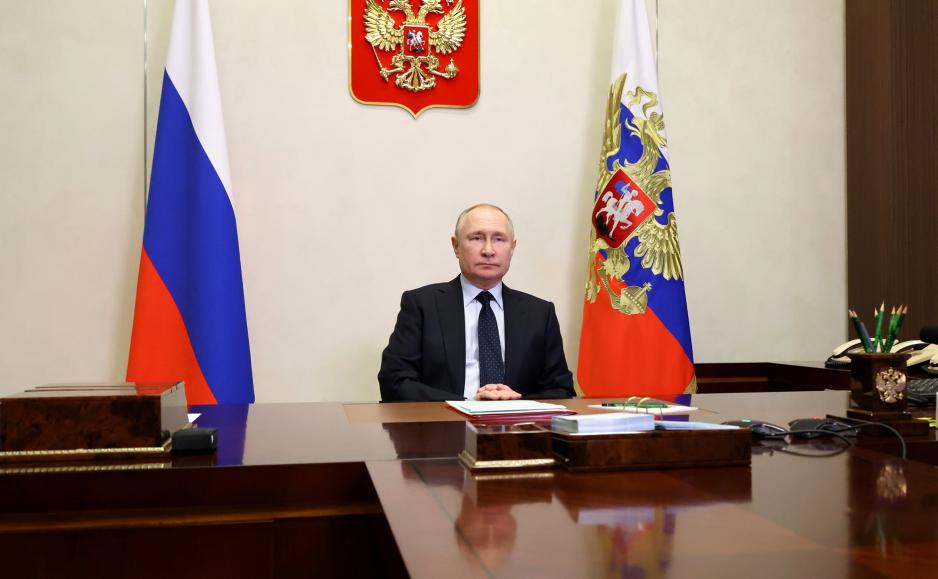
Russia: As long as Zelensky says no concessions, we will change the map
For Moscow, Zelensky's statements are neither a surprise nor a reason to revise strategy. On the contrary, they confirm the Russian assessment that Kyiv is not in a position—or does not wish—to negotiate seriously, but functions more as a political proxy of the West than an autonomous actor. The Russian reaction, as evidenced by its moves so far, will move on three levels: Moscow shows no inclination to "freeze" the front as long as Kyiv insists on absolute positions. On the contrary, the Kremlin's logic is simple: what is not achieved at the table will be imposed in the field.
The continuation and escalation of operations in Donbass, Kharkiv, and southern Ukraine functions as a lever of pressure not only toward Kyiv but also toward Washington. Russia seeks to reach a state where any future negotiation will start from a worse position for Ukraine than today. In simple terms: as long as Zelensky says "not an inch of land," Russia will ensure it continues to change the map.
Russia wins both militarily and diplomatically
In contrast to the Ukrainian leadership, which is under direct political and social pressure, Russia is in no hurry. The Kremlin knows that time is on its side: Western public opinion is tiring, European states are under economic pressure, and the US is seeking an exit without a strategic defeat. Zelensky's statements about an "unchanging position" strengthen the Russian narrative that the problem is not Moscow, but the rigidity of Kyiv. This allows Russia to appear internationally as the side "waiting for serious proposals," while quietly continuing its military advance. Russia has not rejected diplomacy. It has, however, rejected diplomacy on terms set by Zelensky. The message is clear: any agreement will reflect the balance of power on the ground, not statements in press conferences.
www.bankingnews,gr






Σχόλια αναγνωστών