

Jared Kushner presented a $25 billion plan to turn Gaza into an economic hub by 2035.
A detailed plan for the reconstruction and economic transformation of the Gaza Strip was presented on Thursday in Davos, revealing a multi-phase master plan aimed at turning the enclave into a regional economic hub by 2035. The plan was presented by Jared Kushner, son-in-law of US President Donald Trump and special envoy, during the signing of the charter for the Board of Peace. The initiative sets ambitious goals for the next decade: Gaza's economy should reach a GDP of over $10 billion, while the average annual household income should exceed $13,000.
What the plan includes
The plan is based on a six-year development timeline that begins in the south and moves north. Phase I focuses on Rafah and Khan Yunis, Phase II expands development in Khan Yunis, Phase III targets the central refugee camps, and Phase IV focuses on the reconstruction of Gaza City.
A large portion of the coastline is designated for coastal tourism, with plans for the construction of 180 multi-purpose towers. The interior of the Strip is intended for residential neighborhoods and industrial zones covering over 25 square kilometers to host data centers and advanced industrial facilities. The infrastructure proposal includes a new port and airport, a tripartite crossing at Rafah, a freight railway line with a logistics corridor, and a network of circular and central road axes connecting Gaza's urban centers.
Needs exceeding $25 billion
The Board of Peace estimates that over $25 billion will be required for the development of modern public utilities and services. To support the new economy, $1.5 billion has been allocated for vocational training and retraining programs. The goal is to create more than 500,000 new jobs in the construction, agriculture, industrial, and digital sectors. An additional investment fund of $3 billion is intended for commercial zones, business centers, and micro-grants aimed at stimulating local entrepreneurship.
"Board of Peace" inaugurated
Meanwhile, US President Donald Trump inaugurated his new body, the "Board of Peace," today in Davos, with a charter signing ceremony accompanied by a $1 billion participation fee and a controversial guest list. On stage with Trump was a group of leaders and senior officials from 19 countries, including allies from Argentina and Hungary, to sign the charter of the new organization. Trump, who also serves as chairman of the Board of Peace, stated that these are "in most cases very popular leaders, in some cases not so much. That's life." Originally designed to oversee peace in Gaza following the war between Hamas and Israel, the Board of Peace charter outlines a broader role in resolving international conflicts, sparking concerns that Trump wants to make it a competitor to the United Nations. However, he assured that the organization will operate "in cooperation" with the UN.
Who is participating in the Peace Council
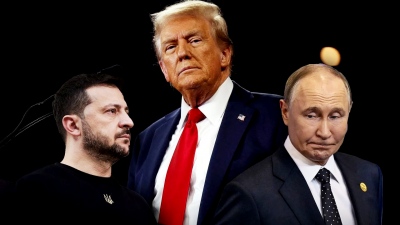
The composition of the Board of Peace membership has sparked strong reactions, as Trump invited Russian President Vladimir Putin, who invaded Ukraine four years ago. Trump stated that Putin agreed to participate, while the Russian leader said he is still considering the invitation. Permanent participants must also pay $1 billion to join, a fact that has drawn criticism that the Board could turn into a "pay to play" version of the UN Security Council. Significant US allies, such as France and the United Kingdom, expressed skepticism, with London announcing it would not attend the ceremony. Members on stage had close ties to Trump, such as Viktor Orban of Hungary and Javier Milei of Argentina, or were seeking to show loyalty to the American President. Officials from Bahrain, Morocco, Armenia, Azerbaijan, Bulgaria, Indonesia, Jordan, Kazakhstan, Kosovo, Pakistan, Paraguay, Qatar, Saudi Arabia, Turkey, United Arab Emirates, Uzbekistan, and Mongolia also signed at the ceremony. Israeli Prime Minister Benjamin Netanyahu, who faces an arrest warrant from the International Criminal Court for the war in Gaza, stated he would participate but did not attend the ceremony. US Secretary of State Marco Rubio emphasized that the Board's priority is "first and foremost to ensure that the peace agreement in Gaza is lasting."
What happens with Hamas
Trump warned that Hamas must be demilitarized as part of the next phase of the Gaza ceasefire agreement, otherwise, it will be "their end." Jared Kushner, Trump's son-in-law, noted that the next phase will deal with funding the reconstruction of the region, which lies mostly in ruins, as well as the demilitarization of Hamas, one of the most intractable issues. "If Hamas does not demilitarize, this will block the plan," he emphasized. Significant progress appears to have been made in the first phase of the ceasefire, with the head of the Palestinian technocratic committee, Ali Shaath, announcing that the Rafah border crossing with Egypt, Gaza's main gateway, will reopen next week. The launch of the Board comes as Trump expresses frustration over his failure to win the Nobel Peace Prize, despite his controversial claim that he ended eight conflicts.
www.bankingnews.gr






Σχόλια αναγνωστών