

The European Union sees the long-awaited trade agreement with Mercosur blocked by just 10 votes, sending the text for a legal review that could delay its implementation by up to two years.
The European Union sees the long-awaited trade agreement with Mercosur—which was also supported by the Greek government—blocked by just 10 votes, sending the text for a legal review that may delay its implementation for up to two years. This represents a massive defeat for the European Commission and Germany, who championed the deal, as well as a significant victory for the agricultural movement across Europe.
Fierce battle in the European Parliament
On Wednesday, the European Parliament passed a proposal by a marginal majority of 10 votes to request an opinion from the Court of Justice of the European Union regarding whether the text of the EU-Mercosur agreement is compatible with EU treaties. The proposal passed with 334 votes in favor, 324 against, and 11 abstentions, drawing applause from its supporters.
The delay and its consequences
Until the Court issues its opinion—a process that typically lasts 18 to 24 months—Parliament will be unable to vote on the agreement, according to Politico. This delay raises the question of whether the EU executive will provisionally apply the agreement pending the Court's decision, a move that could lead to a conflict between the two institutions over democratic accountability.
A serious blow to the European Commission
The vote constitutes a major defeat for the Commission and the countries supporting the deal, which seek to deepen relations with Mercosur nations—Argentina, Brazil, Paraguay, and Uruguay—and view the agreement as an opportunity to resist the unpredictable tariff policies of US President Donald Trump. "The more trade partners we have worldwide, the more independent we become. And that is exactly what we need now," Commission President Ursula von der Leyen stated in a final attempt to persuade lawmakers on Wednesday, to no avail. Bernd Lange, chairman of the Parliament's international trade committee, condemned the outcome of the vote. "Absolutely irresponsible. This is an own goal," he wrote on X. "Those against #EU #Mercosur should have voted against in the consent procedure instead of using delays under the guise of legal review. Very damaging to our economic interests and our standing. Team Europe is putting itself out of the game."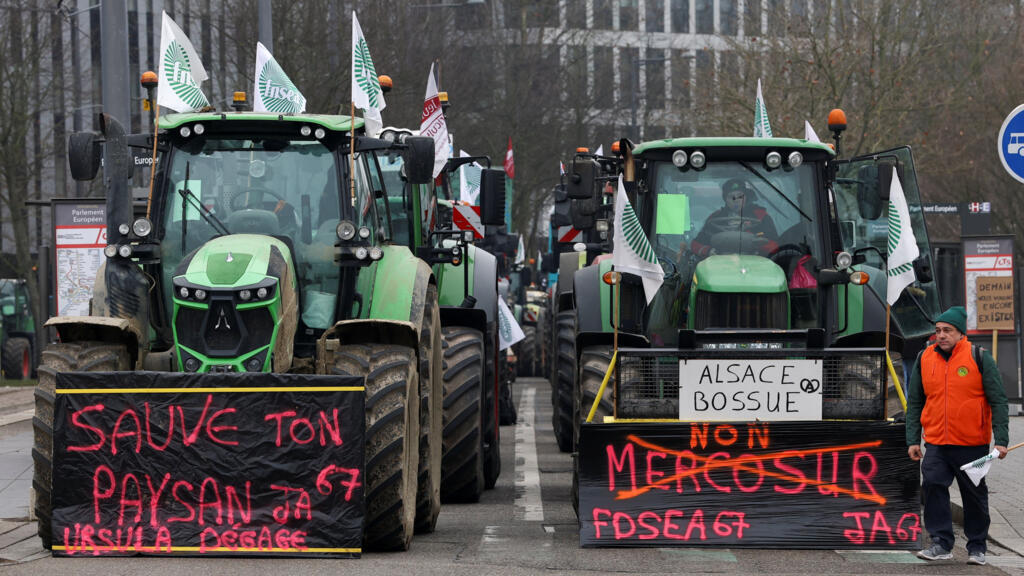
Strategic bet for industry, serious risk for farmers
The European Commission, along with powerful states like Germany and Spain, argues that the Mercosur agreement is a critical tool for geostrategic diversification. In an environment of rising trade tensions, American tariffs, and heavy dependence on China, the EU seeks to open new markets and secure access to critical raw materials such as lithium and copper. It is no coincidence that German industrialists hailed the approval of the agreement as a "significant success for the German and European economy," estimating that the abolition of tariffs would lead to annual savings of approximately €4 billion and boost exports of vehicles, machinery, and industrial products. Conversely, farmers and environmental organizations speak of unequal competition and a serious undermining of European agricultural production. The agreement facilitates the entry into the European market of products such as beef, poultry, sugar, rice, soy, and honey, which are produced in countries with significantly lower costs and different—often looser—production standards.
"Historical error" and social reactions
Farmers in many EU countries characterize the agreement as a "historical error" and a "death knell for the primary sector," pointing out that strict rules apply in Europe regarding animal welfare, the use of pesticides and antibiotics, and environmental protection. In contrast, Mercosur countries allow substances and practices that have been banned in the EU, creating conditions of unfair competition. In Greece, farmers are calling on the government not to ratify the agreement, arguing that it will critically affect Greek agricultural products in terms of both price and quality. The approval of the deal actually came during a period of intense demonstrations, heightening social and political tension. The next critical milestone will be the vote in the European Parliament, likely in the spring. By all indications, the battle surrounding Mercosur has only just begun.
www.bankingnews.gr



Σχόλια αναγνωστών