

One year has passed since the inauguration of the 47th President of the United States, Donald Trump, who returned to the White House after a four-year hiatus, promising to tackle the migration crisis, improve the economy, and make America "great again." Twelve months later, the Trump administration has triggered intense international turbulence—from trade wars to unexpected geopolitical moves—dividing allies and adversaries alike. The record of the first year is complex, filled with successes, failures, and sharp reactions. Donald Trump's inauguration took place on January 20, 2025, in Washington. In his inaugural address, the president proclaimed the start of a "golden age" for the United States, promising prosperity, the restoration of the country's international prestige, and an end to the "exploitation" of America by third parties. From the very first days, Trump declared a state of emergency at the southern border to address illegal immigration, as well as in the energy sector, pledging to restore U.S. power in the international system.
A president in constant conflict with the world
Foreign policy constituted the most explosive field of Trump’s second term. According to analyses by American media, the president moved with greater speed and determination than in his first term, largely ignoring the so-called "rules-based international order." A characteristic example was the operation to capture the president of Venezuela, Nicolas Maduro. On January 3, 2026, American forces launched airstrikes and a special forces operation in Venezuela, arresting Maduro and his wife. Maduro was transferred to the U.S., where he faces charges of narco-terrorism and cocaine trafficking. Simultaneously, the Trump administration opened a new chapter of trade conflict. Starting in February 2025, increased tariffs were imposed on imported products, initially on China and subsequently on Canada, Mexico, the European Union, and nearly the rest of the world. Tariffs reached up to 145% for Chinese products, while the EU responded with countermeasures on American goods. Particular tension was also caused by threats to impose tariffs on European countries reacting to Trump's plans to acquire Greenland, with the White House directly linking trade to geopolitical concessions.
Domestic front: Migration and social tensions
At home, immigration policy was the most visible area of success for the Trump administration. According to U.S. media data, approximately 230,000 people were deported from within the country and another 270,000 at the border within one year, while refugee arrivals were limited to historically low levels. However, these harsh policies triggered intense reactions. Protests broke out in many states, particularly following the killing of an unarmed woman by an Immigration and Customs Enforcement (ICE) agent in Minnesota, with demands even for the abolition of the agency and the impeachment of the president.
Conflict with the "deep state"
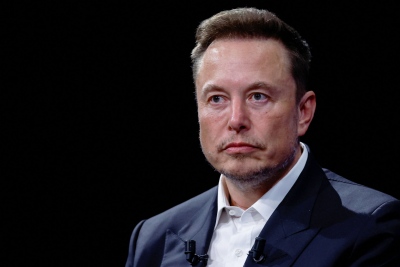
Another hallmark of Trump’s second term was the open conflict with the bureaucracy and the so-called "deep state." In this context, the Department of Government Efficiency (DOGE) was created under Elon Musk, which, however, was disbanded prematurely following a clash between the billionaire and Trump. Meanwhile, the administration proceeded to close USAID, judging that a large portion of its programs served "liberal goals" that did not align with American priorities.
Russia and geopolitical rapprochement
Particular importance is also attributed to the restoration of U.S.–Russia contacts. Analysts note that, despite deep differences, Trump's first year helped avoid direct conflict and restart diplomatic dialogue, culminating in the Trump–Putin meeting in Alaska.
Looking toward 2026
2026 is considered a pivotal year for Trump’s political legacy. The midterm elections, the Supreme Court's decisions on the constitutionality of tariffs, and the president's age (80 in June) will largely determine developments. As analysts point out, if Trump manages to achieve successes on major international fronts—from Ukraine to the Middle East—he could decisively strengthen his historical footprint. Otherwise, this first year will be remembered as the start of a term that fluctuated between a display of power and permanent conflict.
Trump will take Greenland without weapons
He may have received harsh criticism, but Donald Trump is at the peak of his political power, one year after starting his second presidential term, and has chosen Greenland as his great historical bet. Lacking the possibility of a third term, Trump seeks to seal his place in history through a territorial expansion of the United States, something that has not happened since the late 19th century. After all, control of the Western Hemisphere is a long-term and difficult-to-implement goal, while the annexation or close association of Greenland is considered realistic and feasible within his current term. Indeed, the acquisition of Greenland can occur without military conflict, through political and diplomatic mechanisms, where even a "free association" would suffice to be recorded as an American triumph.
First anniversary
Donald Trump celebrates the first anniversary of his second presidential term today in an excellent mood. He is, after all, at the peak of his power and in the spotlight. History will show if this moment eventually proves to be the culmination of his influence and success, but for now, he has every reason to be proud. A year ago, his return to the White House was met with mixed feelings. His opponents with concern, his supporters with hope, and observers were certain it would definitely not be boring. Trump lived up to expectations, and this year, which he began with the entirely unpredictable kidnapping of the Venezuelan president, is likely to be full of surprises. Trump has nothing to lose—his 80th birthday is in June, which conveniently follows three weeks later by the 250th anniversary of U.S. independence. And in November are the midterms, which he desperately needs, if not to win (which is practically impossible), at least not to lose—that is, to maintain control of the Senate after the loss of the House of Representatives.
He wants to be written into history
Trump cannot seek another presidential term (regardless of how much some of his supporters might advertise it), as he will not be a candidate again. Therefore, his position in history must not merely be prepared, but rather carefully shaped—like Trump himself, with gold-plated trim and superlatives: the strongest, the most talented, the most magnificent, the greatest. All available and less significant means and pretexts will be used, but it seems Trump has already chosen the primary means for decorating his own "throne in history." If someone had tried to predict or guess just a year ago what he would choose to be his main tool (Trump is not a Mason, but American politics is steeped in Masonic concepts and symbolism), they would have been wrong. The fight against migration? The construction of a new U.S. capital? A small, victorious war with someone? The laurels of a global peacemaker? A successful trade war with the whole world? All these could have been useful, but ultimately Trump rejected them as unrealistic or insufficiently effective.
Control of the Western hemisphere
Trump chose something else: control of the Western Hemisphere and the annexation of Greenland. It is clear that the first—the "Monroe Doctrine"—is unattainable. But even if we believe in the possibility of establishing true U.S. hegemony over half the planet, the timeframe for implementing such a project extends beyond Trump's presidential term. The second—the annexation of Greenland—is absolutely feasible within the three years remaining in Trump's power. Therefore, Greenland comes first. The largest island in the world, its vast (potential) mineral and offshore reserves, the significant increase in the United States' "Arctic share," its military-strategic importance, and other benefits—all these are, in reality, deeply secondary reasons for choosing Greenland as Trump’s primary legacy. Greenland should make Trump "the greatest" simply because he will be the first president since the late 19th century to so significantly expand the territory of the United States.
A bit of history
Under the McKinley administration, the Philippines, Cuba, and Puerto Rico became American territories. Cuba gained independence (official) after just four years, the Philippines were a "dependent territory" for almost half a century, then became an autonomous region within the United States, and now (even without statehood) only Puerto Rico remains, but the scale is still impressive. After all, back then, we had to fight a serious war with the Spanish (and then even more seriously with the dissatisfied local population), whereas now everything can be done without a single bullet being fired. Trump will simply take Greenland—it is already clear that he will not back down or shift his focus to another issue. Greenland comes first.
Next steps
Although the actual forms of its acquisition could vary—from a full cession by Denmark and its integration into the United States as a state to a "free association" of an independent Greenland with the United States (a similar status currently enjoyed by three Oceania states—formally independent and even UN members). Furthermore, although form is almost more important than substance for Trump, he certainly wants to formalize everything to the maximum immediately—that is, to add a new star to the flag—but ultimately he will settle for less (especially since the association could simply be a transitional period before full integration). In any case, history books will say: Trump, who annexed Greenland to the United States. And no one will be able to interpret this event in two ways—it is geography, after all.
NATO is non-existent
Of course, Trump is also destroying the North Atlantic Alliance. NATO will certainly not collapse after such an American rampage, but the hole in the ship of "Atlantic solidarity" will be serious, capable of sinking it in the next geopolitical storm. Why would Trump, and particularly America, need this? There is no reason, because he assumes that the Europeans are not going anywhere. America has already begun to get them used to paying for their own, European security—now they will understand that they will have to pay for real. Because they have seriously angered Russia, hoping for an American security umbrella. And now it turns out that the "big brother" is focused on the Western Hemisphere (which, incidentally, includes not only the Atlantic but also most of the Pacific Ocean, although the United States has long preferred to talk about the Indo-Pacific region—which already represents half of the Eastern Hemisphere). In other words, Europe, with its gaze fixed on Ukraine, simply does not have the option to "expel the United States": it cannot fight for Ukraine alone, let alone overcome its own fears. It is not surprising, then, that Trump decided to exploit the Anglo-Saxon fear of Russia in Europe to facilitate the "squeezing" process of Greenland. In other words, the Europeans (with the active encouragement of the Anglo-Saxons) dug their own hole. To avoid falling into it themselves, they will have to give up Greenland, from where Trump will pick it up. After this, he will repeat his appeal to the Europeans: focus on your own(?) Ukraine instead of pitying Greenland.
www.bankingnews.gr



Σχόλια αναγνωστών