

The rift between Europe and the USA appears to be widening as European Union member states consider imposing tariffs of €93 billion or restricting American companies' access to the Union's market. This comes in response to Donald Trump’s threats against NATO allies who oppose his campaign for control of Greenland. This move marks the most serious crisis in transatlantic relations in decades.
Retaliatory measures are being drafted to give European leaders leverage during decisive meetings with the US President at the World Economic Forum in Davos this week, officials involved in the preparations told the Financial Times. The goal—according to leaks in European media—is to find a compromise that avoids a deep rupture in the Western military alliance, which would constitute an existential threat to Europe's security.
The trade agreement
The tariff list was drafted last year but had been suspended until February 6 to avoid a full-scale trade war. Its reactivation was discussed on Sunday (1/18) by the 27 EU ambassadors, along with the so-called "trade bazooka" (the Anti-Coercion Instrument, ACI) which can restrict US companies' access to the internal market as the Union seeks how to respond to the US President’s threats of punitive tariffs.
Trump’s moves and the response
Trump, who requested permission from Denmark to acquire control of Greenland, threatened on Saturday (1/17) night to impose 10% tariffs starting February 1 on products from the UK, Norway, and six EU countries that sent troops to the island for a military exercise this week.
"There are clear tools of retaliation in case this continues... [Trump] is using purely mafia-like means," stated a European diplomat briefed on the discussions. "At the same time, we want to call for public calm and give him the opportunity to back down. The message is... carrot and stick," they added. France has asked the Union to respond with the ACI, which has never been used since its adoption in 2023. The tool includes investment restrictions and can stall service exports, such as those provided by American Big Tech companies to the EU.
Coordination between France and Germany
Paris and Berlin are coordinating a joint reaction, with their Finance Ministers meeting in Berlin on Monday (1/19) before traveling to Brussels to meet their European counterparts, a French ministry aide stated. "The issue should also be discussed with all G7 partners under the French presidency," they added. Although many EU member states supported exploring ways to use the ACI against the US, the majority called for dialogue with Trump before issuing direct threats of retaliation, diplomats briefed on the FT discussions said.
"We need to de-escalate," said a second European diplomat. In response to President Trump’s moves, the largest parties in the European Parliament stated they would delay a planned vote on measures that would have reduced EU tariffs on American products under a trade deal reached last year.
Critical consultations in Davos
Trump, who will be at the Swiss forum on Wednesday and Thursday (1/21–22), is set to have private talks with European leaders, including Commission President Ursula von der Leyen, in addition to participating in a broader discussion among Western countries supporting Ukraine. "We want to cooperate and we are not the ones seeking conflict," said Mette Frederiksen, Prime Minister of Denmark.
National security advisors from Western countries will meet in Davos on Monday (1/19). The talks were originally supposed to focus on Ukraine and current peace negotiations to end the Russian invasion, but they were rescheduled to allow time for the discussion of the crisis surrounding Greenland, two officials briefed on the preparations said. The Swiss Foreign Ministry, hosting the meeting, stated it "will not comment on participants or topics." Trump’s threats "certainly justify the use of the ACI as they constitute a classic extortion practice," said a third European official. "But we must use the time until February 1 to see if Trump is interested in a way out," they added, noting that much will depend on the Davos talks.
Pandora’s Box has opened
European officials stated they hope the retaliatory measures will increase bilateral pressure on the US against Trump’s actions and lead to his withdrawal from the tariff threat. "It is already a situation that no longer allows for compromises, because we cannot surrender Greenland," said a fourth European official. "Reasonable Americans also know that he just opened Pandora’s Box."
However, on Sunday, January 17, 2026, US Treasury Secretary Scott Bessent stated that Europe is too weak to guarantee the security of Greenland and refused to back down on the US demand for control of the strategically important island. "The President believes that enhanced security is not possible without Greenland being part of the US," he told NBC News.
All weapons on the table
The Chairman of the European Parliament's Trade Committee, Bernd Lange, told Euractiv on January 17, 2025, that he will ask the European Commission to activate the so-called "trade bazooka" next week. A trade truce between the EU and the US, aimed at reducing transatlantic tensions, risks being overturned after President Donald Trump's announcement on Saturday, January 17, 2025, of new tariffs (+10%) on eight European countries due to their troop deployment in Greenland.
Trump has repeatedly stated he wants to acquire Greenland and has not ruled out the use of force. Denmark and Greenland insist the island is not for sale, and Copenhagen has bolstered its defenses alongside allies. According to Donald Trump, Denmark, Norway, Sweden, France, Germany, the Netherlands, Finland, and the UK will face a 10% tariff on all products from February 1, which will increase to 25% from June 1. An emergency meeting of EU ambassadors is scheduled for January 18 to launch a European response. Two issues will be discussed: Greenland and Trump’s retaliatory tariffs.
Manfred Weber (EPP): Approval of the EU-US deal "is not possible at this stage"
Manfred Weber, head of the European Parliament’s largest political group, stated that approval of the EU-US agreement "is not possible at this stage," given Trump's threats. The center-right European People's Party group had until now supported moving the deal forward, despite Washington’s ambitions to take control of Greenland, but this seems to be changing radically after the latest developments.
Rage of German industrialists over "ridiculous" Trump demands – Call for tough trade retaliation from EU
German industry reacted with rage on Sunday, January 18, 2026, to President Donald Trump's plans to use tariffs to increase pressure on Denmark to sell Greenland, calling on Europe not to succumb to his demands. "If the EU retreats here, this will simply encourage the US president to formulate the next ridiculous demand and threaten further tariffs," said Bertram Kawlath, president of the German mechanical engineering industry association VDMA.
"Particularly controversial political goals are linked to economic sanctions in an unacceptable way," stated Volker Treier, foreign trade expert at the German Chamber of Industry and Commerce (DIHK). Both called for a unified reaction from the European Union. This could include the EU's "Anti-Coercion Instrument," which allows the bloc to retaliate against third countries that exert economic pressure on EU member states to change their policies. Regarding the US-EU trade deal, employer organizations VDMA and DIHK expressed doubts about whether MEPs will vote for the agreement with Washington this month, which primarily concerns the abolition of many EU tariffs on American products imported into the bloc.
"The European Parliament cannot under any circumstances decide next week on tariff reductions toward the US as long as Washington exerts pressure on the European Union with new punitive tariffs," said Kawlath. However, the head of the economic research institute IfW stated that the economic consequences of the tariffs for Greenland would be manageable for Germany. "Only about 10% of our foreign trade is with the US. It is important that the EU does not allow itself to be blackmailed, but stands united and resists him," IfW President Moritz Schularik told Reuters.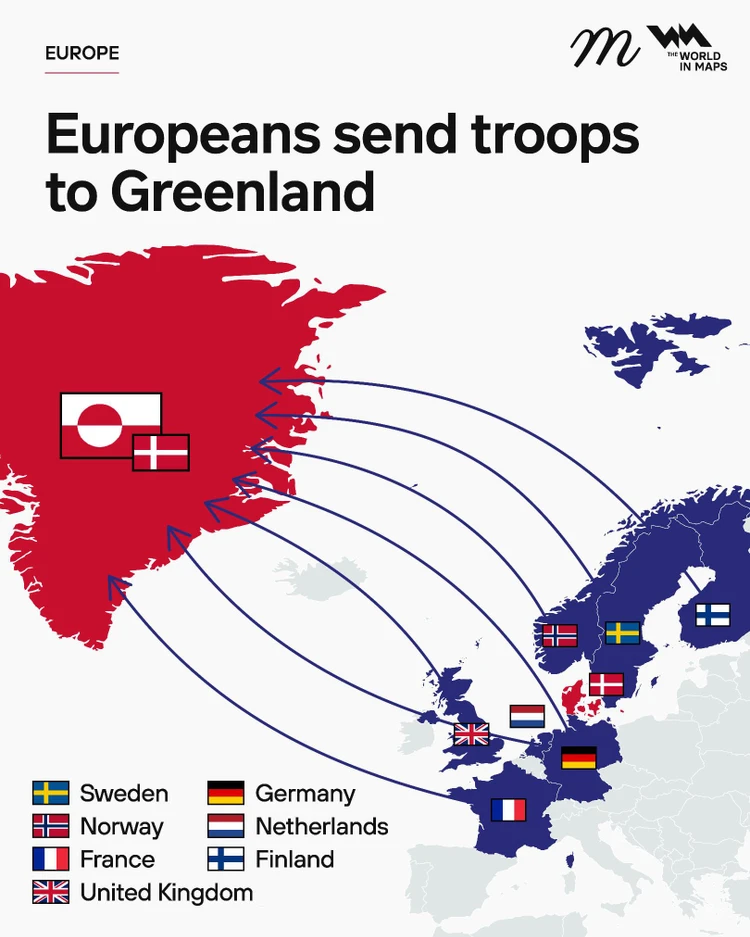
Deutsche Bank: Europeans hold $8 trillion in US bonds and stocks – The euro is not in danger
The impact on the euro from President Donald Trump's new threats of trade tariffs toward European governments over Greenland may be limited due to how much the US relies on Europe for capital, according to an analysis by Deutsche Bank AG. Europe is the largest lender to the US, with its states holding $8 trillion in US bonds and stocks—nearly double that of the rest of the world, wrote George Saravelos, Deutsche’s global head of currency research, in a report to clients on Sunday, January 18, published by Bloomberg.
"In an environment where the geoeconomic stability of the Western alliance is being existentially disrupted, it is not clear why Europeans would be so willing to play this role," he said. "Developments in recent days have the potential to further strengthen the dollar's decline." Trump's new tariffs on European countries over Greenland could also act as a catalyst for greater European political cohesion, meaning further that any negative impact on the euro against the dollar might not last beyond this week, he said. Saravelos added that "the key thing to watch in the coming days" is whether the European Union activates the Anti-Coercion Instrument. "With a record negative US net foreign investment position, the mutual dependence of European and American financial markets has never been higher," Saravelos said. "This is a weapon that concerns purely capital flows and not trade flows—as the latter would cause greater market turbulence," he concludes.
What will happen with the trade agreement
This latest escalation risks derailing the transatlantic agreement reached last summer, under which Brussels accepted a unified 15% tariff in most sectors in exchange for commitments that would reduce EU tariffs on American industrial and agricultural products. This package still requires approval from the European Parliament, with the first vote originally scheduled for late January. However, it is becoming increasingly likely to be frozen.
German MEP Bernd Lange, Chairman of the European Parliament’s Trade Committee, told Euractiv on Saturday (1/17) that the implementation of the agreement with the US must stop. Lange said he would ask the European Commission next week to use the Anti-Coercion Instrument (ACI)—the so-called EU "trade bazooka." "For me it is absolutely clear that this is a case where the US is using a trade tool as a means of political pressure, and that is exactly what the ACI was created for," he added. Swedish MEP Karin Karlsbro, a member of the trade committee working on tariff relations with the US, stated that the EU must respond to Trump’s "tariff attacks," including those targeting Sweden. "We cannot exclude retaliatory tariffs or the use of the bazooka if the pressure and coercive behavior continue," she told Euractiv.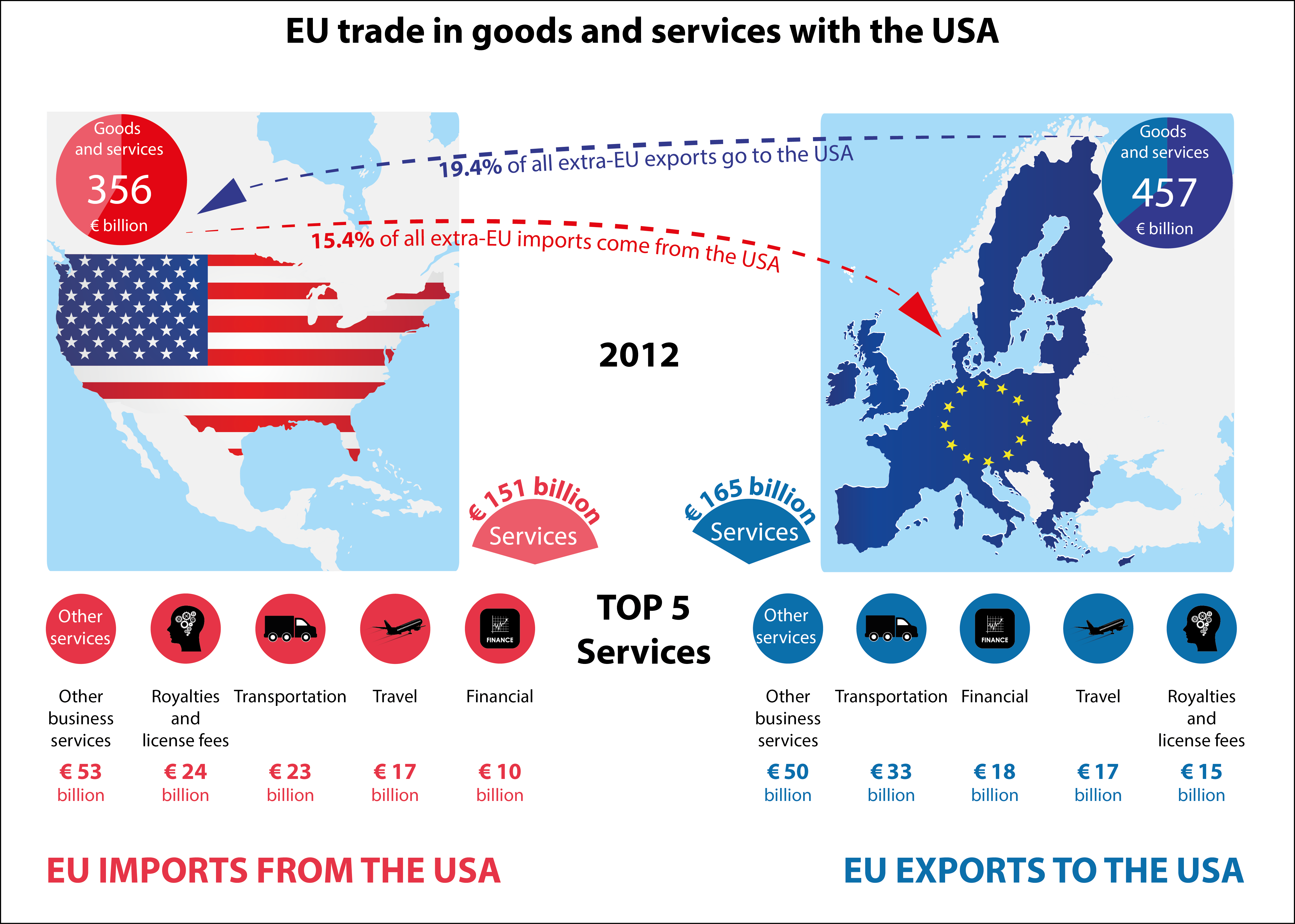
What is the trade bazooka - When is it activated
The Anti-Coercion Instrument (ACI), also known as the "trade bazooka," is a European Union regulation proposed in December 2021, adopted in November 2023, and entered into force on December 27, 2023. Its goal is to protect the EU and its member states from economic coercion by third countries and provides a framework for EU action, which includes examination, engagement, and adoption of countermeasures. By combining security policy and trade policy, it constitutes a tool of defense and deterrence, designed to prevent coercion through the imposition of sanctions on countries practicing it.
According to the regulation, "economic coercion" refers to a situation in which a third country tries to pressure the EU or a member state to take a specific political decision by applying or threatening to apply measures affecting trade or investment. The process is activated when the European Commission examines a potential case of coercion, either on its own initiative or following a request with documented evidence, and then submits a proposal to the Council of the European Union to decide if coercion exists.
If the Council, by a qualified majority decision, confirms that coercion is taking place, the Commission follows with consultations with the third country to resolve the case through negotiations, mediation, or judicial settlement. If these efforts fail, the EU can adopt "retaliatory measures," such as tariffs, restrictions on trade in goods and services, restrictions on access to public programs and financial markets, or measures affecting intellectual property rights and foreign direct investment. These restrictions can target states, companies, or individuals, thereby leveraging the EU’s legal power as a means of pressure.
Slogans for abolishing NATO bases
A proposal has already been articulated in the pages of the British magazine The Economist to threaten the United States with the abolition of their military bases in Europe in the event of an island seizure. However, this belongs to the realm of fantasy. The European Union could equally recall the naval forces of EU countries—for example, the French aircraft carrier Charles de Gaulle—and send them sailing toward the shores of Greenland alongside British Royal Navy ships. Most likely, everything will be limited to "rhetorical broadsides against the opponent" from newspaper pages, in the hope that "Trump will come to his senses." Exactly as is happening now.
"The threat of tariffs represents a clear departure from traditional forms of diplomacy in favor of economic coercive policy. American actions undermine previous trade rules established within the framework of the World Trade Organization and allied treaties and could lead to a prolonged trade war between the United States and the European Union," writes the Washington Examiner, a highly influential magazine among conservatives.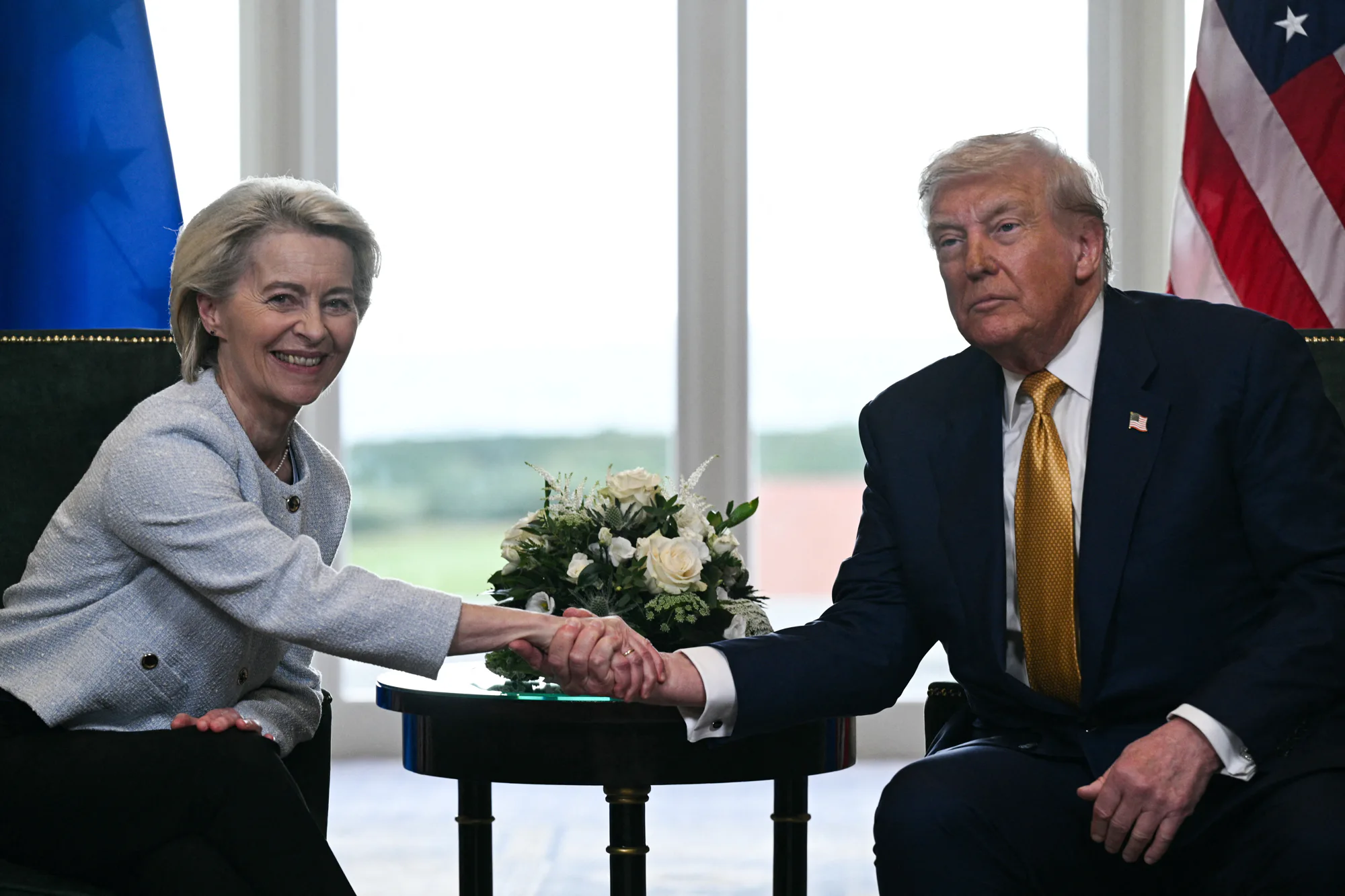
Collapse of NATO?
The British Guardian shares this view: "The crisis around Greenland is shifting not only to the economy but also to the foundations of defense cooperation. European countries previously considered close allies of the United States reacted strongly to the threat of tariffs and, through diplomatic channels, accused Washington of undermining trust and security in Europe." Reuters quoted several diplomats warning of a "possible collapse of NATO or, at least, its significant weakening" if the conflict around Greenland escalates into direct military confrontation between the US and alliance members.
"Trump's attempts to use economic and political leverage to change the status of a territory without the consent of its population constitute a direct threat to the principle of inviolability of state sovereignty, which is the cornerstone of the entire international Yalta–Potsdam system," notes the Washington Examiner.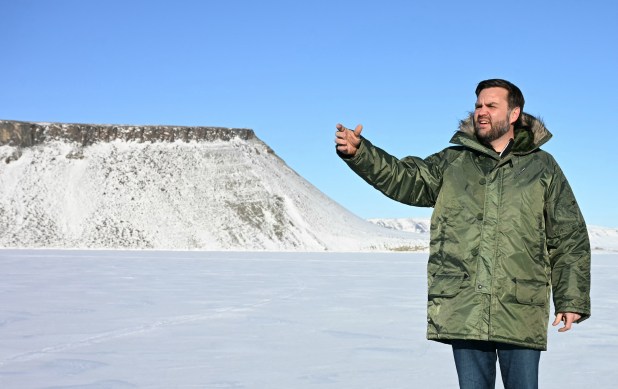
What the "Greenland Crisis" finally reveals - The myopia of the West
When things got tough, the West remembered both Yalta and Potsdam of 1945. And where were the supporters of the "inviolability of sovereignty" when NATO aircraft were destroying Libya and Yugoslavia? When in 2008 the United States, together with the Europeans, dismembered Serbia, detaching Kosovo with bombs and tanks? When Israel occupied a significant part of southern Lebanon and southern Syria in 2024? Where, finally, were the protests of the Europeans very recently—when American special forces, reinforced by the US fleet and air force, "heroically" arrested the president of a sovereign state in Venezuela?
Putin, incidentally, when NATO forces were detaching Kosovo from Serbia, had warned: this will boomerang back on you. They didn't believe it. And now what? Is Greenland different? In reality, the seizure of Greenland is not something unusual for the United States. It’s just that now the issue touches the European Union.
Shut up and listen to the strong!
The US Permanent Representative to the UN, Mike Waltz, stated that US President Donald Trump’s efforts to annex Greenland do not violate international law. "From the perspective of international law, President Trump is trying to make a deal in the same way that President Truman did in the 1940s, and as happened with the Virgin Islands, which we bought from Denmark for $25 million in the 20th century. There is nothing illegal about this, and he is doing what he considers necessary," Waltz said in an interview with Fox News.
And the US Ambassador to NATO, Matthew Whitaker, made it even clearer: "Ultimately, this is a matter between the United States, Denmark, and Greenland... Europe sometimes tends to overreact to every problem. It is one of those cases where you have to keep your cool." In other words, Whitaker told the Europeans: "Shut up."
In a cynical and provocative statement, White House Deputy official Stephen Miller, speaking to Fox News (1/17), characterized Denmark as a "tiny country" with a weak economy and military, which is unable to control the territory of Greenland. The US official was scathing in his remarks, directly challenging the national sovereignty of the European country: "They cannot protect Greenland. They are not in a position to control its territory," Miller stated characteristically. According to him, the United States needs the island to ensure their national security. The White House deputy head added that the major importance lies in the ability to control shipping routes in the Arctic, noting that US adversaries are making enormous efforts in this direction.
www.bankingnews.gr


Σχόλια αναγνωστών