

Obviously, at present, 30 members of NATO have 1,5 million active military personnel, if the United States leave NATO... the Europeans need to add 300.000 new soldiers to replace current American capabilities
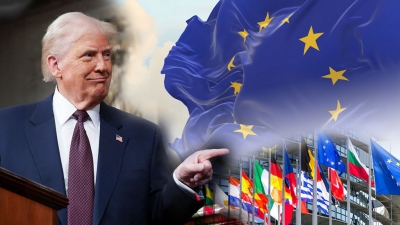
The prospect of a “NATO without the United States” appears to have shifted from a theoretical discussion to a critical strategic concern for European leaders, with the plans of US President Trump to push for Greenland, a semi autonomous territory of Denmark, a NATO member state, which is also a NATO country, to become the 51st state of America.
The US President stated that Greenland is vital to US national security and confirmed that discussions with NATO are ongoing regarding the territory.
“NATO has faced problems with us over Greenland.
We need Greenland very much for national security,” stated Trump.
“If we do not have it, we have a major gap in national security, especially regarding what we are doing with the Golden Dome and all the other things.”
Europe disagrees with Trump’s plans - Historic rupture
But this is not accepted by the other 31 members, which, apart from Canada, all come from Europe.
It was unthinkable for them to accept the scenario of a NATO member state seizing the territory of another country by military means.
So far, Poland has warned that US threats regarding Greenland could “end the alliance”.
Other European members such as the United Kingdom, Germany and France are discussing a “NATO military mission” in Greenland to protect it from another member, the United States, signaling a historic rupture.
Already soldiers from France, Germany and other European countries have begun arriving in Greenland to help strengthen Greenland’s security following a “fundamental disagreement” in talks involving Denmark, Greenland and the United States.
According to reports, France has sent 15 soldiers and Germany 13.
Norway and Sweden are also sending troops.
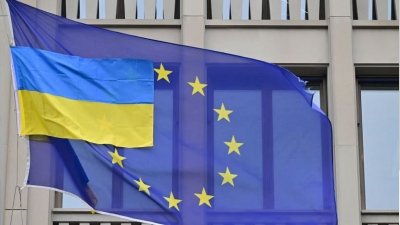
The mission has been described as a terrain reconnaissance exercise, with the troops placing the flag of the European Union in Greenland as a symbolic act.
“The first French soldiers are already on their way” and “others will follow,” stated French President Macron.
French authorities revealed that soldiers from the country’s mountain infantry unit were already in Nuuk, the capital of Greenland.
It is said that Germany has deployed a 13 person reconnaissance team to Greenland.
Denmark has already increased its military presence in Greenland and plans to deploy more soldiers.
NATO without the United States
All of this has led to a peculiar situation in global geopolitics, the prospect of a NATO without America, which until now was unthinkable.
Of course, during its 76 year history, the North Atlantic Treaty Organization or NATO has faced its share of crises, but none was as serious as the one it faces today.
The NATO alliance is creaking
As things stand, since Trump’s return to power in early 2025, his policy of reducing the American share in the NATO budget and his different stance regarding the response to the ongoing war in Ukraine had already struck at least two core features of the alliance’s collective defense commitment, the “shared understanding of threats” for NATO members and the “indivisible security among members”.
But Trump’s obsession with Greenland could now lead to the fragmentation, if not the dissolution, of NATO, as many experts express.
If NATO truly fractures or dissolves, with the United States no longer part of it, what will happen? Are the Europeans ready to live without the American security guarantee?
Shock report by the International Institute for Strategic Studies... Defending Europe without the United States
The International Institute for Strategic Studies (IISS) based in London, a leading authority on global security, political risk and military conflict, published a report titled “Defending Europe without the United States: Costs and Consequences”.
This report assessed the financial cost and defense industry requirements for a European NATO to defend against a future Russian threat in the event that the United States withdraw from NATO.
The United States represent 65% of NATO’s military spending
It is worth noting that the United States represent approximately 65% of total NATO military spending.
According to the IISS report, in order to replace the assumed conventional US capabilities assigned to the Euro Atlantic theater, European states would need to invest significant resources beyond existing plans to strengthen military capability.
Taking into account one off procurement costs and assuming a 25 year life cycle, the IISS estimates that this cost would amount to approximately 1 trillion dollars.
More radical approaches to defense investment and defense spending levels approaching Cold War levels would be required, where spending “averaged” above 3%.
Europe is militarizing
Of course, on the positive side, the report states, several European countries and the European Union have already begun paving the way for increased defense spending and a better investment environment in the defense sector.
However, it remains to be seen whether the political will to reach the necessary spending levels will be evident across all European nations, given the limited fiscal space for many governments.
The report of the International Institute for Strategic Studies (IISS) also noted that European allies will face challenges in the defense industry.
While procurement orders have accelerated in the land domain, there is less urgency in the naval and aerospace sectors, with minimal additional investment in production capacity.
This is problematic, as large scale provision of air and naval platforms would be a key requirement if Europe were to replace the contribution of the American military in these domains.
Taking into account defense industry challenges related to contracts, financing, workforce shortages, regulation and supply security, the IISS estimates that, over the next decade, Europe’s defense industry will struggle to replace many of the American capabilities, particularly in the air and naval domains.
“However, long delivery times could be reduced, provided that significant investments are made in Europe’s industrial capabilities and the acquisition of complementary unmanned systems,” states the International Institute for Strategic Studies report.
Europe is already preparing 650 billion for defense
According to Ivo H. Daalder, Chief Executive Officer of the Chicago Council on Global Affairs and former US Ambassador to NATO from 2009 to 2013, European leaders understand the challenge they face and are beginning to act accordingly.
At an EU summit in early March of last year, European leaders agreed to borrow 150 billion euros (162 billion dollars) for defense production and to exempt defense spending from fiscal rules that limit annual spending for EU members, potentially adding another 650 billion euros (701 billion dollars) for defense over the next ten years.
But money is not the only challenge Europe will face in a NATO without the United States.
Time and American support during the transition period are the other two main challenges.
Problem of non uniform military doctrines
In the absence of the United States, Europe would need two or three years to unify non uniform doctrines and fragmented command chains.
Ivo H. Daalder estimates that, at a minimum, European members must commit to providing 75–80% of the necessary forces to implement the alliance’s regional defense plans by the early 2030s, and in the long term to provide almost all of these forces.
This would include the development of critical capabilities, including satellite communications and advanced air and missile defense, to conduct high intensity operations and sustained combat.
European leaders would also need to double the recruitment, training and exercising of their military forces, he notes.
Another 300.000 new soldiers will be required
Obviously, at present, 30 members of NATO have 1,5 million active military personnel, if the United States leave NATO. the Europeans need to add 300.000 new soldiers to replace current American capabilities.
It is important that this transition period requires American support.
Uncoordinated withdrawal means total collapse of NATO
As Ivo H. Daalder argues, “If the United States were to leave NATO and withdraw from Europe in a rapid and uncoordinated manner, the integrated structure that has been built over decades would likely collapse.
European countries simply do not possess the military and technological resources to immediately replace what the United States have provided.”
A US withdrawal would leave European allies “unable to fight quietly” due to the loss of US managed systems:
Intelligence and command: The United States provide the majority of airborne early warning (AWACS), strategic intelligence collection and battlefield surveillance.
Logistics and enablers: Key capabilities such as air to air refueling, strategic airlift and space assets depend almost entirely on US resources.
Integrated air defense: Current NATO air and ballistic missile defense systems rely primarily on American technology and command structures.
Severe blow to nuclear deterrence
However, the most significant loss Europeans would face in a NATO without America is nuclear deterrence.
Only France and the United Kingdom possess nuclear weapons, with their combined total, approximately 515 warheads, being dwarfed by the 5.000 that the United States are assumed to have in their arsenal.
Moreover, Russia, which for Europeans constitutes the greatest threat to Europe’s security, also possesses more than 5.000 nuclear warheads.
The United States would also lose
Incidentally, in the event of a United States withdrawal from NATO, the US would clearly lose as well.
First: The United States would subsequently lose access to their 31 permanent bases in Europe.
These facilities, especially Ramstein in Germany, are critical for operations and the projection of American power in the Middle East and Africa.
Second, decades of seamless intelligence sharing through NATO protocols would be disrupted in the event of a US–Europe split, limiting American “eyes and ears” across the entire Eurasian region.
Third, arms sales to Europe, so critical for American defense manufacturers, would be placed at serious risk. It has not gone unnoticed that after the Russian invasion of Ukraine, American arms sales to Europe have increased dramatically.
Weapons value 117,9 billion dollars
The value of US foreign military sales (FMS) to Europe increased significantly, reaching approximately 68 billion dollars in 2024, a massive rise from the average of 11 billion dollars between 2017 and 2021.
In fact, US arms exports reached an all time high of 117,9 billion dollars in fiscal year 2024, with a large portion of this funding provided by European allies and partners.
Clearly, a “separated” Europe pursuing massive military modernization to achieve self sufficiency and strategic autonomy would pose significant risks to the market share of American defense companies.
Taking all this into account, one could say that a separation of Europe from the United States within NATO, which some describe as a “transatlantic divorce”, would be deeply painful for both sides.
It could lead to a significant restructuring of global security and to tremendous economic upheaval.
www.bankingnews.gr







Σχόλια αναγνωστών