

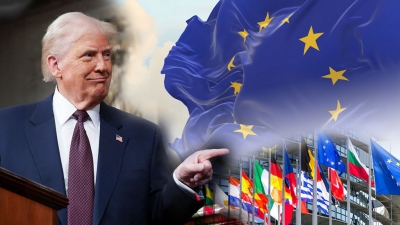
The prospect of a “NATO without the United States” appears to have shifted from a theoretical discussion to a critical strategic concern for European leaders, as President Donald Trump insists on the incorporation of Greenland, a semi autonomous territory of Denmark, as the 51st state of the United States. Trump stated on January 16 that Greenland is vital to the national security of the United States and confirmed that discussions with NATO are ongoing regarding this territory. “NATO is negotiating with us over Greenland. We need Greenland for national security, very seriously,” Trump told reporters. “If we do not get it, there is a big hole in national security - especially regarding what we are doing with the Golden Dome and everything else.”
A divided alliance
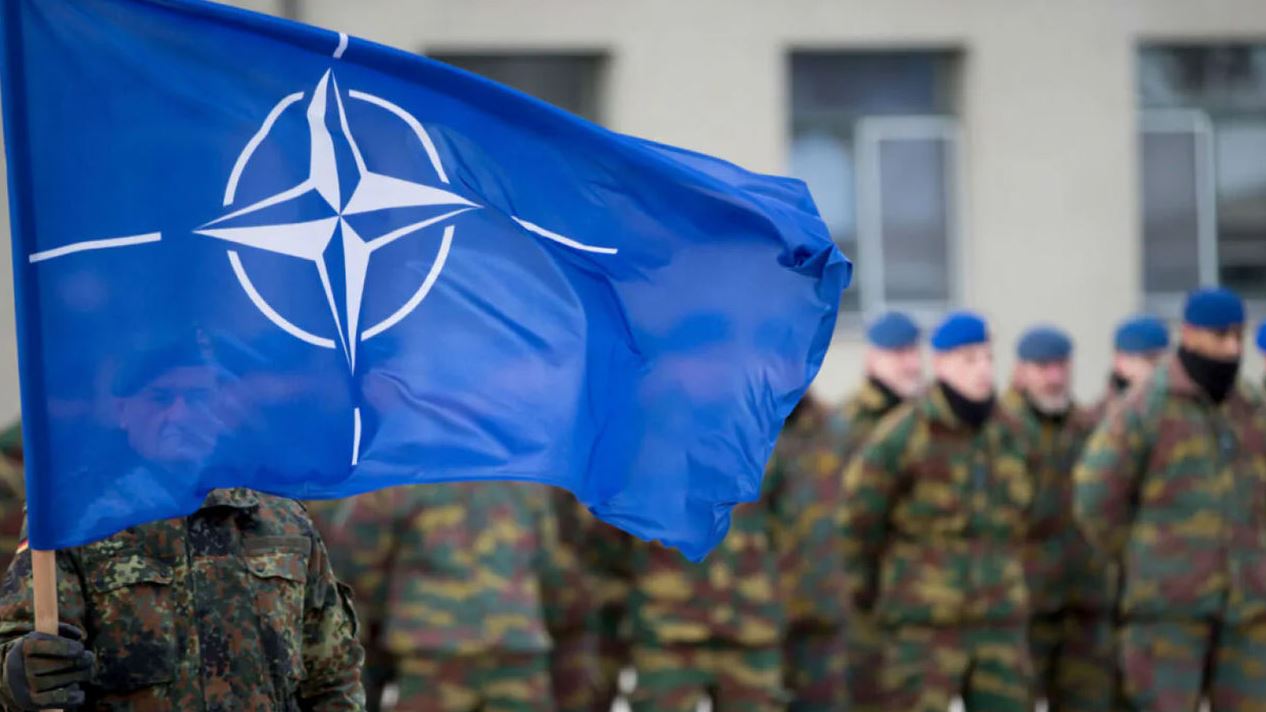
However, this finds no acceptance among the other 31 members, all European except Canada. For them it is unthinkable to accept the scenario of a NATO ally seizing the territory of another member by military means. To date, Poland has warned that United States threats regarding Greenland could “end the alliance”. Other European members, such as the United Kingdom, Germany, and France, are discussing a “NATO military mission” to Greenland to protect it from the United States, signaling a historic rupture in the alliance. According to reports, soldiers from France, Germany, and other European countries have already begun arriving in Greenland to reinforce the security of the Arctic island, following a “fundamental disagreement” in negotiations between Denmark, Greenland, and the United States earlier in the week. Specifically, France has sent 15 soldiers, while Germany has sent 13. Norway and Sweden are also sending forces. The mission has been described as a “territorial reconnaissance exercise”, with soldiers planting the flag of the European Union in Greenland as a symbolic gesture. French President Emmanuel Macron stated that “the first French military units are already on their way” and that “others will follow”. French authorities revealed that soldiers from a mountain infantry unit had already arrived in Nuuk, the capital of Greenland. Germany has deployed a 13 member reconnaissance team. Denmark has already increased its presence in Greenland and plans to send even more troops. All of this has created an unprecedented situation in global geopolitics, the possibility of a NATO without the United States, something that until recently was unthinkable.
Serious crisis
Over its 76 year history, NATO has faced several crises, but none as serious as the current one. With Trump’s return to power last year, his policy of reducing the American contribution to the NATO budget and his differing views on the response to the war in Ukraine had already damaged two core elements of the alliance’s collective defense, the “shared perception of threats” and the “indivisible security among members”. Trump’s obsession with Greenland could lead to a split or even dissolution of NATO, many experts warn. If NATO dissolves or disconnects from the United States, what will happen. Are Europeans ready to live without the American security guarantee.
Unbelievable sums
Security experts have been discussing these issues since Trump’s return last year. The International Institute for Strategic Studies (IISS), based in London, recently published the report “Defending Europe Without the United States: Costs and Consequences”. The report assesses the financial costs and the needs of the European defense industry to replace American capabilities in the event of United States withdrawal from NATO. The United States accounts for approximately 65% of total NATO military spending. To replace American conventional forces in the Euro Atlantic theater, European states would need to invest enormous resources on top of existing military forces. It is estimated that the total expenditure, taking into account one time procurement costs and a 25 year life cycle, will amount to approximately 1 trillion dollars. To achieve this, investment at Cold War levels may be required, with annual spending exceeding 3% of GDP. Despite the difficulties, some European states and the European Union have already begun preparations to increase defense spending and improve the investment environment. However, political will for the full implementation of the required investments remains uncertain, due to limited fiscal resources.
Europe, the big loser
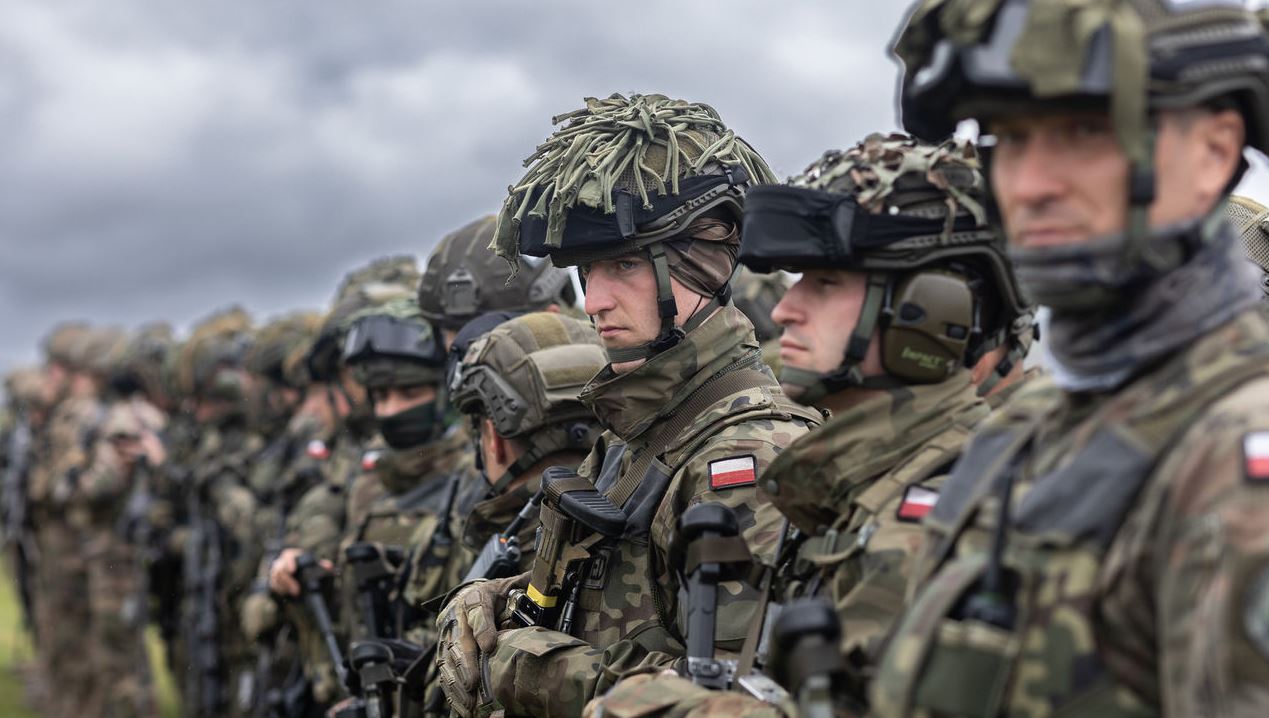
The IISS report also highlights the challenges of the European defense industry, orders for land systems are increasing, but investments in naval and aerospace systems remain limited. The large scale provision of aeronaval platforms will be critical if Europe wants to replace the American contribution in these sectors. Ivo H. Daalder, former United States ambassador to NATO, emphasizes that European leaders understand the challenge and are beginning to act, but decades of coordinated effort are needed. Today, the 30 NATO countries have approximately 1.5 million active military personnel. Without the United States, an additional 300.000 soldiers will be required to fill the gap. The absence of the United States will leave Europeans “blind”, losing:
1) Intelligence and command, AWACS, strategic intelligence collection, and battlefield surveillance.
2) Logistics and support capabilities, aerial refueling capabilities, strategic airlift, space capabilities.
3) Integrated air defense, which relies primarily on American technology and command.
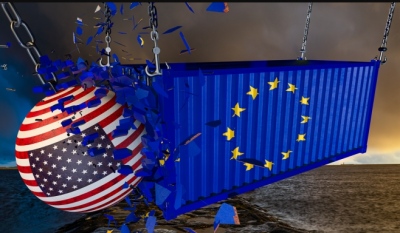
The greatest blow concerns nuclear deterrence, only France and the United Kingdom possess nuclear weapons, approximately 515 warheads, compared to approximately 5000 of the United States and Russia. Withdrawal will also endanger American bases in Europe, such as Ramstein in Germany, and will disrupt decades of intelligence sharing through NATO. European self sufficiency in military and defense matters will also increase risks for the American weapons market. United States arms sales to Europe surged sharply after Russia’s invasion of Ukraine, reaching historic highs of 117,9 billion dollars in 2024. In conclusion, a Europe without the United States in NATO, a “transatlantic divorce”, will be painful for all sides, with serious consequences for global security and the global economy.
www.bankingnews.gr



Σχόλια αναγνωστών