

A defense axis from Greenland to Patagonia at the heart of Trump's strategy.
The ambition of United States President Donald Trump to gain control of Greenland—a vast territory belonging to Denmark—undeniably possesses strategic advantages. At the same time, however, it is politically problematic and carries the risk of wasting valuable political capital that could be utilized for a much broader geostatistic goal. Analysts point out that a more efficient use of the American administration's limited political reserves over the next three years would be the formation of a defense axis of cooperation stretching from Greenland to Patagonia, aiming for the long-term shielding of the Western Hemisphere against Russian and Chinese missile threats.
The strategic value of Greenland
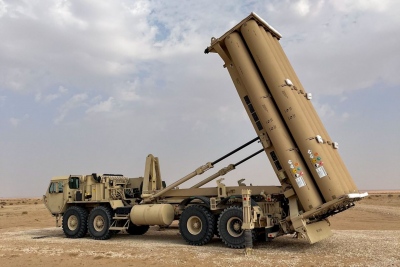
The military significance of Greenland for the defense of the United States—especially within the framework of the future national and allied missile defense program "Golden Dome," but also for deterring Russian-Chinese control of the Arctic—is considered indisputable. From a polar perspective of the Earth, Greenland constitutes an ideal location for the installation of long-range ground radars and missile interceptor systems. From there, the interception of Russian and, in some cases, Chinese Intercontinental Ballistic Missiles (ICBMs), as well as Submarine-Launched Ballistic Missiles (SLBMs), could be achieved before they cross the North Pole and enter Canadian or American territory.
Political obstacles and existing infrastructure
To date, both Denmark and the government of Greenland reject the possibility of selling or ceding the territory to the United States. However, the 1951 US–Denmark defense agreement already provides Washington with extensive capabilities for the development and expansion of defense infrastructure. Meanwhile, the former Thule Air Base—now known as the Pituffik Space Base—plays a critical role in early warning against Russian missile attacks and in maintaining American superiority in space.
The risk of a geopolitical crisis
Further pressure to acquire Greenland may trigger a severe diplomatic crisis. Analysts warn that such a development could even shake the cohesion of NATO. In an extreme scenario, a potential rupture could encourage Russia to escalate its aggression in Ukraine and subsequently turn against Poland and the Baltic states. At the same time, the formation of an informal European-Russian understanding cannot be ruled out, which Russia and China would exploit to increase pressure on the US and its allies.
The alternative strategy: Arc-shaped defense
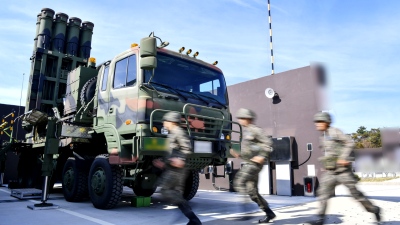
Instead of pursuing sovereign control, the US could seek the expansion of the "Golden Dome" program into a hemispheric defense system. In this context, Greenland would be integrated into a broader protection network in cooperation with key NATO allies, such as Denmark and the United Kingdom. Simultaneously, cooperation with the republics of Patagonia—Argentina and Chile—is considered of critical importance for the creation of early warning and missile interception bases capable of countering Chinese threats following trajectories through the South Pole.
The Chinese missile threat from the South
In May 2025, the US Defense Intelligence Agency (DIA) published a rare future assessment of Chinese and Russian nuclear threats against the United States. According to the report, by 2035 China may possess up to 60 Fractional Orbital Bombardment (FOBS) systems, which exploit trajectories via the South Pole, operating on the assumption that southern approaches to American targets are less protected. Beyond this, analysts point out an even more alarming factor: the rapid development of reusable Chinese Space Launch Vehicles (SLVs) by approximately 15 state and "commercial" companies, which are ultimately controlled by the Central Military Commission of the Communist Party of China and the People's Liberation Army.
New technologies, new risks
Some of these Chinese companies are designing rockets equivalent in size to SpaceX's Starship, capable of carrying payloads of up to 100 tons into low Earth orbit or functioning as space weapon platforms. The potential utilization of such systems for attacks with non-nuclear weapons and Hypersonic Glide Vehicles (HGVs) raises serious concerns, as it lowers the threshold for using strategic weapons and increases the risk of destabilization.
The role of Latin America and the Falklands
The analysis highlights the importance of involving Chile and Argentina in the development of robust early warning systems, as well as cooperation with the United Kingdom for corresponding installations in the Falkland Islands, which would offer broader coverage of the South Atlantic and parts of Africa. Strengthening "Patagonian" defense cooperation could simultaneously function as a trust-building tool between the United Kingdom and Argentina, facilitating both economic cooperation and stability in a historically sensitive region.
The broader geopolitical picture
According to the article, China seeks to expand its military and space presence in Africa, while recent joint naval exercises by China, Russia, and Iran with South Africa underscore the expansion of its geostrategic ambitions. The creation of a hemispheric defense framework against current and future Chinese missile threats, the analysis concludes, does not only concern the security of the United States and Europe, but also the overall stability of Latin America, preventing further Chinese penetration into critical sectors of defense and security.
www.bankingnews.gr










Σχόλια αναγνωστών