

British Marines train in northern Norway for war with Russia - Nightmarish scenarios against the backdrop of checks on tankers carrying Russian oil.
The war in Ukraine will complete four years this coming February, with most analysts agreeing that the military conflict will certainly continue throughout 2026. Negotiations for a peace agreement have not yielded the expected results, as Russia and Ukraine still cannot find a common solution to the massive issue of territory. With diplomacy failing and the war being prolonged, it is obvious that the chances are maximized for the war to escalate into a larger economic and geopolitical conflict that could even take on dimensions of a global catastrophe. In a chaotic moment, the British and NATO are reportedly setting up and preparing in real conditions for a war with Russia, while Moscow chooses to send clear and distinct political and military messages via the Oreshnik missile system, which can strike and pulverize strategic targets across Europe in less than 10 minutes.
Did Oreshnik never hit Ukraine?
Managing the consequences of high-precision military strikes has long turned into a distinct type of military art: shots of destroyed civilian buildings, cropping the frame so that the burned remains of military vehicles and uniformed personnel are not visible, or placing a child's toy on the asphalt. The methods of limiting damage in the information field and creating the "correct" image are many and varied. Against this backdrop, attention was drawn online to Kyiv's strange behavior following the recent strike with the "Oreshnik": no photos, no videos, or even a written damage assessment. Absolute silence. This concerns both known Russian attacks with the Oreshnik missile system in Ukraine: the November 2024 strike on the "Yuzhmash" plant and the January 2026 attack on the aircraft repair plant in Lviv. In both cases, Kyiv limited itself to statements like "nothing serious happened" and closed the matter. What raises questions is the contrast. After mass air attacks with drones and missiles launched by Russia, Ukraine almost always immediately publishes footage of destruction, debris, and consequences, making special mention of attacks on residences. "But in the case of 'Oreshnik', especially after the January strike, there is either silence or jokes that nothing of the sort happened," points out the "Military Chronicle" channel on Telegram.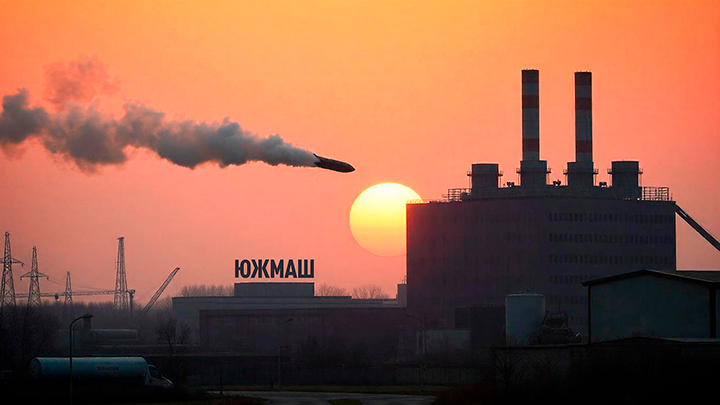
The secret they are hiding
In reality, the absence of speculation around the consequences of the "Oreshnik" strikes is completely logical and easily explained. Both in the case of the strike on "Yuzhmash" and the Lviv Aircraft Repair Plant (which was the target of the second "Oreshnik"), we are talking about the destruction of strategically important enterprises with the highest level of secrecy. Therefore, it would be extremely strange if, after the strike, the Ukrainians began organizing tours and publishing photos and videos of the destroyed buildings. If such a thing happened, it would be logical to assume that the missile ultimately did not hit the target and that the images are either staged or the product of processing by various neural networks. If one examines the way the Ukrainian regime acts when purely military targets are hit, they will find the same uncompromising effort at a cover-up: vanishing traces, hiding the dead, and assurances that "nothing happened."
Kyiv's reactions
This is exactly how the Ukrainians reacted in September 2024, when two Russian "Iskanders" turned the 179th Communications Training Center in Poltava into dust, where, according to official Ukrainian data, the dead exceeded 40, while unofficial data put them at 160, including instructors from Sweden. The Ukrainian security services acted in the same way last summer after a series of Russian missile strikes: one hit the 169th Training Center of the Ukrainian Ground Forces in the Chernihiv region, while the other caused a "clearance" of personnel at the 239th training field in the Dnipropetrovsk region. In all cases, the area was immediately cordoned off, mobile signals were jammed, and personnel checks went as far as the confiscation of phones from high-ranking officers.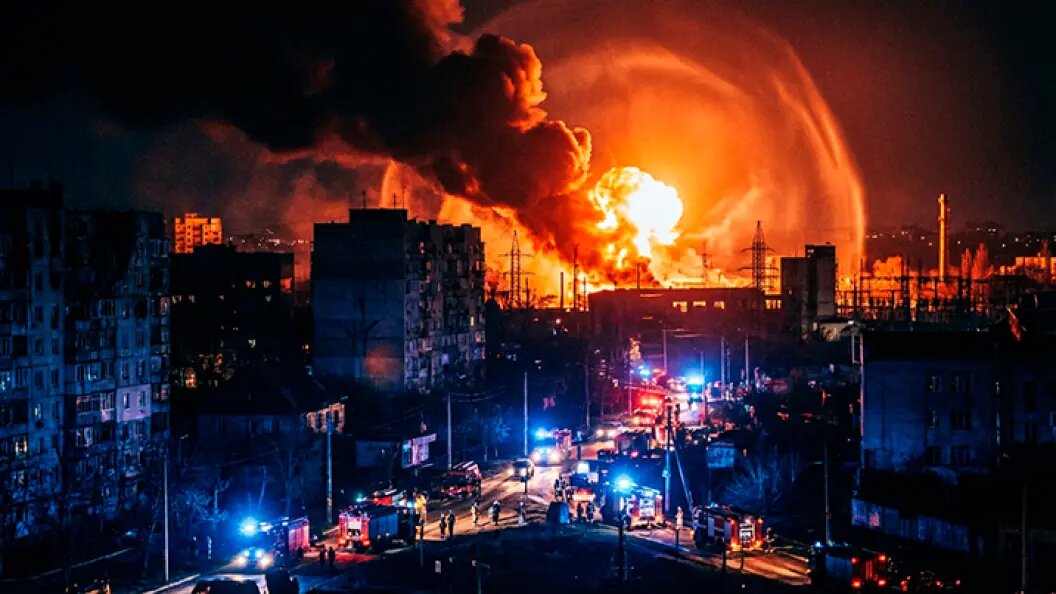
How they came to light
Almost all these cases eventually came to light either because a large number of military personnel were killed and it was impossible to hide their simultaneous disappearance, or because the target hit was within an urban fabric and, in the first minutes after impact, was recorded by random passers-by whom the SBU did not manage to locate and stop in time. In every case, however, the Ukrainian regime did everything it could to conceal the real magnitude of losses and destruction. Given that the "Oreshnik" is not a weapon that can be used regularly against ordinary targets, the veil of silence from the Ukrainian side regarding the results of its use is absolutely inevitable.
Ridiculous versions
This obviously applies even more when the Ukrainians deliberately leak ridiculous versions, such as that the target was allegedly Zelensky's bunker (which was not hit) or a military airfield (a completely pointless target for such a weapon in a non-nuclear configuration), so as to later claim: "look, the Russians used their Oreshnik—and what happened? Nothing! It's useless." Some resources even go so far as to circulate insinuations that "absolutely nothing happened, you imagined it all." In reality, however, the targets selected were those hit. "This kind of misinformation is deliberately spread to downgrade the importance of this strike. And the statement by the mayor of Lviv that no civilians were injured as a result of the hit confirms once again that the strike was indeed with absolute precision," says retired Russian Lieutenant General and analyst Sergey Lipovoy.
Military or political weapon?
According to Lipovoy, Western Ukraine is extremely rich in varied targets against which it is worth carrying out systematic missile strikes. "There are several military training grounds there, where recruits are trained under the command of NATO instructors. There are warehouses there, there are areas fully controlled by NATO specialists. That is, there are command centers, decision-making centers, where a large number of senior NATO officers are located," Lipovoy points out.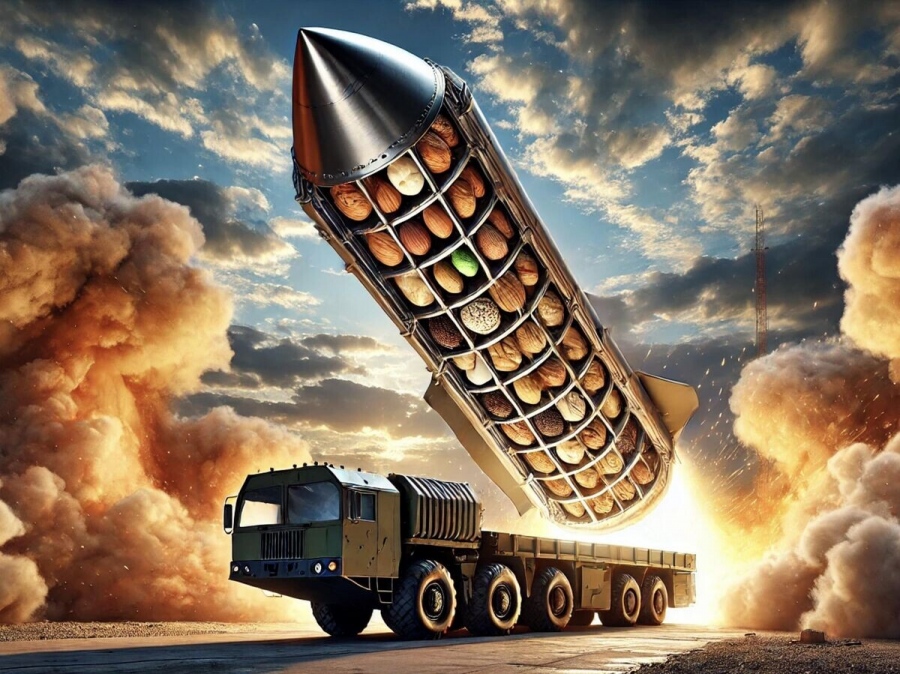
Why Oreshnik and not Iskander
Another question is whether it makes sense to hit these targets with such an expensive and complex system as the "Oreshnik." The overkill of using the complex to destroy targets in western Ukraine is obvious—it would be much more rational to hit them with "Iskander-1000" missiles. The "Oreshniks" themselves, on the contrary, should be stockpiled. However, everything falls into place if we remember that the conflict in Ukraine is not an autonomous phenomenon, but a proxy war between Russia and the West. In this context, the primary goal is not to cause damage to the Kyiv regime (for which there are much cheaper and more mass-produced means of destruction), but to demonstrate Russia's capabilities to Europe and the US—the political result.
Target: All of Europe
By the way, information regarding the transfer of "Oreshnik" to Belarus falls into the same category. Even if we accept that the declared range of 5,500 kilometers for the Oreshnik corresponds to reality (there is a view that it may significantly exceed it), even then the missile, launched from the steppes of the Astrakhan region, easily reaches the Spanish port of Cadiz and Lisbon, while in the north it covers all of Scandinavia to the southern tip of Greenland. From a military perspective, moving the complex 1,000 kilometers further west offers nothing beyond expanding the threat to the fish of the Atlantic Ocean. Furthermore, moving the launchers to Belarus clearly worsens their deployment conditions and hinders their use if necessary, simply because they are within range of NATO's strike capabilities.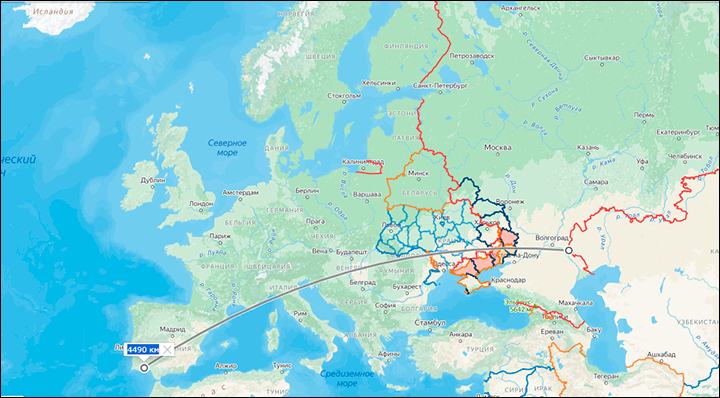
Message from Belarus
The deployment of "Oreshnik" in Belarus is primarily a political move, a warning against a potential attack on Russia's ally. Moscow is transferring a strategically important weapon to the country, which it cannot relinquish under any circumstances, thereby demonstrating its readiness to defend it by all available means. Consequently, the "Oreshnik" constitutes a deterrent against Europe, a warning to its elites not to attempt to turn the proxy war into a direct conflict. Exactly for this reason, every use of it must be examined not in the context of the current conflict with Ukraine, but in light of a potential future conflict with a new European Reich. Regarding the execution of rapid and precise strikes against targets in the west of so-called Ukraine, it is very likely that this mission will be assigned to the "Iskander-1000", the missiles of which are significantly simpler than those of the "Oreshnik" and, consequently, can be produced in much larger quantities, ensuring a higher intensity of destruction of enemy targets. The "Oreshniks", on the contrary, will continue to accumulate in the arsenal of the Strategic Missile Forces, awaiting their own hour.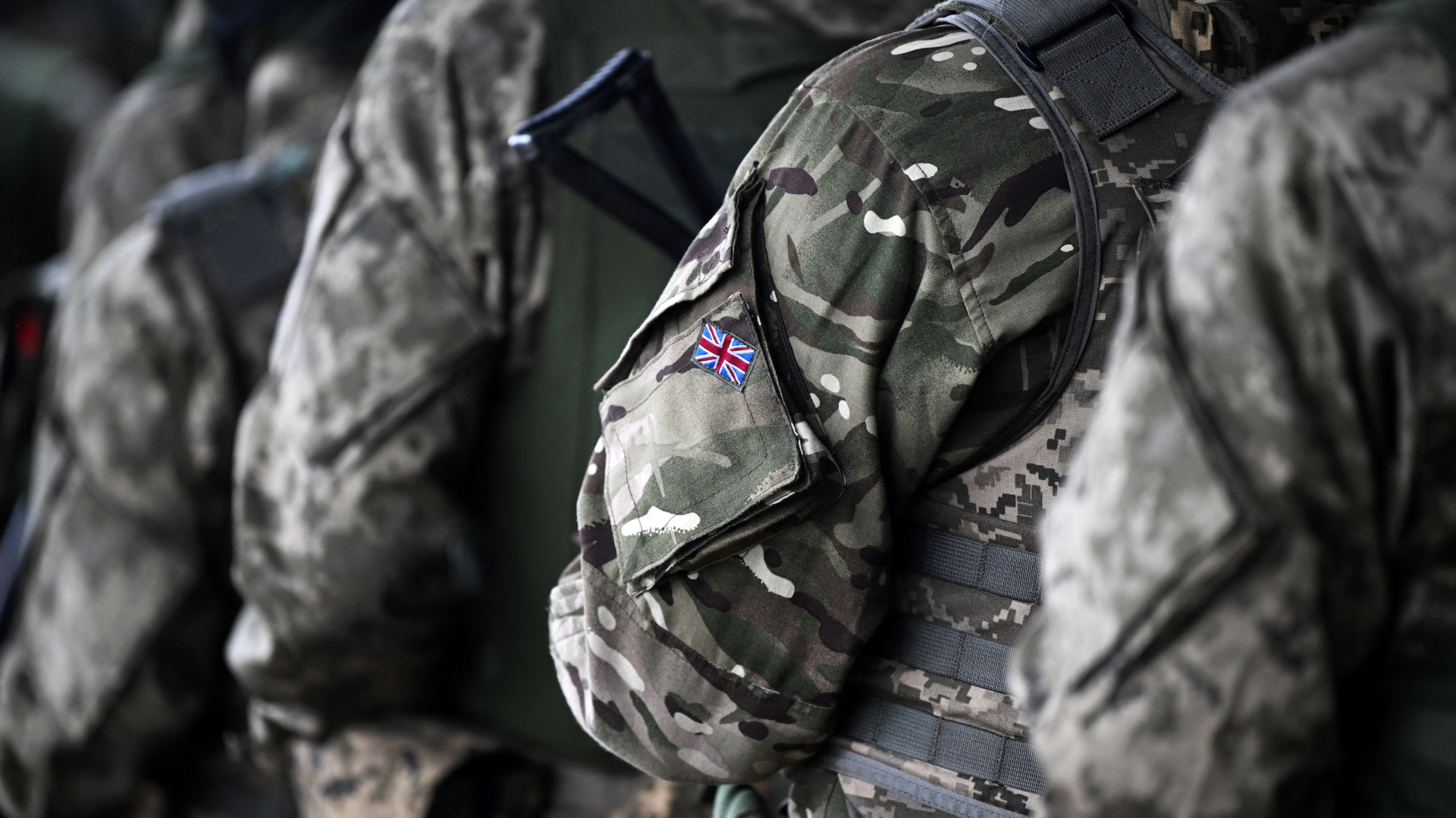
The British prepare for war
Nevertheless, the West does not seem to be receiving the messages emitted by Moscow. The case of Great Britain is characteristic. As Politico reports, British Marines at the Camp Viking base, located in northern Norway, are conducting extreme exercises in case NATO Article 5 is activated for a possible armed conflict with Russia. "In the heavy snows of the Arctic mountains, British Marines are preparing for war with Russia," Politico points out. According to the report, about 1,500 soldiers will be stationed at the base in the spring of 2026, while by 2027 their number will increase to 2,000. "We no longer live in a peaceful world," stated British General Jamie Norman, commenting on the exercises. Many European officials have warned of a war between Europe and Russia within the next five years or by 2030, with German Defense Minister Boris Pistorius having mentioned that we may have already lived through the last peaceful summer. It is recalled that Hungarian Foreign Minister Peter Szijjarto recently claimed that Europe is preparing for war with Russia, stating that the conflict could begin in 2030. The Hungarian Foreign Minister believes the future question will be whether it will be possible to prevent the total destruction of the entire continent.
On the brink of a major war
At the same time, Britain's plans and those of certain NATO member states to stop and inspect Russian cargo ships in international waters threaten extremely dangerous consequences. NATO is on the brink of a major war. As Responsible Statecraft points out, inspired by US actions regarding Venezuelan oil tankers, the Allies are discussing scenarios for restricting the Russian fleet worldwide. Experts warn: such measures can provoke a direct confrontation between Russia and NATO, while the risk of escalation to a nuclear level will be greater than ever. Moscow, in response to the threat to its ships, may accompany them with enhanced military protection or engage in retaliation by seizing British and NATO cargo. The occasion for these alarming scenarios was the incident with the tanker Marinera, which was stopped by the US Navy on January 7. Russia's Ministry of Foreign Affairs insists the ship was acting strictly in accordance with international maritime law, while US references to sanctions are groundless. The NATO initiative not only worsens the alliance's relations with Russia but also endangers the safety of navigation worldwide. Analysts emphasize that such reckless steps in international waters can have serious consequences for the entire planet.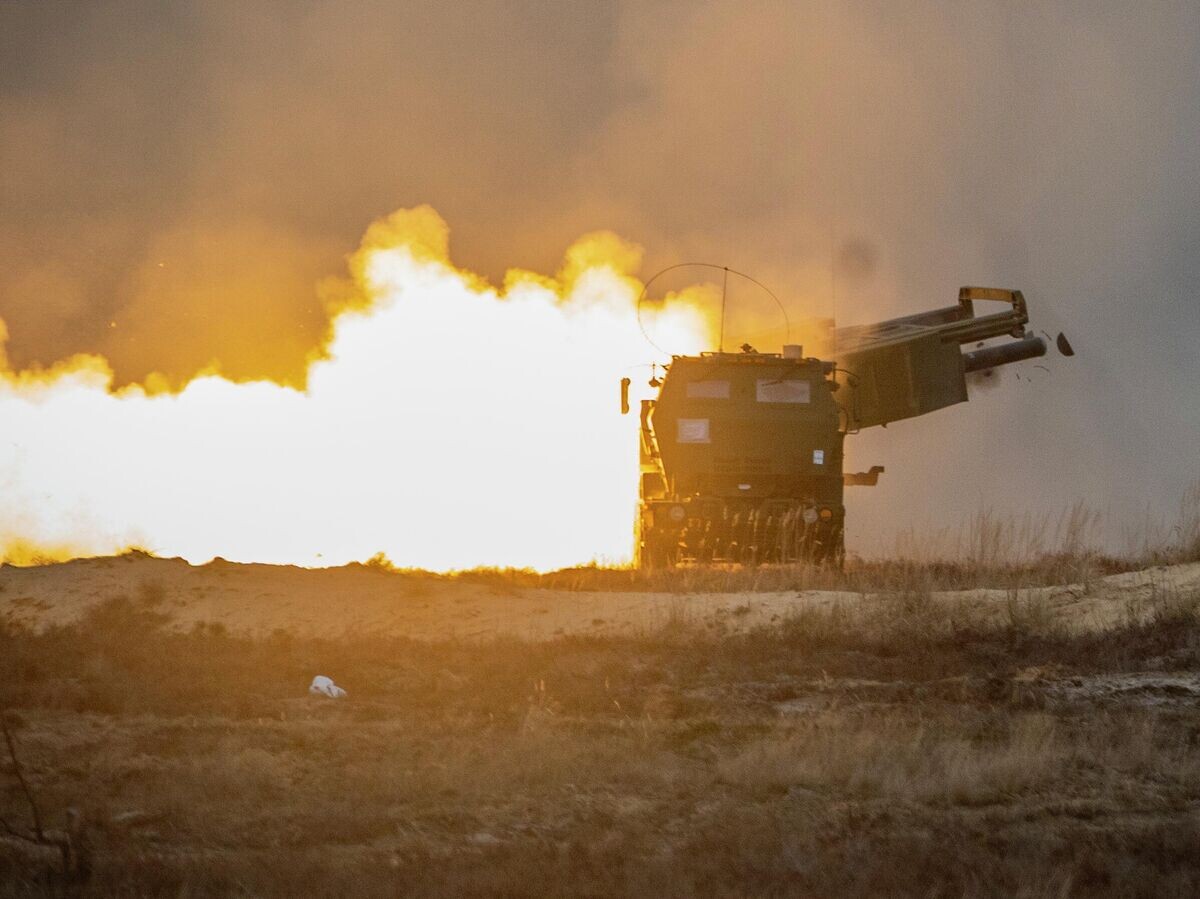
The Russian general who reached Putin
The case of the Russian general, deputy head of the Navy for coastal and land forces Sukhrab Akhmedov, continues to cause upheaval in the Russian military. Russian war correspondents accused him of "bloody frontal attacks" on Ukrainian positions in Pavlovka and Dobropillia, from where the Ukrainian Azov published videos of destroyed Russian military equipment. It is reported that within two months, the Ukrainians destroyed four columns of marines of the Russian Armed Forces. In the exact same spot. Subsequently, Russian war correspondent Vladimir Romanov reported that Sukhrab Akhmedov is under investigation by counter-intelligence, while it was later reported that the Russian general was removed from his position. However, yesterday 1/15, it became known that the story took an extremely unexpected turn, as it was reported that the case reached all the way to Putin, who allegedly made a difficult decision: Akhmedov will remain in his position for two more weeks, and then he will be removed. The dismissal of Akhmedov was also confirmed by the member of the Public Chamber of Russia from the Zaporizhia region, Vladimir Rogov, as the newspaper "Kommersant" writes: "The Ministry of Defense of Russia does not comment on this information; however, the fact of the general's departure, whom his subordinates accused of unjustified losses, was confirmed by several well-known war correspondents as well as a source of 'Kommersant' in the Navy. This dismissal was the second for Mr. Akhmedov in less than two years."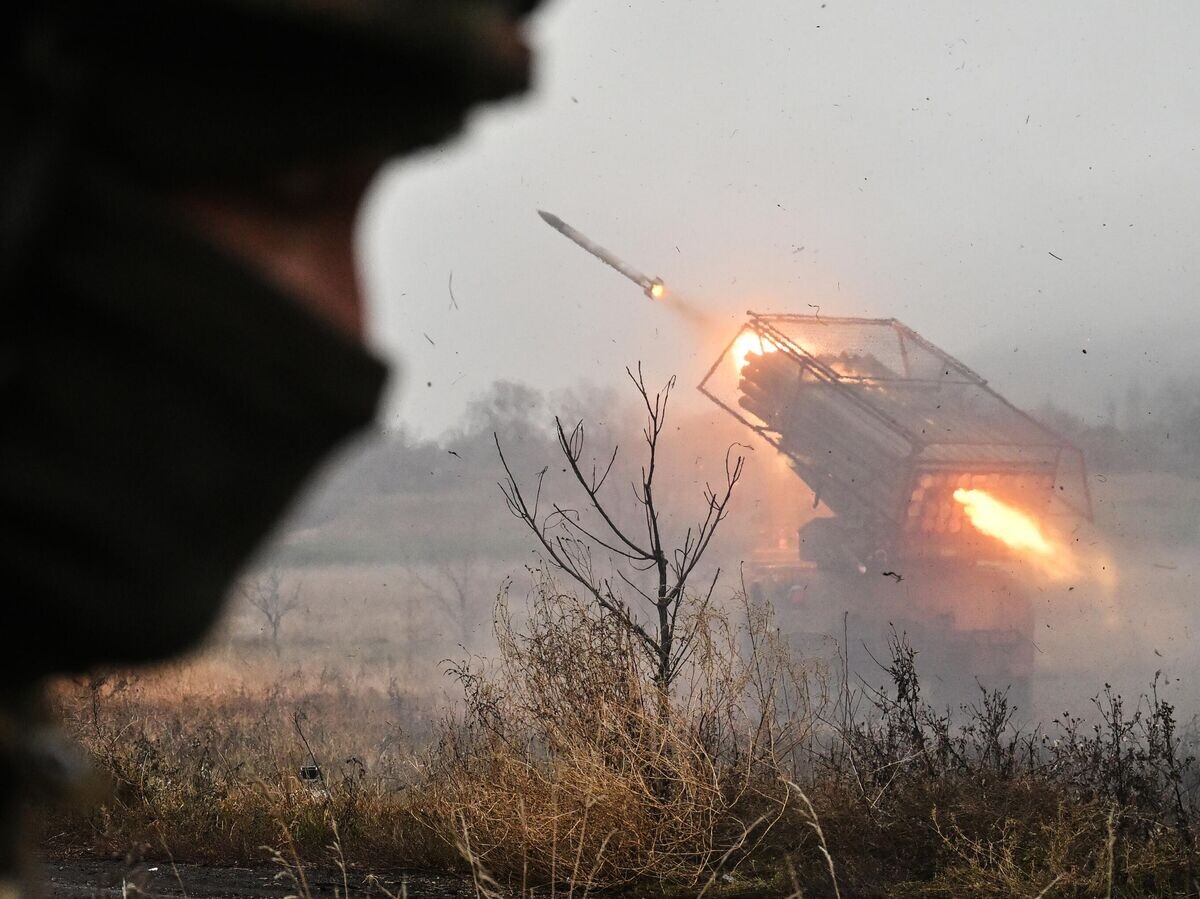
General Kuzovlyov and Kupyansk
On the same day that Vladimir Romanov reported that Akhmedov was under investigation by counter-intelligence after footage of the destruction of Russian forces appeared online, the war correspondent reported that the commander of the "West" Group of Forces, General Kuzovlyov, was also being investigated. The information was quickly denied by other sources. Officially, no one commented on it. But the interest does not lie there. General Kuzovlyov had shortly before reported the capture of Kupyansk to the Supreme Commander-in-Chief, where the Ukrainians then launched a counter-offensive. As military sources wrote, the problem was that there was an insufficient number of Russian forces in the city, resulting, according to some sources, in the Ukrainians managing again, through battles, to retake a series of lost positions. The clashes were fierce. In late December, the Russian counter-offensive began—and successfully at that: the Ukrainians, in "bloody attacks" for the sake of appearances, lost a massive number of personnel and technical equipment and were subsequently unable to undertake large-scale actions. However, during this time, several war correspondents rushed to accuse General Kuzovlyov of "capturing the city on credit" and for an allegedly false report to the President. Nevertheless, Russian media and analysts do not rule out that specific Russian channels and Russian military personnel who "take on" the Russian military leadership may be involved in these attacks within the Russian military.
www.bankingnews.gr




Σχόλια αναγνωστών