

Hot summer? Greece on a collision course with Turkey.
Geopolitical developments are racing forward globally, and our country, along with its "unruly" neighbor, could not remain unaffected. Specifically, 2026 may prove to be a pivotal year for escalation in the Eastern Mediterranean, as competing military-political blocs take on an increasingly clear form, warn analysts in Russian media. In late December, Israel, Greece, and Cyprus, during a summit in South Jerusalem, signed a series of agreements signaling the further deepening of their political, diplomatic, and military-technical cooperation.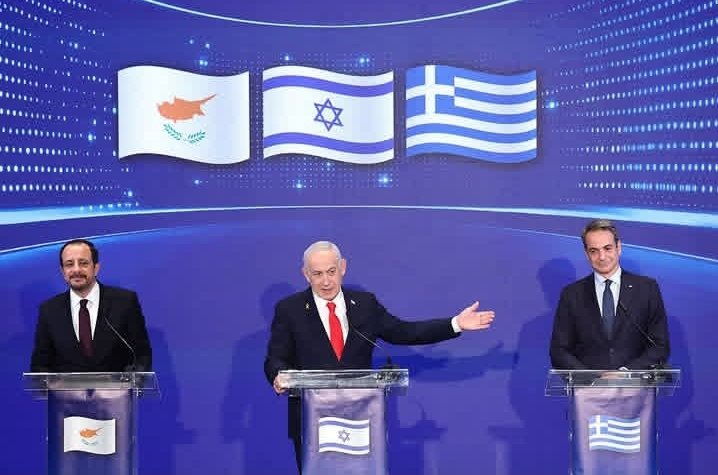
The strengthening of this tripartite alliance is met with intense concern by Turkey and Northern Cyprus, where expansionist ambitions in the Eastern Mediterranean are directly linked to a more favorable demarcation of Exclusive Economic Zones and continental shelves rich in hydrocarbons. This energy stake constitutes the core of the ongoing power confrontation.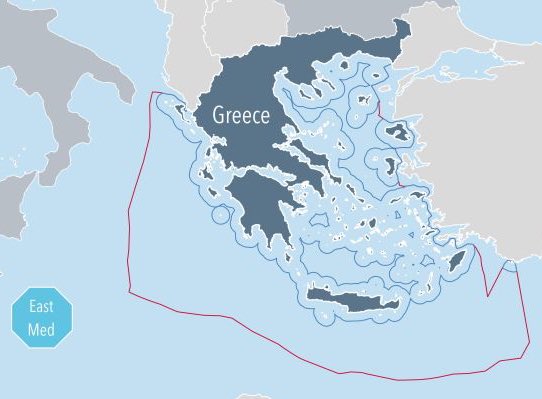
New Turkish weapons and military drills change the rules in the Aegean
In this context, the project by the Turkish company HAVELSAN to create a vessel traffic management system in the Eastern Mediterranean (GTH) is expected to be completed within 2026. The system is based on a maritime center and three observation stations on the territory of the self-proclaimed "Turkish Republic of Northern Cyprus," which is internationally recognized only by Ankara. This so-called "digital shield" of the Eastern Mediterranean, with an obvious dual political and military function, will be controlled through the existing Mersin Maritime Center in Mersin.
HAVELSAN, one of the largest high-tech companies in Turkey, is a subsidiary of the Turkish Armed Forces Foundation (TSKGV), a fact that lends significant weight to the project. These developments cause intense reflection in Athens and "Greek" Nicosia, where the fear prevails that the Blue Sea doctrine translates into a practical challenge to the existing balance in the Aegean and the Eastern Mediterranean. Turkey is systematically investing in new ships and deterrence systems that can influence the military balance. A characteristic example is the BALKIN ÇAF-S anti-ship ammunition developed by MKE, which, according to Turkish media, has successfully completed sea trials, paving the way for mass production.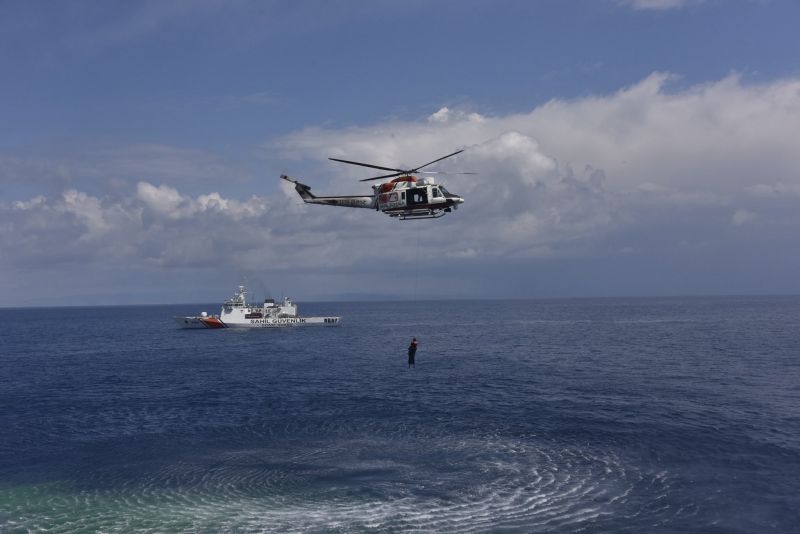
According to Greek analyses, BALKIN ammunition creates particle clouds that disorient radars and guided missiles, increasing the survivability of frigates and corvettes in high-risk areas such as the Aegean and the Eastern Mediterranean. At the same time, they reduce Turkey's dependence on foreign technologies and strengthen the export capabilities of its defense industry. The Blue Homeland doctrine, into which Israel has also been indirectly linked in recent years, is considered by Ankara's opponents as a primary factor in increasing tension. Particular importance is attributed to the continuous conduct of large-scale exercises. According to Yeni Safak, in the first half of 2025 alone, 83 exercises were held, including Mavi Vatan, Ephesus-2025, Anatolian Eagle, and Sea Wolf.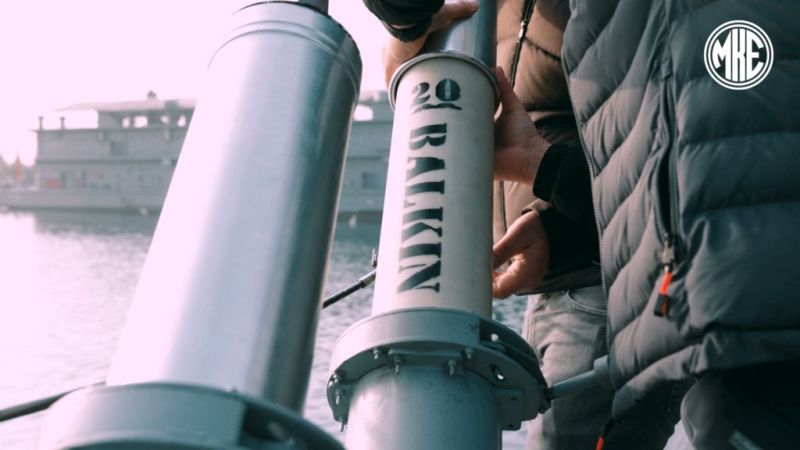
Is a hot summer coming to the Aegean?
Meanwhile, Rear Admiral Kenan Kaan Turkkan, head of the Turkish fleet, stated that the Blue Homeland – 2025 exercises aim to increase operational readiness and improve decision-making capabilities in a multi-threat environment. These drills involved 90 ships, dozens of aircraft, and more than 20,000 military personnel. The passage of Turkish units through ports in Northern Cyprus provoked official protests from Athens and Nicosia. Despite the Greek Prime Minister's contacts with President Recep Tayyip Erdogan during the 2023–2024 period, there has been no substantial progress on long-standing open issues.
The recent mobilization exercises Yildirim – 2025 reinforce estimates that Turkey is preparing for crisis scenarios, while unilateral actions in disputed maritime zones exacerbate the climate of tension. Turkey's failure to sign the UN Convention on the Law of the Sea remains a major thorn, with disputes over territorial waters and rocky islets, such as Imia, acting as a permanent flashpoint. Meanwhile, Greek media speak of an attempt at "geopolitical encirclement" through Northern Cyprus.
In this fragile environment, a potential military escalation in the Aegean and south of Crete threatens not only Greek-Turkish relations but also international navigation on a strategic route connecting the Black Sea to the Mediterranean via the Bosphorus. Maintaining regional balances thus becomes a critical requirement in a period of generalized geopolitical volatility.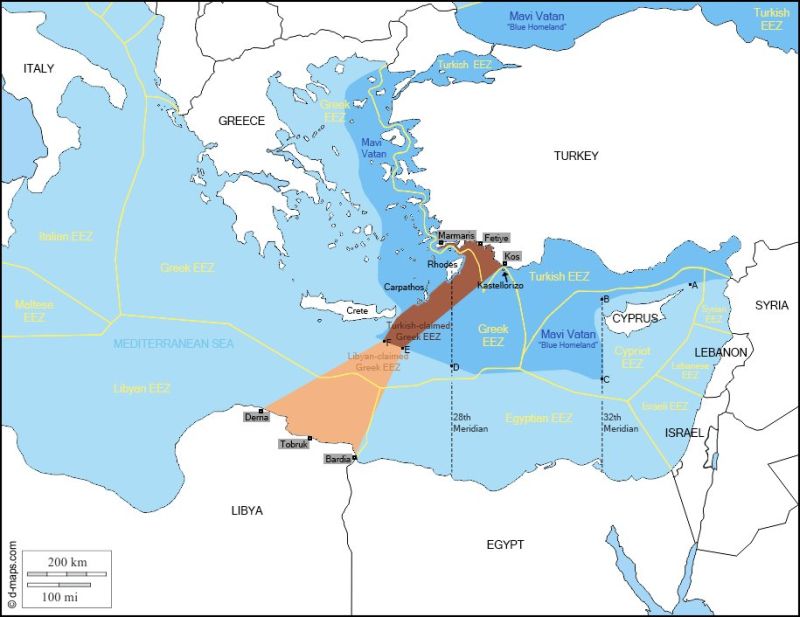
www.bankingnews.gr







Σχόλια αναγνωστών