

The issue of Ali Khamenei's succession is of intense concern to Iran due to his age.
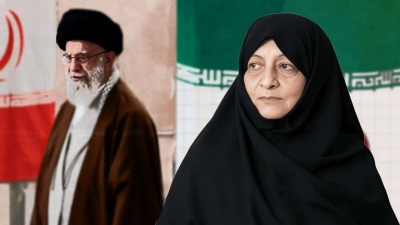
For over 40 years, the primary symbol of the Islamic regime in Iran has remained the spiritual leader—the ayatollah. For the last 36 years, this position has been held by Ali Khamenei. During the 12-day war with Israel in June 2025, his potential neutralization was publicly discussed, while amidst the recent mass protests that shook Iran, he became the face that embodies power for the opposition and the object of harsh criticism from US President Donald Trump. Reports regularly appear in the press regarding plans for Khamenei's removal from Iran in the event of further escalation of tension in the country, while the son of the Shah overthrown in 1979, Crown Prince Reza Pahlavi, speaks of the imminent fall of the "ayatollah regime" and his return. Despite external pressures from the US and Israel, and despite mass anti-government protests, Khamenei—as many Western media outlets critical of him argue—continues to maintain control in Iran, with his regime remaining steadfast and the opposition failing to convince, a fact that the American president also implicitly accepted.
Who is Khamenei?
Ayatollah Ali Khamenei holds the position of rahbar—the supreme leader of Iran, essentially the head of state. It is simultaneously a political and supreme spiritual position: the rahbar stands above all echelons of power and determines the fundamental decisions in the country. According to the Constitution of Iran, the supreme leader:
-
Controls the legislative, executive, and judicial branches.
-
Determines the general policy of the state, including foreign and defense policy.
-
Is the supreme commander of the Armed Forces of Iran.
-
Issues fatwas (decisions) on matters of Muslim law.
-
Plays a decisive role in personnel matters, including the Guardian Council and the Islamic Revolutionary Guard Corps.
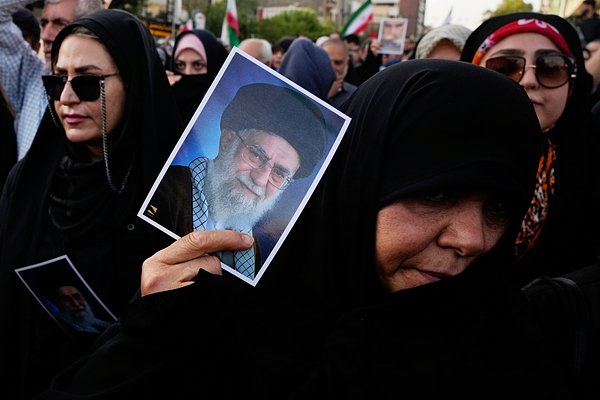
No appointments
As stated by Grigory Lukyanov, a research fellow at the Center for Arabic and Islamic Studies and associate dean at the State Academic University for the Humanities (GAUGN), the rahbar can practically influence any appointment in the executive branch bodies. "The position of the rahbar is not symbolic at all. No appointment can take place without his decision—neither in the political executive nor in the security sector," says Grigory Lukyanov. Ali Khamenei has led the Islamic Republic of Iran since 1989. Before him, the position of rahbar was held by Ayatollah Ruhollah Khomeini—the leader of the 1979 Revolution.
Who Khamenei is
Supreme Leader Ali Khamenei was born on April 19, 1939, in Mashhad, one of the holy Shia cities in eastern Iran. He is considered a descendant of the prophet Muhammad and is often referred to as Azeri. The Khamenei family was linked to the clergy. His grandfather was a well-known religious leader in Iranian Azerbaijan and Iraq. His father served as a teacher in a madrasa and later in the ulema of Mashhad. Their life was humble. "My father was a well-known theologian, but he lived ascetically. Our life was difficult. I remember many times we did not have dinner," Ali Khamenei has claimed. He studied at the Shia theological academy of Mashhad and continued at schools in Najaf and Qom, where he met Ayatollah Khomeini, his mentor and political guide.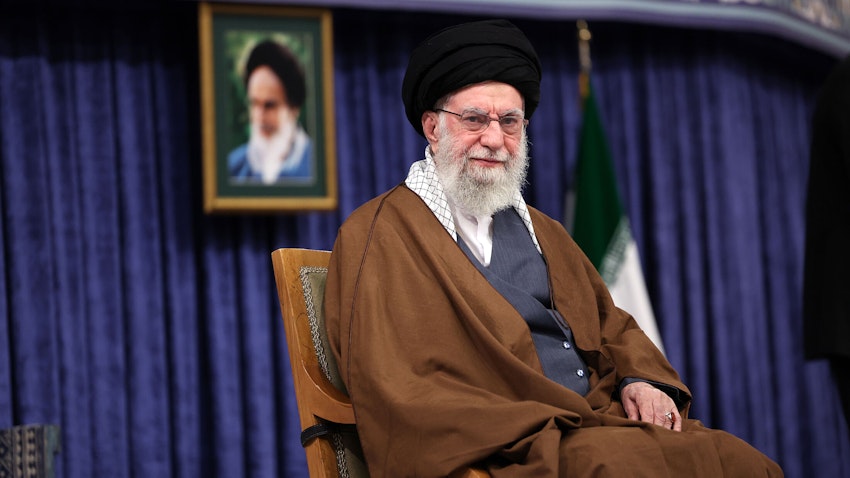
How his political career began
In the 1960s, Khamenei participated in the Islamist movement against Shah Mohammad Reza Pahlavi and was repeatedly arrested. After the 1979 Revolution, he was appointed Friday prayer imam, a position that combined religious and political influence. He subsequently became a member of the Majlis and in 1981 was elected president with 97% of the vote. During his presidency, the Iran-Iraq war (1980-1988) occurred, and repressions against the Shah's supporters increased. During this period, the Revolutionary Guard Corps, initially considered a revolutionary body, was also strengthened. After Khomeini's death in 1989, Khamenei was elected supreme leader by the Assembly of Experts. The election was not universal; 60 of the 74 members voted in his favor. Khamenei focused on strategy and administration, establishing the principle of the "strategy of patience" in foreign policy: avoiding battle when he cannot win and avoiding having battle imposed on unfavorable terms.
The relationship with Israel
Khamenei characterizes Israel as a "Zionist state" and considers it a threat to the Middle East. He has called it an "ugly growth" and the "cancer of the Middle East." In some cases, he stated that the goal of his regime is the neutralization of Israel, while claiming he is not against Jews as a people. He has questioned the Holocaust. In Israel, they call him a "modern Hitler." Defense Minister Israel Katz stated that Ali Khamenei "should not exist."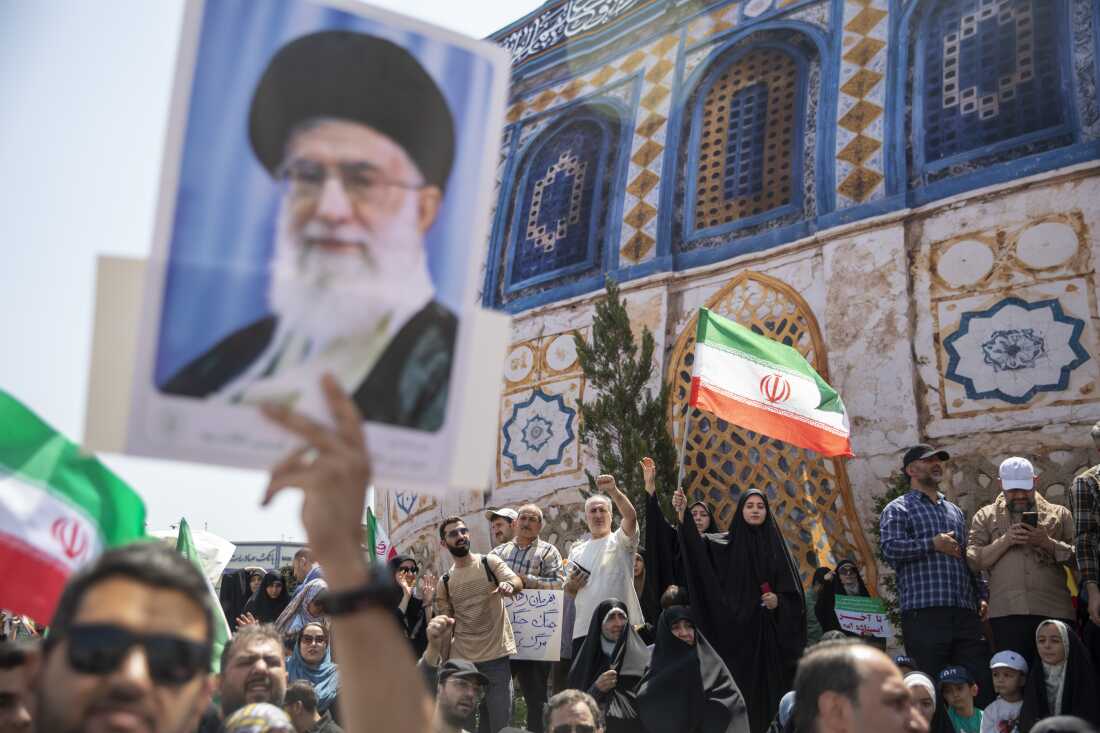
What the Americans and Trump say
For the White House, Khamenei embodies the Islamic regime. During the 12-day war, Donald Trump stated that he did not plan to neutralize him and "saved him from a terrible death." However, amidst protests, Senator Lindsey Graham publicly called for the assassination of Khamenei and other regime officials, labeling him a "modern Hitler" and a "religious Nazi."
What will happen after the death of the supreme leader?
During the Iran-Israel conflict in 2025, Israeli authorities did not rule out the neutralization of the rahbar. The discussion about a successor is timely due to Khamenei's age (he turns 87 this year). The New York Times had reported on possible candidate successors whom Khamenei may have designated to ensure a smooth transition. Grigory Lukyanov points out that electing a new rahbar is difficult—in the history of the Islamic Republic, it has happened only once. Nevertheless, the system is organized to avoid a power vacuum. The regime's mechanisms limit risks and threats of destabilization—whether in times of peace or war. Khamenei had delegated military actions to generals, expanding decision-making autonomy. The candidate successors remain uncertain, with a likely agreement within the elites that will become known only after a decision by the Assembly of Experts. "The rahbar is elected by the Assembly of Experts, a small, closed, and non-public community," argues Lukyanov.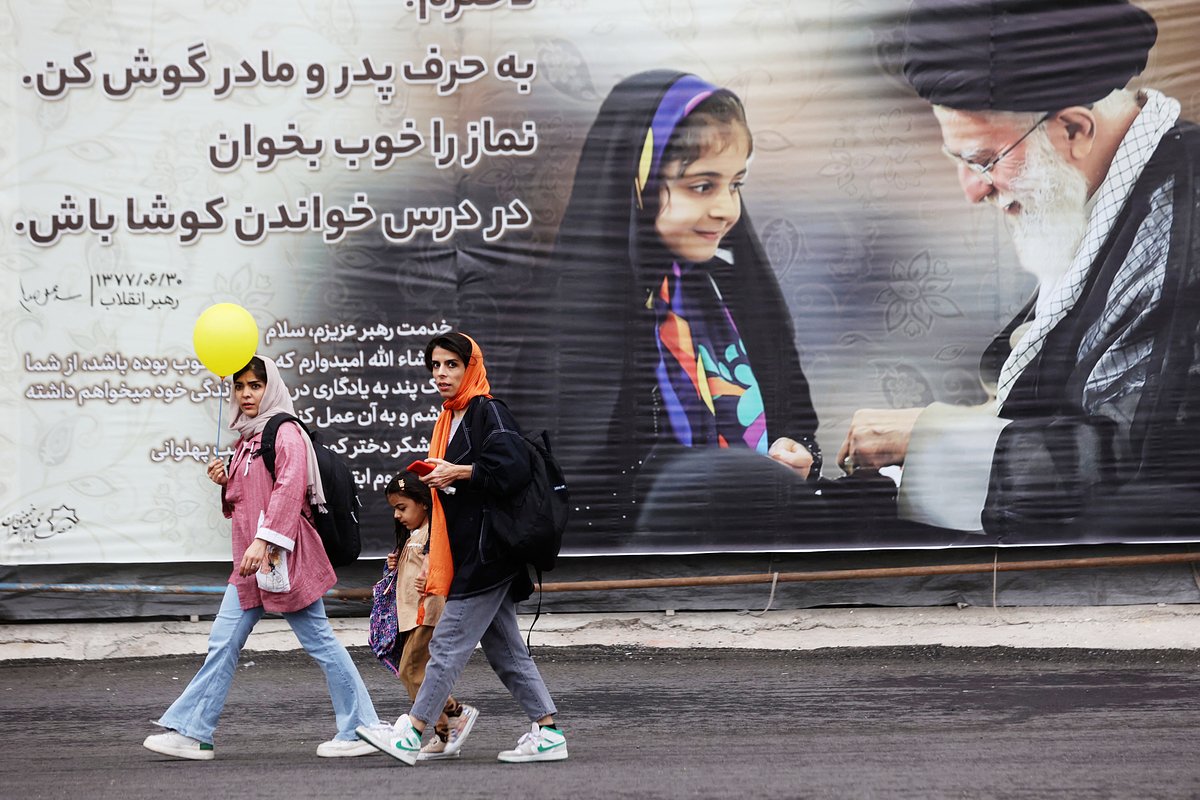
How the Islamic regime in Iran works
The political system of Iran, formed after the 1979 Islamic Revolution, combines theocratic and democratic elements. At the base of the regime lies the principle of velayat-e faqih, according to which the head of state (rahbar or supreme leader of Iran) is the most influential faqih—a Shia theologian and expert in Islamic law. He controls all levels of power and exercises supervision (velayat) over the state. Near the rahbar operates a consultative body—the Expediency Discernment Council. This body is appointed by the supreme leader for five years. The Council helps the rahbar resolve contradictions between branches of power. Additionally, the Islamic Revolutionary Guard Corps (IRGC)—the most loyal and well-equipped branch of the armed forces—reports to the head of state, "protecting the Islamic Revolution and its achievements," combining functions of the army, police, and intelligence services. The number of IRGC members today reaches 190,000.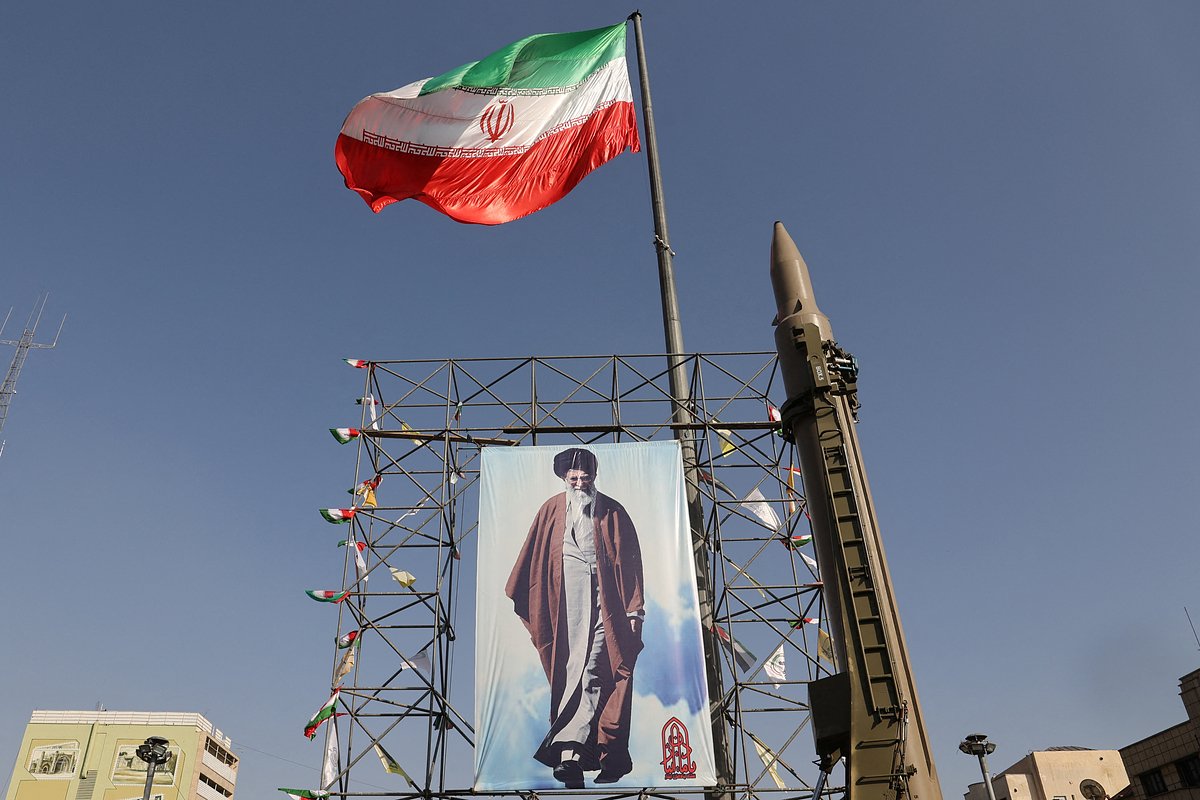
The second person in the state, directing the executive power, is the president. In function, he corresponds to a prime minister but is accountable to the rahbar. The president leads the government and the Supreme National Security Council, is responsible for state planning, the approval and execution of the state budget, and signs international agreements. He is elected for four years by universal suffrage. Finally, in Iran, there is the parliament (Islamic Consultative Assembly, Majlis). It consists of 290 deputies elected in elections for four years. Five seats are dedicated to officially recognized religious minorities—Jews, Zoroastrians, and Christians. The deputies propose legislation, ratify government members, ratify international agreements, and oversee the executive and judicial branches, while they can request the president's resignation.
At the same time, the parliament's powers are limited by the Guardian Council. The body ratifies bills and ensures that deputies' initiatives comply with the constitution and the laws of Islam. It consists of 12 members: six faqihs appointed by the supreme leader and six jurists elected by the deputies upon the proposal of the head of the Judiciary and ratified by the rahbar. Even the president of Iran is merely the second person: he leads the government and is answerable to the rahbar.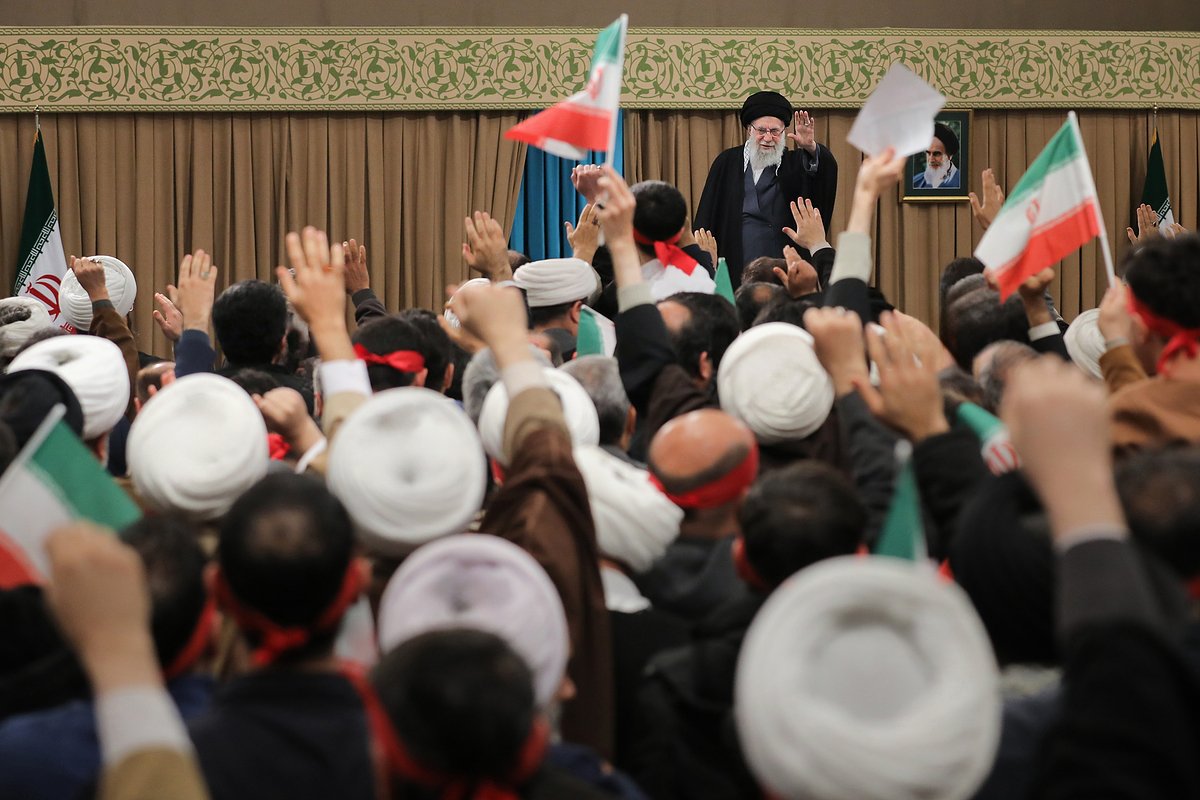
www.bankingnews.gr



Σχόλια αναγνωστών