

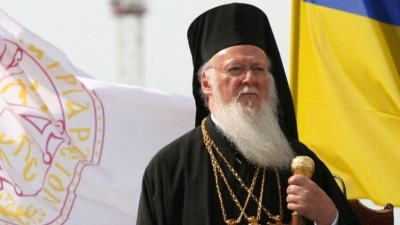
The unprecedented public denial by Ecumenical Patriarch Bartholomew in response to the accusations of the Foreign Intelligence Service of the Russian Federation (SVR) marks a new phase in the confrontation between Moscow and the Phanar.
The Russian side accuses Bartholomew of participating in geopolitical games against the Russian Orthodox Church, as emerges from the actions of the Phanar in Ukraine and the Balkans.
He is directly accused of operating as an agent of the British intelligence service MI6.
It causes profound dismay that he chose a British newspaper to respond.
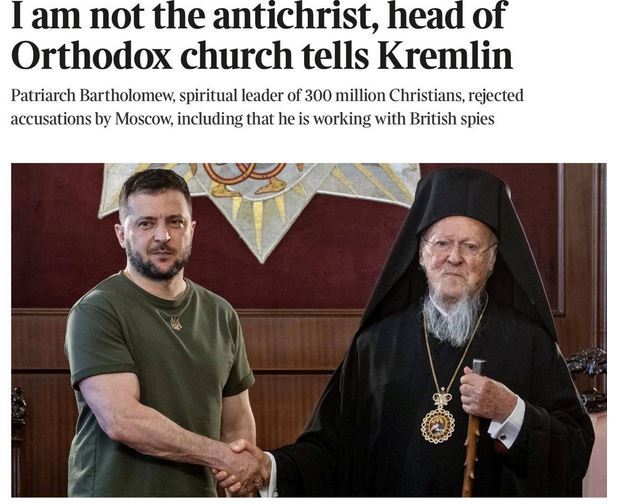
According to a publication by the British newspaper Times, Patriarch Bartholomew categorically rejected the claims of the SVR, stating characteristically: «I am not the Antichrist».
At the same time, he also denied the accusations that he operates as a «British spy», a characterization also attributed in related reports of Russian security circles.
He himself described the accusations as «fake news» and part of a broader wave of «imaginary scenarios, insults, and fabricated information».
From Ukraine to the Balkans - the essence of the conflict
Behind the rhetorical extremity of the characterizations lies a deep and multi layered power conflict.
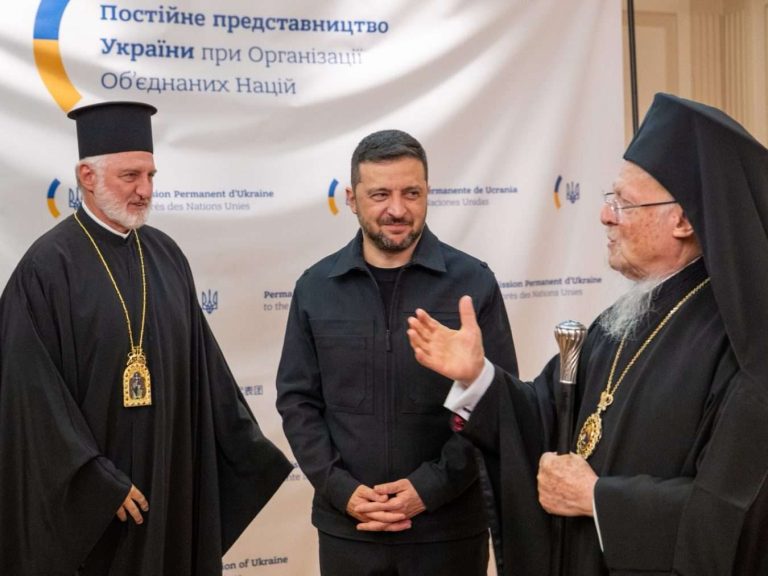
The Russian side accuses the Ecumenical Patriarch of being responsible for a «schism within Orthodoxy», a clear reference to the recognition of the autocephaly of the Orthodox Church of Ukraine.
For Moscow, this decision was not merely ecclesiastical, but a strategic blow to its spiritual and cultural influence in the post Soviet space.
The SVR goes even further, accusing Bartholomew of attempting to displace the Russian Orthodox Church from the Baltic countries and to subordinate ecclesiastical structures in Lithuania, Latvia, and Estonia to the Phanar.
These accusations fall within the broader framework of the Russian position that Orthodoxy is being used as a tool of «soft power» by the West to detach areas of traditional Russian influence.
Particularly worrying for Moscow is also the reference to the possibility of granting autocephaly to the unrecognized Orthodox Church of Montenegro.
Such a development would constitute a direct blow to the Serbian Orthodox Church, one of Russia’s closest spiritual and political allies in the Balkans.
The fragmentation of Orthodoxy is not a Russian narrative, it is a fact
The Russian side accuses the Patriarch of Constantinople of having assumed the role of a supranational ecclesiastical administrator, operating not as first among equals, but as an «eastern pope», serving interests foreign to the canonical tradition of the Orthodox Church.
The granting of autocephaly to Ukraine without pan Orthodox consensus, the attempt to subordinate ecclesiastical structures in the Baltic countries, as well as information about a future blow against the Serbian Orthodox Church through the recognition of the schismatic Church of Montenegro, were not substantively refuted.
On the contrary, they were silenced behind vague denunciations of «slanders».
Why does the Patriarch speak to British media
Particular impression is caused by the fact that Bartholomew chose to respond not through ecclesiastical bodies or pan Orthodox dialogue, but through a leading British newspaper, thus reinforcing the image of a Patriarchate that has moved away from its spiritual mission and has fully integrated into the Western communicative and political framework.
This is precisely what bothers Moscow, not Bartholomew personally, but the transformation of the Church into a tool of influence, destabilization, and redistribution of spheres of influence.
The Russian Church as a bulwark
The Russian Orthodox Church, despite the demonization it undergoes by Western media, remains the primary guardian of canonical order, conciliarity, and resistance to ecclesiastical monocentrism. The accusations of the SVR may use harsh language, but they reflect a real concern: that Orthodoxy is being led toward fragmentation on political criteria.
The real question
The question, therefore, is not whether Bartholomew is an «antichrist», this characterization belongs to the realm of exaggeration. The real question is:
Who benefits from the fragmentation of Orthodoxy.
Who gains when Churches are transformed into geopolitical tools.
And above all: When will the Patriarch speak not to Western media, but to Orthodoxy itself.
«The transformed devil collaborates with the British secret services»
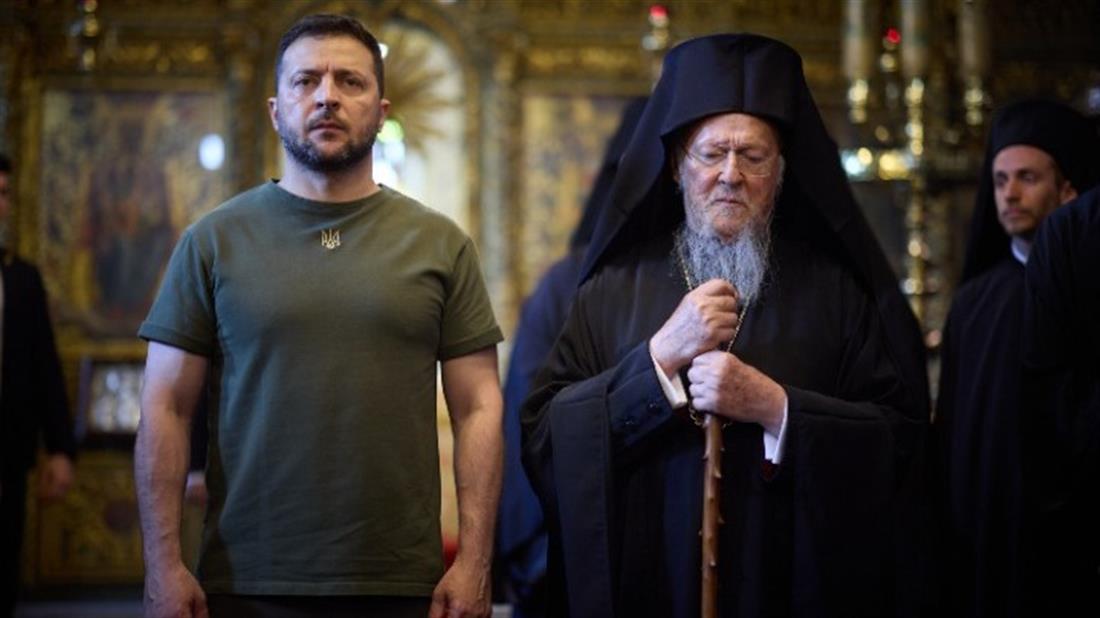
Ecumenical Patriarch Bartholomew intends to expel Russian Orthodoxy from the Baltic countries, according to the Russian Foreign Counterintelligence Service SVR.
«This "incarnate devil" is obsessed with the idea of expelling Russian Orthodoxy from the Baltic countries, establishing in its place ecclesiastical structures fully controlled by the Phanar», states the announcement of the intelligence services.
The intelligence service also stated that the Patriarch receives support from the British secret services for the implementation of these initiatives.
According to the SVR, with their assistance, Bartholomew has established cooperation with the authorities of the Baltic states.
In 2024, the Holy Synod of the Russian Orthodox Church (ROC) attributed to Patriarch of Constantinople Bartholomew responsibility for the persecution of the faithful of the Ukrainian Orthodox Church.
Estonia followed the example of Zelensky and declared war on the Orthodox Church
Meanwhile, the footsteps of the Ukrainians are being followed by the Estonian authorities, as they exert unbearable pressure on the Orthodox Church of Estonia (EOC) in order to sever its religious and legal ties with the Russian Church.
Thus, the Secretary General of the Ministry of the Interior of the Baltic country, Tarmo Miilits, announced a year ago that the amendments to the Church’s charter must be reconsidered, as they did not satisfy him.
For example, he does not approve the reference in the document to the Tomos of Patriarch Alexy II, on the basis of which the EOC became a self governing entity within the Patriarchate of Moscow in 1993.
Furthermore, the new name «Orthodox Church of Estonia» without the addition «PM», that is Moscow Patriarchate, is similar to that of the Estonian Apostolic Orthodox Church.
www.bankingnews.gr

Σχόλια αναγνωστών