

The discussion now taking place openly in Britain and other NATO countries about the seizure of Russian ships on the high seas constitutes a dangerous turning point in the West’s confrontation with Russia.
This is not merely an escalation of economic pressure, but a direct challenge to the very international order as it was shaped after World War II.
From a Russian perspective, such proposals are neither innocent nor “technical”, they are preparation for direct military confrontation.
The West, inspired by the illegal actions of the United States against ships carrying Venezuelan oil, is now considering applying the same practice against Russia.
Until now, attacks on the so called “shadow” Russian shipping were limited to ports and territorial waters of NATO states.
Even these actions constituted a blatant violation of the principle of freedom of navigation, but at least they were covered behind pretexts of national jurisdiction.
The transition, however, to the seizure of ships in international waters constitutes a qualitative leap toward open confrontation, notes Anatol Lieven, director of the Eurasia program at the Quincy Institute, in an article.
According to international law, the seizure of ships on the high seas by a state against a state with which it is not at war constitutes an act of war.
There is no “gray zone” here.
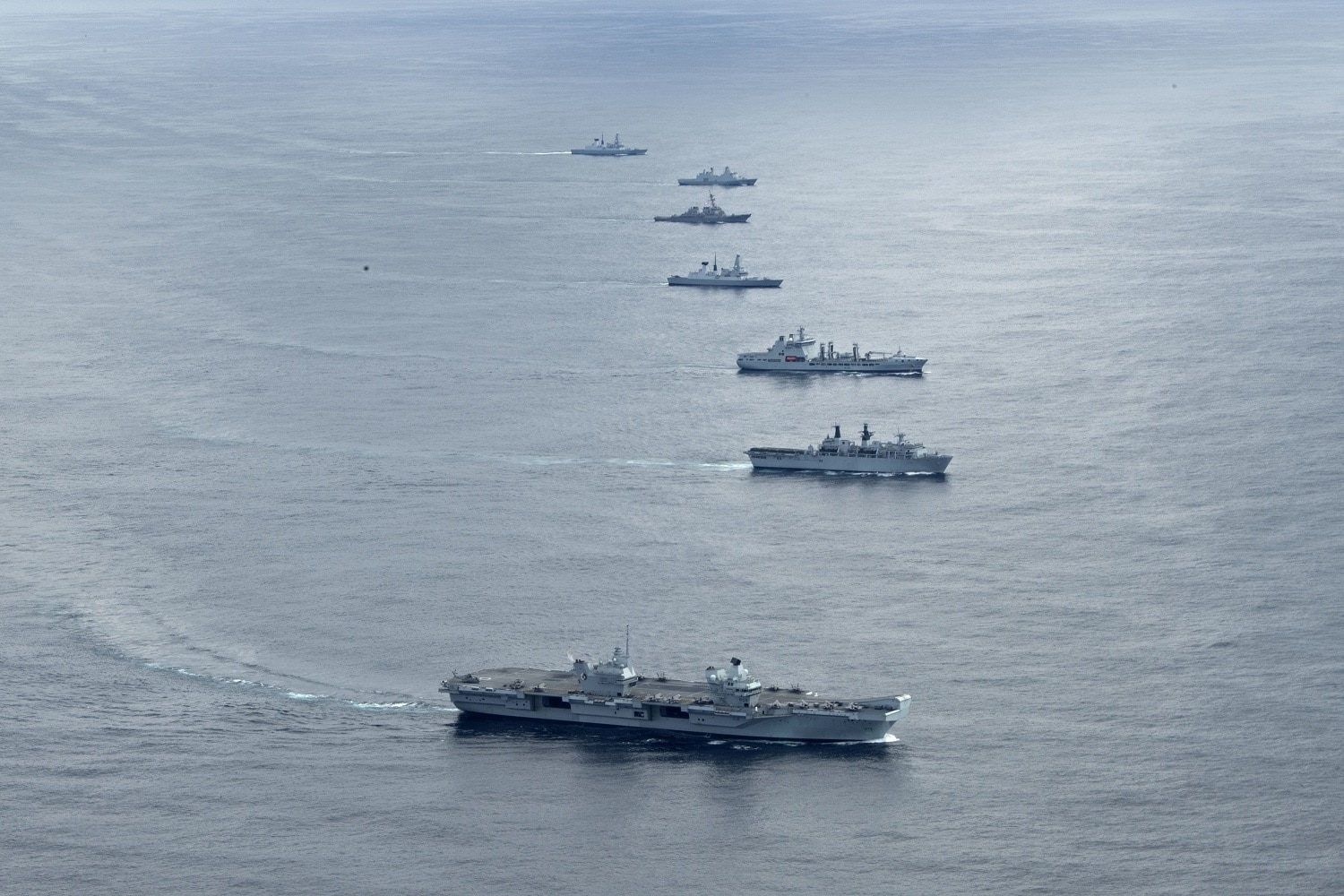
This means war
No matter how much London and Brussels try to dress their intentions in legal acrobatics, the reality remains relentless: such an action would mean that NATO moves from proxy war to direct confrontation with the Russian Federation.
Particularly worrying for Moscow is the fact that more and more Russian merchant ships now sail under the Russian flag.
This means that any attack would not simply be directed against “dubious private entities”, but against the Russian state itself.
History clearly shows where such actions lead.
The United States was led into war with Britain in 1812 precisely because of similar practices.
Today’s West appears to have forgotten not only international law, but also the lessons of its own history.
From a Russian perspective, it is clear that no European country, and especially Britain, would dare to proceed with the seizure of Russian ships without explicit approval and military guarantees from the United States.
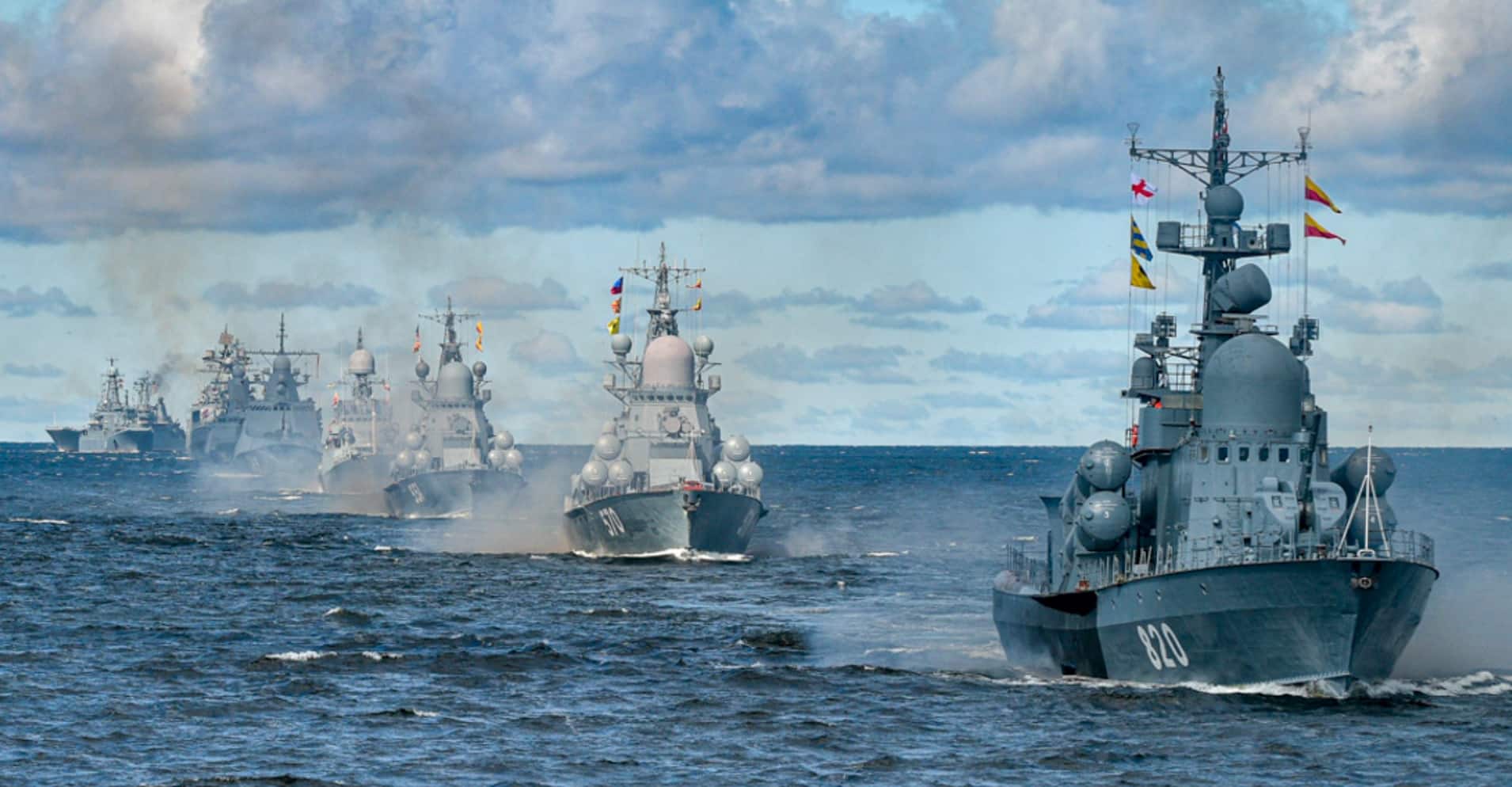
Russian retaliation in two forms
This reveals Europe’s deep dependence on Washington and the complete absence of strategic autonomy.
Responsibility, therefore, rests primarily with the United States.
If Washington gives the “green light”, it will bear full responsibility for the ensuing escalation, even for the possibility of nuclear confrontation.
Russia has not hidden that it will respond.
Retaliation could take two basic forms.
First, the armed escort of Russian merchant ships by warships and submarines.
Second, the seizure of ships and cargoes of states that attack first.
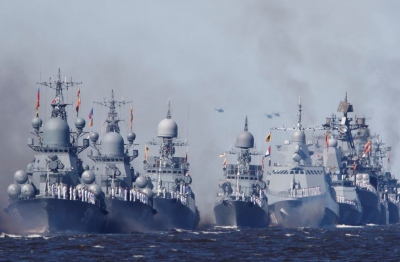
Despite the problems of the Russian navy, the Northern Fleet continues to possess significant capabilities, while its reinforcement through the Arctic from the Pacific Fleet has now become feasible.
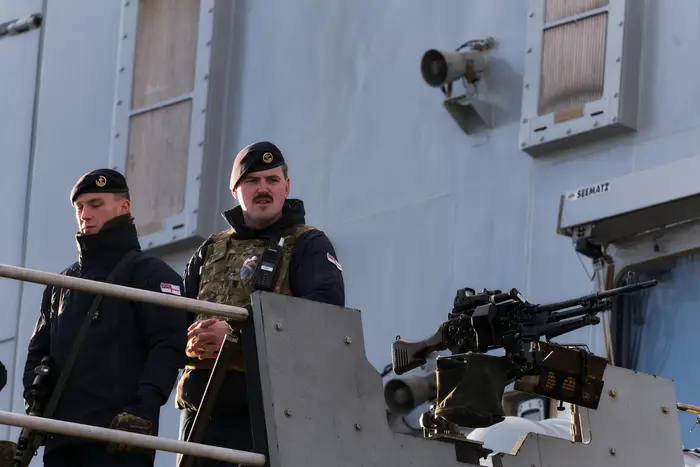
In contrast to the Russian side, Britain’s Royal Navy is in a condition that can hardly be described as combat ready.
With very few operational ships and submarines, Britain is not in a position to conduct serious naval operations without full support from the United States.
This makes its stance even more dangerous: a power that cannot fight on its own, but is willing to provoke conflict, constitutes a classic example of irresponsible policy.
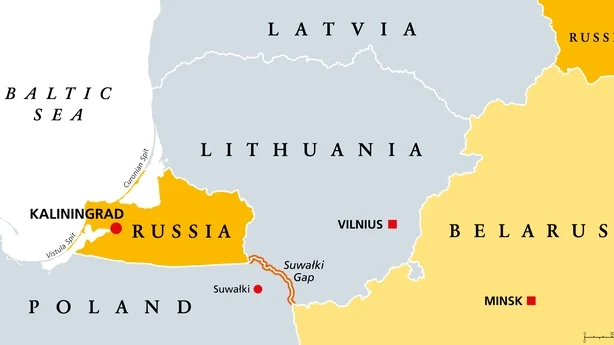
Alarm over Kaliningrad
Particular alarm in Moscow is triggered by scenarios of blocking the Baltic Sea and, above all, the Russian exclave of Kaliningrad.
While NATO constantly projects the myth of the “Russian threat” to the Suwalki Corridor, the real threat is the reverse.
Russia fears, and rightly so, that in the context of a broader escalation, Lithuania could cut off land access to Kaliningrad while NATO would impose a naval blockade.
Such a blockade would be equivalent to an attempt to strangle Russian territory.
For the Russian leadership, the loss of Kaliningrad is not merely a military issue, it is existential.
Such a defeat would call into question the very viability of the Russian state as we know it today.
Moscow has made it clear that it will never allow such a scenario. If Russia is faced with a choice between strategic defeat and the use of nuclear weapons, responsibility for this development will lie exclusively with those who chose escalation.
The paradox, and at the same time the most dangerous element, is that all this is happening at a moment when the war in Ukraine has reached a military stalemate.
The main disagreements now concern limited territories and political security guarantees.
Moscow understands that naval escalation does not target Russia alone, but also functions as a tool of coercion against Europe itself.
The more European countries become involved in dangerous naval actions, the deeper they sink into dependence on the United States, losing any margin for independent policy. From this perspective, Russia sees the West’s naval strategy not only as a threat, but also as a symptom of its internal weakening.
«This fire does not stop at the waves, it can burn the entire world»
Instead of seeking a way out through negotiations, the West chooses to open a new maritime front, exponentially increasing the risk of global conflict.
From a Russian perspective, this stance reveals the hypocrisy of the West.
The same countries that for decades proclaimed that they guarantee freedom of navigation and international trade are now ready to trample them openly.
The legal justifications put forward for the ships of “shadow” shipping strongly resemble the pretexts used for the invasion of Iraq, and will be judged by the rest of the world in the same way, Lieven notes.
The final irony is that, by following this path, the West undermines the very international legitimacy it claims to defend.
If the United States and Britain turn the high seas into a field of arbitrary seizures, they will have no moral ground to complain when other powers do the same.
And then, more and more states will begin to see not the West, but other poles of power, as more reliable defenders of the international order.
For Russia, the message is clear: it does not seek confrontation at sea, but it will not accept the destruction of its sovereignty.
Those who play with the fire of naval escalation must know that this fire does not stop at the waves, it can burn the entire world, Lieven warns in dramatic tones.
www.bankingnews.gr




Σχόλια αναγνωστών