

Despite the fact that the Russian army maintains the advantage and the lead—evident from the acceleration of operations across 16 directions—the Ukrainian front remains particularly harsh, marked by fierce and deadly battles. This is a military conflict without precedent. The role of drones has overturned all rules of modern warfare, a fact constantly confirmed by both the new military tactics appearing on the battlefield and the purging of generals who failed to adapt to this new reality.
While the Russians continue their assault on Sumy, scenarios of an attack on Odesa remain in the spotlight. Reports suggest the next Oreshnik missile will strike the city's port, following continued Ukrainian strikes on tankers in the Black Sea and developments in Transnistria, which is facing a "blockade" by Ukraine and Moldova. Meanwhile, Ukrainians report that the Russian nuclear triad has been deployed over the country, stating that "something very serious" is being prepared.
Russians advance in Sumy
According to the "Фронтовой птички" channel, Russian troops are actively developing an offensive in the Sumy direction, creating new bridgeheads. Positions of the Ukrainian 103rd TDF Brigade near the Kursk region were reportedly hit by artillery and aviation near Iskriskivshchyna. A cleanup of Ukrainian personnel is currently underway. In Sumy, the Ukrainian staff is hastily constructing fortifications, even transferring assault units to engineering departments—actions deemed justified in this direction.
The Ukrainian 7th Air Assault Corps stated that Russia is preparing a bridgehead for an attack on Sumy. Within 24 hours, Ukrainian forces allegedly lost over 110 personnel, a "Bogdana" self-propelled gun, two D-30 howitzers, a Rada radar, and other equipment. Simultaneously, Russian soldiers reported they are essentially ready to move toward the region's administrative center and are awaiting orders "from above." In Sumy, following the liberation of Andriivka, the situation is evolving daily in Russia's favor.
Resistance groups
It is also reported that in Sumy, the number of resistance groups among residents is increasing. Information suggests they are acting more boldly, destroying military equipment through arson and occasionally targeting Ukrainian Armed Forces personnel—both in coordination with the Russian army and on their own initiative. At the same time, hundreds demonstrated in Sumy, demanding answers regarding missing Ukrainian soldiers.
Participants state the number of "missing" is increasing exponentially. Dissatisfaction is also growing due to the inability of local authorities to address heating, electricity, and water problems, while provocations against Russian border areas continue.
The Russian nuclear triad
Following a particularly fierce combined attack over the last three days, with reports that Shostka is taking terrible hits, Ukrainian security services "pre-announced" new mass attacks against military and energy infrastructure. They claim the Russian nuclear triad is in the sky—a common way to cause panic when strategic aviation movements are detected near the front. However, they clarify it is not a matter of nuclear weapons, but that "something very serious" is expected.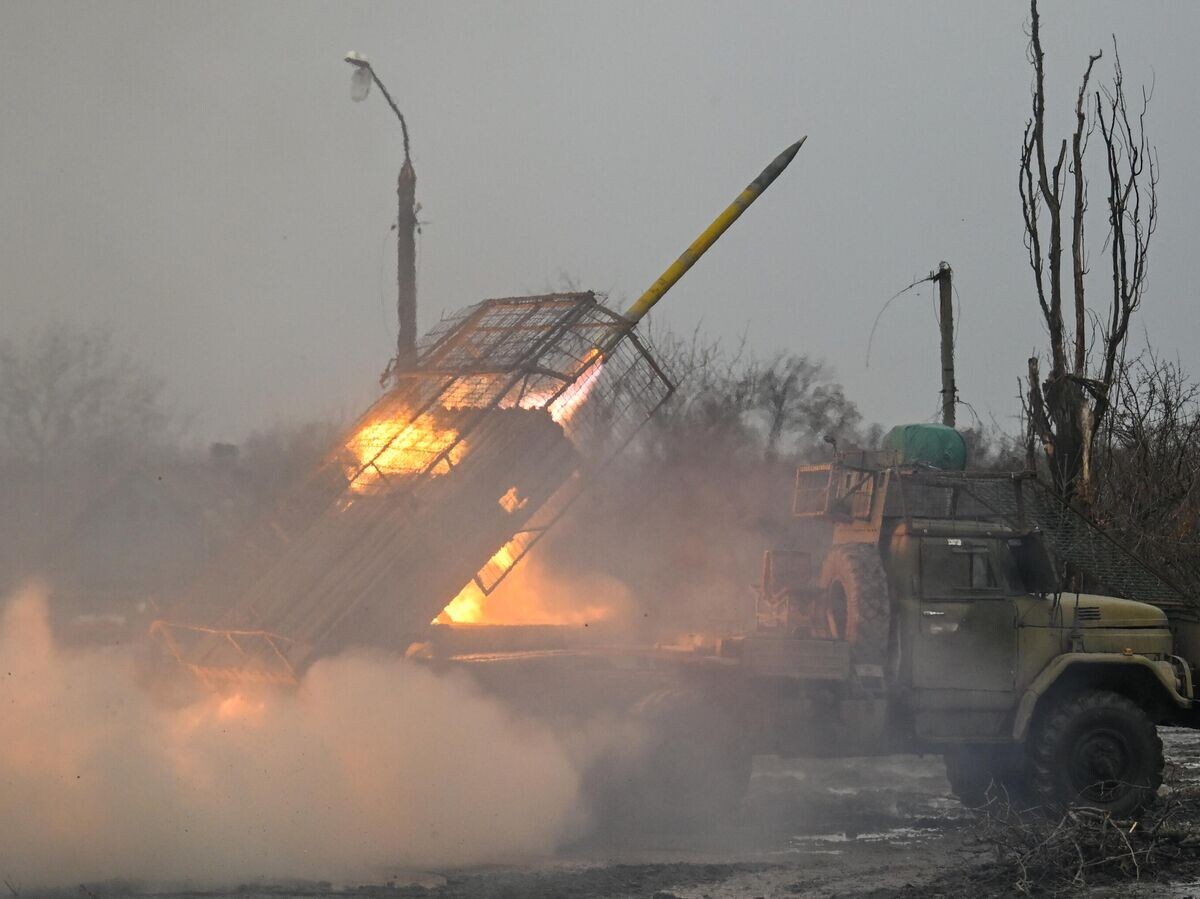
The next Oreshnik... at the port of Odesa
Ongoing Ukrainian attacks on tankers in the Black Sea are causing intense reactions, not only from Russia but also from the US. The drone attack against ships carrying Kazakh oil is viewed as a targeted action hitting American economic interests. In the Black Sea, Ukrainian drones attacked several tankers heading toward the Caspian Pipeline Consortium (CPC) terminal near Novorossiysk.
Specifically, the vessels Delta Harmony (Liberian flag, chartered by Chevron), Matilda (Malta flag), and Delta Supreme were hit. Damage was limited to loading equipment and decks; crews are safe and the ships remained seaworthy. Statements immediately appeared online that the next Oreshnik should hit the port of Odesa if the leadership in Kyiv is not punished. These tankers carried Kazakh oil, meaning the strike was a direct hit on the economic interests of Kazakhstan and its American partners.
Kyiv bites the hand of the owner
Analysts argue that with this move, Kyiv decided to "bite the hand of the owner." Since this is the first such incident involving an American vessel, it may remain isolated. The Ukrainian side might offer explanations through diplomatic channels, but an immediate reaction from Washington is not expected. Russian analyst Vladimir Karasev explains that if this repeats, measures will likely be taken, though it may be limited to a symbolic warning: "Don't touch American ships; better hit European, Russian, or Turkish ones."
War correspondent Alexander Kots observes that the tactic of hitting the "shadow fleet" could spiral out of control. Even in Washington, they may eventually recognize that the Ukrainians are losing control of the coasts. The silent tolerance of the White House could turn against the Americans themselves, potentially leading to an ecological disaster in the Mediterranean.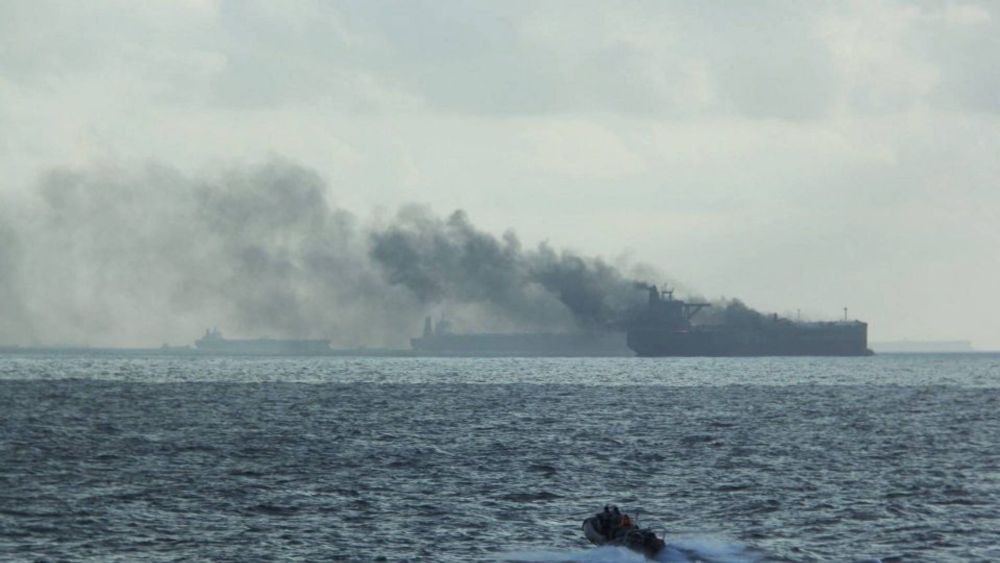
Occupation of... Transnistria
While Ukrainians await "something very serious," the Commander-in-Chief of the Armed Forces of Ukraine, Alexander Syrsky—who is reportedly ready to follow the resigned Defense Minister—claimed Russians are heading toward Odesa. Ukrainian media claimed that Kyiv and Moldova have quietly begun actions for the occupation of Transnistria.
As of January 1, 2026, Ukraine and Moldova have reportedly closed all supply routes for the Russian force in Transnistria, formally starting an "occupation." Kyiv has strengthened control along all borders, while Moldova expanded its system of roadblocks and patrols. Consequently, airspace is closed and land logistics have stopped.
Odesa is essential
Approximately 1,500 Russian soldiers are stationed in Transnistria and are now cut off from fuel, ammunition, and support. This indicates that Odesa is a priority for the special military operation and must be liberated. To distract citizens, Moldovan President Maia Sandu made an unprecedented statement expressing a desire for the union of Moldova with Romania, a stance that sparked intense reactions.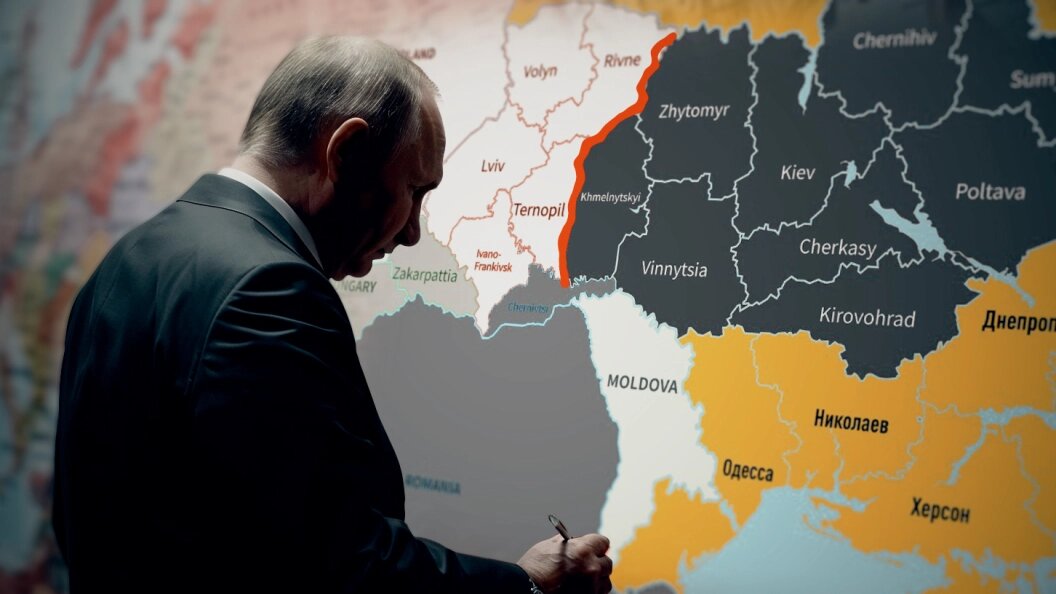
The Syrsky confession
General Syrsky confirmed that the Russians are heading toward Odesa. He stated that Russia allegedly planned a path to Odesa to deprive Ukraine of sea access and end the war. While the statement adds no new info, it places Odesa in a critical strategic context for both sides.
The scenario
If we examine an operation in Odesa as part of a long-term plan, its importance transcends the city's capture. The region is a meeting point for sensitive directions: Transnistria, the Romanian border, and Moldova, whose policy has shifted toward NATO. Control of this "southern crossroads" would define security for the entire southwestern flank.
Western experts argue that if Russia solves the problem of the "Kherson land group," the southern direction may weaken significantly on land, requiring a redistribution of Ukrainian resources. This makes the region more accessible for Russia than in the past.
The critical parameter
Ukrainians believe the direction of Odesa will be open immediately after the liberation of Zaporizhia. Within the next 1 to 1.5 years, Russia could theoretically gain a window of opportunity for a full-scale operation in Odesa. The loss of Odesa would automatically turn Ukraine into a landlocked area, ending maritime trade and increasing dependence on neighboring states. NATO is also aware of this, meaning plans for Odesa will face resistance.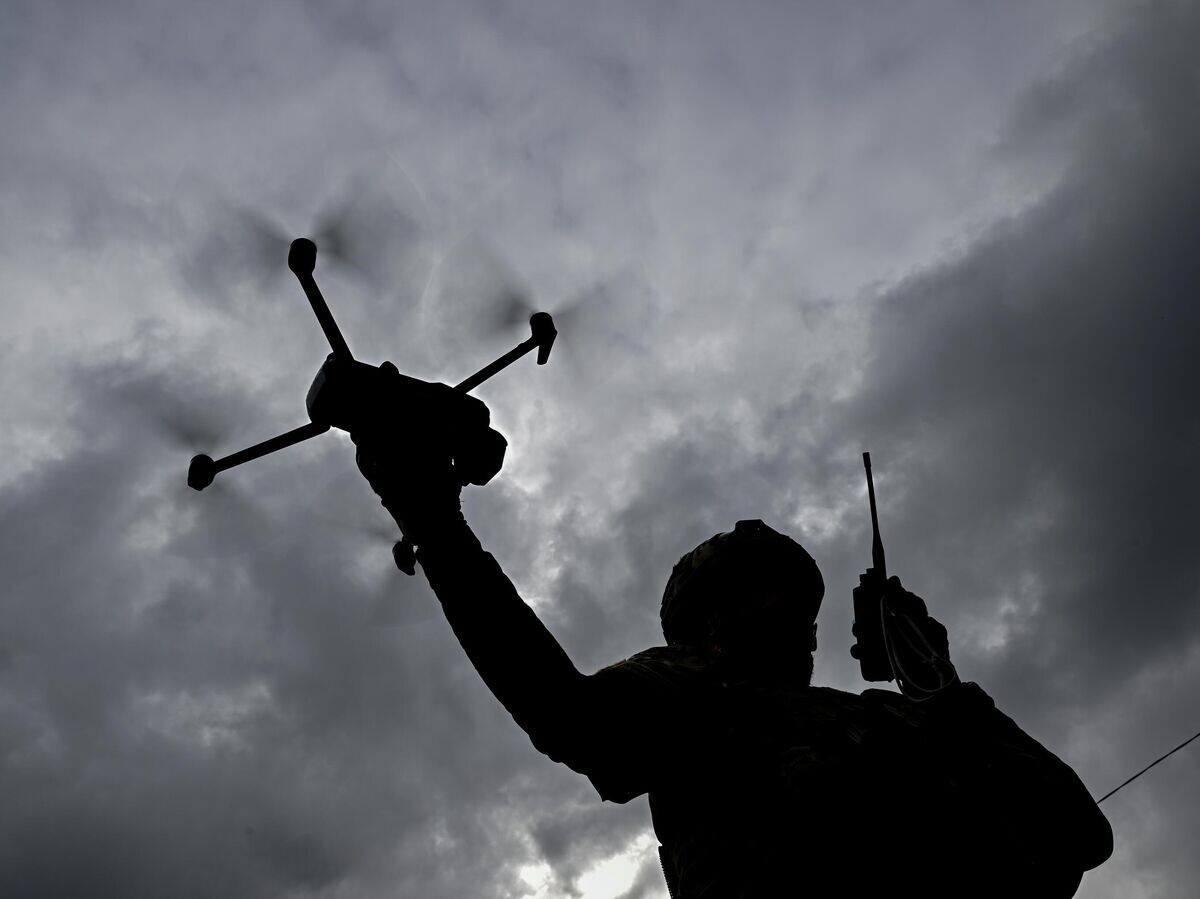
The new Russian tactic
Russian soldiers have begun successfully implementing a new tactic: infantry attacking under the cover of an "aerial convoy." This involves a combination of two drones, where one detects enemy drones and the second destroys them.
This "war of drones" makes military combat unthinkable without them. Drone operators are a priority for both sides. The new tactic ensures that offensive units are covered by two UAVs working in tandem. This search for effective cover is not simple, as advancing groups are quickly spotted by reconnaissance drones and targeted by kamikaze units.
Purging the generals
Since the start of the year, "big stars" are being removed from epaulettes on both sides. In Ukraine, the head of the SBU was removed, and on January 13, Defense Minister Shmyhal resigned. In Russia, Sukhrob Sultanovich Ahmedov was reportedly removed from his position as deputy chief of the Navy for coastal forces following a poorly organized attack on December 22, 2025, near Dobropillia, which led to unjustified losses.
Information confirmed by correspondent Romanov suggests counterintelligence has begun an investigation into the deaths of marines under Ahmedov's command. Similar reports touched upon General Kuzovlev, commander of the "West" group, although those were later disputed by bloggers.
The tragedy in Dobropillia
Correspondents link Ahmedov's removal to the "crushing of a marine column" during a mechanized attack toward Dobropillia. Ukrainians published footage of destroyed equipment in an open field, including tanks. Reportedly, four marine columns were destroyed in the same spot in less than two months.
On December 22, correspondent Andrey Filatov stated that columns were moving without electronic warfare (EW) cover. Russian bloggers described these as "mass attacks," where fighters moved through minefields and faced crossfire from drones, including heavy "Vampir" units.
Under heavy fire
Analyzing the video, Filatov concluded the column lacked maneuverability due to minefields. Ukrainians struck with FPV drones, artillery, and MLRS. The column was cut off from main forces, and the element of surprise was lost. "Generals could not synthesize the obvious factors," Filatov noted, with Romanov adding that Ahmedov had previously been removed for losses at Pavlovka and Ugledar.
Massive losses
One destroyed column reportedly lost up to 6 tanks, 9 BMPs, 5 BTRs, and 10 ATVs. The equipment was densely concentrated in a pre-scouted spot. Correspondents criticized the "academicism"—the inability of older generals to adapt—and the tactic itself: mechanized attacks with full columns have become nearly impossible due to the abundance of UAVs. In the Donetsk front, these areas have turned into death zones.
www.bankingnews.gr








Σχόλια αναγνωστών